Kirjojen hintavertailu. Mukana 12 459 402 kirjaa ja 12 kauppaa.

Kirjahaku

Etsi kirjoja tekijän nimen, kirjan nimen tai ISBN:n perusteella.

1000 tulosta hakusanalla Joyce Bennett-Hall

Joyce and the Joyceans

Joyce and the Joyceans

Morton P Levitt

Syracuse University Press
2002
nidottu
This collection of 17 essays on James Joyce covers a variety of subjects and approaches by some of the major figures of Joyce criticism and scholarship, as well as some by newer Joyceans. Its scope is among the very broadest of such collections as well as the most up to date. It includes a series of personal essays describing some pivotal events in the international study of Joyce, including the beginnings of the Joyce Foundation and Symposia.
Joyce and Reality

Joyce and Reality

John Gordon

Syracuse University Press
2004
sidottu
Joyce was a realist, but his reality was not ours, writes John Gordon in his new book. Here, he maintains that the shifting styles and techniques of Joyce's works is a function of two interacting realities - the external reality of a particular time and place and the internal reality of a character's mental state. In making this case Gordon offers up a number of new readings: how Stephen Dedalus conceives and composes his villanelle; why the Dubliners story about Little Chandler is titled ""A Little Cloud""; why MacDowell suddenly appears and disappears; what is happening when Leopold Bloom looks for two minutes at a beer bottle's label; why the triangle etched at the center of Finnegans Wake doubles itself and grows a pair of circles; why the next to last chapter of Ulysses has, by far, the book's highest incidence of the letter C; and who is the man in the macintosh. Gordon, whose authoritative Finnegans Wake: A Plot Summary received critical acclaim and is considered one of the standard references, revises - and challenges - the received version of that reality. For instance, Joyce features ghost visitations, telepathy, and other para-normal phenomena not as ""flights into fantasy"" but because he believed in the real possibility of such occurrences.
Joyce, Imperialism, and Postcolonialism
On the surface, James Joyce's work is largely a political. Through most of the twentieth century he was the proud embodiment of the rootless intellectual. However, perspectives on the colonial history of Ireland have proliferated in recent years, yielding a subtle and complex conception of the Irish postcolonial experience that has become a major theme in current Joyce scholarship. Highly original and often provocative, these essays bring Joyce powerfully within the ambit of postcolonial studies.
Joyce / Shakespeare

Joyce / Shakespeare

Syracuse University Press
2015
nidottu
Shakespeare’s presence in Joyce’s work is tentacular, extending throughout his career on many different levels: cultural, structural, lexical, and psychological; yet a surprisingly long time has passed since the last monograph on this literary nexus was published. Joyce/Shakespeare brings together fresh work by internationally recognized Joyce scholars on these two icons, reinvigorating our understanding of Joyce at play with the Bard. One way these essays revitalize the discussion is by moving well beyond the traditional Joycean challenge of “thinking Shakespearean” by “thinking Hamletian,” redefining the field to include works like Troilus and Cressida, Othello, and The Tempest. This collection also transforms our understanding of how Hamlet works in and for Joyce. In compelling essays that introduce new variables to the equation such as Trieste, Goethe, and Futurism, Hamlet’s role in Joyce gains fresh mobility. The Danish prince’s shadow, we learn, can still cast itself in unpredictable shapes, making Joyce/Shakespeare as rewarding in its analyses of this well-studied pairing as it is when it considers fresh Shakespearean matches.
Joyce's Book of Memory

Joyce's Book of Memory

John S. Rickard

Duke University Press
1999
sidottu
For James Joyce, perhaps the most crucial of all human faculties was memory. It represented both the central thread of identity and a looking glass into the past. It served as an avenue into other minds, an essential part of the process of literary composition and narration, and the connective tissue of cultural tradition. In Joyce’s Book of Memory John S. Rickard demonstrates how Joyce’s body of work-Ulysses in particular-operates as a “mnemotechnic,” a technique for preserving and remembering personal, social, and cultural pasts.Offering a detailed reading of Joyce and his methods of writing, Rickard investigates the uses of memory in Ulysses and analyzes its role in the formation of personal identity. The importance of forgetting and repression, and the deadliness of nostalgia and habit in Joyce’s paralyzed Dublin are also revealed. Noting the power of spontaneous, involuntary recollection, Rickard locates Joyce’s mnemotechnic within its historical and philosophical contexts. As he examines how Joyce responded to competing intellectual paradigms, Rickard explores Ulysses’ connection to medieval, modern, and (what would become) postmodern worldviews, as well as its display of tensions between notions of subjective and universal memory. Finally, Joyce’s Book of Memory illustrates how Joyce distilled subjectivity, history, and cultural identity into a text that offers a panoramic view of the modern period.This book will interest students and scholars of Joyce, as well as others engaged in the study of modern and postmodern literature.
Joyce's Book of Memory

Joyce's Book of Memory

John S. Rickard

Duke University Press
1999
pokkari
For James Joyce, perhaps the most crucial of all human faculties was memory. It represented both the central thread of identity and a looking glass into the past. It served as an avenue into other minds, an essential part of the process of literary composition and narration, and the connective tissue of cultural tradition. In Joyce’s Book of Memory John S. Rickard demonstrates how Joyce’s body of work-Ulysses in particular-operates as a “mnemotechnic,” a technique for preserving and remembering personal, social, and cultural pasts.Offering a detailed reading of Joyce and his methods of writing, Rickard investigates the uses of memory in Ulysses and analyzes its role in the formation of personal identity. The importance of forgetting and repression, and the deadliness of nostalgia and habit in Joyce’s paralyzed Dublin are also revealed. Noting the power of spontaneous, involuntary recollection, Rickard locates Joyce’s mnemotechnic within its historical and philosophical contexts. As he examines how Joyce responded to competing intellectual paradigms, Rickard explores Ulysses’ connection to medieval, modern, and (what would become) postmodern worldviews, as well as its display of tensions between notions of subjective and universal memory. Finally, Joyce’s Book of Memory illustrates how Joyce distilled subjectivity, history, and cultural identity into a text that offers a panoramic view of the modern period.This book will interest students and scholars of Joyce, as well as others engaged in the study of modern and postmodern literature.
Joyce Studies Annual 2007

Joyce Studies Annual 2007

Fordham University Press
2007
sidottu
An indispensable resource for scholars and students of James Joyce, Joyce Studies Annual gathers essays by foremost scholars and emerging voices in the field. Formerly published by the University of Texas, the first volume from Fordham University Press is scheduled for publication in November 2007, and will include historical, archival, and comparative approaches from a variety of theoretical perspectives. Volumes 1990–2003 continue to be published by the Univesity of Texas Press. Joyce Studies Annual welcomes submissions on any aspect of Joyce's work, and especially encourages longer essays treating historical, archival, or comparative issues.
Joyce Studies Annual 2008

Joyce Studies Annual 2008

Fordham University Press
2008
sidottu
Contents Addresses from the 2007 International James Joyce Conference Thomas F. Staley, "A Life With Joyce" Carol Loeb Shloss, "Copyright and the Joyce Estate: Legal Issues, Moral Issues, and Unresolved Issues in the Publication of Lucia Joyce: To Dance in the The Wake" Robert Spoo, "Litigating the Right To Be a Scholar" Visual Art Carl Kohler, Sketches of Joyce's Progressive Blindness Articles Garry Leonard, "He's Got Bette Davis Eyes: Joyce and Melodrama" Margot Backus, "Odd Jobs': James Joyce, Oscar Wilde, and the New Journalism" Alistair McCleery, William Brockman, and Ian Gunn, "Fresh Evidence and Further Complications: Correcting the Text of the Random House 1934 Edition of Ulysses" Andre Cormier, "The Transcendental, Blind Stripling in Ulysses" Michael Lapointe, "Irish Nationalism's Sacrificial Homosociality in Ulysses" Sam Slote, "1904, A Space Odyssey" William Sayers, "The Russian General, Gargantua, and Joyce Writing 'of his wit's waste' in Finnegans Wake
Joyce Studies Annual 2010

Joyce Studies Annual 2010

Fordham University Press
2011
sidottu
ARTICLES Amanda Sigler, Joyce's Ellmann: The Beginnings of James Joyce Peter Nohrnberg, "Building Up a Nation Once Again": Irish Masculinity, Violence, and the Cultural Politics of Sports in A Portrait of the Artist as a Young Man and Ulysses Denise Ayo, Scratching at Scabs: The Garryowens of Ireland Lauren Rich, A Table for One: Hunger and Unhomeliness in Joyce's Public Eateries Angela Nemecek, Reading the Disabled Woman: Gerty MacDowell and the Stigmaphilic Space of "Nausicaa" Dieter Fuchs, Szombathely, Vienna, Budapest: Epic Geography and the Austro-Hungarian Subtext of James Joyce's Ulysses Roy Benjamin, Intermisunderstanding Minds: The First Gospel in Finnegans Wake NOTES Faith Steinberg, Joyce Illustrates Finnegans Wake (verbally) and HCE Goes Tomb-Hopping Joseph Kestner, James Joyce's "Araby" on Film Brandon Lansom, Orpheus Descending: Images of Psychic Descent in "Hades" and "Circe" Thomas Rendall, Joyce's "The Dead" and the Mid-life Crisis
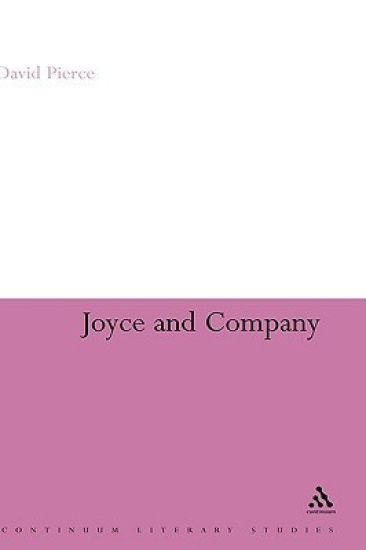
Joyce and Company

Joyce and Company

David Pierce

Continuum International Publishing Group Ltd.
2008
nidottu
This is a comparative study focusing on Joyce as an Irish and European writer, best understood in the context of other times and writers, including Virginia Woolf."Joyce and Company" is a comparative study which encourages a way of thinking about Joyce not as an isolated figure but as someone who is best understood in the company of others whether from the past, the present or, indeed, the imagined future. Throughout, Pierce places Joyce and his time in dialogue with other figures or different historical periods or languages other than English. In this way, Joyce is seen anew in relation to other writers and contexts.The book is organised in four parts: Joyce and History, Joyce and Language, Joyce and the City, and Joyce and the Contemporary World. Pierce emphasises Joyce's position as both an Irish and a European writer and shows Joyce's continuing relevance to the twenty-first century, not least in his commitment to language, culture and a discourse on freedom.
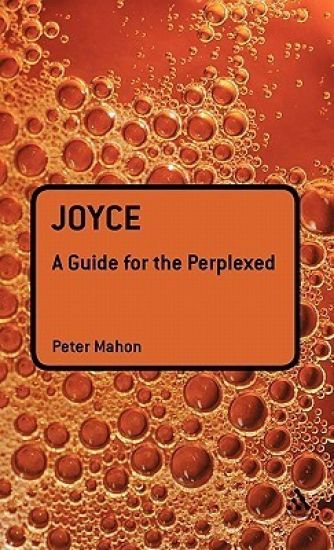
Joyce: A Guide for the Perplexed

Joyce: A Guide for the Perplexed

Peter Mahon

BLOOMSBURY PUBLISHING PLC
2009
sidottu
James Joyce's work has, not unjustly, been regarded as some of the most obscure, challenging and difficult writing ever committed to paper; it is also shamelessly funny and endlessly entertaining. Joyce: A Guide for the Perplexed celebrates the daring, humour and playfulness of Joyce's complex work while engaging with and elucidating the most demanding aspects of his writing. The book explores in detail the motifs and radical innovations of style and technique that characterize his major worksGAao Dubliners, A Portrait of the Artist as a Young Man, Ulysses and Finnegans Wake. By highlighting how Joyce's texts have been read by recent innovations in literary and cultural theory, Joyce: A Guide for the Perplexed offers the reader a Joyce that is contemporary, fresh and relevant.
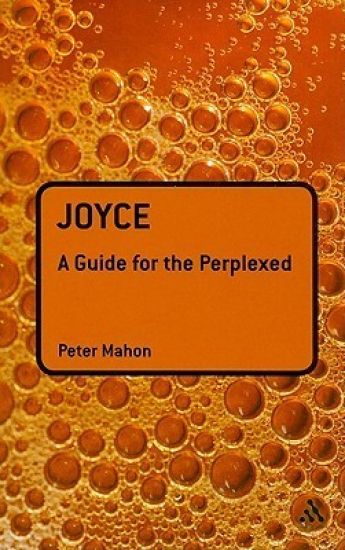
Joyce: A Guide for the Perplexed

Joyce: A Guide for the Perplexed

Peter Mahon

Continuum International Publishing Group Ltd.
2009
nidottu
Focusing on the most commonly studied texts, it guides the reader through Joyce's stylistic and thematic complexity and through differing theoretical interpretations of his work. James Joyce's work has, not unjustly, been regarded as some of the most obscure, challenging and difficult writing ever committed to paper; it is also shamelessly funny and endlessly entertaining. "Joyce: A Guide for the Perplexed" celebrates the daring, humor and playfulness of Joyce's complex work while engaging with and elucidating the most demanding aspects of his writing. The book explores in detail the motifs and radical innovations of style and technique that characterize his major works - "Dubliners", "A Portrait of the Artist as a Young Man", "Ulysses", and "Finnegans Wake". By highlighting how Joyce's texts have been read by recent innovations in literary and cultural theory, "Joyce: A Guide for the Perplexed" offers the reader a Joyce that is contemporary, fresh and relevant. Continuum's "Guides for the Perplexed" are clear, concise and accessible introductions to thinkers, writers and subjects that students and readers can find especially challenging - or indeed downright bewildering. Concentrating specifically on what it is that makes the subject difficult to grasp, these books explain and explore key themes and ideas, guiding the reader towards a thorough understanding of demanding material.
Joyce and Company

Joyce and Company

David Pierce

Continuum International Publishing Group Ltd.
2006
sidottu
"Joyce and Company" is a comparative study which encourages a way of thinking about Joyce not as an isolated figure but as someone who is best understood in the company of others whether from the past, the present or, indeed, the imagined future. Throughout, Pierce places Joyce and his time in dialogue with other figures or different historical periods or languages other than English. In this way, Joyce is seen anew in relation to other writers and contexts. The book is organised in four parts: Joyce and History, Joyce and Language, Joyce and the City, and Joyce and the Contemporary World. Pierce emphasises Joyce's position as both an Irish and a European writer and shows Joyce's continuing relevance to the twenty-first century, not least in his commitment to language, culture and a discourse on freedom.