

Kirjahaku
Etsi kirjoja tekijän nimen, kirjan nimen tai ISBN:n perusteella.
1000 tulosta hakusanalla Judith Freeman




Judith Trachtenberg
Karl Emil Franzos; Charlton Thomas Lewis; L P Lewis
Anson Street Press
2025
pokkari

Judith Trachtenberg
Karl Emil Franzos; Charlton Thomas Lewis; L P Lewis
Anson Street Press
2025
sidottu








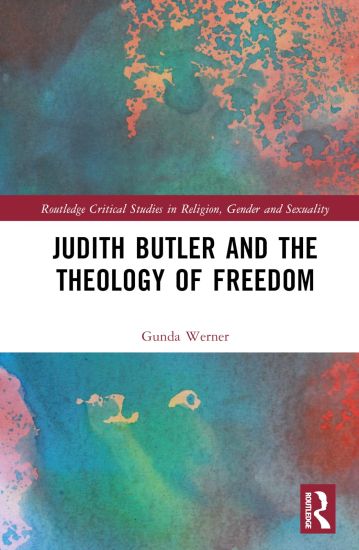
Judith Butler, Michel Foucault, and the Theology of Freedom
Gunda Werner
TAYLOR FRANCIS LTD
2023
sidottu
This book explores how Judith Butler’s work on gender and the shaping of the human subject and Michel Foucault's notion of parrhesia, ‘speaking the truth’, can be made fruitful for a theology of freedom. The volume illustrates the importance of three concepts - freedom, gender (body) and power (critique) - and how this triad provides the foundational categories and structural elements of a theology of freedom. By starting from an analysis of power and the performative potential of gendered embodiment, freedom can be thought of as the basis of creative and critical human action and thereby implemented in theology. The chapters feature several theological-historical case studies that are representative of topics that continue to shape contemporary Catholic norms and thought. In particular, the author reflects on the 13th century with the idea of personal sin and confession, and the 19th century with a gender ideology that has led to the marginalization of difference and dissent. The book shows how Butler and Foucault can provide essential insights for Catholic theology and is valuable reading for scholars of religion, philosophy, and gender and sexuality studies.

Judith Butler, Michel Foucault, and the Theology of Freedom
Gunda Werner
TAYLOR FRANCIS LTD
2025
nidottu
This book explores how Judith Butler’s work on gender and the shaping of the human subject and Michel Foucault's notion of parrhesia, ‘speaking the truth’, can be made fruitful for a theology of freedom. The volume illustrates the importance of three concepts - freedom, gender (body) and power (critique) - and how this triad provides the foundational categories and structural elements of a theology of freedom. By starting from an analysis of power and the performative potential of gendered embodiment, freedom can be thought of as the basis of creative and critical human action and thereby implemented in theology. The chapters feature several theological-historical case studies that are representative of topics that continue to shape contemporary Catholic norms and thought. In particular, the author reflects on the 13th century with the idea of personal sin and confession, and the 19th century with a gender ideology that has led to the marginalization of difference and dissent. The book shows how Butler and Foucault can provide essential insights for Catholic theology and is valuable reading for scholars of religion, philosophy, and gender and sexuality studies.



Judith Trachtenberg
Karl Emil Franzos; L. P. (TRN) Lewis; C. T. (TRN) Lewis
Kessinger Pub
2009
pokkari

2020 will mark thirty years since the first publication of Judith Butler’s ground-breaking book, Gender Trouble. Here, and in subsequent work, Butler argues that gender and other forms of identity can best be understood as performative acts. These acts are what bring our subjectivities into existence, enabling us to be recognized as viable employable social beings, worthy of rights, responsibilities and respect. The three decades since the publication of Gender Trouble have witnessed Butler become one of the most widely cited and controversial figures in contemporary feminist thinking. While it is only in her most recent work that Butler has engaged directly with themes such as work and organization, her writing has profound implications for thinking, and acting, on the relationship between power, recognition and organization. Whilst her ideas have made important in-roads into work, organization and gender studies that are discussed here, there is considerable scope to explore further avenues that her concepts and theories open up. These inroads and avenues are the focus of this book.Judith Butler and Organization Theory makes a substantial contribution to the analysis of gender, work and organization. It not only covers central issues in Butler’s work, it also offers a close reading of the complexities and nuances in her thought. It does so by ‘reading’ Butler as a theorist of organization, whose work resonates with scholars, practitioners and activists concerned to understand and engage with organizational life, organization and organizing. Drawing from a range of illustrative examples, the book examines key texts or ‘moments’ in the development of Butler’s writing to date, positing her as a thinker concerned to understand and address the ways in which our most basic desire for recognition comes to be organized within the context of contemporary labour markets and workplaces. It examines insights from Butler’s work, and the philosophical ideas she draws on, considering the impact of these on work, organization and management studies thus far; it also explores some of the many ways in which her thinking might be mobilized in future, considering what scope there is for a non-violent ethics of organization, and for a (re)assembling of the relationship between vulnerability and resistance within and through organizational politics.