Kirjojen hintavertailu. Mukana 11 540 829 kirjaa ja 12 kauppaa.

Kirjahaku

Etsi kirjoja tekijän nimen, kirjan nimen tai ISBN:n perusteella.

1000 tulosta hakusanalla Julian Sharp

Julian the Apostate in Byzantine Culture

Julian the Apostate in Byzantine Culture

Stefano Trovato

TAYLOR FRANCIS LTD
2022
sidottu
Julian, the last pagan emperor of the Roman empire, died in war in 363. In the Byzantine (that is, the Eastern Roman) empire, the figure of Julian aroused conflicting reactions: antipathy towards his apostasy but also admiration for his accomplishments, particularly as an author writing in Greek. Julian died young, and his attempt to reinstate paganism was a failure, but, paradoxically, his brief and unsuccessful policy resonated for centuries.This book analyses Julian from the perspectives of Byzantine Culture. The history of his posthumous reputation reveals differences in cultural perspectives and it is most intriguing with regard to the Eastern Roman empire which survived for almost a millennium after the fall of the Western empire. Byzantine culture viewed Julian in multiple ways, first as the legitimate emperor of the enduring Roman empire; second as the author of works written in Greek and handed down for generations in the language that scholars, the Church, and the state administration all continued to use; and third as an open enemy of Christianity.Julian the Apostate in Byzantine Culture will appeal to both researchers and students of Byzantine perspectives on Julian, Greco-Roman Paganism, and the Later Roman Empire, as well as those interested in Byzantine Historiography.
Julian the Apostate in Byzantine Culture

Julian the Apostate in Byzantine Culture

Stefano Trovato

TAYLOR FRANCIS LTD
2024
nidottu
Julian, the last pagan emperor of the Roman empire, died in war in 363. In the Byzantine (that is, the Eastern Roman) empire, the figure of Julian aroused conflicting reactions: antipathy towards his apostasy but also admiration for his accomplishments, particularly as an author writing in Greek. Julian died young, and his attempt to reinstate paganism was a failure, but, paradoxically, his brief and unsuccessful policy resonated for centuries.This book analyses Julian from the perspectives of Byzantine Culture. The history of his posthumous reputation reveals differences in cultural perspectives and it is most intriguing with regard to the Eastern Roman empire which survived for almost a millennium after the fall of the Western empire. Byzantine culture viewed Julian in multiple ways, first as the legitimate emperor of the enduring Roman empire; second as the author of works written in Greek and handed down for generations in the language that scholars, the Church, and the state administration all continued to use; and third as an open enemy of Christianity.Julian the Apostate in Byzantine Culture will appeal to both researchers and students of Byzantine perspectives on Julian, Greco-Roman Paganism, and the Later Roman Empire, as well as those interested in Byzantine Historiography.
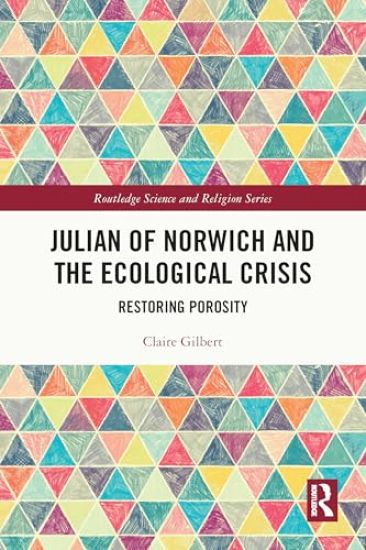
Julian of Norwich and the Ecological Crisis

Julian of Norwich and the Ecological Crisis

Claire Gilbert

TAYLOR FRANCIS LTD
2024
sidottu
This book presents ecological insights drawn from a reading of Julian of Norwich, considering how effectively she can help us in our current plight. The argument is that to address the ecological crisis with the mindset that created it will only cause more problems, and that to really undo the harm humanity has done and continues to do will take a transformation of selfhood and hence of perception, from the Gestell, technological self that is the child of the Enlightenment to the porous self that we truly are, underneath our buffered, separated, controlling and lonely exterior. The author suggests Julian of Norwich’s text Revelations of Divine Love has the power to effect this transformation if we can learn to read it as disciples, not masters, just as Julian received and responded to her revelations as a performative, porous, receptive disciple. The chapters describe the technological mindset and its causal relationship with the ecological crisis, and articulate in detail how, if they are to transform us, we must read the Julian texts, taking first steps away from our technological selves as we do so. The book then takes significant passages from Julian and reads them in the performative, porous way that has been recommended. It will be of particular interest to scholars of theology and ecology, as well as medieval mysticism.
Julian of Norwich and the Ecological Crisis

Julian of Norwich and the Ecological Crisis

Claire Gilbert

TAYLOR FRANCIS LTD
2025
nidottu
This book presents ecological insights drawn from a reading of Julian of Norwich, considering how effectively she can help us in our current plight. The argument is that to address the ecological crisis with the mindset that created it will only cause more problems, and that to really undo the harm humanity has done and continues to do will take a transformation of selfhood and hence of perception, from the Gestell, technological self that is the child of the Enlightenment to the porous self that we truly are, underneath our buffered, separated, controlling and lonely exterior. The author suggests Julian of Norwich’s text Revelations of Divine Love has the power to effect this transformation if we can learn to read it as disciples, not masters, just as Julian received and responded to her revelations as a performative, porous, receptive disciple. The chapters describe the technological mindset and its causal relationship with the ecological crisis, and articulate in detail how, if they are to transform us, we must read the Julian texts, taking first steps away from our technological selves as we do so. The book then takes significant passages from Julian and reads them in the performative, porous way that has been recommended. It will be of particular interest to scholars of theology and ecology, as well as medieval mysticism.
Julian's Geistesblitze - Dinge, die du nicht verstehen würdest, also - Finger weg! Private: Cooles Notizbuch ca. A5 für alle Männer 108 Seiten mit Pun
Geistesblitze - cooles Notizbuch f r alle M nner / ca. A5 mit Punkteraster / 108 SeitenTolle kleine Geschenkidee f r alle M nner, V ter, Opas, Br der und Freunde. Schnapp dir dieses lustige Notizheft f r deine Geistesblitze. Ideal f r Notizen, Ideen, Tagebucheintr ge, To-Do-Listen, Adressen, pers nliche Gedanken, als Reisetagebuch, ... .PRODUCT DETAILS: ca. A5 (15,2 x 22,8 cm)Taschenbuch (soft cover)cooles "distressed" Designmatter Umschlag 108 Seiten mit Punkterasterstarkes Papierperfekt f r Notizen, Skizzen, Adressen, Mitteilungen, als Tagebuch, ...Es stehen viele andere Namen zur Verf gung. Gib einfach in die Amazon-Suche "CoolMenNotes Vorname" ein.
Julian Robertson

Julian Robertson

Daniel A. Strachman

John Wiley Sons Inc
2015
nidottu
Julian Robertson is one of the most successful and well-known hedge fund managers of our time. For nearly twenty years his infamous fund--Tiger Management--was the talk of the town, routinely delivering double-digit performance. This biography will explore this legendary fund manager's role in the development and popularity of hedge funds, examine his investment methodology and strategy, and look at the growth of his fund and his 'Tigers'--individuals who have gone on to great success themselves. * Includes candid interviews of Robertson, his colleagues, and his peers * Uncovers the trading strategies and investment style of a legendary fund manager * Offers a rare glimpse inside the personal world of Julian Robertson READERSHIP: Those with any interest in or knowledge of hedge funds, business readers, investment professionals. Daniel A. Strachman is Managing Director of Answers Company, a New York-based money management firm that offers investment management services to individuals and institutions. He has contributed many articles on investment management and strategies to publications including the New York Post and the Financial Times and is also the author of Getting Started in Hedge Funds (Wiley 2000). Also available by Daniel Strachman, Getting Started in Hedge Funds, 0471316962 Paper. EAN - 9780471323631 Carton Quantity - 41
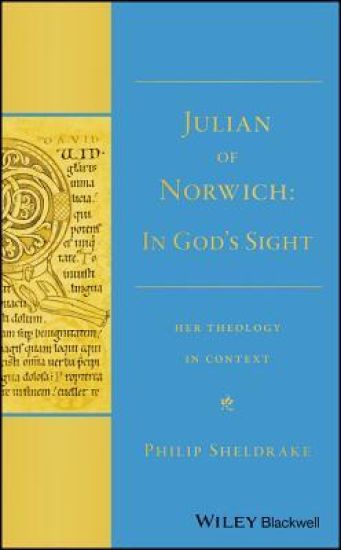
Julian of Norwich

Julian of Norwich

Philip Sheldrake

Wiley-Blackwell
2018
sidottu
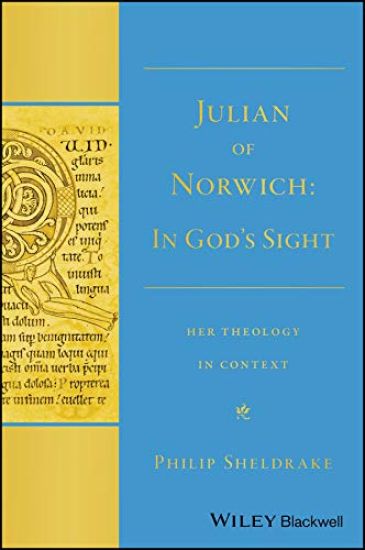
A noted scholar examines the work of the English mystic Julian of Norwich Julian of Norwich is the late fourteenth-century and early fifteenth-century English woman theologian. With her mystical writings, she has become one of the most popular and influential spiritual figures of our times. In Julian of Norwich: In God's Sight, the eminent scholar Philip Sheldrake offers a study of the theology that Julian expresses in her writings. The author examines what is known about Julian’s mystical experience or mystical consciousness, discusses what can be surmised about Julian’s likely identity and places her writings in historical, cultural and spiritual contexts. Julian of Norwich: In God's Sight is based on a faithful reading of Julian’s texts, especially the Long Text, as well as on her own declared theological-spiritual purpose. This compelling book: Presents a contextually-grounded and text-related study of the key elements of Julian’s theologyOffers a scholarly work by a well-known expert in the fieldUnlocks an ever-richer understanding of Julian’s writingsIncludes an examination of the key texts attributed to Julian Written for students of theology and those interested in learning more about this popular mystic, Julian of Norwich: In God's Sight offers ascholarly review of Julian’s most important writings.
Julian of Norwich

Julian of Norwich

Philip Sheldrake

Wiley-Blackwell
2018
nidottu
A noted scholar examines the work of the English mystic Julian of Norwich Julian of Norwich is the late fourteenth-century and early fifteenth-century English woman theologian. With her mystical writings, she has become one of the most popular and influential spiritual figures of our times. In Julian of Norwich: In God's Sight, the eminent scholar Philip Sheldrake offers a study of the theology that Julian expresses in her writings. The author examines what is known about Julian’s mystical experience or mystical consciousness, discusses what can be surmised about Julian’s likely identity and places her writings in historical, cultural and spiritual contexts. Julian of Norwich: In God's Sight is based on a faithful reading of Julian’s texts, especially the Long Text, as well as on her own declared theological-spiritual purpose. This compelling book: Presents a contextually-grounded and text-related study of the key elements of Julian’s theologyOffers a scholarly work by a well-known expert in the fieldUnlocks an ever-richer understanding of Julian’s writingsIncludes an examination of the key texts attributed to Julian Written for students of theology and those interested in learning more about this popular mystic, Julian of Norwich: In God's Sight offers ascholarly review of Julian’s most important writings.
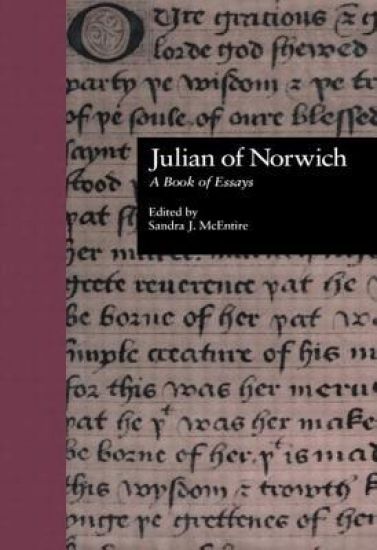
Julian of Norwich
These essays-written specifically for this book-provide a rich evaluation of this late 14th and early 15th-century mystical writer's book of revelations and considers the construction of her narrative, its theological complexity, and its literary and intellectual context. This casebook features discussions by both established scholars and newer voices ranging from genre to eschatology and gynecology to diabology, reflecting both current and comparative theory. Providing translations of all Middle English quotations, the volume includes a selective bibliography that provides a guide for further reading.
Julian (Routledge Revivals)

Julian (Routledge Revivals)

Polymnia Athanassiadi

Routledge
2014
sidottu
Julian: An Intellectual Biography, first published in 1981, presents a penetrating and scholarly analysis of Julian’s intellectual development against the background of philosophy and religion in the late Roman Empire. Professor Polymnia Athanassiadi tells the story of Julian’s transformation from a reclusive and scholarly adolescent into a capable general and an audacious social reformer. However, his character was fraught with a great many contradictions, tensions and inconsistencies: he could be sensitive and intelligent, but also uncontrollably spontaneous and subject to alternating fits of considerable self-pity and self-delusion.Athanassiadi traces the Emperor Julian’s responses to personal and public challenges, and dwells on the conflicts that each weighty choice imposed on him. This analysis of Julian’s character and of all the issues that confronted him as an emperor, intellectual and mystic is based largely on contemporary evidence, with particular emphasis on the extensive writings of the man himself.
Julian (Routledge Revivals)

Julian (Routledge Revivals)

Polymnia Athanassiadi

Routledge
2015
nidottu
Julian: An Intellectual Biography, first published in 1981, presents a penetrating and scholarly analysis of Julian’s intellectual development against the background of philosophy and religion in the late Roman Empire. Professor Polymnia Athanassiadi tells the story of Julian’s transformation from a reclusive and scholarly adolescent into a capable general and an audacious social reformer. However, his character was fraught with a great many contradictions, tensions and inconsistencies: he could be sensitive and intelligent, but also uncontrollably spontaneous and subject to alternating fits of considerable self-pity and self-delusion.Athanassiadi traces the Emperor Julian’s responses to personal and public challenges, and dwells on the conflicts that each weighty choice imposed on him. This analysis of Julian’s character and of all the issues that confronted him as an emperor, intellectual and mystic is based largely on contemporary evidence, with particular emphasis on the extensive writings of the man himself.
Julian Abele

Julian Abele

eck Spurlock Wilson

Routledge
2019
sidottu
Julian Abele, Architect and the Beaux Arts uncovers the life of one of the first beaux arts trained African American architects. Overcoming racial segregation at the beginning of the twentieth century, Abele received his architecture degree from the University of Pennsylvania in 1902. Wilson traces Abele’s progress as he went on to become the most formally educated architect in America at that time. Abele later contributed to the architectural history of America by designing over 200 buildings throughout his career including the Widener Memorial Library (1913) at Harvard University and the Free Library of Philadelphia (1917). Architectural history is a valuable resource for those studying architecture. As such this book is beneficial for academics and students of architecture and architectural historians with a particular interest in minority discussions.