
Kirjahaku
Etsi kirjoja tekijän nimen, kirjan nimen tai ISBN:n perusteella.
1000 tulosta hakusanalla Karl Credner


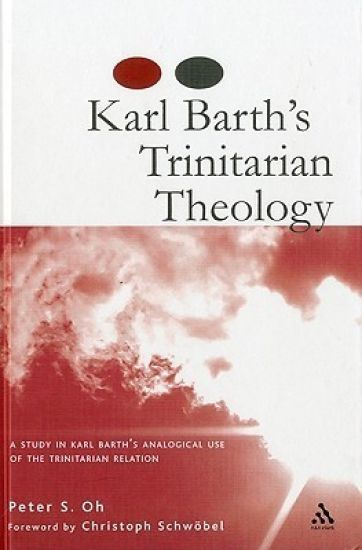
Karl Barth's "Trinitarian Theology" is an original and insightful discussion of the theme of the Trinity in the thought of Karl Barth with particular reference to ecclesiology. The book examines Karl Barth's analogical use of the Trinity, with respect to various patterns of divine-human communion in the context of the doctrine of redemption. In the first part of the book, Oh explores Barth's understanding and use of analogy throughout his theological development. To support his argument on the concept of analogy and in order to place Barth's moral theology in context, Oh compares the work of Kierkegaard and Barth. This research gives fresh insight into Karl Barth's "Trinitarian", theological hermeneutics. In Part II, Oh examines Barth's analogical use of the doctrine of the Trinity from an ecclesiastical perspective. He demonstrates an indirect relationship and similarity between the perichoretic 'intra divine' communion and the complementary 'divine-human' relation in Barth's theology of redemption.
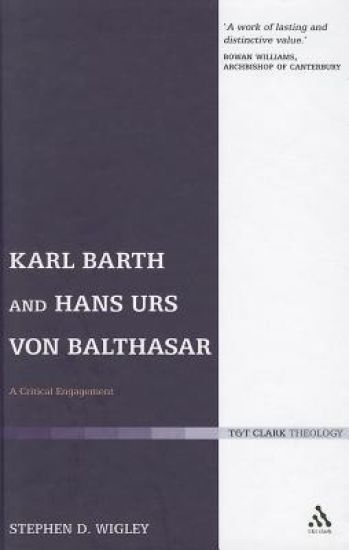
Karl Barth and Hans Urs von Balthasar are two of the most important theologians of the last century. Although one being Reformed and the other Catholic, they kept a lifelong friendship which also influenced their theological work. The book argues for the crucial influence of von Balthasar's meeting with and study of Barth for the emergence of his own great theological trilogy, beginning with "The Glory of the Lord", continuing with the "Theo-Drama" and concluding with the "Theo-Logic". In particular, it argues that it is von Balthasar's debate with Barth over the analogy of being which is to determine the shape of von Balthasar's subsequent theology, structured as it is around the transcendentals of being, the beautiful, the good and the true.
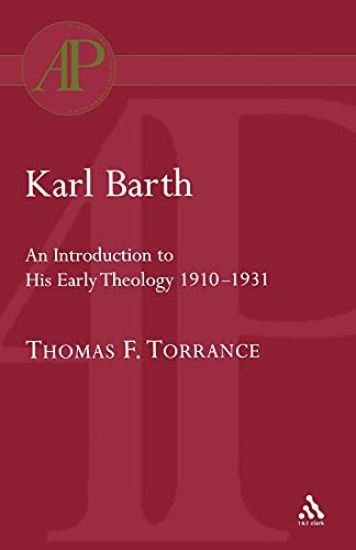
A classic study of the development and influence of Barth's theology, and an exploration of the period in which the Barthian revolution was shoped.
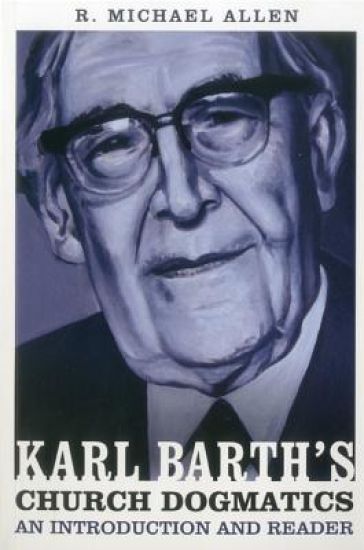
This is a textbook with annotated excerpts from Karl Barth's "Church Dogmatics" and additional essays on Barth's life and work and his place in modern theology. This reader from Karl Barth's multi-volume "Church Dogmatics" offers an introduction to the whole work, key readings in reasonable portions with introductions and provides helpful hints at secondary material. This is an ideal textbook for all beginners studying the work of one of the most important theologians of the last century.
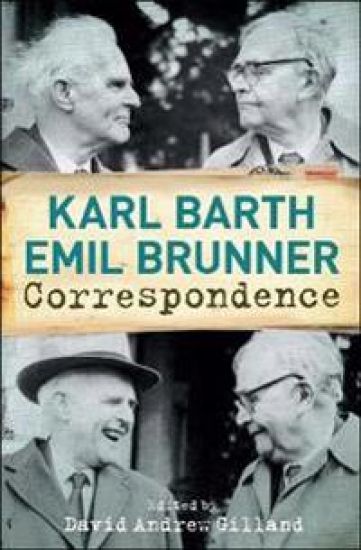
Karl Barth-Emil Brunner Correspondence
Karl Barth; Emil Brunner
Continuum International Publishing Group Ltd.
2019
nidottu
The Barth-Brunner correspondence contains 174 letters, and offers a glimpse into the dynamic interactions of two of the 20th century's greatest theologians. The letters reveal the personalities of both men as they engage in intense and explicit theological discussion, debate, and criticism. The correspondence is rife with references to other theologians and theological positions, providing a telling account of how Barth and Brunner viewed themselves in relation to Christianity and philosophy. Additional commentaries reveal their thoughts on their teachers, contemporaries, and students, and ultimately offer a unique glimpse into the theology and the history of the Christian church in the 20th century, as well as the characters of the two men. Accordingly, the letters will clearly challenge some popular conceptions.

Many interpreters argue that Karl Barth's rejection of the Roman Catholic analogia entis was based upon a mistaken interpretation of the principle, and many scholars also contend that late in his career, Barth changed his mind about the analogia entis, either by withdrawing his rejection of it or by adopting some form of it as his own. This book challenges both views, and by doing so, it opens up new avenues for ecumenical dialogue between Protestants and Roman Catholics. In short, this book establishes that Barth did not make a mistake when he rejected the analogia entis and that he also never wavered on his critique of it; he did, however, change his response to it-not by breaking with his earlier thought, but by deepening it so that a true Christological dialogue could take place between Protestant and Roman Catholic theologians. This conclusion will be used to point the way to new terrain for ecumenical dialogue in contemporary discussions.

A fascinating new study challenging the classical view of Karl Barth's rejection of the Roman Catholic understanding of analogia entis.

Karl Barth-Emil Brunner Correspondence
Karl Barth; Emil Brunner
Continuum International Publishing Group Ltd.
2019
sidottu
The Barth-Brunner correspondence, containing 174 letters, offers a glimpse into the dynamic interactions of two of the twentieth century's greatest theological minds. The letters betray the personalities of both men as they engage in intense and explicit theological discussion, debate, and criticism. The correspondence is rife with references to other theologians and theological positions, giving a telling account of how Barth and Brunner viewed themselves in relation to Christianity and philosophy, as well as their teachers, contemporaries, and students, ultimately offering a unique glimpse into the theology and the history of the Christian church in the twentieth century. Accordingly, the letters will clearly challenge some popular conceptions.
From the 1920s on, Karl Barth's thought was received with great interest not only by Protestants but also by Catholic theologians, who analyzed it in detail. This study outlines how and why this happened, especially in the period leading up to Vatican II. Dahlke shows how the preoccupation with Barth's 'Epistle to the Romans' and the Church Dogmatics' triggered a theological renewal among Catholic theologians. In addition to Hans Urs von Balthasar's critical appropriation of Barth's thought the the controversy about the issue of analogia entis with Erich Przywara is also dealt with.
From the 1920s on, Karl Barth’s thought was received with great interest not only by Protestants but also by Catholic theologians, who analyzed it in detail. This study outlines how and why this happened, especially in the period leading up to Vatican II. Dahlke shows how preoccupation with Barth's Epistle to the Romans and Church Dogmatics triggered a theological renewal among Catholic theologians. In addition to Hans Urs von Balthasar’s critical appropriation of Barth’s thought, the controversy surrounding the issue of analogia entis with Erich Przywara is also dealt with.
This work demonstrates the significance of Karl Barth's Christology by examining it in the context of his orientation toward the classical tradition - an orientation that was both critical and sympathetic. To compare this Christology with the doctrine's history, Sumner suggests first that the Chalcedonian portrait of the incarnation is conceputally vulnerable at a number of points. By recasting the doctrine in actualist terms - the history of Jesus' lived existence as God's fulfillment of His covenant with creatures, rather than a metaphysical uniting of natures - Barth is able to move beyond problems inherent in the tradition.Despite a number of formal and material differences, however, Barth's position coheres with the intent of the ancient councils and ought to be judged as orthodox. Barth's great contribution to Christology is in the unapologetic affirmation of 'the humanity of God'.

Ashley Cocksworth presents Karl Barth as a theologian who not only produces a strong and vibrant theology of prayer, but also grounds theology itself in the practice of prayer. Prayer and theology are revealed to be integrally related in Barth's understanding of the dogmatic task. Cocksworth provides careful analysis of a range of key texts in Barth's thought in which the theme of prayer emerges with particular interest.He analyzes: Barth's writings on the Sabbath and uncovers an unexpected theology of contemplative prayer; the doctrine of creation of the Church Dogmatics and explores its prioritization of petitionary prayer; and the ethics of the doctrine of reconciliation in which a 'turn to invocation' is charted and the final 'resting place' of Barth's theology of prayer is found. Through the theme of prayer fundamental questions are asked about the relation of human agency to divine agency as conceived by Barth, and new insights are offered into his understandings of the nature and task of theology, pneumatology, sin, baptism, religion, and sanctification. The result is a rich engagement with Barth's theology of prayer, an advancements of scholarship on Karl Barth, and a constructive contribution to the theology of prayer.
Karl Barth’s Theology as a Resource for a Christian Theology of Religions
Sven Ensminger
T. T.Clark Ltd
2014
sidottu
This book uses Karl Barth’s theology as a resource for Christian theology of religions. For this purpose, it examines Barth’s theology under the doctrinal aspects of revelation, revelation and religion, theological anthropology and election, addressing questions such as the possibility of and context for revelation, Barth’s understanding of religion, the theological approach to the human being, and soteriology. Furthermore, Barth’s thought is put into conversation with other approaches in the field of theology of religions, notably Karl Rahner’s inclusivism and John Hick and the pluralist paradigm. It is shown that Barth’s theological system as a whole can serve as a resource for the Christian approach to and interaction with those of other faiths or no faith at all. This is achieved through maintaining a balance between the commitment to the own faith and the openness to the sovereignty of God impacting the whole of creation. Central to Barth’s approach is the challenge to the Christian community to see their presuppositions challenged in the most unexpected circumstances, while looking beyond human categories to affirm the dignity bestowed upon all of humanity through the divine Yes in the person Jesus Christ. Barth’s theology with its starting point in the person of Jesus Christ is advocated as a framework for the members of the Christian community as they live alongside those with a different faith from their own.
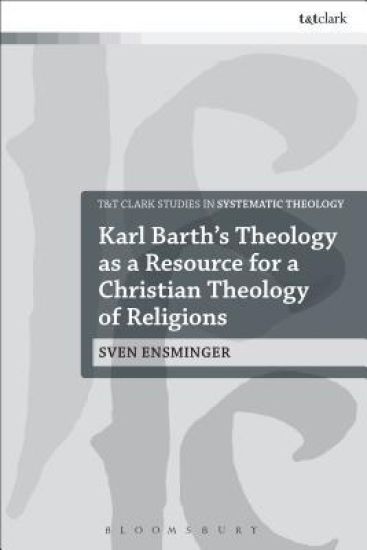
Karl Barth’s Theology as a Resource for a Christian Theology of Religions
Sven Ensminger
T. T.Clark Ltd
2016
nidottu
This book uses Karl Barth’s theology as a resource for Christian theology of religions. For this purpose, it examines Barth’s theology under the doctrinal aspects of revelation, revelation and religion, theological anthropology and election, addressing questions such as the possibility of and context for revelation, Barth’s understanding of religion, the theological approach to the human being, and soteriology. Furthermore, Barth’s thought is put into conversation with other approaches in the field of theology of religions, notably Karl Rahner’s inclusivism and John Hick and the pluralist paradigm. It is shown that Barth’s theological system as a whole can serve as a resource for the Christian approach to and interaction with those of other faiths or no faith at all. This is achieved through maintaining a balance between the commitment to the own faith and the openness to the sovereignty of God impacting the whole of creation. Central to Barth’s approach is the challenge to the Christian community to see their presuppositions challenged in the most unexpected circumstances, while looking beyond human categories to affirm the dignity bestowed upon all of humanity through the divine Yes in the person Jesus Christ. Barth’s theology with its starting point in the person of Jesus Christ is advocated as a framework for the members of the Christian community as they live alongside those with a different faith from their own.
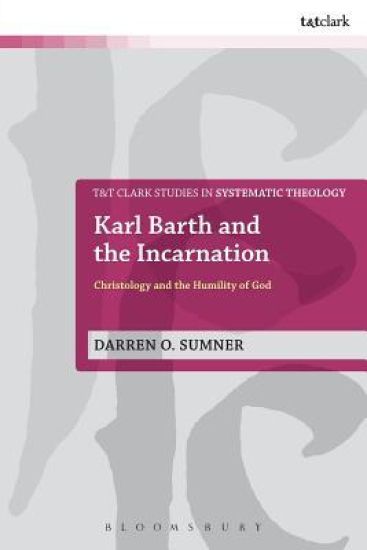
This work demonstrates the significance of Karl Barth's Christology by examining it in the context of his orientation toward the classical tradition - an orientation that was both critical and sympathetic. To compare this Christology with the doctrine's history, Sumner suggests first that the Chalcedonian portrait of the incarnation is conceputally vulnerable at a number of points. By recasting the doctrine in actualist terms - the history of Jesus' lived existence as God's fulfillment of His covenant with creatures, rather than a metaphysical uniting of natures - Barth is able to move beyond problems inherent in the tradition.Despite a number of formal and material differences, however, Barth's position coheres with the intent of the ancient councils and ought to be judged as orthodox. Barth's great contribution to Christology is in the unapologetic affirmation of 'the humanity of God'.