Kirjojen hintavertailu. Mukana 12 390 323 kirjaa ja 12 kauppaa.

Kirjahaku

Etsi kirjoja tekijän nimen, kirjan nimen tai ISBN:n perusteella.

1000 tulosta hakusanalla Karl S. Ryll

Karl Marx’s Grundrisse
Written between 1857 and 1858, the Grundrisse is the first draft of Marx’s critique of political economy and, thus, also the initial preparatory work on Capital. Despite its editorial vicissitudes and late publication, Grundrisse contains numerous reflections on matters that Marx did not develop elsewhere in his oeuvre and is therefore extremely important for an overall interpretation of his thought.In this collection, various international experts in the field, analysing the Grundrisse on the 150th anniversary of its composition, present a Marx in many ways radically different from the one who figures in the dominant currents of twentieth-century Marxism. The book demonstrates the relevance of the Grundrisse to an understanding of Capital and of Marx’s theoretical project as a whole, which, as is well known, remained uncompleted. It also highlights the continuing explanatory power of Marxian categories for contemporary society and its present contradictions. With contributions from such scholars as Eric Hobsbawm and Terrell Carver, and covering subject areas such as political economy, philosophy and Marxism, this book is likely to become required reading for serious scholars of Marx across the world.
Karl Marx’s Grundrisse
Written between 1857 and 1858, the Grundrisse is the first draft of Marx’s critique of political economy and, thus, also the initial preparatory work on Capital. Despite its editorial vicissitudes and late publication, Grundrisse contains numerous reflections on matters that Marx did not develop elsewhere in his oeuvre and is therefore extremely important for an overall interpretation of his thought.In this collection, various international experts in the field, analysing the Grundrisse on the 150th anniversary of its composition, present a Marx in many ways radically different from the one who figures in the dominant currents of twentieth-century Marxism. The book demonstrates the relevance of the Grundrisse to an understanding of Capital and of Marx’s theoretical project as a whole, which, as is well known, remained uncompleted. It also highlights the continuing explanatory power of Marxian categories for contemporary society and its present contradictions. With contributions from such scholars as Eric Hobsbawm and Terrell Carver, and covering subject areas such as political economy, philosophy and Marxism, this book is likely to become required reading for serious scholars of Marx across the world.
Karl Popper's Philosophy of Science

Karl Popper's Philosophy of Science

Stefano Gattei

Routledge
2010
nidottu
This book seeks to rectify misrepresentations of Popperian thought with a historical approach to Popper’s philosophy, an approach which applies his own mature view, that we gain knowledge through conjectures and refutations, to his own development, by portraying him in his intellectual growth as just such a series. Gattei seeks to reconstruct the logic of Popper’s development, in order to show how one problem and its tentative solution led to a new problem.
Karl Imhoff's Handbook of Urban Drainage and Wastewater Disposal
Presents, in straightforward language, the fundamentals of urban drainage and wastewater disposal. Carrying on the tradition of its predecessors (the first edition appeared in German in 1906), this new edition of a standard in the field has been reworked to reflect new U.S. technology, practices, and conditions. Chapters cover calculation of drainage systems, urban stormwater and combined sewer overflow management, general considerations of wastewater treatment, design and planning of treatment plants, industrial wastewater treatment and pretreatment, protection of receiving waters: discharge of wastewater into surface waters and self-purification of surface waters, conversion of SI units to English customary units, and information retrieval. Includes appendix of monographs for dimensioning of sewers.
Karl Marx's Theory of Ideas

Karl Marx's Theory of Ideas

Torrance John

Cambridge University Press
2008
pokkari
Marx's undeveloped ideas about how society presents a misleading appearance which distorts its members' understanding of it have been the subject of many conflicting interpretations. In this book John Torrance takes a fresh, un-Marxist approach to Marx's texts and shows that a more precise, coherent and cogent sociology of ideas can be extracted from them than is generally allowed. The implications of this for twentieth-century capitalism and for recent debates about Marx's conceptions of justice, morality and the history of social science are explored. The author argues that Marx's theory of ideas is sufficiently independent of other parts of his thought to provide a critique and explanation of those defects in his own understanding of capitalism which allowed Marxism itself to become, by his own definition, an ideology.
Karl Marx's Theory of Ideas

Karl Marx's Theory of Ideas

John Torrance

Cambridge University Press
1995
sidottu
Marx’s undeveloped ideas about how society presents a misleading appearance which distorts its members’ understanding of it have been the subject of many conflicting interpretations. In this book John Torrance takes a fresh, un-Marxist approach to Marx’s texts and shows that a more precise, coherent and cogent sociology of ideas can be extracted from them than is generally allowed. The implications of this for twentieth-century capitalism and for recent debates about Marx’s conceptions of justice, morality and the history of social science are explored. The author argues that Marx’s theory of ideas is sufficiently independent of other parts of his thought to provide a critique and explanation of those defects in his own understanding of capitalism which allowed Marxism itself to become, by his own definition, an ideology.
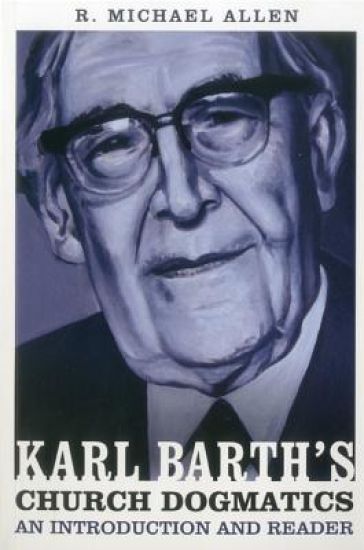
Karl Barth's Church Dogmatics: An Introduction and Reader
This is a textbook with annotated excerpts from Karl Barth's "Church Dogmatics" and additional essays on Barth's life and work and his place in modern theology. This reader from Karl Barth's multi-volume "Church Dogmatics" offers an introduction to the whole work, key readings in reasonable portions with introductions and provides helpful hints at secondary material. This is an ideal textbook for all beginners studying the work of one of the most important theologians of the last century.
Karl Barth’s Theology as a Resource for a Christian Theology of Religions
This book uses Karl Barth’s theology as a resource for Christian theology of religions. For this purpose, it examines Barth’s theology under the doctrinal aspects of revelation, revelation and religion, theological anthropology and election, addressing questions such as the possibility of and context for revelation, Barth’s understanding of religion, the theological approach to the human being, and soteriology. Furthermore, Barth’s thought is put into conversation with other approaches in the field of theology of religions, notably Karl Rahner’s inclusivism and John Hick and the pluralist paradigm. It is shown that Barth’s theological system as a whole can serve as a resource for the Christian approach to and interaction with those of other faiths or no faith at all. This is achieved through maintaining a balance between the commitment to the own faith and the openness to the sovereignty of God impacting the whole of creation. Central to Barth’s approach is the challenge to the Christian community to see their presuppositions challenged in the most unexpected circumstances, while looking beyond human categories to affirm the dignity bestowed upon all of humanity through the divine Yes in the person Jesus Christ. Barth’s theology with its starting point in the person of Jesus Christ is advocated as a framework for the members of the Christian community as they live alongside those with a different faith from their own.
Karl Barth’s Theology as a Resource for a Christian Theology of Religions
This book uses Karl Barth’s theology as a resource for Christian theology of religions. For this purpose, it examines Barth’s theology under the doctrinal aspects of revelation, revelation and religion, theological anthropology and election, addressing questions such as the possibility of and context for revelation, Barth’s understanding of religion, the theological approach to the human being, and soteriology. Furthermore, Barth’s thought is put into conversation with other approaches in the field of theology of religions, notably Karl Rahner’s inclusivism and John Hick and the pluralist paradigm. It is shown that Barth’s theological system as a whole can serve as a resource for the Christian approach to and interaction with those of other faiths or no faith at all. This is achieved through maintaining a balance between the commitment to the own faith and the openness to the sovereignty of God impacting the whole of creation. Central to Barth’s approach is the challenge to the Christian community to see their presuppositions challenged in the most unexpected circumstances, while looking beyond human categories to affirm the dignity bestowed upon all of humanity through the divine Yes in the person Jesus Christ. Barth’s theology with its starting point in the person of Jesus Christ is advocated as a framework for the members of the Christian community as they live alongside those with a different faith from their own.
Karl Rahner’s Writings on Literature, Music and the Visual Arts
This book is made up of a collection of texts unavailable in one volume until now, including six previously untranslated essays, from a major theologian of the twentieth century.Rahner’s numerous writings focused on the revelation of God as mystery in the world and on the human being who has an essential openness towards the transcendent. His articles reveal an empathy and a depth of insight into the relationship between theology, faith and the arts which are remarkable and may take the reader by surprise. More recently, Rahner’s contribution to the growing field of theology and the arts has been recognised by leading theologians on this subject. He asserts that theology must integrate the verbal and non-verbal arts as they are authentic means of human self-expression, of religious experience, and of God’s self-communication; and therefore they are essential sources of theology. Rahner argues that theology, understood as a person’s ‘reflexive self-expression’ about him- or herself ‘in the light of divine revelation’, cannot be regarded as complete until ‘the arts become an intrinsic moment of theology itself’.
Karl Rahner’s Writings on Literature, Music and the Visual Arts
This book is made up of a collection of texts unavailable in one volume until now, including six previously untranslated essays, from a major theologian of the twentieth century.Rahner’s numerous writings focused on the revelation of God as mystery in the world and on the human being who has an essential openness towards the transcendent. His articles reveal an empathy and a depth of insight into the relationship between theology, faith and the arts which are remarkable and may take the reader by surprise. More recently, Rahner’s contribution to the growing field of theology and the arts has been recognised by leading theologians on this subject. He asserts that theology must integrate the verbal and non-verbal arts as they are authentic means of human self-expression, of religious experience, and of God’s self-communication; and therefore they are essential sources of theology. Rahner argues that theology, understood as a person’s ‘reflexive self-expression’ about him- or herself ‘in the light of divine revelation’, cannot be regarded as complete until ‘the arts become an intrinsic moment of theology itself’.
Karl Marx's Theory of History

Karl Marx's Theory of History

G. A. Cohen

Princeton University Press
2001
pokkari
First published in 1978, this book rapidly established itself as a classic of modern Marxism. Cohen's masterful application of advanced philosophical techniques in an uncompromising defense of historical materialism commanded widespread admiration. In the ensuing twenty years, the book has served as a flagship of a powerful intellectual movement--analytical Marxism. In this expanded edition, Cohen offers his own account of the history, and the further promise, of analytical Marxism. He also expresses reservations about traditional historical materialism, in the light of which he reconstructs the theory, and he studies the implications for historical materialism of the demise of the Soviet Union.
Karl Barth's Christological Ecclesiology

Karl Barth's Christological Ecclesiology

Kimlyn J. Bender

Ashgate Publishing Limited
2005
sidottu
Many of Barth's theological themes, such as revelation and election, have received numerous scholarly examinations, whilst Barth's doctrine of the church has been largely ignored. Yet, Barth entitled his massive systematic theological opus the Church Dogmatics, and the church was a central element of his thought from first to last. This book seeks to fill a lacuna in studies of Barth's theology, presenting the first comprehensive examination of Karl Barth's doctrine of the church in over three decades. Kimlyn Bender examines Barth's ecclesiological thought, from his early theological treatises to his massive unfinished dogmatics, in light of his interaction with both Roman Catholicism and Protestant Liberalism. A special emphasis is placed upon Barth's mature ecclesiology in the Church Dogmatics.
Karl Mannheim's Sociology as Political Education

Karl Mannheim's Sociology as Political Education

Colin Loader

Transaction Publishers
2002
sidottu
German professors and academic intellectuals are often blamed for their passivity or complicity in the face of the anti-Republican surge of the late Weimar years, culminating in the National Socialist rise to power. Karl Mannheim was a preeminent member of a vital minority committed to making German universities contribute to democratization. Mannheim argued that traditional German emphasis on the cultivation of individuals rooted in a certain high culture had to be adapted to a more egalitarian, socially complex community. He advocated teaching of sociology to create social awareness to inspire informed political judgments. Karl Mannheim's Sociology as Political Education situates Mannheim in the Weimar debates about sociology in the university. It shows how his project of political education for democracy informs his work as well as his relations with liberal, fascist, and orthodox Marxist thinkers.In advancing his educational strategy, Mannheim had to contend, with influential figures who attacked sociology as a mere political device to undermine cultural and national values for the sake of narrow interests and partisanship. He also had to overcome the objections of fellow sociologists, who felt the discipline would prosper only if it could persuade other academics that it made no claim to educational goals beyond the reproduction of technical findings. He had to separate himself from proponents of a politicized sociology. Mannheim argued that sociology should respond to problems that actually confronted individuals in their lives, be tolerant of difference and distance, and support efforts to generate agreement rather than encourage competition. Sociological thought had to be rigorous, critical, and attentive to evidence, but also congruent with the ultimate responsibility of individuals to fashion their lives through their acts.Karl Mannheim's Sociology as Political Education is a joint effort by two authors who have written separately on Karl Mannheim's sociological work and who write from different disciplines and traditions of commentary. The Mannheim who emerges from this volume is remarkably contemporary. In particular, he supports arguments that the threat to academic integrity is feared less in sociology than in certain areas of cultural studies. Certainly the issue of academic politicization was better understood by Mannheim in his time than it is by either side of the debate today.
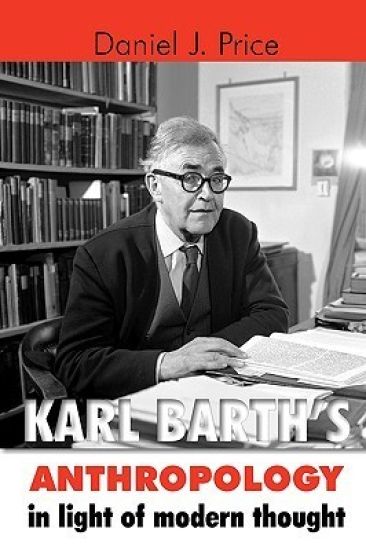
Karl Barth's Anthropology in Light of Modern Thought

Karl Barth's Anthropology in Light of Modern Thought

D. Price

William B Eerdmans Publishing Co
2002
nidottu
This engaging book explores Karl Barth's view of human beings, finding in the thought of this monumental Christian thinker new possibilities for dialogue between religion and modern science. Covering all of Barth's writings, Daniel Price clearly pieces together Barth's anthropology, showing that Barth based his view of persons on his understanding of the Trinity. Rather than stressing bodily and soulish substances or innately endowed faculties, Barth emphasized that people are composed of certain vital relations -- to God, to self, and to others. With Barth's theology firmly in hand, Price argues that Barth's dynamic anthropology bears certain intriguing analogies to modern object relations psychology. Price uses these analogies in turn to demonstrate that Barth's theology is not alien or hostile to modern science, as many people suppose; instead, his thought actually opens up the potential for increased dialogue between theology and the human sciences. This volume will be of value to anyone interested in Barth's thought, Christian anthropology, or the relation of science and faith.
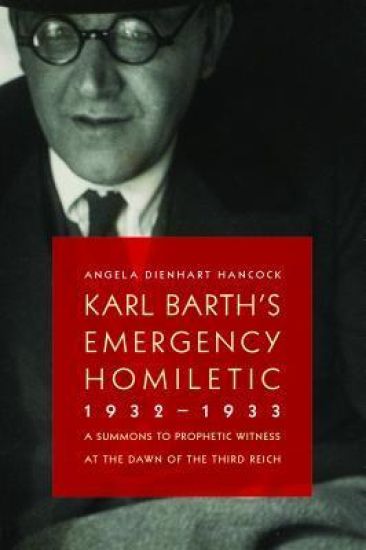
Karl Barth's Emergency Homiletic, 1932-1933

Karl Barth's Emergency Homiletic, 1932-1933

Angela Dienhart Hancock

William B Eerdmans Publishing Co
2013
nidottu
What does a theologian say to young preachers in the early 1930s, at the dawn of the Third Reich? What Karl Barth did say, how he said it, and why he said it at that time and place are the subject of Angela Dienhart Hancock's book. This is the story of how a preaching classroom became a place of resistance in Germany in 1932 - 33 -- a story that has not been told in its fullness. In that emergency situation, Barth took his students back to the fundamental questions about what preaching is and what it is for, returning again and again to the affirmation of the Godness of God, the only ground of resistance to ideological captivity. No other text has so interpreted Barth's "Exercises in Sermon Preparation" in relation to their theological, political, ecclesiastical, academic, and rhetorical context.
Karl Barth's Theological Exegesis

Karl Barth's Theological Exegesis

Richard E Burnett

William B. Eerdmans Publishing Company
2004
pokkari
For many students of Scripture and Christian theology, Karl Barth's break with liberalism is the most important event that has occurred in theology in over 200 years. In Karl Barth's Theological Exegesis Richard E. Burnett provides the first detailed look at this watershed event, showing how Barth read the Bible before and after his break with liberalism, how he came to read the Bible differently than most of his contemporaries, and why Barth's contribution is still significant today. As Burnett explains, the crux of Barth's legacy is his abandonment of the hermeneutical tradition of Schleiermacher, which had had such a profound influence on Christian thought in the nineteenth and twentieth centuries. This hermeneutical tradition, which began with Herder and extended through Dilthey, Troeltsch, Wobbermin, Wernle, and Barth himself prior to 1915, is characterized by its attempt to integrate broad aspects of interpretation, to establish universally valid rules of interpretation on the basis of a general anthropology, and by its reliance on empathy. Barth's discovery that "the being of God is the hermeneutical problem" implied that the object to be known should determine the way taken in knowing. This fundamental insight brought about a hermeneutical revolution that gave priority to content over method, to actual exegesis over hermeneutical theory. The development of Barth's new approach to Scripture is especially evident in his R merbrief period, during which he developed a set of principles for properly reading Scripture. Burnett focuses on these principles, which have never been discussed at length or viewed specifically in relationship to Schleiermacher, and presents a study that challenges both "neo-orthodox" and "postmodern" readings of Barth. This is a crucial piece of scholarship. Not only is it the first major book in English on Barth's hermeneutics, but it also employs pioneering research in Barth studies. Burnett includes in his discussion important material only recently discovered in Switzerland and made available here in English for the first time -- namely, six preface drafts that Barth wrote for his famous Romans commentary, which some regard as the greatest theological work of all time. In making a major contribution to Barth studies, this volume will also inform scholars, pastors, and students whose interests range from modern Christian theology to the history of biblical interpretation.
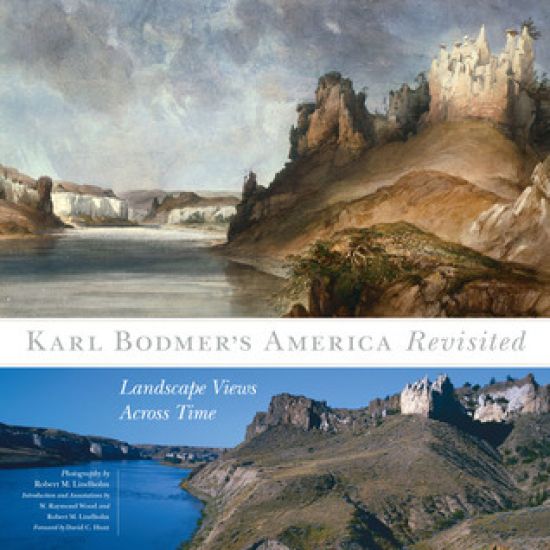
Karl Bodmer's America Revisited

Karl Bodmer's America Revisited

David C. Hunt

University of Oklahoma Press
2013
sidottu
Less than thirty years after Lewis and Clark completed their epic journey, Prince Maximilian of Wied - a German naturalist - and his entourage set off on their own daring expedition across North America. Accompanying the prince on this 1832-34 voyage was Swiss artist Karl Bodmer, whose drawings and watercolors - designed to illustrate Maximilian's journals - now rank among the great treasures of nineteenth-century American art. This lavishly illustrated book juxtaposes Bodmer's landscape images with modern-day photographs of the same views, allowing readers to see what has changed, and what seems unchanged, since the time Maximilian and Bodmer made their storied trip up the Missouri River.To discover how the areas Bodmer depicted have changed over time, photographer Robert M. Lindholm and anthropologist W. Raymond Wood made several trips over a period of years, from 1985 to 2002, to locate and record the same sites - all the way from Boston Harbor, where Maximilian and Bodmer began their journey, to Fort McKenzie, in modern-day western Montana. Pairing sixty-seven Bodmer works side by side with Lindholm's photographs of the same sites, this volume uses the comparison of old and new images to reveal alterations through time - and the encroachment of a built environment - across diverse landscapes. Karl Bodmer's America Revisited is at once a tribute to the artistic achievements of a premier landscape artist and a photographer who followed in his footsteps, and a valuable record of America's ever-changing environment.