Kirjojen hintavertailu. Mukana 12 459 402 kirjaa ja 12 kauppaa.

Kirjahaku

Etsi kirjoja tekijän nimen, kirjan nimen tai ISBN:n perusteella.

1000 tulosta hakusanalla Ken Ring

Ken White: Muralist and Painter

Ken White: Muralist and Painter

Angela Atkinson

Amberley Publishing
2019
nidottu
Ken White’s career spans an impressive six decades. He is perhaps best known for his murals, sited in a wide variety of locations. To date, he has painted over one hundred murals. For over twenty years Ken was the personal artist to Virgin boss Richard Branson and has completed works for him in Virgin establishments throughout the world, including recording studios, record shops, hotels and airport lounges. With the launch of Virgin Atlantic in 1984, Ken produced what is probably his most well know work: the ‘Scarlet Lady’ emblem, which features on all the airline's aircraft. Ken’s early career as a graphic designer in the swinging sixties saw his work grace a variety of music and arts magazines, including the legendary underground magazine Oz. Through the 1970s and 1980s, Ken designed a vast amount of concert posters and, most notably, the cover of XTC’s Black Sea album. Although mural work has provided a living, Ken has always been, first and foremost, a painter and is now gaining recognition for his works on canvas. Latterly, his work is concerned with depicting industrial landscapes and the lives of working men, strongly influenced by life in the railway workshops where he worked in his youth.
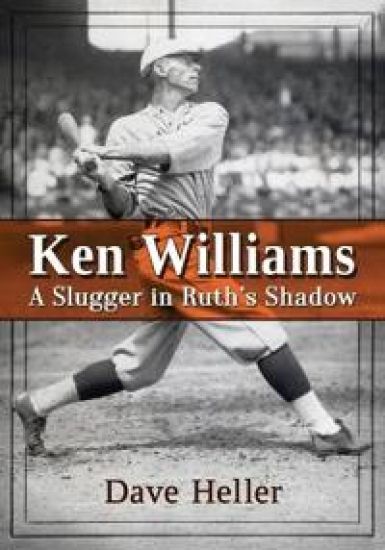
Ken Williams

Ken Williams

Dave Heller

McFarland Co Inc
2017
pokkari
Perhaps familiar today as an answer to sports trivia questions, Ken Williams (1890-1959) was once a celebrity who helped bring about a new kind of power baseball in the 1920s. One of the great sluggers of his era (and of all time), he beat Babe Ruth for the home run title in 1922, and became the first to hit 30 home runs and steal 30 bases in a season that year. Later recognized for his accomplishments, he was considered for but not inducted into the Hall of Fame. This first-ever biography of Williams covers his life and career, from his small town upbringing, to his unlikely foray into pro baseball, to his retirement years, when he served as a police officer and ran a pool hall in his hometown.
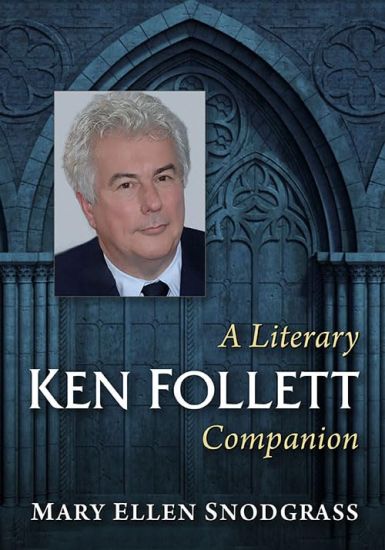
Ken Follett

Ken Follett

Mary Ellen Snodgrass

MCFARLAND CO INC
2025
nidottu
This book surveys the stellar writing by the Welsh master, Ken Follett. The 76 A to Z topics analyze 35 published works and highlight the intangibles--parenting, achievers, literacy--alongside historical themes of plague, healing, religion, and spies. Stylistic touches appear in entries on secondary characters, villains, sense impressions, names, humor and language. Details authenticate the role of fictional households in global and racial movements. Key to the author's appeal, the progress of women toward full citizenship fuels admirable domestic and career progress by his heroines.
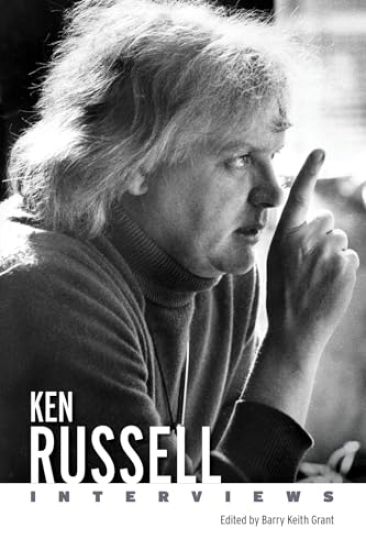
Ken Russell

Ken Russell

UNIVERSITY PRESS OF MISSISSIPPI
2024
pokkari
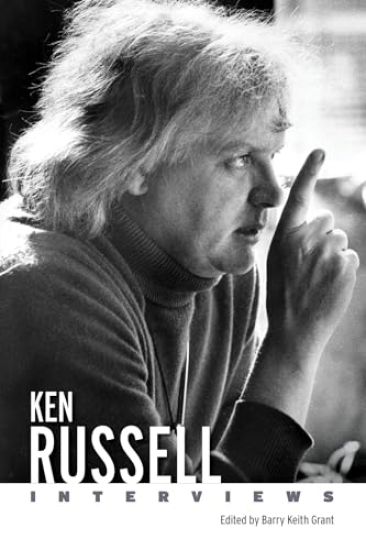
In the 1970s, British filmmaker Ken Russell (1927–2011) quickly gained a reputation as the enfant terrible of British cinema. His work, like the man himself, was regarded as flamboyant, excessive, and unrestrained. Inheriting and yet subverting the venerable mantle of British documentary, Russell did not fit comfortably in the context of a national cinema dominated by sober realism. His distinct style combined realism with fictional devices, often in audacious ways, to create the biographical ""docudrama."" In Ken Russell: Interviews, the filmmaker discusses his colorful life and career, from his youth fascinated by movies to his early work in television through his feature films and his retreat to home movies.Russell first drew notice in the early 1960s for a series of unorthodox biographical films about artists and composers. In these early television films, Russell was already exhibiting an unconventional approach to biography that combined historical fact, aesthetic interpretation, and outlandish personal vision. After the critical and commercial success of his adaptation of D. H. Lawrence’s Women in Love, Russell continued to explore the related themes of art, sexuality, and music in The Music Lovers, The Boy Friend, Mahler, Tommy, and Lisztomania. His career foundered after Valentino, however, and he found it increasingly difficult to get funding. Toward the end of his career, Russell was restricted to making movies with his own equipment, using family and friends as actors, with virtually no budget.Throughout the ups and downs of his career, Russell alternately embraced and resented his characterization as an enfant terrible. While Russell’s comments are often meant to provoke and shock, he is articulate when discussing his films, his approach to cinema, music and composers, and, of course, his critics.
Ken Russell

Ken Russell

UNIVERSITY PRESS OF MISSISSIPPI
2024
sidottu
In the 1970s, British filmmaker Ken Russell (1927–2011) quickly gained a reputation as the enfant terrible of British cinema. His work, like the man himself, was regarded as flamboyant, excessive, and unrestrained. Inheriting and yet subverting the venerable mantle of British documentary, Russell did not fit comfortably in the context of a national cinema dominated by sober realism. His distinct style combined realism with fictional devices, often in audacious ways, to create the biographical ""docudrama."" In Ken Russell: Interviews, the filmmaker discusses his colorful life and career, from his youth fascinated by movies to his early work in television through his feature films and his retreat to home movies.Russell first drew notice in the early 1960s for a series of unorthodox biographical films about artists and composers. In these early television films, Russell was already exhibiting an unconventional approach to biography that combined historical fact, aesthetic interpretation, and outlandish personal vision. After the critical and commercial success of his adaptation of D. H. Lawrence’s Women in Love, Russell continued to explore the related themes of art, sexuality, and music in The Music Lovers, The Boy Friend, Mahler, Tommy, and Lisztomania. His career foundered after Valentino, however, and he found it increasingly difficult to get funding. Toward the end of his career, Russell was restricted to making movies with his own equipment, using family and friends as actors, with virtually no budget.Throughout the ups and downs of his career, Russell alternately embraced and resented his characterization as an enfant terrible. While Russell’s comments are often meant to provoke and shock, he is articulate when discussing his films, his approach to cinema, music and composers, and, of course, his critics.
Ken Sumrall and Church Foundational Network

Ken Sumrall and Church Foundational Network

Terry D Shiver

Wipf Stock Publishers
2015
pokkari
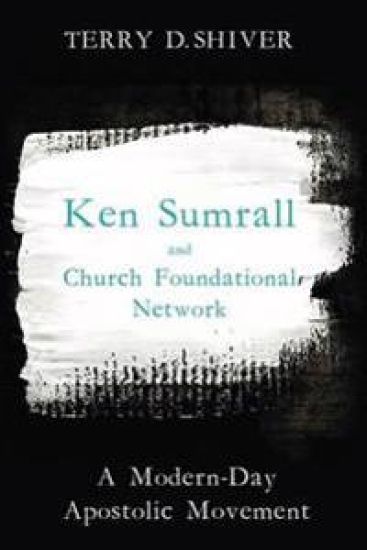
This is the first extensive examination of the life of Ken Sumrall and his firm belief in the modern-day apostolic restoration movement. It presents Sumrall's journey from his Baptist beginnings, through his experience of the baptism of the Holy Spirit, through his learning struggles with Liberty Fellowship of Churches and Ministers, and into his birthing of Church Foundational Network. It represents Sumrall in his own light, while dealing with his paradigm changes concerning church government the heart of which revolved around the restoration of modern-day apostles. Godly government was grounded in godly relationships with one's apostle, whom Sumrall understood as a ""spiritual father."" For Sumrall, the best biblical government for the New Testament church today is a theocracy. Instead of a centralized, hierarchical church government, Sumrall advanced a decentralized network of churches connected relationally. This volume contains the major influences upon Sumrall's thinking and the progress of his comprehension of the life of the church as ""family."" Moreover, it engages some of the apprehensions that have surfaced over the present-day apostolic movement and provides insights of the direction and survivability of the movement.
Ken Sumrall and Church Foundational Network

Ken Sumrall and Church Foundational Network

Terry D Shiver

Wipf Stock Publishers
2015
sidottu
This is the first extensive examination of the life of Ken Sumrall and his firm belief in the modern-day apostolic restoration movement. It presents Sumrall's journey from his Baptist beginnings, through his experience of the baptism of the Holy Spirit, through his learning struggles with Liberty Fellowship of Churches and Ministers, and into his birthing of Church Foundational Network. It represents Sumrall in his own light, while dealing with his paradigm changes concerning church government the heart of which revolved around the restoration of modern-day apostles. Godly government was grounded in godly relationships with one's apostle, whom Sumrall understood as a ""spiritual father."" For Sumrall, the best biblical government for the New Testament church today is a theocracy. Instead of a centralized, hierarchical church government, Sumrall advanced a decentralized network of churches connected relationally. This volume contains the major influences upon Sumrall's thinking and the progress of his comprehension of the life of the church as ""family."" Moreover, it engages some of the apprehensions that have surfaced over the present-day apostolic movement and provides insights of the direction and survivability of the movement.