Kirjojen hintavertailu. Mukana 11 244 527 kirjaa ja 12 kauppaa.

Kirjahaku

Etsi kirjoja tekijän nimen, kirjan nimen tai ISBN:n perusteella.

1000 tulosta hakusanalla Kenneth Silverman

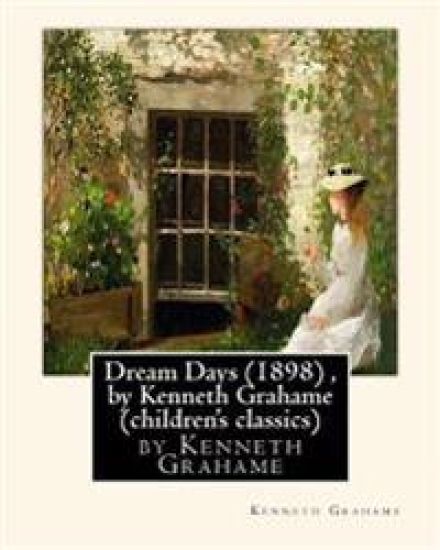
Dream Days (1898), by Kenneth Grahame (children's classics)

Dream Days (1898), by Kenneth Grahame (children's classics)

Kenneth Grahame

Createspace Independent Publishing Platform
2016
nidottu
Dream Days is a collection of children's fiction and reminiscences of childhood written by Kenneth Grahame. A sequel to Grahame's 1895 collection The Golden Age (some of its selections feature the same family of five children), Dream Days was first published in 1898 under the imprint John Lane: The Bodley Head. (The first six selections in the book had been previously published in periodicals of the day-in The Yellow Book, the New Review, and in Scribner's Magazine in the United States.)The book is best known for its inclusion of Grahame's classic story The Reluctant Dragon. Like its precursor volume, Dream Days received strong approval from the literary critics of the day. In the decades since, the book has perhaps suffered a reputation as a thinner and weaker sequel to The Golden Age-except for its single hit story. In one modern estimation, both books "paint a convincingly unsentimental picture of childhood, with the adults in these sketches totally out of touch with the real concerns of the young people around them, including their griefs and rages." As with The Golden Age, the first edition of Dream Days was un-illustrated; again like the prior volume, a subsequent edition of Dream Days was published with illustrations by Maxfield Parrish. The publisher's first intention was to print color plates; however, John Lane was not satisfied with the color reproductions of Parrish's pictures. Lane instead chose a new photogravure reproduction process that produced black-and-white results superior to the halftone images in the 1899 edition of The Golden Age. The Parrish-illustrated edition of Dream Days was issued by The Bodley Head in London and New York in 1902; it contained ten full-page illustrations (one for each of the eight selections plus frontispiece and title page), and six tailpieces. The quality of the images in Dream Days inspired Lane to issue a matching edition of The Golden Age, with improved photogravure plates, in 1904. Kenneth Grahame ( 8 March 1859 - 6 July 1932) was a British writer, most famous for The Wind in the Willows (1908), one of the classics of children's literature. He also wrote The Reluctant Dragon; both books were later adapted into Disney films.Kenneth Grahame was born on 8 March (1859) in Edinburgh, Scotland. When he was a little more than a year old, his father, an advocate, received an appointment as sheriff-substitute in Argyllshire at Inveraray on Loch Fyne. Kenneth loved the sea and was happy there, but when he was 5, his mother died from complications of childbirth, and his father, who had a drinking problem, gave over care of Kenneth, his brother Willie, his sister Helen and the new baby Roland to Granny Ingles, the children's grandmother, in Cookham Dean in the village of Cookham in Berkshire. There the children lived in a spacious, if dilapidated, home, "The Mount", on spacious grounds in idyllic surroundings, and were introduced to the riverside and boating by their uncle, David Ingles, curate at Cookham Dean church. This delightful ambiance, particularly Quarry Wood and the River Thames, is believed, by Peter Green, his biographer, to have inspired the setting for The Wind in the Willows. He was an outstanding pupil at St Edward's School in Oxford. During his early years at St. Edwards, a sports regimen had not been established and the boys had freedom to explore the old city with its quaint shops, historic buildings, and cobblestone streets, St Giles' Fair, the idyllic upper reaches of the River Thames, and the nearby countryside.Grahame died in Pangbourne, Berkshire, in 1932. He is buried in Holywell Cemetery, Oxford. Grahame's cousin Anthony Hope, also a successful author, wrote his epitaph, which reads: "To the beautiful memory of Kenneth Grahame, husband of Elspeth and father of Alastair, who passed the river on the 6th of July, 1932, leaving childhood and literature through him the more blest for all time"
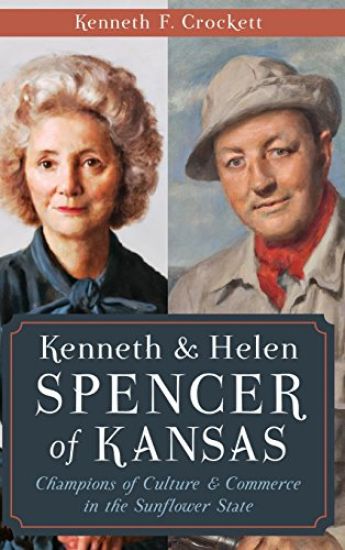
Kenneth & Helen Spencer of Kansas: Champions of Culture & Commerce in the Sunflower State
Born on opposite sides of the Kansas/Missouri border in 1902, Kenneth Aldred Spencer and his wife, Helen Foresman Spencer, were transformative figures in the Midwest during the twentieth century. Kenneth grew up in the small town of Pittsburg, Kansas, but by the 1950s, his innovation in the chemical and coal industries had earned him mention in Forbes" magazine for his role as one of the nation's great industrialists. But it is the couple's remarkable philanthropic work that stands as their true legacy, preserved in places like the Kenneth Spencer Research Library and the Helen Foresman Spencer Museum of Art.."
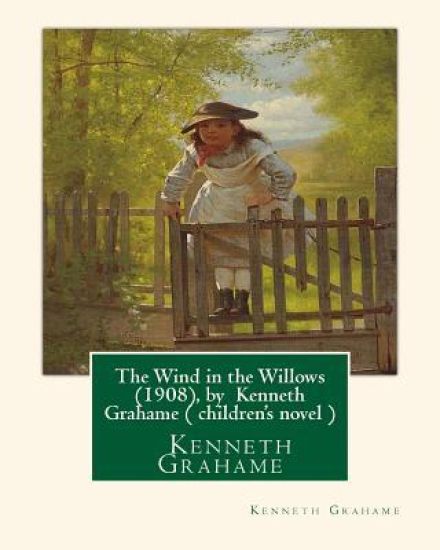
The Wind in the Willows Kenneth Grahame

The Wind in the Willows Kenneth Grahame

Kenneth Grahame

Createspace Independent Publishing Platform
2016
nidottu
The Wind in the Willows is a children's novel by Kenneth Grahame, first published in 1908. Alternately slow moving and fast paced, it focuses on four anthropomorphised animals in a pastoral version of Edwardian England. The novel is notable for its mixture of mysticism, adventure, morality and camaraderie, and celebrated for its evocation of the nature of the Thames Valley.
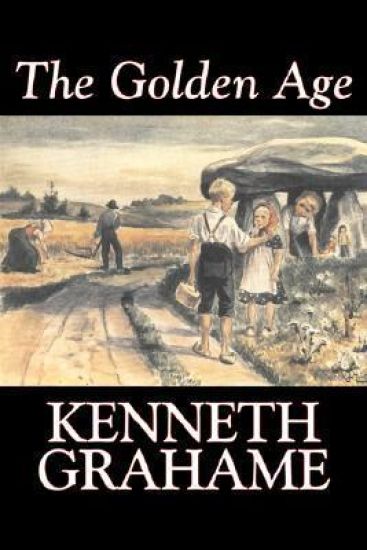
The Golden Age Kenneth Grahame

The Golden Age Kenneth Grahame

Kenneth Grahame

Createspace Independent Publishing Platform
2017
nidottu
Grahame's reminiscences are notable for their conception "of a world where children are locked in perpetual warfare with the adult 'Olympians' who have wholly forgotten how it feels to be young"--a theme later explored by J. M. Barrie and other authors.
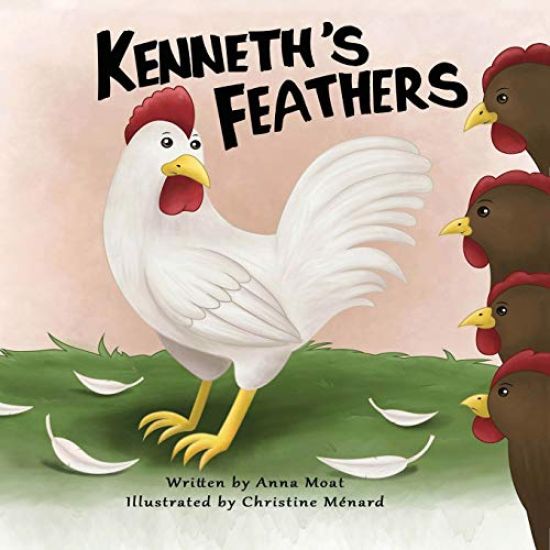
Kenneth's Feathers

Kenneth's Feathers

Anna Moat

TotalRecall Press
2017
pokkari
Kenneth's Feathers by Anna Moat Illustrated by Christine MenardThe Chickens in kenneth's new coop are stealing his lovely white feathers Kenneth does not like it at all. With the help of his friend Gwendolyn, Kenneth tries everhting to save his feathers and make new friends.This illustrated story book is sure to please the read-aloud crowd.
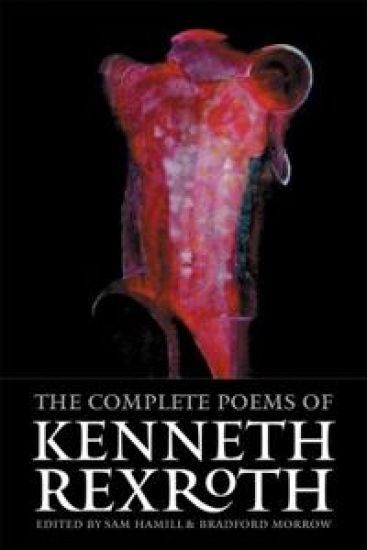
The Complete Poems of Kenneth Rexroth

The Complete Poems of Kenneth Rexroth

Kenneth Rexroth

Copper Canyon Press
2004
pokkari
The Complete Poems of Kenneth Rexroth assembles all of his published longer and shorter poems, and includes a never-before-published selection of his earliest work. Rexroth's poems of nature and protest are remarkable for their erudition and biting social and political commentary; his love poems justly celebrated for their eroticism and depth of feeling.The cloth edition was one of the most widely reviewed poetry titles in 2003: "Scholars and critics who endeavor to discuss mid-20th century American poetry responsibly ignore Rexroth at their peril."--Los Angeles Times Book Review, cover feature and selected as a Book of the Year"Rexroth is probably best known as the 'Father of the Beat Generation.' These poems reveal that great beauty lies beyond that clich ."--NPR's All Things Considered"Rexroth's prodigious breadth of learning, his hungry attention to the natural world, his contempt for warmongering and his profound, occasionally overlapping love of women are all on flourishing display."--The San Francisco Chronicle"Rexroth never mistook his poetry for a product, and he could present ideas and images in an urgent, memorable and eloquent way."--The Nation"Rexroth is one of the most readable and rewarding 20th-century American poets."--BooklistKenneth Rexroth (1905-1982) was one of the world's great literary minds. In addition to being a poet, translator, essayist and teacher, he helped found the San Francisco Poetry Center and influenced generations of readers with his Classics Revisited series.
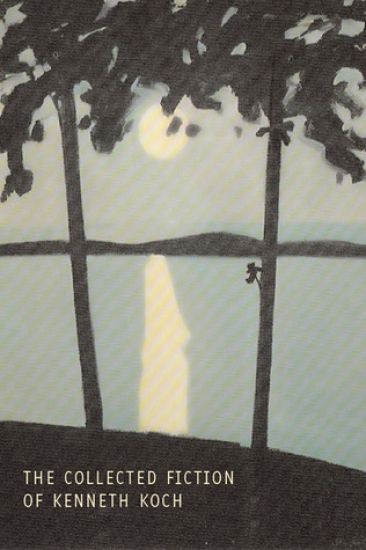
The Collected Fiction of Kenneth Koch

The Collected Fiction of Kenneth Koch

Kenneth Koch

Coffee House Press
2005
pokkari
“It’s lucky for us all that you’re holding Koch’s collected fiction in your hands right now. Koch’s seasons on our earth were blessed ones and these traces, some of them among his last, are gifts.”—Jonathan Lethem Hilarious and profoundly moving, this volume restores to print all the fiction of the writer John Ashbery called “simply the best we have.” Koch, who once characterized New York School writing as about “the fullness and richness of possibility and excitement and happiness,” imbues his prose with humor, wit, and a beautifully tender exuberance. The Collected Fiction of Kenneth Koch is a must-read for anyone interested in discovering what American literature might still hope to be. Published simultaneously with The Collected Poems of Kenneth Koch (Knopf), Collected Fiction includes Koch’s innocent and rambunctious novel The Red Robins, as well as Hotel Lambosa, his book of semi-autobiographical short pieces inspired equally by Hemingway’s Nick Adams stories and Yasunari Kawabata’s Palm-of-the-Hand Stories. Fans of Koch’s unparalleled gift for comic invention will turn immediately to “The New Orleans Stories,” a cycle about the family of a small-time criminal, published here for the first time along with “The Soviet Room,” a gentle story of requited love at the end of the Cold War. Koch’s previously uncollected work includes a warm-hearted parody of a children’s adventure narrative and a story detailing the mysteries uncovered by an obsessive postcard detective. Together, the work of Kenneth Koch opens up a wonderful world—one where the pursuit of happiness is taken very seriously indeed. Kenneth Koch was born in Cincinnati and served in the South Pacific during World War II. A poet, playwright, novelist, and Columbia University professor, Koch also published several books about teaching and reading poetry, including the groundbreaking Wishes, Lies, and Dreams; Rose, Where Did You Get That Red?; and Making Your Own Days: The Pleasures of Reading and Writing Poetry. He was the recipient of the Bollingen Prize and the Bobbitt Library of Congress Prize, a finalist for the National Book Award, and winner of the Phi Beta Kappa Poetry Award.
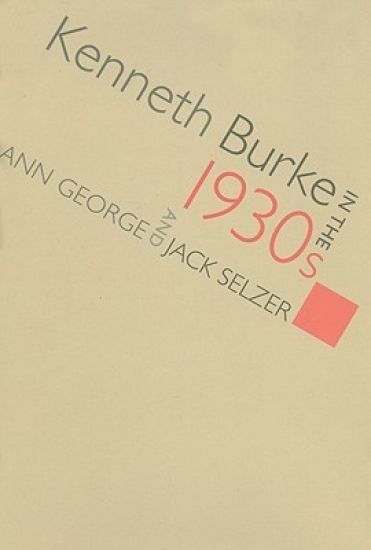
Kenneth Burke in the 1930s

Kenneth Burke in the 1930s

Ann George; Jack Selzer

University of South Carolina Press
2007
sidottu
Kenneth Burke once remarked that he was ""not a joiner of societies."" Yet during the 1930s, he affiliated himself with a range of intellectual communities - including the leftists in the League of American Writers; the activist contributors to ""Partisan Review"", the ""New Masses"", the ""Nation"", and the ""New Republic""; and the southern Agrarians and New Critics, as well as various other poets and pragmatists and thinkers. Ann George and Jack Selzer underscore the importance of these relations to Burke's development and suggest that his major writing projects of the 1930s fundamentally emerged from interactions with members of these various groups, such as writers Robert Penn Warren, Katherine Anne Porter, Allen Tate, and John Crowe Ransom; poets Marianne Moore and William Carlos Williams; cutural commentators Malcolm Cowley, Mike Gold, and Edmund Wilson; and philosophers Sidney Hook and John Dewey. George and Selzer offer a comprehensive account of four Burke texts - ""Auscultation, Creation, and Revision"" (1932), ""Permanence and Change"" (1935), ""Attitudes toward History"" (1937), and ""The Philosophy of Literary Form"" (1941) - and contend that the work from this decade is at least as compelling as his later, more widely known books. The authors examine extensive and largely unexplored archives of Burke's papers, study the magazines in which Burke's works appeared, and, most important, read him carefully in relation to the ideological conversations of the time. Offering a rich context for understanding Burke's writings from one of his most prolific periods, George and Selzer argue that significant Burkean concepts - such as identification and dramatism - found in later texts ought to be understood as rooted in his 1930s commitments.
Kenneth Burke's Permanence and Change

Kenneth Burke's Permanence and Change

Ann George

University of South Carolina Press
2018
sidottu
A guide to and analysis of a seminal book’s key concepts and methodology.Since its publication in 1935, Kenneth Burke’s Permanence and Change, a text that can serve as an introduction to all his theories, has become a landmark of rhetorical theory. Using new archival sources and contextualizing Burke in the past and present, Ann George offers the first sustained exploration of this work and seeks to clarify the challenging book for both amateurs and scholars of rhetoric.This companion to Permanence and Change explains Burke’s theories through analysis of key concepts and methodology, demonstrating how, for Burke, all language and therefore all culture is persuasive by nature. Positioning Burke’s book as a pioneering volume of New Rhetoric, George presents it as an argument against systemic violence, positivism, and moral relativism. Permanence and Change has become the focus of much current rhetorical study, but George introduces Burke’s previously unavailable outlines and notes, as well as four drafts of the volume, to investigate his work more deeply than ever before. Through further illumination of the book’s development, publication, and reception, George reveals Burke as a public intellectual and critical educator, rather than the eccentric, aloof genius earlier scholars imagined him to be.George argues that Burke was not ahead of his time, but rather deeply engaged with societal issues of the era. She redefines Burke’s mission as one of civic engagement, to convey the ethics and rhetorical practices necessary to build communities interested in democracy and human welfare—lessons that George argues are as needed today as they were in the 1930s.