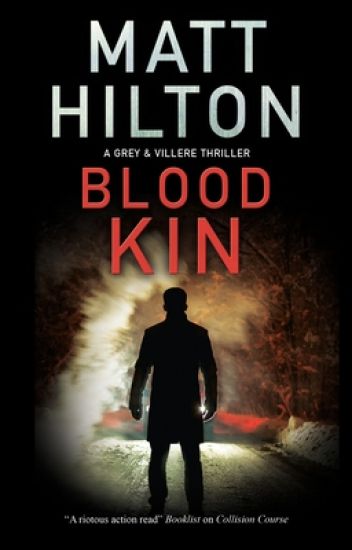
A fast-paced and action-packed ride through upstate New York for fans of CHRIS RYAN and STEPHEN LEATHER.When Nicolas 'Po' Villere runs into Elspeth Fuchs, an old flame, he's surprised to find who's by her side. It's her son, Jacob, and he's a dead ringer for when Po was a child. His age lines up with when Po last saw Elspeth, before she left him for Caleb Moorcock and a life in a secluded community.Elspeth and Jacob are now running for their lives from the abusive Caleb. Po and his partner, Private Investigator Tess Grey, offer shelter. But before Po can dive into the boy's parentage, Caleb snatches the absconded pair and drags them back to their fortified commune.Has Po dodged a bullet? Maybe it's best for them all if he never learns whether he's Jacob's father. Who's he kidding? Po resolves to rescue Elspeth and discover the truth about Jacob no matter what . . .
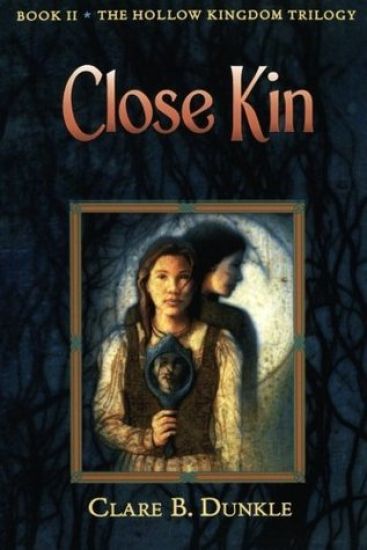
Clare Dunkle's acclaimed fantasy trilogy now available in paperbackFor thousands of years, young women have been vanishing from Hallow Hill, never to be seen again. Now Kate and Emily have moved there with no idea of the land's dreadful heritage until Marak decides to tell them himself. Marak is a powerful magician who claims to be the goblin king, and he has very specific plans for the two new girls who have trespassed into his kingdom . . .So begins the award-winning Hollow Kingdom Trilogy. Now in paperback, these editions welcome a whole new audience to the magical realm that Newbery Award winner Lloyd Alexander calls "as persuasive as it is remarkable.""
The ties between Ireland and the American South span four centuries and include shared ancestries, cultures, and sympathies. The striking parallels between the two regions are all the more fascinating because, studded with contrasts, they are so complex. Kieran Quinlan, a native of Ireland who now resides in Alabama, is ideally suited to offer the first in-depth exploration of this neglected subject, which he does to a brilliant degree in Strange Kin.The Irish relationship to the American South is unique, Quinlan explains, in that it involves both kin and kinship. He shows how a significant component of the southern population has Irish origins that are far more tangled than the simplistic distinction between Protestant Scotch Irish and plain Catholic Irish. African and Native Americans, too, have identified with the Irish through comparable experiences of subjugation, displacement, and starvation. The civil rights movement in the South and the peace initiative in Northern Ireland illustrate the tense intertwining that Quinlan addresses.He offers a detailed look at the connections between Irish nationalists and the Confederate cause, revealing remarkably similar historical trajectories in Ireland and the South. Both suffered defeat; both have long been seen as problematic, if also highly romanticized, areas of otherwise ""progressive"" nations; both have been identified with religious prejudices; and both have witnessed bitter disputes as to the interpretation of their respective ""lost causes."" Quinlan also examines the unexpected twentieth-century literary flowering in Ireland and the South -- as exemplified by Irish writers W. B.Yeats, James Joyce, and Elizabeth Bowen, and southern authors William Faulkner, Eudora Welty, and Flannery O'Connor. Sophisticated as well as entertaining, Strange Kin represents a benchmark in Irish-American cultural studies. Its close consideration of the familial and circumstantial resemblances between Ireland and the South will foster an enhanced understanding of each place separately, as well as of the larger British and American polities.
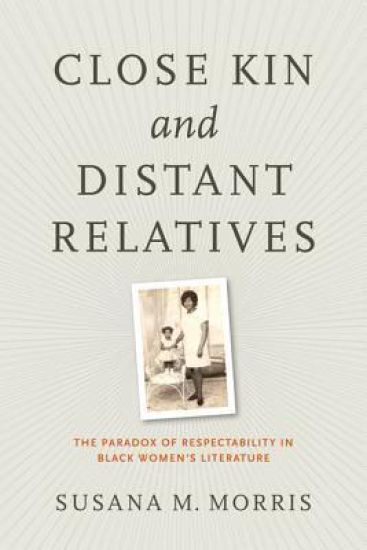
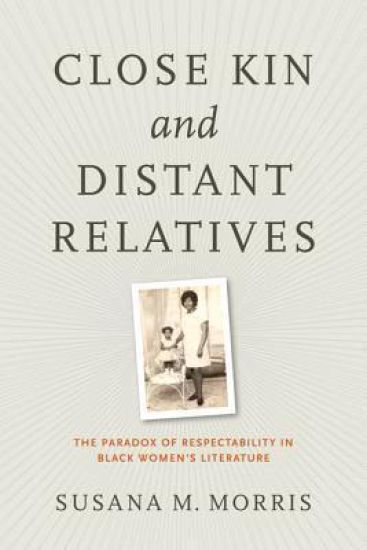
The ""black family"" in the United States and the Caribbean often holds contradictory and competing meanings in public discourse: on the one hand, it is a site of love, strength, and support; on the other hand, it is a site of pathology, brokenness, and dysfunction that has frequently called forth an emphasis on conventional respectability if stability and social approval are to be achieved. Looking at the ways in which contemporary African American and black Caribbean women writers conceptualize the black family, Susana Morris finds a discernible tradition that challenges the politics of respectability by arguing that it obfuscates the problematic nature of conventional understandings of family and has damaging effects as a survival strategy for blacks.The author draws on African American studies, black feminist theory, cultural studies, and women’s studies to examine the work of Paule Marshall, Jamaica Kincaid, Edwidge Danticat, and Sapphire, showing how their novels engage the connection between respectability and ambivalence. These writers advocate instead for a transgressive understanding of affinity and propose an ethic of community support and accountability that calls for mutual affection, affirmation, loyalty, and respect. At the core of these transgressive family systems, Morris reveals, is a connection to African diasporic cultural rites such as dance, storytelling, and music that help the fictional characters to establish familial connections.
The ""black family"" in the United States and the Caribbean often holds contradictory and competing meanings in public discourse: on the one hand, it is a site of love, strength, and support; on the other hand, it is a site of pathology, brokenness, and dysfunction that has frequently called forth an emphasis on conventional respectability if stability and social approval are to be achieved. Looking at the ways in which contemporary African American and black Caribbean women writers conceptualize the black family, Susana Morris finds a discernible tradition that challenges the politics of respectability by arguing that it obfuscates the problematic nature of conventional understandings of family and has damaging effects as a survival strategy for blacks.The author draws on African American studies, black feminist theory, cultural studies, and women’s studies to examine the work of Paule Marshall, Jamaica Kincaid, Edwidge Danticat, and Sapphire, showing how their novels engage the connection between respectability and ambivalence. These writers advocate instead for a transgressive understanding of affinity and propose an ethic of community support and accountability that calls for mutual affection, affirmation, loyalty, and respect. At the core of these transgressive family systems, Morris reveals, is a connection to African diasporic cultural rites such as dance, storytelling, and music that help the fictional characters to establish familial connections.
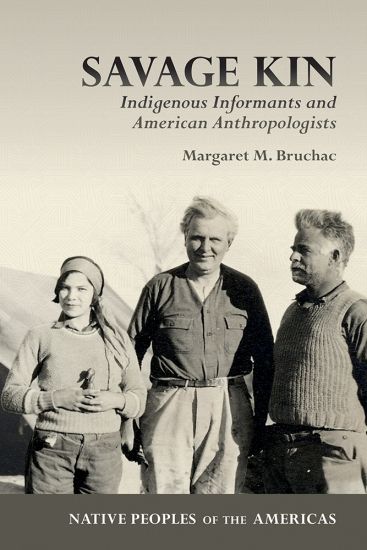
In this provocative new book, Margaret M. Bruchac, an Indigenous anthropologist, turns the word savage on its head. Savage Kin explores the nature of the relationships between Indigenous informants, such as Gladys Tantaquidgeon (Mohegan), Jesse Cornplanter (Seneca), and George Hunt (Tlingit), and early twentieth-century anthropological collectors, such as Frank Speck, Arthur C. Parker, William N. Fenton, and Franz Boas.This book reconceptualizes the intimate details of encounters with Native interlocutors who by turns inspired, facilitated, and resisted the anthropological enterprise. Like other texts focused on this era, Savage Kin features some of the elite white men credited with salvaging material that might otherwise have been lost. Unlike other texts, this book highlights the intellectual contributions and cultural strategies of unsung Indigenous informants without whom this research could never have taken place.These bicultural partnerships transgressed social divides and blurred the roles of anthropologist/informant, relative/stranger, and collector/collected. Yet these stories were obscured by collecting practices that separated people from objects, objects from communities, and communities from stories. Bruchac’s decolonizing efforts include “reverse ethnography”—painstakingly tracking seemingly unidentifiable objects, misconstrued social relations, unpublished correspondence, and unattributed field notes—to recover this evidence. Those early encounters generated foundational knowledges that still affect Indigenous communities today.Savage Kin also contains unexpected narratives of human and other-than-human encounters—brilliant discoveries, lessons from ancestral spirits, prophetic warnings, powerful gifts, and personal tragedies—that will move Native and non-Native readers alike.
'Isaac's choices are stark, and the moral dilemmas he faces as he matures form the basis of this richly detailed, emotionally engaging slice of Texas frontier life. Chappell's novel reads the way a John Ford western unfolds on the screen: good folks, hard choices, humour, tragedy, and heartbreaking humanity played out against the backdrop of the great American West. A wonderful book for readers who like westerns that leave formula in the dust' - ""Booklist starred review"". '[This book] does what art demands: It makes us both think and feel' - ""Texas Parks & Wildlife"". 'A Texas writer to watch. The author has created strong characters and a vivid sense of place in a tale that is punctuated with bloody fighting and awkward courtships on a tough, unforgiving frontier' - ""Dallas Morning News"". In ""Blood Kin"", Isaac Webb, a young Texas ranger, struggles for decency amid the violence of the Texas Revolution and the early days of the Republic. Still in his teens when he joins the legendary ranger captain Noah Smithwick, Isaac discovers in himself extraordinary mettle in battle and a fierce yearning for young war widow Catherine Druin. But victory over Mexico does not bring the new Republic nor Isaac the peace and stability he fought for. Escalating Indian depredations forestall Isaacs hopes to work the farmland he's cleared near Bastrop and to marry Catherine. Pressed into accompanying Smithwick as Sam Houstons peace emissary to the Comanches, Isaac befriends Looks Far, a young warrior at whose side he fends off Waco attacks and with whom he learns to grieve. As the Texans hunger for land and the Comanches penchant for raiding imperil Isaacs friendship and thwart peace negotiations, Isaac returns to Bastrop prepared for the worst. When his future with Catherine is confounded by her fathers blind hatred of the Comanches and his own commitment to the indomitable Inez, a Lipan captive, Isaac must confront a brutal dilemma and a painful secret. So achingly honest and culturally sensitive is Chappell in his telling of this epic story that every image, every characterization rings true. It is hard to believe that he did not live it himself.
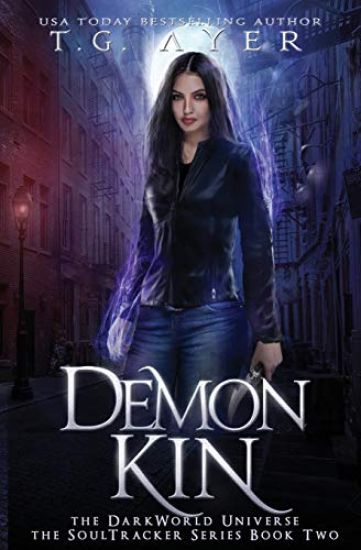
When a business tycoon hires Mel Morgan to find his missing daughter, the SoulTracker is thrown headlong into twists and turns of unexpected deaths and unusual killers. But to find the girl in time to save her, she has to first understand the killer. Demonic or human killers? Mel can't decide which will be worse. Things get a little complicated when she has to help find both a Panther Alpha's mother, and a reluctant Djinn Queen. Add to the mix an evil spirit plus her mentor Samuel sending her terrifying messages in the Ether. Save him, or else. It's just all in a days work for a SoulTracker.
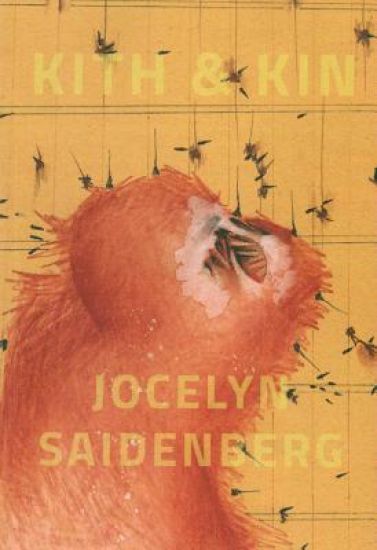
Poetry. California Interest. Women's Studies. LGBTQIA Studies. A serial poem written at the beginning of each day for one year by the prolific poet and long-time editor Jocelyn Saidenberg, KITH & KIN imbricates dreams, waking, friendship, and grief. In reproducing everyday banalities of mourning, Saidenberg finds herself "in proximity to others who are also with me, ones who mumble, who yell in rage, who are recently or long dead, who dream of me at night."
As the planet’s human numbers grow and environmental concerns proliferate, natural scientists, economists, and policy-makers are increasingly turning to new and old questions about families and kinship as matters of concern. From government programs designed to fight declining birth rates in Europe and East Asia, to controversial policies seeking to curb population growth in countries where birth rates remain high, to increasing income inequality transnationally, issues of reproduction introduce new and complicated moral and political quandaries.Making Kin Not Population ends the silence on these issues with essays from leading anti-racist, ecologically-concerned, feminist scholars. Though not always in accord, these contributors provide bold analyses of complex issues of intimacy and kinship, from reproductive justice to environmental justice, and from human and nonhuman genocides to new practices for making families and kin. This timely work offers vital proposals for forging innovative personal and public connections in the contemporary world.
Theodore Abijah Cutting's memoir offers a fascinating glimpse into the life of a pioneering American family. From his ancestors' travels across the Atlantic to their lives in New England and beyond, Cutting's family history is full of adventure, hardship, and resilience. With his keen eye for detail and gift for storytelling, Cutting brings his ancestors to life in vivid detail.This work has been selected by scholars as being culturally important, and is part of the knowledge base of civilization as we know it.This work is in the "public domain in the United States of America, and possibly other nations. Within the United States, you may freely copy and distribute this work, as no entity (individual or corporate) has a copyright on the body of the work.Scholars believe, and we concur, that this work is important enough to be preserved, reproduced, and made generally available to the public. We appreciate your support of the preservation process, and thank you for being an important part of keeping this knowledge alive and relevant.