Kirjojen hintavertailu. Mukana 11 342 296 kirjaa ja 12 kauppaa.

Kirjahaku

Etsi kirjoja tekijän nimen, kirjan nimen tai ISBN:n perusteella.

1000 tulosta hakusanalla Lee H. Butler

When The Time Comes And Other Stories

When The Time Comes And Other Stories

M H Lee

Laugh or Else You'll Cry
2020
pokkari
In this collection of ten speculative short stories, M.H. Lee explores the future as well as the fantastical.From a fantasy world where a dragonrider must make an impossible choice when his dragon starts to forget him to a future where a young surrogate isn't even allowed to speak lest she corrupt the development of the child she carries, each story focuses on some aspect of who we are and how we become that person.Author's Note: Some of the stories in this collection previously appeared in A World Dark and Cold, a collection of essays and short stories which is no longer available for purchase.
My Country Versus Me

My Country Versus Me

Helen Zia; Wen H Lee

Little, Brown and Company
2003
pokkari
For the first time, Wen Ho Lee speaks out: about his work at Los Alamos and his experiences with the FBI, about his arrest and imprisonment. In January of 1999, the arrest of Wen Ho Lee, the Los Alamos scientist who was falsely accused of espionage by the U.S. government and imprisoned without trial, sparked controversy throughout the country. Throughout the ordeal, Wen Ho Lee quietly and steadfastly maintained his innocence. Now he tells his story. A riveting account about prejudice, fear, suspicionand courage, My Country Versus Me offers at last a clear and truthful look at one of the great miscarriages of justice of our time.
Cognitive Risk

Cognitive Risk

James Bone; Jessie H Lee

TAYLOR FRANCIS LTD
2023
sidottu
Cognitive Risk is a book about the least understood but most pervasive risk to mankind – human decision-making. Cognitive risks are subconscious and unconscious influence factors on human decision-making: heuristics and biases. To understand the scope of cognitive risk, we look at case studies, corporate and organizational failure, and the science that explains why we systemically make errors in judgment and repeat the same errors.The book takes a multidisciplinary and pedestrian stroll through behavioral science with a light touch, using stories to explain why we consistently make cognitive errors that not only increase risks but also simultaneously fail to recognize these errors in ourselves or our organizations. This science has deep roots in organizational behavior, psychology, human factors, cognitive science, and behavioral science all influenced by classic philosophers and enabled through advanced analytics and artificial intelligence. The point of the book is simple. Humans persist with bounded rationality, but as the speed of information, data, money, and life in general accelerates, we will need the right tools to not only keep pace but to survive and thrive.In light of all these factors that complicate risk, the book offers a foundational solution. A cognitive risk framework for enterprise risk management and cyber security. There are five pillars in a cognitive risk framework with five levels of maturity, yet there is no universally prescribed maturity level. It is more a journey of different paths. Each organization will pursue its own path, but the goal is the same – to minimize the errors that could have been avoided. We explain why risks are hard to discuss and why we systematically ignore the aggregation of these risks hidden in collective decision-making in an organization.The cognitive risk framework is a framework designed to explore the two most complex risks organizations face: uncertainty and decision-making under uncertainty. The first pillar is cognitive governance, which is a structured approach for institutionalizing rational decision-making across the enterprise. Each pillar is complimentary and builds on the next in a succession of continuous learning. There is no endpoint because the pillars evolve with technology. Enterprise risk is a team effort in risk intelligence grounded in a framework for good decision-making. We close with a call to become designers of risk solutions enabled by the right technology and nurtured by collaboration.We hope you enjoy the book with this context.
Cognitive Risk

Cognitive Risk

James Bone; Jessie H Lee

TAYLOR FRANCIS LTD
2023
nidottu
Cognitive Risk is a book about the least understood but most pervasive risk to mankind – human decision-making. Cognitive risks are subconscious and unconscious influence factors on human decision-making: heuristics and biases. To understand the scope of cognitive risk, we look at case studies, corporate and organizational failure, and the science that explains why we systemically make errors in judgment and repeat the same errors.The book takes a multidisciplinary and pedestrian stroll through behavioral science with a light touch, using stories to explain why we consistently make cognitive errors that not only increase risks but also simultaneously fail to recognize these errors in ourselves or our organizations. This science has deep roots in organizational behavior, psychology, human factors, cognitive science, and behavioral science all influenced by classic philosophers and enabled through advanced analytics and artificial intelligence. The point of the book is simple. Humans persist with bounded rationality, but as the speed of information, data, money, and life in general accelerates, we will need the right tools to not only keep pace but to survive and thrive.In light of all these factors that complicate risk, the book offers a foundational solution. A cognitive risk framework for enterprise risk management and cyber security. There are five pillars in a cognitive risk framework with five levels of maturity, yet there is no universally prescribed maturity level. It is more a journey of different paths. Each organization will pursue its own path, but the goal is the same – to minimize the errors that could have been avoided. We explain why risks are hard to discuss and why we systematically ignore the aggregation of these risks hidden in collective decision-making in an organization.The cognitive risk framework is a framework designed to explore the two most complex risks organizations face: uncertainty and decision-making under uncertainty. The first pillar is cognitive governance, which is a structured approach for institutionalizing rational decision-making across the enterprise. Each pillar is complimentary and builds on the next in a succession of continuous learning. There is no endpoint because the pillars evolve with technology. Enterprise risk is a team effort in risk intelligence grounded in a framework for good decision-making. We close with a call to become designers of risk solutions enabled by the right technology and nurtured by collaboration.We hope you enjoy the book with this context.
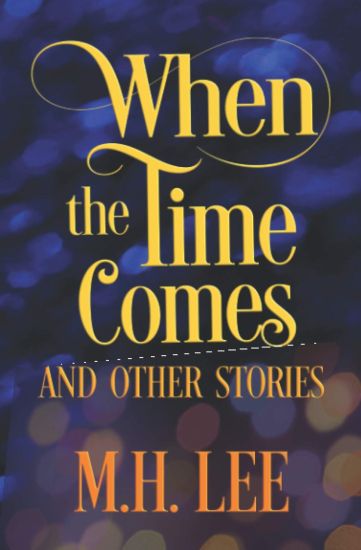
Cognitive Hack and Cognitive Risk Set

Cognitive Hack and Cognitive Risk Set

James Bone; Jessie H Lee

TAYLOR FRANCIS LTD
2024
muu
Cognitive Hack explores a broad cross section of research and actual case studies to draw out new insights that may be used to build a benchmark for IT security professionals. This research takes a deeper dive beneath the surface of the analysis to uncover novel ways to mitigate data security vulnerabilities, connect the dots and identify patterns in the data on breaches. This analysis will assist security professionals not only in benchmarking their risk management programs but also in identifying forward looking security measures to narrow the path of future vulnerabilities.Cognitive Risk is a book about the least understood but most pervasive risk to mankind – human decision-making. Cognitive risks are subconscious and unconscious influence factors on human decision-making: heuristics and biases. To understand the scope of cognitive risk, we look at case studies, corporate and organizational failure, and the science that explains why we systemically make errors in judgment and repeat the same errors.The book takes a multidisciplinary and pedestrian stroll through behavioral science with a light touch, using stories to explain why we consistently make cognitive errors that not only increase risks but also simultaneously fail to recognize these errors in ourselves or our organizations. This science has deep roots in organizational behavior, psychology, human factors, cognitive science, and behavioral science all influenced by classic philosophers and enabled through advanced analytics and artificial intelligence. The point of the book is simple. Humans persist with bounded rationality, but as the speed of information, data, money, and life in general accelerates, we will need the right tools to not only keep pace but to survive and thrive.In light of all these factors that complicate risk, the book offers a foundational solution. A cognitive risk framework for enterprise risk management and cyber security. There are five pillars in a cognitive risk framework with five levels of maturity, yet there is no universally prescribed maturity level. It is more a journey of different paths. Each organization will pursue its own path, but the goal is the same – to minimize the errors that could have been avoided. We explain why risks are hard to discuss and why we systematically ignore the aggregation of these risks hidden in collective decision-making in an organization.The cognitive risk framework is a framework designed to explore the two most complex risks organizations face: uncertainty and decision-making under uncertainty. The first pillar is cognitive governance, which is a structured approach for institutionalizing rational decision-making across the enterprise. Each pillar is complimentary and builds on the next in a succession of continuous learning. There is no endpoint because the pillars evolve with technology. Enterprise risk is a team effort in risk intelligence grounded in a framework for good decision-making. We close with a call to become designers of risk solutions enabled by the right technology and nurtured by collaboration.We hope you enjoy the book with this context.