Winner of the Austin Civil War Round Table's Laney Prize and the Virginia Historical Society's Richard L. Slatten Award for Excellence in Virginia Biography While most historians agree that Robert E. Lee's loyalty to Virginia was the key factor in his decision to join the Confederate cause, Richard B. McCaslin further demonstrates that Lee's true call to action was the legacy of the American Revolution viewed through his reverence for George Washington. In this thematic biography, McCaslin locates the sources of Lee's devotion to Washington and shows how this bond affected his performance as a general. The enduring paradox, McCaslin shows, is that Washington earned his reputation as a statesman, whereas Lee never escaped his self-imposed image as a revolutionary in Washington's shadow.
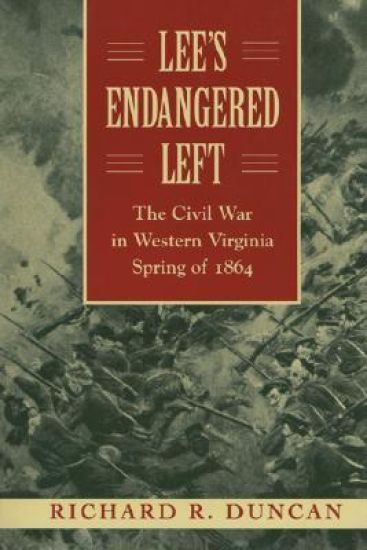
In the spring of 1864, Ulysses S. Grant as general-in-chief of the Union armies devised a plan of concerted action to bring down the Confederacy. As part of that strategy, Grant aimed to destroy General Robert E. Lee's supply source for his Army of Northern Virginia in western Virginia and to use military activity there as an extended turning movement to threaten Lee from the west. In this outstanding study, Richard R. Duncan offers a riveting overview of these military operations as well as their impact on the civilian population, shedding light on an often overlooked chapter of the Civil War in Virginia. Initially, Duncan explains, Grant proposed a three-pronged pincer movement to strike at the depots and transportation system in southwest Virginia and the Shenandoah Valley's breadbasket. The Army of the Kanawha, under General George Crook, struck at the New River Bridge to cut the Virginia and Tennessee Railroad, while a subordinate cavalry expedition lead by General William Averell moved against the saltworks and lead mines in southwestern Virginia. Meanwhile, General Franz Sigel advanced up the Shenandoah Valley to threaten Staunton and form a junction with Crook. If all went well, the combined army was then to advance on Lynchburg.As Duncan shows, these Federal operations proved only partially successful. Despite a victory at the battle of Cloyds Mountain and the destruction of the New River Bridge, Grant's pincer movement faltered in the Shenandoah Valley at the battle of New Market. A renewal of the initiative by General David Hunter in late May and early June briefly secured Federal objectives and dominance over western Virginia. But General Jubal Early stopped the Army of West Virginia at the gates of Lynchburg, and Confederate forces went on to regain the Shenandoah Valley and even to threaten Washington.Unlike most works on the eastern theater, Lee's Endangered Left emphasizes the high price civilians paid for these campaigns. The Federal troops' need for food and horses and the Union objective of crippling the South's ability to wage war brought serious losses to Confederate and Unionist civilians alike, reflecting the increasingly destructive nature of the war. The devastation civilians experienced in western Virginia, Duncan asserts, would later reverberate in the burning of Chambersburg, Pennsylvania, by Confederate troops and in the sufferings inflicted upon Georgians by William T. Sherman.Providing a much-needed overview of the first part of the Virginia campaign, Lee's Endangered Left thoroughly integrates the military operations in western Virginia into the larger canvas of the entire eastern theater. Civil War historians and buffs alike will welcome Duncan's work.
The initial confrontation between Union general Ulysses S. Grant and Confederate general Robert E. Lee in Virginia during the Overland Campaign has not until recently received the same degree of scrutiny as other Civil War battles. The first round of combat between the two renowned generals spanned about six weeks in May and early June 1864. The major skirmishes- Wilderness, Spotsylvania, and Cold Harbor- rivaled any other key engagement in the war. While the strength and casualties in Grant's army remain uncontested, historians know much less about Lee's army. Nonetheless, the prevailing narrative depicts Confederates as outstripped nearly two to one, and portrays Grant suffering losses at a rate nearly double that of Lee. As a result, most Civil War scholars contend that the campaign proved a clear numerical victory for Lee but a tactical triumph for Grant. Questions about the power of Lee's army stem mainly from poor record keeping by the Confederates as well as an inordinate number of missing or lost battle reports. The complexity of the Overland Campaign, which consisted of several smaller engagements in addition to the three main clashes, led to considerable historic uncertainty regarding Lee's army. Significant doubts persist about the army's capability at the commencement of the drive, the amount of reinforcements received, and the total of casualties sustained during the entire campaign and at each of the major battles. In Lee's Army during the Overland Campaign, Alfred C. Young III addresses this deficiency by providing for the first time accurate information regarding the Confederate side throughout the conflict. The results challenge prevailing assumptions, showing clearly that Lee's army stood far larger in strength and size and suffered considerably higher casualties than previously believed.
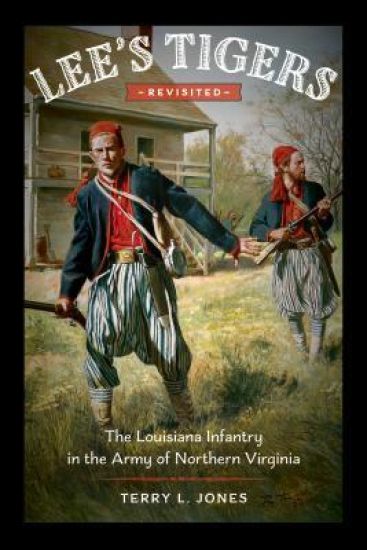
In Lee's Tigers Revisited, noted Civil War scholar Terry L. Jones dramatically expands and revises his acclaimed history of the approximately twelve thousand Louisiana infantrymen who fought in Robert E. Lee's Army of Northern Virginia. Sometimes derided as the ""wharf rats from New Orleans"" and the ""lowest scrappings of the Mississippi,"" the Louisiana Tigers earned a reputation for being drunken and riotous in camp, but courageous and dependable on the battlefield. Louisiana's soldiers, some of whom wore colorful uniforms in the style of French Zouaves, reflected the state's multicultural society, with regiments consisting of French-speaking Creoles and European immigrants. Units made pivotal contributions to many crucial battles- resisting the initial Union onslaught at First Manassas, facilitating Stonewall Jackson's famous Valley Campaign, holding the line at Second Manassas by throwing rocks when they ran out of ammunition, breaking the Union line temporarily at Gettysburg's Cemetery Hill, containing the Union breakthrough at Spotsylvania's Bloody Angle, and leading Lee's attempted breakout of Petersburg at Fort Stedman. The Tigers achieved equal notoriety for their outrageous behavior off the battlefield, so much so that sources suggest no general wanted them in his command. By the time of Lee's surrender at Appomattox, there were fewer than four hundred Louisiana Tigers still among his troops. Lee's Tigers Revisited uses letters, diaries, memoirs, newspaper articles, and muster rolls to provide a detailed account of the origins, enrollments, casualties, and desertion rates of these soldiers. Illustrations- including several maps newly commissioned for this edition- chart the Tigers' positions on key battlefields in the tumultuous campaigns throughout Virginia. By utilizing first-person accounts and official records, Jones provides the definitive study of the Louisiana Tigers and their harrowing experiences in the Civil War.
In a careful re-examination of the historical evidence, Alan Nolan explodes many long-standing myths about Robert E. Lee and the American Civil War. The book may change readers' perceptions of the South's premier icon, as Nolan separates the Lee of reality from the Lee of mythology. The book should be of interest to general readers as well as Civil War buffs.
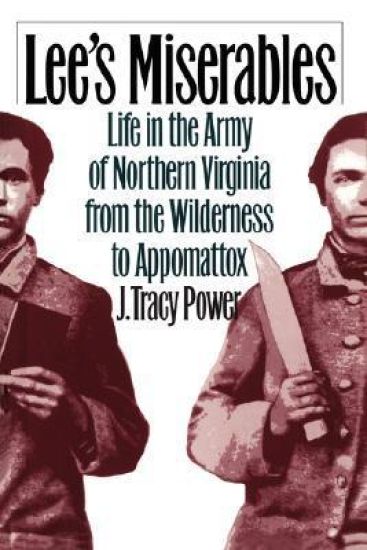
A vivid account of life in Lee's army; Based on research in more than 1,200 wartime letters and diaries by more than 400 Confederate officers and enlisted men, Lee's Miserables offers a compelling social history of Robert E. Lee's Army of Northern Virginia during its final year, from May 1864 to April 1865. The book uses the words of the soldiers themselves to provide a richly detailed view of the army's experiences in camp, on the march, in combat, and under siege - from the battles in the Wilderness to the final retreat to Appomattox.
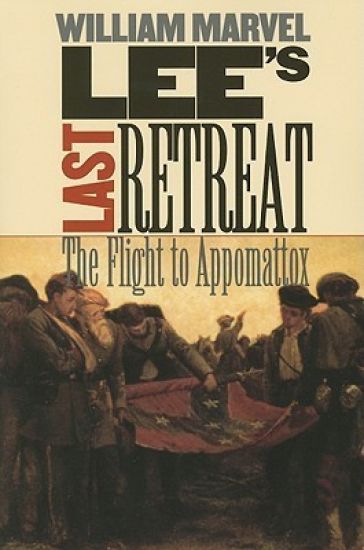
Few events in Civil War history have generated such deliberate myth-making as the retreat that ended at Appomattox. William Marvel shows that during the final week of the war in Virginia, Lee's troops were more numerous yet far less faithful to their cause than has been suggested: Lee himself made mistakes in this campaign, and defeat wrung from him an unusual display of fault-finding. Finally, Marvel proves accounts of the congenial intermingling of the armies at Appomattox to be shamelessly overblown and the renowned exchange of salutes to be apocryphal.
Was Robert E. Lee a gifted soldier whose only weaknesses lay in the depth of his loyalty to his troops, affection for his lieutenants, and dedication to the cause of the Confederacy? Or was he an ineffective leader and poor tactician whose reputation was drastically inflated by early biographers and Lost Cause apologists? These divergent characterizations represent the poles between which scholarly and popular opinion on Lee has swung over time. In eight essays, Gary Gallagher offers his own refined thinking on Lee, exploring the relationship between Lee's operations and Confederate morale, the quality of his generalship, and the question of how best to assess his legacy in light of the many distortions that grew out of Lost Cause historiography.
Few events in Civil War history have generated such deliberate myth making as the retreat that ended at Appomattox. William Marvel offers the first history of the Appomattox campaign written primarily from contemporary source material, with a skeptical eye toward memoirs published well after the events they purport to describe. Marvel shows that during the final week of the war in Virginia, Lee's troops were more numerous yet far less faithful to their cause than has been suggested. He also proves accounts of the congenial intermingling of the armies at Appomattox to be shamelessly overblown and the renowned exchange of salutes to be apocryphal.
Of all the heroes produced by the Civil War, Robert E. Lee is the most revered and perhaps the most misunderstood. Lee is widely portrayed as an ardent antisecessionist who left the United States Army only because he would not draw his sword against his native Virginia, a Southern aristocrat who opposed slavery, and a brilliant military leader whose exploits sustained the Confederate cause. Alan Nolan explodes these and other assumptions about Lee and the war through a rigorous reexamination of familiar and long-available historical sources, including Lee's personal and official correspondence and the large body of writings about Lee. Looking at this evidence in a critical way, Nolan concludes that there is little truth to the dogmas traditionally set forth about Lee and the war.
For many of his theater contemporaries, Lee J. Cobb (1911–1976) was the greatest actor of his generation. In Hollywood he became the definitive embodiment of gangsters, psychiatrists, and roaring lunatics. From 1939 until his death, Cobb contributed riveting performances to a number of films, including Boomerang, On the Waterfront, The Brothers Karamazov, 12 Angry Men, and The Exorcist. But for all of his conspicuous achievements in motion pictures, Cobb’s name is most identified with the character Willy Loman in the original stage production of Arthur Miller’s Death of a Salesman (1949). Directed by Elia Kazan, Cobb’s Broadway performance proved to be a benchmark for American theater. In Lee J. Cobb: Characters of an Actor, Donald Dewey looks at the life and career of this versatile performer. From his Lower East Side roots in New York City—where he was born Leo Jacob—to multiple accolades on stage and the big and small screens, Cobb’s life proved to be a tumultuous rollercoaster of highs and lows. As a leading man of the theater, he gave a number of compelling performances in such plays as Golden Boy and King Lear. For the Hollywood studios, Cobb fit the description of the “character actor.” No one better epitomized the performer who suddenly appears on the screen and immediately grabs the audience’s attention. During his forty-five-year career, there wasn’t a significant star—from Humphrey Bogart and James Stewart to Paul Newman and Clint Eastwood—with whom he didn’t work. Cobb was also followed by controversy: he appeared before the House Un-American Activities Committee in the 1950s and was a witness to a movie-set murder case in the 1970s. Through it all, he never lost his taste for fast cars and gin rummy. A bear of a man with a voice that equally accommodated growls and sibilant sympathies, Cobb was undeniably an actor to be reckoned with. In this fascinating book, Dewey captures all of the drama that surrounded Cobb, both on screen and off.
A companion to his previous work, Lincoln's Cavalrymen, this volume will focus on the confederate cavalry of the Army of Northern Virginia - its leadership, the military life of its officers and men as revealed in their diaries and letters, the development of its tactics as the war evolved, and the influence of government policies on its operational abilities. All the major players are discussed and appraised, including Joseph E. Johnston, P.G.T Beauregard, and J.E.B. Stuart, and individual actions and battles are recounted in detail. As evidenced in his previous books, Longacre's painstakingly thorough research will make this volume as indispensable a reference as its predecessor.
For almost 100 years, analysis of the Gettysburg Campaign has been centered around a set of commonly held beliefs, among them an oversimplified view of Confederate general Robert E. Lee's goals for the battle. Author and Gettysburg National Military Park historian Troy D. Harman believes this view is misinformed. Lee's Real Plan at Gettysburg presents a provocative new theory regarding Lee's true tactical objectives during this pivotal battle of the American Civil War.
During the American Civil War, William R.J. Pegram became one of the most prominent artillerists in the Army of Northern Virginia. Pegram shared the values of the South's ruling elite and this book argues that he entered Confederate service to defend a way of life he believed was ordained by God.
In the South, one can find any number of bronze monuments to the Confederacy featuring heroic images of Robert E. Lee, Stonewall Jackson, J. E. B. Stuart, and many lesser commanders. But while the tarnish on such statues has done nothing to color the reputation of those great leaders, there remains one Confederate commander whose tarnished image has nothing to do with bronze monuments. Nowhere in the South does a memorial stand to Lee's intimate friend and second-in-command James Longstreet.In Lee's Tarnished Lieutenant, William Garrett Piston examines the life of James Longstreet and explains how a man so revered during the course of the war could fall from grace so swiftly and completely. Unlike other generals in gray whose deeds are familiar to southerners and northerners alike, Longstreet has the image not of a hero but of an incompetent who lost the Battle of Gettysburg and, by extension, the war itself. Piston's reappraisal of the general's military record establishes Longstreet as an energetic corps commander with an unsurpassed ability to direct troops in combat, as a trustworthy subordinate willing to place the war effort above personal ambition. He made mistakes, but Piston shows that he did not commit the grave errors at Gettysburg and elsewhere of which he was so often accused after the war.In discussing Longstreet's postwar fate, Piston analyzes the literature and public events of the time to show how the southern people, in reaction to defeat, evolved an image of themselves which bore little resemblance to reality. As a product of the Georgia backwoods, Longstreet failed to meet the popular cavalier image embodied by Lee, Stuart, and other Confederate heroes. When he joined the Republican party during Reconstruction, Longstreet forfeited his wartime reputation and quickly became a convenient target for those anxious to explain how a "superior people" could have lost the war. His new role as the villain of the Lost Cause was solidified by his own postwar writings. Embittered by years of social ostracism resulting from his Republican affiliation, resentful of the orchestrated deification of Lee and Stonewall Jackson, Longstreet exaggerated his own accomplishments and displayed a vanity that further alienated an already offended southern populace.Beneath the layers of invective and vilification remains a general whose military record has been badly maligned. Lee's Tarnished Lieutenant explains how this reputation developed—how James Longstreet became, in the years after Appomattox, the scapegoat for the South's defeat, a Judas for the new religion of the Lost Cause.
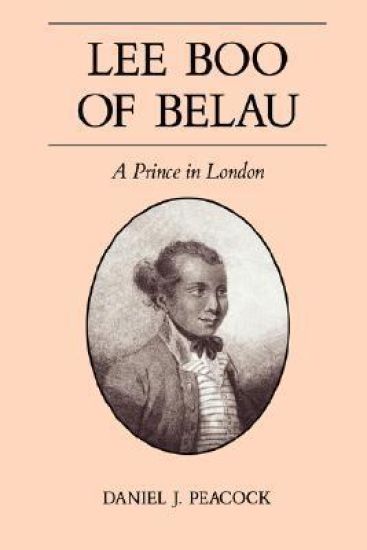
This is the story of the adventures of a Pacific island prince, Lee Boo, one of the first of the “noble savages” to be feted by London society. Within six months of his arrival in England he fell victim to small pox and died, far from his island home. How he came to spend his last days in London beside the Thames is a fascinating story, yet this is the first time the events that surrounded him have been detailed.In 1783 a packet ship of the East India Company was wrecked on the reefs off Belau (Palau) in the western Pacific. When its captain returned to England nearly a year later he brought with him Lee Boo, the twenty-year-old son of a Belauan chief. The story of Lee Boo’s adventures takes place both in the island world of Belau when “civilization” arrived with the captain and crew of the Antelope and in the world of the English sea traders of the 1780s. The author has painstakingly researched sources on both sides of the Atlantic and the result is a history that any scholar of the Pacific islands will treasure.Lee Boo was well remembered for many years after his death, inspiring poems and plays. This book, a tantalizing portrait of the life and times of Lee Boo of Belau, shows he has still not been forgotten.
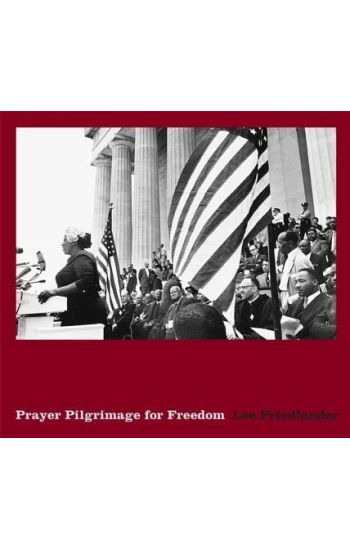
Early work from Lee Friedlander capturing a pivotal moment in the Civil Rights Movement On May 17, 1957, through the generosity of Bayard Rustin, Lee Friedlander was given full access to photograph the participants of the Prayer Pilgrimage for Freedom in Washington, D.C. This extraordinary event, organized by Mr. Rustin, as well as A. Philip Randolph, Roy Wilkins and Dr. Martin Luther King, Jr., brought together many of the great thinkers and leaders of the period, and was a pivotal moment in the Civil Rights Movement. Friedlander's photographs depict the famous individuals at the event—Mahalia Jackson, Ruby Dee and Harry Belafonte, among many other luminaries of the African-American community—but they also pay particular attention to the 25,000 men, women and children who gathered to give voice and energy to the ideas embattled by the movement. The 58 previously unpublished photographs gathered here are among Friedlander's earliest work. Also included in this publication is the typescript of Martin Luther King, Jr.'s "Give Us the Ballot" speech and additional ephemera from the march produced in facsimile.
Originally published to great acclaim in 1976, The American Monument has become one of the most sought-after photography publications of the twentieth century. Long out of print, with only a rare few available on the secondary market, this second edition makes a treasure available once more to new audiences. Published in the same over-sized format as the first edition—with exquisite reproductions of 213 photographs—the album of post-bound single sheets can easily be temporarily disassembled for display. Considered by many, including Friedlander himself, to be one of his most important books, The American Monument has influenced generations of photographers. The second edition includes a new essay by eminent photography curator and Friedlander scholar, Peter Galassi, which illuminates the history and continued significance of this publication. This album by Lee Friedlander is a memorial in photographs to the American monument. The photographs were selected from several thousand negatives and more than a thousand prints the photographer made of the subject during a dozen years while traveling throughout the United States. The curator John Szarkowski stated: “I am still astonished and heartened by the deep affection of those pictures, by the photographer’s tolerant equanimity in the face of the facts, by the generosity of spirit, the freedom from pomposity and rhetoric. One might call this work an act of high artistic patriotism, an achievement that might help us reclaim that word from ideologues and expediters.”
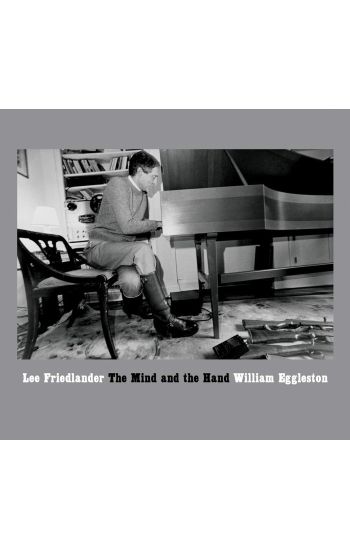
Friedlander’s social landscape is a who’s who of postwar American photography In the 1960s and '70s, Lee Friedlander (born 1934) developed his signature approach to documenting the American “social landscape”: deadpan, structurally complex black-and-white photographs of seemingly anything, anybody or anyplace that passed in front of his lens. But as he was making his name as a documentary photographer capturing the look and feel of modern American life, he was also photographing his closest friends, a practice he has continued throughout his long career. A slipcased set of six paperback books, The Mind and the Hand presents the photographer’s intimate portraits of six of his best friends taken over the past five decades. The subjects, each presented in their own separate volume, comprise a veritable who's who of one of America's most fertile periods in photography: Richard Benson, William Christenberry, William Eggleston, Walker Evans, John Szarkowski and Garry Winogrand. Each volume begins with a relevant quote from its subject.