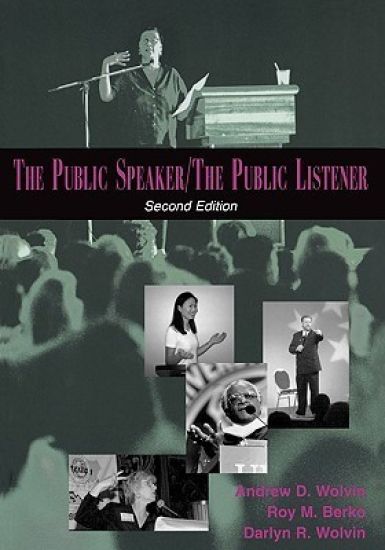
The Second Edition of Wolvin, Berko, and Wolvin's popular text offers students a look at the total public communication process--public speaking and public listening--emphasizing how these two dimensions interrelate as public communicators shape, present, and receive speeches.
Music as a narrative drama is an intriguing idea, which has captured explicit music theoretical attention since the nineteenth century. Investigations into narrative characters or personae has evolved into a sub-field—musical agency. In this book, Palfy contends that music has the potential to engage us in social processes and that those processes can be experienced as a social interaction with a musical agent. She explores the overlap between the psychological processes in which we participate in order to understand and engage with people, and those we engage in when we listen to music. Thinking of musical agency as a form of social process is quite different from existing theoretical frameworks for agency. It implies that we come to musical analysis by way of intuition—that our ideas are already partially formed based on our experience of the piece (and what it makes us feel or how it makes us sense it as any other) when we choose to analyze and interpret it. Palfy’s focus on social processes is a very effective way to pinpoint when and why it is that our attention is captured and engaged by musical agents.
Music as a narrative drama is an intriguing idea, which has captured explicit music theoretical attention since the nineteenth century. Investigations into narrative characters or personae has evolved into a sub-field—musical agency. In this book, Palfy contends that music has the potential to engage us in social processes and that those processes can be experienced as a social interaction with a musical agent. She explores the overlap between the psychological processes in which we participate in order to understand and engage with people, and those we engage in when we listen to music. Thinking of musical agency as a form of social process is quite different from existing theoretical frameworks for agency. It implies that we come to musical analysis by way of intuition—that our ideas are already partially formed based on our experience of the piece (and what it makes us feel or how it makes us sense it as any other) when we choose to analyze and interpret it. Palfy’s focus on social processes is a very effective way to pinpoint when and why it is that our attention is captured and engaged by musical agents.
This work has been selected by scholars as being culturally important and is part of the knowledge base of civilization as we know it.This work is in the public domain in the United States of America, and possibly other nations. Within the United States, you may freely copy and distribute this work, as no entity (individual or corporate) has a copyright on the body of the work.Scholars believe, and we concur, that this work is important enough to be preserved, reproduced, and made generally available to the public. To ensure a quality reading experience, this work has been proofread and republished using a format that seamlessly blends the original graphical elements with text in an easy-to-read typeface.We appreciate your support of the preservation process, and thank you for being an important part of keeping this knowledge alive and relevant.
When someone claims to be a good listener, it usually means they've mastered waiting impatiently for another person to talk before entering a conversation. But that's not listening. Neither is interrupting with your own thoughts when you hear something that jogs your memory, or judging whether or not you agree or disagree with what's being said. Listening involves truly hearing what other people are saying, and once you master it, you'll enjoy more intimacy in your romantic relationships, a deeper connection with children and other family members, and better interactions with co-workers, direct reports, supervisors, and customers. In this guidebook to cultivating your listening skills, you'll get proven strategies to truly start listening to others. You'll find that if you sit quietly, don't react, and ask questions based on what the other person is saying, the world will open up to you in ways you never dreamed possible.
When someone claims to be a good listener, it usually means they've mastered waiting impatiently for another person to talk before entering a conversation. But that's not listening. Neither is interrupting with your own thoughts when you hear something that jogs your memory, or judging whether or not you agree or disagree with what's being said. Listening involves truly hearing what other people are saying, and once you master it, you'll enjoy more intimacy in your romantic relationships, a deeper connection with children and other family members, and better interactions with co-workers, direct reports, supervisors, and customers. In this guidebook to cultivating your listening skills, you'll get proven strategies to truly start listening to others. You'll find that if you sit quietly, don't react, and ask questions based on what the other person is saying, the world will open up to you in ways you never dreamed possible.
Ives and Copeland did not influence each other, but they each helped to define and build a place for American music and composers in the pantheon of classical music, which had been European-dominated until that time. This CD with book lays a foundation for a broader knowledge and understanding of American music in the 20th century overall. 1 CD.
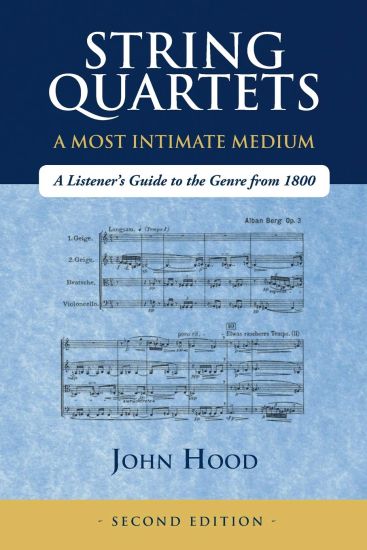
It has often been said that string quartets represent a composer's most intimate and personal works, a statement with which I wholeheartedly agree. After listening to string quartets for over 25 years, I have come to believe this humble assembly of two violins, viola and cello somehow manages to express the whole range of human emotional experiences.This Second Edition of the book contains discussions of 360 string quartets by 240 composers, from 1800 through to the present day. It is written for the general or novice string quartet listener and is not an academic treatise - this specialised type of information can be found in a limited format elsewhere. The approach to the quartets is non-technical - they are described as they unfold, and the discussions are mostly concerned with the chronological structure and emotional feeling of the works. There are also references to similar sounding quartets, and influences from other composers, when appropriate.Some musical terms are used and these are defined in a Glossary but I am sure that most readers, even novices, would quickly become familiar with the basic musical vocabulary used in the book. The Glossary is available as a PDF from my website.Most of the popular string quartet repertoire is covered here, but there is also a host of lesser known composers discussed. For those only just embarking on this journey, you will find many wonderful string quartets available by these composers. Sadly, many of them are not frequently recorded, but all of the works covered are available at time of writing. There is much fine music to be found here.Each review comes with information on current availability, mostly via Amazon US and UK. There are also references to internet sites where the works may be heard. These include chamber music blog, earsense, the best organised chamber music site going around, together with Spotify and YouTube.This Second Edition contains assorted images of CDs, string quartet ensembles and classic composers.While it can be read from cover to cover, the book is more designed as a source of information reflecting the depth of the string quartet repertoire. My hope is that readers might find themselves listening to composers who are entirely new to them. While the writing style is personal, almost conversational, it is my ambition to create a useful resource that would enable readers to enter and explore the wonderful world of string quartets.
Providing guidance and advice on the challenging art of listening, this book responds directly to the expressed learning needs of hospice and palliative care volunteers regarding their communication skills in end-of-life care.Listening can be mentally, physically, and spiritually exhausting, often highlighted in books about hospice and palliative care but never taking the spotlight. This accessible companion provides hospice and palliative care workers with a variety of helpful insights and suggestions drawn from a solid base of current theoretical concepts and clinical research.With personal reflections on being listened to, the guide includes strategies for becoming a more effective listener, as well as exploring the challenges of listening, the need for self-care and spiritual and ethical considerations. By expanding their own capacity for empathy, compassion and understanding the wider narrative of illness, hospice and palliative care volunteers will become even better listeners in their essential roles.
The most important skill in relationship is the ability to listen to another human being. This skill is referred to over and over but it does a good listener DOES NOT GIVE ANSWERS. They listen to find the core of the situation bothering another person. It can be resemble an onion where you find layer of layer of material, but when you come to the core of their situation, it is where they break into tears. This is the essence of what good listening is all about.
The most important skill in relationship is the ability to listen to another human being. This skill is referred to over and over but it does a good listener DOES NOT GIVE ANSWERS. They listen to find the core of the situation bothering another person. It can be resemble an onion where you find layer of layer of material, but when you come to the core of their situation, it is where they break into tears. This is the essence of what good listening is all about.
The first book-length consideration of Hong Mai's Record of the Listener, the Song dynasty text that has been an ongoing source of literary and social history. 2007 CHOICE Outstanding Academic Title Song dynasty historian Hong Mai (1123–1202) spent a lifetime on a collection of supernatural accounts, contemporary incidents, poems, and riddles, among other genres, which he entitled Record of the Listener (Yijian zhi). His informants included a wide range of his contemporaries, from scholar-officials to concubines, Buddhist monks, and soldiers, who helped Hong Mai leave one of the most vivid portraits of life and the different classes in China during this period. Originally comprising a massive 420 chapters, only a fraction survived the Mongol ravaging of China in the thirteenth century. The present volume is the first book-length consideration of this important text, which has been an ongoing source of literary and social history. Alister D. Inglis explores fundamental questions surrounding the work and its making, such as theme, genre, authorial intent, the veracity of the accounts, and their circulation in both oral and written form. In addition to a brief outline of Hong Mai's life that incorporates Hong's autobiographical anecdotes, the book includes many intriguing stories translated into English for the first time, including Hong's legendary thirty-one prefaces. Record of the Listener fills the gaps left by official Chinese historians who, unlike Hong Mai, did not comment on women's affairs, ghosts and the paranormal, local crime, human sacrifice, little-known locales, and unofficial biographies.
What is a musical work? What are its identity-conditions and the standards (if any) that they set for a competent, intelligent, and musically perceptive act of performance or audition? Should the work-concept henceforth be dissolved as some New Musicologists would have it into the various, everchanging socio-cultural or ideological contexts that make up its reception-history to date? Can music be thought of as possessing certain attributes, structural features, or intrinsically valuable qualities that are response-transcendent, i.e., that might always elude or surpass the best state of (current or future) informed opinion? These are some of the questions that Christopher Norris addresses by way of a sustained critical engagement with the New Musicology and other debates in recent philosophy of music. His book puts the case for a qualified Platonist approach that would respect the relative autonomy of musical works as objects of more or less adequate understanding, appreciation, and evaluative judgement. At the same time this approach would leave room for listeners share the phenomenology of musical experience in so far as those works necessarily depend for their repeated realisation from one performance or audition to the next upon certain subjectively salient modalities of human perceptual and cognitive response. Norris argues for a more philosophically and musically informed treatment of these issues that combines the best insights of the analytic and the continental traditions. Perhaps the most distinctive feature of Norris's book, true to this dual orientation, is its way of raising such issues through a constant appeal to the vivid actuality of music as a challenge to philosophic thought. This is a fascinating study of musical understanding from one of the worlds leading contemporary theorists.
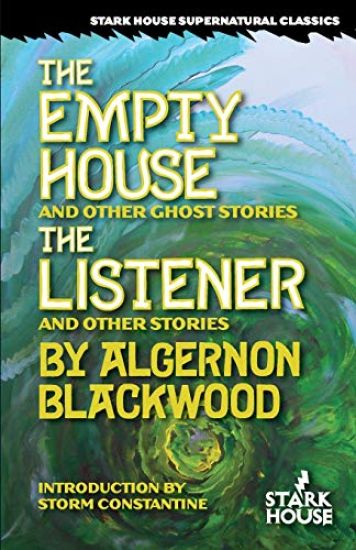
"He had always been tremblingly aware that he stood on the borderland of another region, a region where time and space were merely forms of thought, where ancient memories lay open to the sight, and where the forces behind each human life stood plainly revealed, and he could see the hidden springs at the very heart of the world."--Algernon Blackwood, from "The Insanity of Jones"The Empty Room and Other Ghost Stories is Algernon Blackwood's first collected work, ten original stories submitted by an old friend of Blackwood's, who thought so highly of them that he sent them to a new publisher by the name of Eveleigh Nash. Nash was so impressed, he offered Blackwood an immediate advance and brought the stories out to the British public that same year in 1906. Filled with chilling, unsettling and unnerving tales of ghostly visitations, The Empty Room serves as the perfect introduction to the world of Blackwood.But it wasn't until The Listener and Other Stories, his second collection, was published by Nash in 1907 that the true brilliance of this master storyteller was revealed to the reading public. Here you will find the otherworldly stories for which Blackwood is best known, true nightmares of supernatural fiction: "The Listener," "Max Hensig," "The Insanity of Jones," the poignant "The Dance of Death"...and, of course, his classic, "The Willows," in which two men on a boat trip down the Danube discover that there are more things in Nature than Man should ever know.