Kirjojen hintavertailu. Mukana 12 390 323 kirjaa ja 12 kauppaa.

Kirjahaku

Etsi kirjoja tekijän nimen, kirjan nimen tai ISBN:n perusteella.

1000 tulosta hakusanalla M J Simms-Maddox

Racism and Cultural Diversity

Racism and Cultural Diversity

M.J. Maher

Routledge
2019
sidottu
The author writes for all those interested in the dynamics of racism, from professionals in counselling, group analysis and psychotherapy working in multiracial and multicultural societies to those exposed to racism who need help in dealing with the impact of their experiences. She also addresses the concept of victims becoming perpetrators if supp
The History of Medications for Women
The first work of its kind, The History of Medications for Women: Materia medica woman is a richly detailed, far-ranging illustrated history of medications for women in all the great cultures and civilizations, from ancient times to the present. Compiled by an acclaimed author of medical history literature, this is the only book that extends from the earliest uses of ergometrine, lettuce, and mummy medicine, through the history of women's medications in ancient Assyria and Egypt, and into the 16th through 20th centuries. With the main sections organized by origin and timeline, the book contains lists of medications used by women from earliest times to the present accompanied by historically-based text. The author includes botanical, chemical, pharmacalogical, and therapeutic details where appropriate, as well as extensive quotations from both contemporary and old, rare books. The text is complemented with the history of obstetrics and gynecology, along with short biographies and illustrations. Additionally, the author presents a unique fund of hard-to-find information in sections devoted to topics such as anesthesia and analgesia, antiseptics, antibiotics and chemotherapy, blood transfusion and Rhesus disease, eclampsia, family planning, menopause, and uterine stimulants. Interesting and thought-provoking, The History of Medications for Women will not only provide an enjoyable read, but will allow you to appreciate the past and look at the future with a new perspective.
Stimulated Brillouin Scattering

Stimulated Brillouin Scattering

M J Damzen; V Vlad; Anca Mocofanescu; V Babin

CRC Press
2020
nidottu
Stimulated Brillouin scattering (SBS) is the most important example of a stimulated scattering process-light scattering that occurs when the intensity of the light field itself affects the propagating medium. A phenomenon that has been known of for some 35 years in solid state laser research, it has recently become relevant in the optical fiber industry, due to the increasing intensity required in optical fiber cores (and their long interaction lengths). SBS is one of the major limiting factors on the amount of power that can be transmitted via an optical fiber. This book describes the underlying physics of SBS, much of which are applicable to other fields of research, including, to some extent, plasma physics. It provides references to experimental details throughout. Later chapters investigate more advanced concepts and feature the problems faced by researchers using optical fibers.
The Denotational Description of Programming Languages

The Denotational Description of Programming Languages

M.J.C. Gordon

Springer-Verlag New York Inc.
1987
nidottu
This book explains how to formally describe programming languages using the techniques of denotational semantics. The presentation is designed primarily for computer science students rather than for (say) mathematicians. No knowledge of the theory of computation is required, but it would help to have some acquaintance with high level programming languages. The selection of material is based on an undergraduate semantics course taught at Edinburgh University for the last few years. Enough descriptive techniques are covered to handle all of ALGOL 50, PASCAL and other similar languages. Denotational semantics combines a powerful and lucid descriptive notation (due mainly to Strachey) with an elegant and rigorous theory (due to Scott). This book provides an introduction to the descriptive techniques without going into the background mathematics at all. In some ways this is very unsatisfactory; reliable reasoning about semantics (e. g. correctness proofs) cannot be done without knowing the underlying model and so learning semantic notation without its model theory could be argued to be pointless. My own feeling is that there is plenty to be gained from acquiring a purely intuitive understanding of semantic concepts together with manipulative competence in the notation. For these equip one with a powerful conceptua1 framework-a framework enabling one to visualize languages and constructs in an elegant and machine-independent way. Perhaps a good analogy is with calculus: for many practical purposes (e. g. engineering calculations) an intuitive understanding of how to differentiate and integrate is all that is needed.
Urban Air Pollution and Forests

Urban Air Pollution and Forests

M.J. Molina

Springer-Verlag New York Inc.
2002
sidottu
At present, roughly half of the world's population lives in urban centers. There are now more than 20 cities with a population of over 10 million inhabitants, compared to less than 5 about 50 years ago. This tendency toward urbanization is expected to continue, particularly in the developing world. A consequence of this growing trend is that millions of people are being exposed to harmful levels of urban air pollutants caused mainly by emissions from motor vehicles and from industrial and domestic activities involving the combustion of fossil fuels. The driving force for the design and implementation of emission control strate­ gies aimed at improving air quality has been the protection of the health of the population in urban centers. There are, however, other consequences of the pres­ ence of air pollutants besides the direct effect on human health. Reduced visibil­ ity, damage to monuments and buildings, and many other such consequences indirectly affect our quality of life. Another set of consequences involves damage to ecological systems. In fact, the nature of "photochemical smog" was first uncovered in the 1950s in connection with observations of its harmful effects on crops and plants in the vicinity of Los Angeles.
Search for Security: An Ethno-Psychiatric Study of Rural Ghana
In Search for Security, M. J. Field offers a unique ethno-psychiatric study of rural Ghana. The book focuses on the people, many of whom were obviously mentally ill, who came to the shrines of a new religious movement for help. The author's training in clinical psychiatry as well as ethnography enable her to place the findings of psychiatry within their cultural context. This book, drawn from a total of over 2,500 recorded cases, incorporates the results of her research.Dr. Field's findings do away with the myth that mental stress and illness are the prerogative of over-civilized societies. All the indices of stress familiar to students of European and American psychopathology were found to be present. After outlining the social, economic, and domestic conditions in rural Ghana, Dr. Field discusses the ideological background, in particular beliefs about witchcraft, magic, and spiritual possession. She then goes on to describe the treatment of patients at the shrines and interprets the complaints and requests in psychiatric terms. A series of chapters incorporate an illuminating selection of case studies, containing a wealth of accurate clinical material on depression, fear, and anxiety reactions, obsessive-compulsive disorders, paranoia, and schizophrenia. Search for Security effectively demonstrates that psychiatric illness must be understood through the ideology and value system of the society in which it appears. The book has a broad theoretical and methodological implication for both psychiatric and anthropological research, and makes an important contribution to the understanding an aspect of African life that has long been neglected.
Subsurface Ventilation and Environmental Engineering
This book has been written as a reference and text for engineers, researchers, teachers and students who have an interest in the planning and control of the environment in underground openings. While directed primarily to underground mining operations, the design procedures are also applicable to other complex developments of subsurface space such as nuclear waste repositories, commercial accommodation or vehicular networks. The book will, therefore, be useful for mining, civil, mechanical, and heating, ventilating and air-conditioning engineers involved in such enterprises. The chapters on airborne pollutants highlight means of measurement and control as well as physiological reaction. These topics will be of particular interest to industrial hygienists and students of industrial medicine. One of the first technical applications of digital computers in the world's mining industries was for ventilation network analysis. This occurred during the early 1960s. However, it was not until low cost but powerful personal computers proliferated in engineering offices during the 1980s that the full impact of the computer revolution was realized in the day-to-day work of most mine ventilation engineers. This book reflects the changes in approach and design procedures that have been brought about by that revolution. While the book is organized into six parts, it encompasses three broad areas.
Penetrant Testing

Penetrant Testing

M.J. Lovejoy

Chapman and Hall
1991
nidottu
The main aim of this book is to provide a concise guide to the penetrant inspection method of non-destructive testing. The emphasis is practical and is aimed at indicating how the various processes can be applied. The book begins with a survey of the history of the technology and the introduction of non-destructive testing. It goes on to discuss the penetrant process itself, its development, principles of the processes, techniques, choice of methods and the equipment that can be used. It also examines the quality control of penetrant materials and processes. The final chapters deal with health and safety and the management of penetrant waste.
Magnetic Particle Inspection

Magnetic Particle Inspection

M.J. Lovejoy

Chapman and Hall
1993
nidottu
During the years since this book was first published in 1993 there have very few developments in the technology of magnetic particle inspection apart from improvements in instrumentation which has made the measurement of peak values of time varying currents practicable. The major changes have arisen from health and safety and environmental concerns. These involve chemicals and exposure of personnel to air-borne electromagnetic fields and long wave ultraviolet (UY.A). The changes in the acceptability of certain volatile halogenated hydrocar­ bons which led to the banning of 1, 1, 1 thichloroethane in 1995 were evident in 1993. The present discussions concerning the emissions of volatile organic compounds (VOCs) in general was also current and has now reached a stage where the effects of these deliberations will become evident over the next few years. Concerns over the exposure of personnel to airborne electromagnetic fields has been current for some years as has discussions to the effects of long wave ultraviolet (UY.A) on human skin. Recommendations as to maximum permit­ ted exposures over periods of time to both of these phenomena have been put forward and will doubtless form the basis of future legislation on the matter. A number of new specifications have appeared notably EN (European) and ISO specifications and some of these are still in preparation. Generally their impact will be minimal since these specifications are largely derived from existing documentation.
Management for Child Health Services

Management for Child Health Services

M.J Rigby

CHAPMAN AND HALL
1998
nidottu
The provision of health care services for children is central to improving the nation's health and remains a key feature of every government's policy. This concept has been recognised in the United Kingdom since nineteenth century visionaries prompted increasing interest in the welfare of the country's school children. Successive generations have built upon these foundations and have been diligent in promoting effective service development. It is right that we follow their example, for the young have only one chance of a healthy upbringing. They are totally dependent on others to provide the right services, which are sensitive enough to address individual needs, yet sufficiently comprehensive to enable as many children as possible to reach adulthood with their potential uncom­ promised by illness. Our objective must be to enable today's children to enjoy a healthy childhood and to equip them to maximise the benefits of a healthy lifestyle in the years to come. We are making an essential investment in the future and must appreciate the challenges which come with that commitment. We need a multi-professional approach, positive management skills and the adoption of good management practice. I therefore welcome this book on managing child health services and commend the initiative of its editors in bringing together such an impressive team of contributors from different disciplines.
Insect Conservation Biology

Insect Conservation Biology

M.J. Samways

Chapman and Hall
1994
nidottu
This book is a paperback reprint of a previously published hardback. Insects are the major component of the world's biodiversity. By virtue of their vast numbers of both species and individuals, they are vital determinants of terrestrial ecological processes. Quantiatively, insects are important pointers for species-rich geographical areas. Qualitatively, they are also important, whether the subjects of conservation themselves or as tools for identifying biotic areas with high endemism. Insect Conservation Biology covers a wide range of topics from single species to landscape conservation, and from rare butterflies to the benefits-and-risks of biocontrol agents. The approach is both positive and realistic, with insects being discussed in the contexts of sustainable development, agroecology and monitoring environmental change. Ethical issues surrounding insects are also considered as well as clear ecommendations for the future. Conservation circles have given too little attention to the ecological significance of insects, while entomologists have been engaged mostly in controlling a tiny minority of species of insect pests. The realms of conservationists and entomologists are brought together in this ground-breaking book.
Extruder Principles and Operation

Extruder Principles and Operation

M.J. Stevens; J.A. Covas

Chapman and Hall
1995
sidottu
This book is intended to fill a gap between the theoretical studies and the practical experience of the processor in the extrusion of thermoplastic polymers. The former have provided a basis for numerical design of extruders and their components, but generally give scant attention to the practical performance, especially to the conflict between production rate and product quality. In practice extruders are frequently purchased to perform a range of duties; even so, the operator may have to use a machine designed for another purpose and not necessarily suitable for the polymer, process or product in hand. The operator's experience enables him to make good product in unpromising circumstances, but a large number of variables and interactions often give apparently contradictory results. The hope is that this book will provide a logical background, based on both theory and experience, which will help the industrial processor to obtain the best performance from his equipment, to recognize its limitations, and to face new problems with confidence. Mathematics is used only to the extent that it clarifies effects which cannot easily be expressed in words; ifit is passed over, at least a qualitative understanding should remain. The approximate theory will not satisfy the purist, but this seems to the authors less important than a clear representation of the physical mechanisms on which so much of the polymer processing industry depends. M. J. STEVENS J. A.
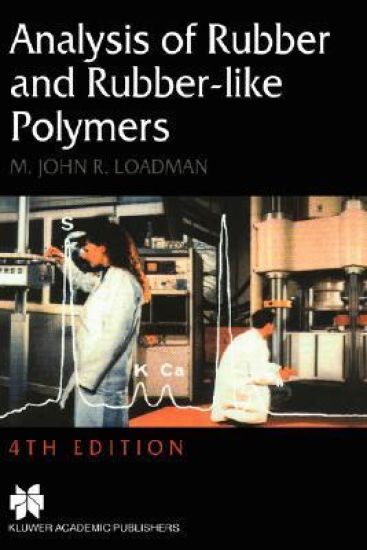
Analysis of Rubber and Rubber-like Polymers

Analysis of Rubber and Rubber-like Polymers

M.J. Loadman

Chapman and Hall
1999
sidottu
The first edition of this book (1958) described an analytical situation which had existed for a number of years for maintaining quality control on vulcanizates of natural rubber although the situation had recently been disturbed by the introduction of a range of synthetic rubbers which required identification and quantitative estimation. For the former purpose 'wet' chemistry, based on various imperfectly understood organic reactions, was pressed into service. Alongside this was the first introduction of instrumental analysis, using the infrared spectra of either the polymers or, more usually, their pyrolytic products to 'fingerprint' the material. The identification of a range of organic accelerators, antioxidants and their derivatives which had been intro­ duced during the 1920s and 30s was, in the first edition, dealt with by a combination of column chromatography and infrared spectroscopy or by paper chromatography. Quantitative procedures were, however, still classical in the tradition of gravimetric or volumetric assays with an initially weighed sample yielding, after chemical manipulation, a carefully precipitated, dried and weighed end product, or a solution of known composition whose weight or titre, as a percentage of the initial sample, quantified the function being determined. The second edition of this work (1968) consolidated the newer techni­ ques which had been introduced in the first without adding to them although, in other applications of analytical chemistry, instrumental analysis had already brought about a transformation in laboratory practice.
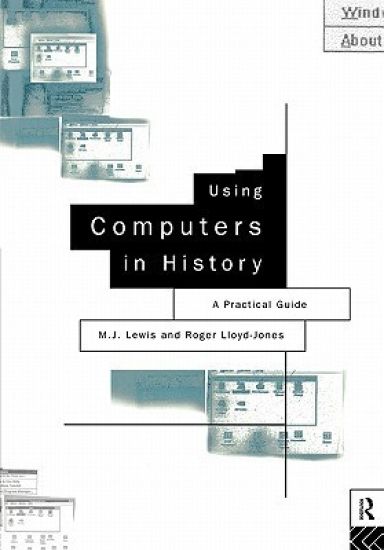
Using Computers in History

Using Computers in History

M.J. Lewis; Roger Lloyd-Jones

Routledge
1996
nidottu
Using Computers in History is designed to introduce students to historical computing through practical workshop exercises. With topics such as the pattern of nineteenth century emigration from the UK, the performance of the American and German economies in the 1930s and the Lancashire cotton industry, Lloyd-Jones and Lewis explain and illustrate the possible uses of the computer for the historian.Using Computers in History:* raises awareness of the use of computers as an important tool for the historian* provides a practical introduction to basic computer terminology* includes high quality diagrams of the screen displays which should appear at each stage* examines the use of spreadsheets and how to design and work with them* discusses the different software packages available, concentrating on Microsoft Excel 4* includes spreadsheet exercises based around a range of historical data sets* explores the use of databases* shows how to construct them* gives guidelines for further study* prompts students to apply the skills they have learnt to a number of examples
A New Introduction to Modal Logic

A New Introduction to Modal Logic

M.J. Cresswell; G.E. Hughes

Routledge
1996
sidottu
This long-awaited book replaces Hughes and Cresswell's two classic studies of modal logic: An Introduction to Modal Logic and A Companion to Modal Logic.A New Introduction to Modal Logic is an entirely new work, completely re-written by the authors. They have incorporated all the new developments that have taken place since 1968 in both modal propositional logic and modal predicate logic, without sacrificing tha clarity of exposition and approachability that were essential features of their earlier works.The book takes readers from the most basic systems of modal propositional logic right up to systems of modal predicate with identity. It covers both technical developments such as completeness and incompleteness, and finite and infinite models, and their philosophical applications, especially in the area of modal predicate logic.
A New Introduction to Modal Logic

A New Introduction to Modal Logic

M.J. Cresswell; G.E. Hughes

Routledge
1996
nidottu
This long-awaited book replaces Hughes and Cresswell's two classic studies of modal logic: An Introduction to Modal Logic and A Companion to Modal Logic.A New Introduction to Modal Logic is an entirely new work, completely re-written by the authors. They have incorporated all the new developments that have taken place since 1968 in both modal propositional logic and modal predicate logic, without sacrificing tha clarity of exposition and approachability that were essential features of their earlier works.The book takes readers from the most basic systems of modal propositional logic right up to systems of modal predicate with identity. It covers both technical developments such as completeness and incompleteness, and finite and infinite models, and their philosophical applications, especially in the area of modal predicate logic.
The Shade of Swords

The Shade of Swords

M.J Akbar

Routledge
2002
sidottu
The Shade of Swords is the first cohesive history of Jihad, written by one of India's leading journalists and writers. In this paperback edition, updated to show how and why Saddam Hussein repositioned himself as a Jihadi against America, M.J. Akbar explains the struggle between Islam and Christianity. Placing recent events in a historical context, he tackles the tricky question of what now for Jihad following the collapse of Saddam Hussein's regime.With British and American troops in Afghanistan, Pakistan, and once again in Iraq, the potential for Jihadi recruitment is ever increasing. Explaining how Jihad thrives on complex and shifting notions of persecution, victory and sacrifice, and illustrating how Muslims themselves have historically tried both to direct and control the phenomenon of Jihad, Akbar shows how Jihad pervades the mind and soul of Islam, revealing its strength and significance.To know the future, one needs to understand the past. M.J. Akbar's The Shade of Swords holds the key.
The Shade of Swords

The Shade of Swords

M.J Akbar

Routledge
2003
nidottu
The Shade of Swords is the first cohesive history of Jihad, written by one of India's leading journalists and writers. In this paperback edition, updated to show how and why Saddam Hussein repositioned himself as a Jihadi against America, M.J. Akbar explains the struggle between Islam and Christianity. Placing recent events in a historical context, he tackles the tricky question of what now for Jihad following the collapse of Saddam Hussein's regime.With British and American troops in Afghanistan, Pakistan, and once again in Iraq, the potential for Jihadi recruitment is ever increasing. Explaining how Jihad thrives on complex and shifting notions of persecution, victory and sacrifice, and illustrating how Muslims themselves have historically tried both to direct and control the phenomenon of Jihad, Akbar shows how Jihad pervades the mind and soul of Islam, revealing its strength and significance.To know the future, one needs to understand the past. M.J. Akbar's The Shade of Swords holds the key.
The UN General Assembly

The UN General Assembly

M.J. Peterson

Routledge
2005
sidottu
The United Nations General Assembly is arguably the most important discussion forum in global politics. This is a concise and accessible introduction to its history, organization and politics. Examining the development of the Assembly as a forum for improving international cooperation, this study details its development of shared norms and goals in the political context of the immediate post-World War II era. The Assembly has had to adapt quickly to the Cold War, the South-North contentions over development, the dissolution of the Soviet bloc and the rise in concern about terrorism. This study also presents a fascinating look ahead to three potential futures: a world of states, a world government, and a world of network governance. To flourish in any of these contexts it shows how the practices of the institution will require considerable change. The common criticisms of the Assembly are also covered in depth, such as that it is just a talking shop; that it is hamstrung by the Security Council and that it benefits the rich at the expense of the poor. This is an ideal book for students of the United Nations, international organizations and global governance.