The book "" Grand-Daddy Whiskers, M.D. "" has been considered important throughout the human history, and so that this work is never forgotten we have made efforts in its preservation by republishing this book in a modern format for present and future generations. This whole book has been reformatted, retyped and designed. These books are not made of scanned copies and hence the text is clear and readable.
This unique volume presents a comprehensive but accessible introduction to the field of ultrafast two-dimension infrared (2D IR) vibrational echo spectroscopy based on the pioneering work of Professor Michael D Fayer, Department of Chemistry, Stanford University, USA. It contains in one place a qualitative introduction to the field of 2D IR spectroscopy and a comprehensive set of scientific papers that underlie the qualitative discussion. The introductory material contains several detailed illustrations, and is based on the Centenary Lecture at the Indian Institute of Science given by Professor Fayer July 16, 2008 as part of the celebration of the 100th anniversary of the founding of IIS in Bangalore, India. The second part of the volume contains reprints of Fayer's relevant papers. The compilation will be very useful because it presents the historical background, motivation, methodology, and experimental results at a level that is accessible to the non-expert. The reprints of the scientific papers, from review articles to detailed theoretical papers, provide rigorous supporting material so that the reader can delve as deeply as desired into the subject.
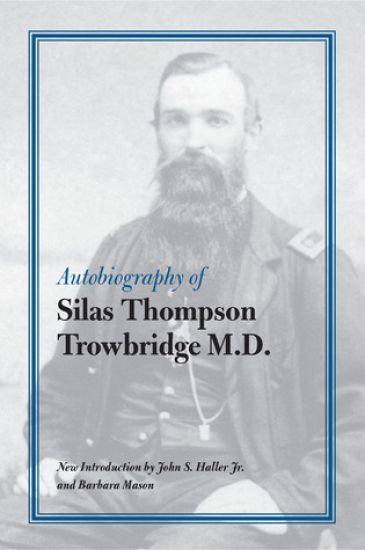
Autobiography of Silas Thompson Trowbridge M.D. is a remarkable account of nineteenth-century medicine, politics, and personal life that recovers the captivating experiences of a Civil War–era regimental surgeon who was also a president of the Illinois State Medical Society and a United States consul in Mexico. First published in 1872 by Trowbridge’s family and even printed on a family-owned press, only a handful of copies of the initial publication survive. In this first paperback edition, Trowbridge’s memoirs are reprinted as they originally appeared. Indiana-born Trowbridge moved to Illinois in his early twenties. A teacher by trade, he continued that career while he began the study of medicine, eventually starting a medical practice near New Castle, which he later moved to Decatur. Though respected by the community, Trowbridge lacked an authentic medical degree, so he enrolled in a four-month course of medical lectures at Rush Medical College in Chicago. Autobiography describes the atmosphere of the medical school and delineates Trowbridge’s opinions on the lack of quality control in medical colleges of the day. Although three years of study and two annual terms of sixteen weeks were the actual requirements for the degree, Trowbridge was allowed to graduate after a single course of lectures and completion of a twenty-page thesis due to his previous experience. He then married a young widow and returned to Decatur, where he began a partnership with two local physicians and inaugurated a county medical society. In addition to practicing medicine, he was known and respected for regulating it, too, having supported legislation that would legalize dissection and prohibit incompetent persons from practicing medicine. In 1861, Trowbridge began service as a surgeon of the 8th Illinois Volunteer Infantry commanded by Colonel Richard J. Oglesby. Autobiography describes his experiences beginning in Cairo, Illinois, where the infantry was involved in several expeditions and where Trowbridge made his “debut at the operating table.” Revealing a litany of surgical duties, replete with gruesome details, these war-time recollections provide a unique perspective on medical practices of the day. Likewise, his commentaries on political issues and his descriptions of combat serve to correct some of the early written histories of the war’s great battles. After receiving an honorable discharge in 1864, Trowbridge returned to Decatur to resume his partnership with Dr. W. J. Chenoweth and devote himself to surgery. His reminiscences recount several difficult surgeries, his efforts to reorganize the county medical society (which had collapsed during the war), and his communications to the Illinois legislature to set higher qualifications for practicing physicians. He was later elected president of the Illinois State Medical Society and appointed by President Grant United States Consul to Vera Cruz on the eastern coast of Mexico, where he studied and challenged the treatment of yellow fever. The autobiography ends in 1874 with a six-day family vacation and the marriage of his daughter to a merchant of Vera Cruz.
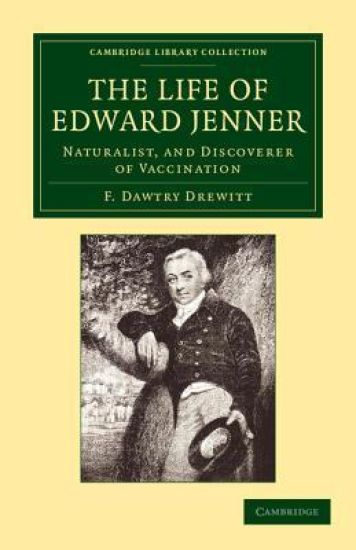
Active in fields spanning medicine, ornithology, zoology and even watercolour painting, Frederick Dawtrey Drewitt (1848–1942) was a prominent fellow of the Royal College of Physicians, exhibited at the Royal Academy, and was involved in governing the National Trust. His particular interest in birds led him to study the work of the physician and naturalist Edward Jenner (1749–1823), who contributed to the field of ornithology through his observations of the cuckoo's behaviour. Jenner is better known, however, as the 'father of immunology' for pioneering the smallpox vaccination - the word 'vaccine' comes from the Latin vacca (cow) as Jenner used the cowpox virus to inoculate against smallpox infection in humans. Drewitt had general readers in mind when he wrote about Jenner's extraordinary life and growing worldwide recognition. The first edition of this biography was published in 1931, and this enlarged second edition appeared in 1933.
Written by his friend, the physician John Baron (1786–1851), this laudatory biography of the 'father of immunology' did much to enhance the reputation of Edward Jenner (1749–1823) upon its publication in two volumes between 1827 and 1838. The work covers Jenner's personal and professional life both before and after his development of the vaccine for smallpox, as well as touching on the vaccine's reception and use around the world. Thoroughly explaining the history and facts of vaccination, Baron established himself as an authority on the subject. Although criticised by some for its unquestioning praise of Jenner's genius, the work is valuable for its use of primary sources, drawing heavily on correspondence and personal notes, excerpts of which appear throughout the text. Volume 1, published in 1827, focuses on Jenner's early life and the history and science of vaccination.
Written by his friend, the physician John Baron (1786–1851), this laudatory biography of the 'father of immunology' did much to enhance the reputation of Edward Jenner (1749–1823) upon its publication in two volumes between 1827 and 1838. The work covers Jenner's personal and professional life both before and after his development of the vaccine for smallpox, as well as touching on the vaccine's reception and use around the world. Thoroughly explaining the history and facts of vaccination, Baron established himself as an authority on the subject. Although criticised by some for its unquestioning praise of Jenner's genius, the work is valuable for its use of primary sources, drawing heavily on correspondence and personal notes, excerpts of which appear throughout the text. Volume 2, published in 1838, covers Jenner's later life and the global reception of vaccination. The appendix lists the various honours bestowed upon him.
Notice biologique du Dr J.-M.-D. Franc, ... par le Dr Jacquemet, ...Date de l'edition originale: 1885Sujet de l'ouvrage: Franc, J.-M.-D.Appartient a l'ensemble documentaire: LangRous1Ce livre est la reproduction fidele d'une oeuvre publiee avant 1920 et fait partie d'une collection de livres reimprimes a la demande editee par Hachette Livre, dans le cadre d'un partenariat avec la Bibliotheque nationale de France, offrant l'opportunite d'acceder a des ouvrages anciens et souvent rares issus des fonds patrimoniaux de la BnF.Les oeuvres faisant partie de cette collection ont ete numerisees par la BnF et sont presentes sur Gallica, sa bibliotheque numerique.En entreprenant de redonner vie a ces ouvrages au travers d'une collection de livres reimprimes a la demande, nous leur donnons la possibilite de rencontrer un public elargi et participons a la transmission de connaissances et de savoirs parfois difficilement accessibles.Nous avons cherche a concilier la reproduction fidele d'un livre ancien a partir de sa version numerisee avec le souci d'un confort de lecture optimal. Nous esperons que les ouvrages de cette nouvelle collection vous apporteront entiere satisfaction.Pour plus d'informations, rendez-vous sur www.hachettebnf.fr
Diese Studie ist ein Gesch ftsplan f r die Er ffnung eines Franchise-Unternehmens f r Damenschuhe und Accessoires in Jo o Pessoa-PB. Das Ziel des Unternehmens ist es, dem weiblichen Publikum Eleganz, Komfort und Wohlbefinden zu bieten, und zwar auf eine Weise, die den Bed rfnissen der Kundschaft entspricht. Zu diesem Zweck wurde eine strategische Planung mit der Mission, der Vision, den Werten, dem Gesch ft, der strategischen Positionierung, den Zielen und den Vorgaben des Unternehmens durchgef hrt. Im Verlauf der Studie wurden die wichtigsten Wettbewerber vorgestellt, eine Swot-Analyse durchgef hrt, die f nf Kr fte von Porter aufgelistet und die Balanced Scorecard analysiert. Schlie lich wurden eine Budgetplanung und eine Wirtschafts- und Finanzanalyse durchgef hrt. Die Ergebnisse zeigten, dass die Er ffnung von M&D Cal ados machbar war, da sie die Erwartungen der Investoren bertraf und eine hohe Rentabilit t erwarten lie . Dieses Buch richtet sich sowohl an diejenigen, die ein Schuhgesch ft er ffnen wollen, als auch an diejenigen, die sich ein Bild von den Managementinstrumenten der strategischen Planung in der Praxis machen wollen.