Kirjojen hintavertailu. Mukana 11 342 296 kirjaa ja 12 kauppaa.

Kirjahaku

Etsi kirjoja tekijän nimen, kirjan nimen tai ISBN:n perusteella.

1000 tulosta hakusanalla MILNE

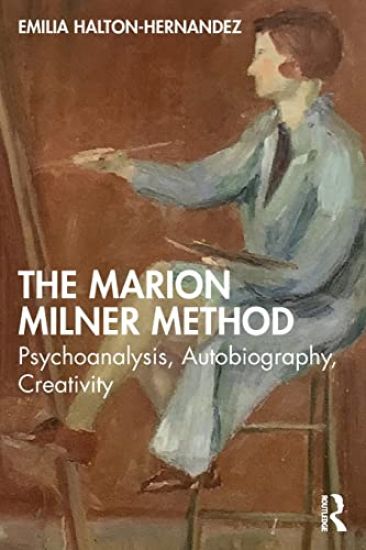
The Marion Milner Method

The Marion Milner Method

Emilia Halton-Hernandez

TAYLOR FRANCIS LTD
2023
nidottu
This book traces the development of British psychoanalyst Marion Milner’s (1900–98) autobiographical acts throughout her lifetime, proposing that Milner is a thinker to whom we can turn to explore the therapeutic potentialities of autobiographical and creative self-expression.Milner’s experimentation with aesthetic, self-expressive techniques are a means to therapeutic ends, forming what Emilia Halton-Hernandez calls her "autobiographical cure." This book considers whether Milner’s work champions this site for therapeutic work over that of the relationship between patient and analyst in the psychoanalytic setting. This book brings to light a theory and practice which is latent and sometimes hidden, but which is central to understanding what drives Milner’s autobiographical work. It is by doing this work of elucidation and organisation that Halton-Hernandez finds Milner to be a thinker with a unique take on psychoanalysis, object relations theory, creativity, and autobiography, working at the interstices of each.Divided into two fascinating sections exploring Milner’s distinctive method and the legacy and influence of her work, this book will appeal to psychoanalysts, art therapists, philosophers, and art and literary researchers alike.The Open Access version of this book, available at http://www.taylorfrancis.com, has been made available under a Creative Commons [Attribution-Non Commercial-No Derivatives (CC-BY-NC-ND)] 4.0 license.
The Marion Milner Method

The Marion Milner Method

Emilia Halton-Hernandez

TAYLOR FRANCIS LTD
2023
sidottu
This book traces the development of British psychoanalyst Marion Milner’s (1900–98) autobiographical acts throughout her lifetime, proposing that Milner is a thinker to whom we can turn to explore the therapeutic potentialities of autobiographical and creative self-expression.Milner’s experimentation with aesthetic, self-expressive techniques are a means to therapeutic ends, forming what Emilia Halton-Hernandez calls her "autobiographical cure." This book considers whether Milner’s work champions this site for therapeutic work over that of the relationship between patient and analyst in the psychoanalytic setting. This book brings to light a theory and practice which is latent and sometimes hidden, but which is central to understanding what drives Milner’s autobiographical work. It is by doing this work of elucidation and organisation that Halton-Hernandez finds Milner to be a thinker with a unique take on psychoanalysis, object relations theory, creativity, and autobiography, working at the interstices of each.Divided into two fascinating sections exploring Milner’s distinctive method and the legacy and influence of her work, this book will appeal to psychoanalysts, art therapists, philosophers, and art and literary researchers alike.The Open Access version of this book, available at http://www.taylorfrancis.com, has been made available under a Creative Commons [Attribution-Non Commercial-No Derivatives (CC-BY-NC-ND)] 4.0 license.
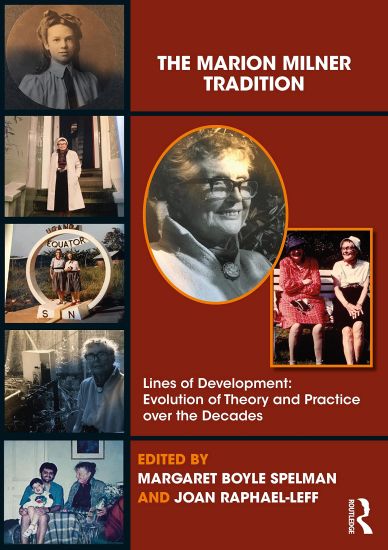
The Marion Milner Tradition
The Marion Milner Tradition provides a comprehensive overview of Milner’s eight-volume oeuvre for the first time, and celebrates her pioneering achievements both in psychoanalytic world and in creative and scientific disciplines such as clinical and organisational psychology, philosophy, mindfulness and spirituality, management theory, art therapy, as well as art appreciation/criticism.This volume considers Marion Blackett Milner through the prism of her innovative engagement with people, art, and human experience, as well as her extraordinary contribution as an original thinker and researcher within the Independent Group of the British Psychoanalytical Society. The co-editors’ exploratory approach to her legacy is as open as the spirit of Milnerean ‘discovery research’ in defining its distinctive features. An assembly of fifty contributors were invited to interrogate the evolution of what is becoming known as the Milner Tradition, demarcating her influence on theory and clinical practice over the many decades of her life and since her death. They draw upon their professional interviews or friendship with Marion Blackett Milner, or intimate experience of her as an analyst, supervisor, or relative. Similarly, participants in global reading groups in Australia, England, Greece, Northern Ireland, the Republic of Ireland, and South Africa recount personal responses to their own exercise in action research. The plethora of riches in this book will be of interest to both new and veteran readers of Milner’s opus, as well as students and practitioners from a variety of therapeutic and other disciplines.
The Marion Milner Tradition
The Marion Milner Tradition provides a comprehensive overview of Milner’s eight-volume oeuvre for the first time, and celebrates her pioneering achievements both in psychoanalytic world and in creative and scientific disciplines such as clinical and organisational psychology, philosophy, mindfulness and spirituality, management theory, art therapy, as well as art appreciation/criticism.This volume considers Marion Blackett Milner through the prism of her innovative engagement with people, art, and human experience, as well as her extraordinary contribution as an original thinker and researcher within the Independent Group of the British Psychoanalytical Society. The co-editors’ exploratory approach to her legacy is as open as the spirit of Milnerean ‘discovery research’ in defining its distinctive features. An assembly of fifty contributors were invited to interrogate the evolution of what is becoming known as the Milner Tradition, demarcating her influence on theory and clinical practice over the many decades of her life and since her death. They draw upon their professional interviews or friendship with Marion Blackett Milner, or intimate experience of her as an analyst, supervisor, or relative. Similarly, participants in global reading groups in Australia, England, Greece, Northern Ireland, the Republic of Ireland, and South Africa recount personal responses to their own exercise in action research. The plethora of riches in this book will be of interest to both new and veteran readers of Milner’s opus, as well as students and practitioners from a variety of therapeutic and other disciplines.