Kirjojen hintavertailu. Mukana 11 244 527 kirjaa ja 12 kauppaa.

Kirjahaku

Etsi kirjoja tekijän nimen, kirjan nimen tai ISBN:n perusteella.

1000 tulosta hakusanalla Maral Atmaca

Moral Understandings

Moral Understandings

Margaret Urban Walker

Oxford University Press Inc
2007
sidottu
This is a revised edition of Walker's well-known book in feminist ethics first published in 1997. Walker's book proposes a view of morality and an approach to ethical theory which uses the critical insights of feminism and race theory to rethink the epistemological and moral position of the ethical theorist, and how moral theory is inescapably shaped by culture and history. The main gist of her book is that morality is embodied in "practices of responsibility" that express our identities, values, and connections to others in socially patterned ways. Thus ethical theory needs to be empirically informed and politically critical to avoid reiterating forms of socially entrenched bias. Responsible ethical theory should reveal and question the moral significance of social differences. The book engages with, and challenges, the work of contemporary analytic philosophers in ethics. Moral Understandings has been influential in reaching a global audience in ethics and feminist philosophy, as well as in tangential fields like nursing ethics; research ethics; disability ethics; environmental ethics, and social and political theory. This revised edition contains a new preface, a substantive postscript to Chapter 1 about "the subject of moral philosophy"; the addition of a new chapter on the importance of emotion in practices of responsibility; and the addition of an afterword, which responds to critics of the book.

Moral Understandings

Moral Understandings

Margaret Urban Walker

Oxford University Press Inc
2007
nidottu
This is a revised edition of Walker's well-known book in feminist ethics first published in 1997. Walker's book proposes a view of morality and an approach to ethical theory which uses the critical insights of feminism and race theory to rethink the epistemological and moral position of the ethical theorist, and how moral theory is inescapably shaped by culture and history. The main gist of her book is that morality is embodied in "practices of responsibility" that express our identities, values, and connections to others in socially patterned ways. Thus ethical theory needs to be empirically informed and politically critical to avoid reiterating forms of socially entrenched bias. Responsible ethical theory should reveal and question the moral significance of social differences. The book engages with, and challenges, the work of contemporary analytic philosophers in ethics. This is a revised edition of Walker's well-known book in feminist ethics first published in 1997. Walker's book proposes a view of morality and an approach to ethical theory which uses the critical insights of feminism and race theory to rethink the epistemological and moral position of the ethical theorist, and how moral theory is inescapably shaped by culture and history. The main gist of her book is that morality is embodied in "practices of responsibility" that express our identities, values, and connections to others in socially patterned ways. Thus ethical theory needs to be empirically informed and politically critical to avoid reiterating forms of socially entrenched bias. Responsible ethical theory should reveal and question the moral significance of social differences. The book engages with, and challenges, the work of contemporary analytic philosophers in ethics.
Moral Skepticisms

Moral Skepticisms

Walter Sinnott-Armstrong

Oxford University Press Inc
2008
nidottu
Sinnott-Armstrong here provides an extensive survey of the difficult subject of moral beliefs. He covers theories that grapple with questions of morality such as naturalism, normativism, intuitionism, and coherentism. He then defends his own theory that he calls "moderate moral skepticism," which is that moral beliefs can be justified, but not extremely justified.
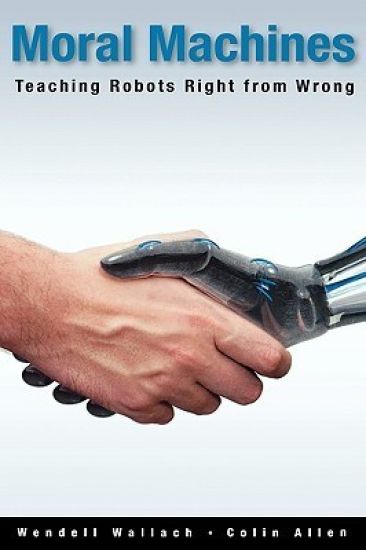
Moral Machines

Moral Machines

Wendell Wallach; Colin Allen

Oxford University Press Inc
2008
sidottu
Computers are already approving financial transactions, controlling electrical supplies, and driving trains. Soon, service robots will be taking care of the elderly in their homes, and military robots will have their own targeting and firing protocols. Colin Allen and Wendell Wallach argue that as robots take on more and more responsibility, they must be programmed with moral decision-making abilities, for our own safety. Taking a fast paced tour through the latest thinking about philosophical ethics and artificial intelligence, the authors argue that even if full moral agency for machines is a long way off, it is already necessary to start building a kind of functional morality, in which artificial moral agents have some basic ethical sensitivity. But the standard ethical theories don't seem adequate, and more socially engaged and engaging robots will be needed. As the authors show, the quest to build machines that are capable of telling right from wrong has begun. Moral Machines is the first book to examine the challenge of building artificial moral agents, probing deeply into the nature of human decision making and ethics.
Moral Value and Human Diversity

Moral Value and Human Diversity

Robert Audi

Oxford University Press Inc
2009
nidottu
Can the moral fragmentation so prominent in the contemporary world be overcome? Are there ethical standards that deserve everyone's allegiance? Can judgments of value transcend taste and cultural preference? Moral Value and Human Diversity offers a brief but highly comprehensive introduction to ethics and value theory that argues for positive answers in a pluralistic framework.
Moral Panics and the Copyright Wars

Moral Panics and the Copyright Wars

William Patry

Oxford University Press Inc
2009
sidottu
Metaphors, moral panics, folk devils, Jack Valenti, Joseph Schumpeter, John Maynard Keynes, predictable irrationality, and free market fundamentalism are a few of the topics covered in this lively, unflinching examination of the Copyright Wars: the pitched battles over new technology, business models, and most of all, consumers. In Moral Panics and the Copyright Wars, William Patry lays bare how we got to where we are: a bloated, punitive legal regime that has strayed far from its modest, but important roots. Patry demonstrates how copyright is a utilitarian government program - not a property or moral right. As a government program, copyright must be regulated and held accountable to ensure it is serving its public purpose. Just as Wall Street must serve Main Street, neither can copyright be left to a Reaganite "magic of the market." The way we have come to talk about copyright - metaphoric language demonizing everyone involved - has led to bad business and bad policy decisions. Unless we recognize that the debates over copyright are debates over business models, we will never be able to make the correct business and policy decisions. A centrist and believer is appropriately balanced copyright laws, Patry concludes that calls for strong copyright laws, just like calls for weak copyright laws, miss the point entirely: the only laws we need are effective laws, laws that further the purpose of encouraging the creation of new works and learning. Our current regime, unfortunately, creates too many bad incentives, leading to bad conduct. Just as President Obama has called for re-tooling and re-imagining the auto industry, Patry calls for a remaking of our copyright laws so that they may once again be respected.
Moral Entanglements

Moral Entanglements

Henry S. Richardson

Oxford University Press Inc
2012
sidottu
The philosopher Henry Richardson's short book is a defense of a position on a neglected topic in medical research ethics. Clinical research ethics has been a longstanding area of study, dating back to the aftermath of the Nazi death-camp doctors and the Tuskegee syphilis study. Most ethical regulations and institutions (such as Institutional Review Boards) have developed in response to those past abuses, including the stress on obtaining informed consent from the subject. Richardson points out that that these ethical regulations do not address one of the key dilemmas faced by medical researchers -- whether or not they have obligations towards subjects who need care not directly related to the purpose of the study, termed 'ancillary care obligations'. Does a researcher testing an HIV vaccine in Africa have an obligation to provide anti-retrovirals to those who become HIV positive during the trial? Should a researcher studying a volunteer's brain scan, who sees a possible tumor, do more than simply refer him or her to a specialist? While most would agree that some special obligation does exist in these cases, what is the basis of this obligation, and what are its limits? Richardson's analysis of those key questions and the development of his own position are at the heart of this book, which will appeal to bioethicists studying research ethics, to policy makers, and to political and moral philosophers interested in the obligations of beneficence, one of the key issues in moral theory.
Moral Sentimentalism

Moral Sentimentalism

Michael Slote

Oxford University Press Inc
2010
sidottu
There has recently been a good deal of interest in moral sentimentalism, but most of that interest has been exclusively either in meta-ethical questions about the meaning of moral terms or in normative issues about benevolence and/or caring and their place in morality. In Moral Sentimentalism Michael Slote attempts to deal with both sorts of issues and to do so, primarily, in terms of the notion or phenomenon of empathy. Hume sought to do something like this over two centuries ago, though he didn't have the term "empathy" and used "sympathy" instead. Slote therefore attempts to give moral sentimentalism a second wind. By relying so systematically on empathy in its account of normative morality and in what it has to say about the meaning of moral vocabulary, Slote offers a unified overall ethical picture that can then be tested against ethical rationalism. Rationalism has recently dominated the scene in ethics, but by showing how sentimentalism can make coherent and intuitive sense of such preferred rationalist notions as autonomy, respect, and justice-and by showing how a sentimentalism based in empathy can deal with ethically significant aspects of the moral life that rationalism tends to ignore or skimp on-Slote hopes a wider and more active debate between rationalism and sentimentalism can be set in motion. There are signs that sentimentalist modes of thought are gaining new footholds on the way ethics is done, and this new book is very hopeful about these possibilities.
Moral Issues

Moral Issues

Jan Nerveson

Oxford University Press
1983
nidottu
Though this moderately-priced anthology dates back to 1983, its lively articles are as relevant as ever. Topics covered include suicide, euthanasia, war, punishment, world hunger, abortion, sexual relations, equality, affirmative action, and future generations.
Moral Reasoning: Rediscovering the Ethical Tradition: Moral Reasoning
Every day we are faced with moral dilemmas in both our personal and professional lives. The choices we make, the ways in which we behave, and our responses to these dilemmas are grounded in our personal understandings of ethics and morality. But this understanding is not black and white: What is deplorable to one person may be perfectly acceptable to another. In Moral Reasoning: Rediscovering the Ethical Tradition, author Louis Groarke guides readers through a honing of their critical skills in moral analysis by providing a rich, deep, and far-reaching overview of the discipline. He offers a careful, in-depth introduction to the many schools of moral thought that have contributed to Western philosophy and to the teachings of great moral thinkers such as Confucius, Socrates, Epicurus, Aristotle, Jesus, Epictetus, Aquinas, Hobbes, Kant, Mill, and Kierkegaard. This wide-ranging text considers these many different perspectives on morality with the goal of building up one coherent, larger view. Text-wide inclusion of contemporary examples drawing on these classical ideas fosters critical reflection about today's important moral questions and encourages readers to develop their own considered views that go beyond peer pressure and ideology.
Moral Progress

Moral Progress

Philip Kitcher

Oxford University Press Inc
2021
sidottu
This inaugural volume in the Munich Lectures in Ethics series presents lectures by noted philosopher Philip Kitcher. In these lectures, Kitcher develops further the pragmatist approach to moral philosophy, begun in his book The Ethical Project. He uses three historical examples of moral progress--the abolition of chattel slavery, the expansion of opportunities for women, and the increasing acceptance of same-sex love--to propose methods for moral inquiry. In his recommended methodology, Kitcher sees moral progress, for individuals and for societies, through collective discussions that become more inclusive, better informed, and involve participants more inclined to engage with the perspectives of others and aim at actions tolerable by all. The volume is introduced by Jan-Christoph Heilinger and contains commentaries from distinguished scholars Amia Srinivasan, Susan Neiman, and Rahel Jaeggi, and Kitcher's response to their commentaries.
Moral and Immoral Whiteness in Immigration Politics

Moral and Immoral Whiteness in Immigration Politics

Yalidy Matos

OXFORD UNIVERSITY PRESS INC
2023
sidottu
Immigration has been at the heart of US politics for centuries. In Moral and Immoral Whiteness in Immigration Politics, Yalidy Matos examines the inherent moral, value-based, nature of white Americans' immigration attitudes, including preferences on local immigration enforcement programs, federal immigration policy, and levels of legal immigration allowed. Does identifying as white always signify a commitment to maintain the racial status quo or can it result in commitments to racial justice? How do we understand the passage of state-level sanctuary and anti-sanctuary immigration legislation through a white identity political lens? Thinking about whiteness as a moral choice complicates the idea that immigration policy preferences are mostly about demographic shifts. To examine the centrality of morality in white Americans' immigration attitudes, Matos looks at public opinion survey data as well as the roll call votes of elected officials. She examines the conditions under which white Americans choose to reproduce a system structured on white supremacy or repudiate it, as well as the role of socialization in their choices and immigration attitudes. As immigration continues to be weaponized to divide, Matos highlights the importance of understanding the roots of immigration attitudes in the United States and the ways in which whiteness structures these attitudes.
Moral and Immoral Whiteness in Immigration Politics

Moral and Immoral Whiteness in Immigration Politics

Yalidy Matos

OXFORD UNIVERSITY PRESS INC
2023
nidottu
Immigration has been at the heart of US politics for centuries. In Moral and Immoral Whiteness in Immigration Politics, Yalidy Matos examines the inherent moral, value-based, nature of white Americans' immigration attitudes, including preferences on local immigration enforcement programs, federal immigration policy, and levels of legal immigration allowed. Does identifying as white always signify a commitment to maintain the racial status quo or can it result in commitments to racial justice? How do we understand the passage of state-level sanctuary and anti-sanctuary immigration legislation through a white identity political lens? Thinking about whiteness as a moral choice complicates the idea that immigration policy preferences are mostly about demographic shifts. To examine the centrality of morality in white Americans' immigration attitudes, Matos looks at public opinion survey data as well as the roll call votes of elected officials. She examines the conditions under which white Americans choose to reproduce a system structured on white supremacy or repudiate it, as well as the role of socialization in their choices and immigration attitudes. As immigration continues to be weaponized to divide, Matos highlights the importance of understanding the roots of immigration attitudes in the United States and the ways in which whiteness structures these attitudes.
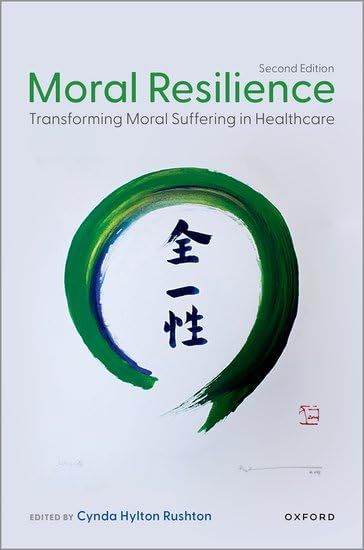
Moral Resilience

Moral Resilience

OXFORD UNIVERSITY PRESS INC
2024
nidottu
Suffering is an unavoidable reality in healthcare. Not only are patients and families suffering, but more and more the clinicians who care for them are also experiencing distress. The omnipresent, daily presence of moral adversity is, in part, a reflection of the burgeoning complexity of healthcare, the clinician's role within it, and the expanding range of available interventions that must be balanced with competing demands. There is an urgent need to design solutions that address the myriad factors that create the conditions for imperiled integrity within the healthcare system. Moral resilience is a pathway to transform the effects of moral suffering in healthcare. Cynda Hylton Rushton and colleagues offer a novel approach to addressing moral suffering that engages transformative strategies for individuals and systems alike and leverages practical skills and tools for a sustainable workforce. By taking this approach, healthcare professionals will be able to dismantle the systemic patterns that impede ethical practice, do so with integrity, competence, and wholeheartedness. This is a must-read for clinicians and front line-nurses, physicians, system leaders, and policymakers, as it will require collective collaboration, aligned values, shared language, and intentional design to make our healthcare organizations and their clinicians healthy again.
Moral Feelings, Moral Reality, and Moral Progress

Moral Feelings, Moral Reality, and Moral Progress

Thomas Nagel

OXFORD UNIVERSITY PRESS INC
2023
sidottu
This volume presents two closely related essays by Thomas Nagel: “Gut Feelings and Moral Knowledge” and “Moral Reality and Moral Progress.” Both essays are concerned with moral epistemology and our means of access to moral truth; both are concerned with moral realism and with the resistance to subjectivist and reductionist accounts of morality; and both are concerned with the historical development of moral knowledge. The second essay also proposes an account of the historical development of moral truth, according to which it does not share the timelessness of scientific truth. This is because moral truth must be based on reasons that are accessible to the individuals to whom they apply, and such accessibility depends on historical developments. The result is that only some advances in moral knowledge are discoveries of what has been true all along.
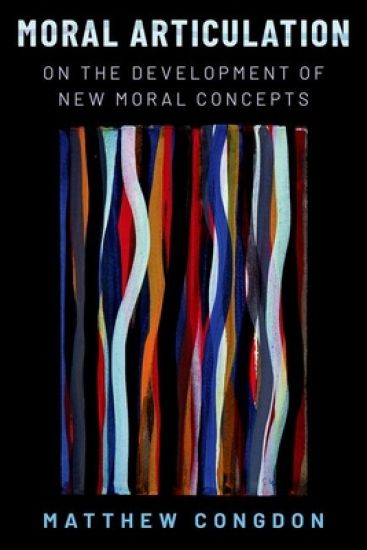
Moral Articulation

Moral Articulation

Matthew Congdon

OXFORD UNIVERSITY PRESS INC
2024
sidottu
This book explores the historical development of new moral concepts. Starting from examples of new moral terms invented in the twentieth century, like 'sexual harassment', 'genocide', 'racism', and 'hate speech', this book asks: what we are doing when we bring ethically significant acts and events under new descriptions? Are we simply naming moral phenomena that already exist, fully formed and intact, prior to their expression in language? Or are moral phenomena sensitive to the descriptions under which they fall, such that new modes of moral expression can reshape the phenomena they bring to light? Moral Articulation outlines an ethical framework that allows us to embrace a version of the latter, transformative view without sacrificing notions of moral truth, objectivity, and knowledge. The book presents a view of moral meaningfulness as extending beyond what we can presently put into words, urging that expansions in our moral vocabularies often begin in dissonant experiences of conceptual and linguistic limits. Resisting a tendency in contemporary ethics to start with situations and dilemmas whose descriptions are already given, this book argues that the struggle to piece together a discursively articulate picture of a situation is an ethical task in its own right. The result is a picture of ethical life that emphasizes the role of language in shaping who we are.
Moral Responsibility and the Flicker of Freedom

Moral Responsibility and the Flicker of Freedom

Justin A. Capes

OXFORD UNIVERSITY PRESS INC
2023
sidottu
Thought experiments of a sort devised by Harry Frankfurt are widely believed to be counterexamples to the principle that a person is morally responsible for what he did only if he could have avoided doing it. In Moral Responsibility and the Flicker of Freedom, Justin A. Capes challenges that widespread belief. He argues that, far from being counterexamples to the principle, Frankfurt cases, as they have come to be known, actually provide further confirmation of it, a conclusion that has important implications for our understanding of free will and moral responsibility. Central to Capes's argument is a version of what's known as the flicker of freedom strategy. Capes contends that while an agent's freedom is significantly curtailed in Frankfurt cases, it isn't extinguished entirely, which is why there is typically something in such cases for which the featured agent is morally responsible (though it's never something the agent couldn't have avoided). This analysis of Frankfurt cases is supported by reflection on vignettes involving omissions (or inaction more generally). Drawing on a detailed analysis of such vignettes, Capes offers a compelling defense of a symmetrical view of moral responsibility, according to which having a fair opportunity to do otherwise is an essential determinant of moral responsibility for both actions and omissions.
Moral Status

Moral Status

Mary Anne Warren

Clarendon Press
1997
sidottu
Mary Anne Warren explores a theoretical question which lies at the heart of practical ethics: what are the criteria for having moral status? In other words, what are the criteria for being an entity towards which people have moral obligations? Some philosophers maintain that there is one intrinsic property--for instance, life, sentience, humanity, or moral agency. Others believe that relational properties, such as belonging to a human community, are more important. In Part I of the book, Warren argues that no single property can serve as the sole criterion for moral status; instead, life, sentience, moral agency, and social and biotic relationships are all relevant, each in a different way. She presents seven basic principles, each focusing on a property that can, in combination with others, legitimately affect an agent's moral obligations towards entities of a given type. In Part II, these principles are applied in an examination of three controversial ethical issues: voluntary euthanasia, abortion, and the moral status of animals.
Moral Particularism

Moral Particularism

Clarendon Press
2000
nidottu
Moral Particularism is a timely and penetrating investigation of a theoretical approach that seeks to transform moral philosophy. In the face of continuing disagreement about which general moral principles are correct, there has been a resurgence of interest in the view that correct moral judgements can be only about particular cases. This view, moral particularism, presages a revolution in ordinary moral practice, which has hitherto consisted largely of appeals to general moral principles. Moral particularism also opposes the main aim of most contemporary normative moral theory, which consists in attempts to show that either one general principle or a set of general principles is superior to all its rivals.