Kirjojen hintavertailu. Mukana 12 016 292 kirjaa ja 12 kauppaa.

Kirjahaku

Etsi kirjoja tekijän nimen, kirjan nimen tai ISBN:n perusteella.

1000 tulosta hakusanalla Marcus Patzer

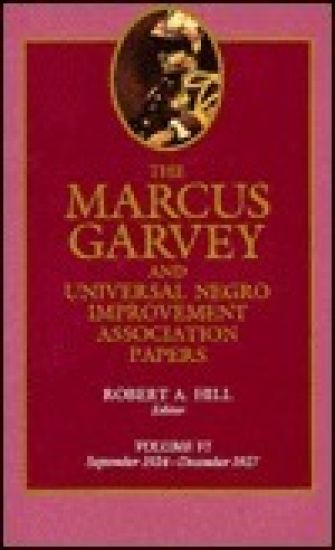
The Marcus Garvey and Universal Negro Improvement Association Papers, Vol. VI
'If I die in Atlanta my work shall then only begin, but I shall live, in the physical or spiritual, to see the day of Africa's glory...I shall write the history that will inspire the millions that are coming and leave the posterity of our enemies to reckon with the hosts for the deeds of their fathers' - Marcus Garvey upon his imprisonment in the Atlanta federal penitentiary, 1925. The sixth volume of "The Marcus Garvey and UNIA Papers" spans the great divide in the affairs of the American Garvey movement that resulted from the imprisonment of its charismatic leader in 1925. The volume tells the story of Garvey's failed efforts to win the appeal against his conviction for mail fraud, his incarceration, the legal battle to win his freedom, and the massive grass-roots petition movement mobilized in his defense. The activism inspired by Garvey's imprisonment was confounded by internecine struggles within the hierarchy of the movement and by growing financial difficulties, including the failure of the Black Cross Navigation and Trading Company, the loss of Liberty Hall, and the bankruptcy of Liberty University. The volume ends with Garvey's release from prison and his deportation from America. Although he never returned to the United States, Garvey continued his forceful shaping of the history of the movement that bore his name, first from Jamaica and then from his final exile in Britain.
The Marcus Garvey and Universal Negro Improvement Association Papers, Vol. VII
The publication of Volume VII marks the completion of the American series of "The Marcus Garvey and Universal Negro Improvement Association Papers". This final book in the seven-volume set charts the magnetic, controversial Pan-African leader's career from his deportation from the United States in November 1927 to his death in England in 1940. The volume begins with Garvey's triumphant welcome in Jamaica, his tour abroad, and his entry into Jamaican party politics. It traces his reshaping of the organizational structure of the Universal Negro Improvement Association (UNIA) in the late 1920s, and his management of UNIA affairs from Kingston and London in the 1930s. Though typically seen as a time of decline, this final period of Garvey's life appears, in editorials drawn from his publications, as a fruitful one in which some of his strongest political writings were produced. Surveillance reports filed by Jamaican police and British colonial officials provide a rich account of Garvey's speeches and activities. Although he was banned from the United States and restricted from traveling or speaking in many areas under colonial supervision, Garvey nevertheless traveled widely after his deportation, visiting and influencing affairs in Geneva, Paris, and London, and making organizational tours of Canada and the Caribbean. He chaired UNIA conferences in Toronto and inaugurated the School of African Philosophy, a series of lectures designed to train UNIA leaders. In the mid-1930s he moved the headquarters of the UNIA to London. In the final months of his life, correspondence between Garvey in England and his young sons in Jamaica shows the personal side of the public leader. The tragedy of Garvey's personal demise is framed by the cataclysmic events of Europe entering a world war and by the decline of the movement he had worked so diligently to build. The long financial hardships of the previous decade and the loss of Garvey's presence had winnowed the membership of the UNIA. Garvey suffered a disabling stroke in January 1940. He died in London the following June, as Italy invaded France and Germany prepared to occupy Paris. Volume VII ends with the reconstitution of the UNIA in the months immediately after Garvey's death and the establishment of a new headquarters with new leadership in Cleveland.
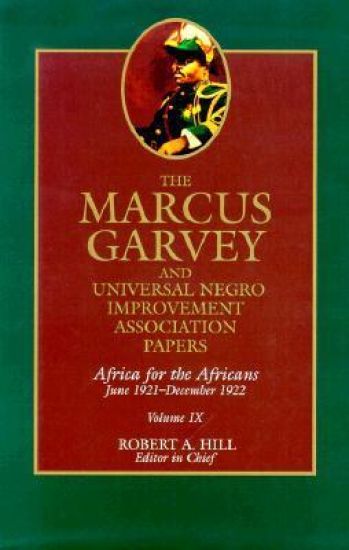
The Marcus Garvey and Universal Negro Improvement Association Papers, Vol. IX
'Africa for the Africans' was the name given in Africa to the extraordinary black social protest movement led by Jamaican Marcus Mosiah Garvey (1887-1940). Volumes I-VII of the "Marcus Garvey and Universal Negro Improvement Association Papers" chronicled the Garvey movement that flourished in the United States during the 1920s. Now, the long-awaited African volumes of this edition (Volumes VIII and IX and a forthcoming Volume X) demonstrate clearly the central role Africans played in the development of the Garvey phenomenon. The African volumes provide the first authoritative account of how Africans transformed Garveyism from an external stimulus into an African social movement. They also represent the most extensive collection of documents ever gathered on the early African nationalism of the inter-war period. Here is a detailed chronicle of the spread of Garvey's call for African redemption throughout Africa and the repressive colonial responses it engendered. Volume VIII begins in 1917 with the little-known story of the Pan-African commercial schemes that preceded Garveyism and charts the early African reactions to the UNIA. Volume IX continues the story, documenting the establishment of UNIA chapters throughout Africa and presenting new evidence linking Garveyism and nascent Namibian nationalism.
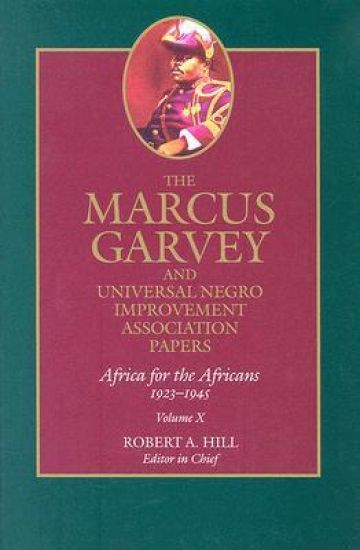
The Marcus Garvey and Universal Negro Improvement Association Papers, Vol. X
'Africa for the Africans' was the name given to the extraordinary movement led by Jamaican Marcus Mosiah Garvey (1887-1940). Volumes I-VII of the "Marcus Garvey and Universal Negro Improvement Association Papers" chronicled the Garvey movement that flourished in the United States during the 1920s. Now, the long-awaited African volumes of this edition demonstrate clearly the central role Africans played in the development of the Garvey phenomenon. The African volumes provide the first authoritative account of how Africans transformed Garveyism into an African social movement. The most extensive collection of documents ever gathered on the early African nationalism of the interwar period, Volume X provides a detailed chronicle of the spread of Garvey's call for African redemption throughout Africa.
Marcus Foster and the Oakland Public Schools

Marcus Foster and the Oakland Public Schools

Jesse J. McCorry

University of California Press
2022
pokkari
Critics of public organizations have charged them with rigidity, insensitivity to public needs, inefficiency, and other faults. The charges are not new, but the surge of urban political activism during the 1960s gave a sense of urgency to demands for organizational change. Marcus Foster and the Oakland Public Schools examines an urban political executive’s efforts to meet those demands. In an attempt to reform education bureaucracy, Marcus Foster—former superintendent of schools in Oakland, California—introduced a three-part program of community participation, decentralization, and budgeting. Each component responded to a specific criticism of bureaucracies, and each was strongly supported by students of organizations. The most successful changes were those for which the superintendent controlled the requisite resources, enabling Foster to initiate community involvement and determine its procedures. But where change required existing bureaucratic units to relinquish some of their resources, Foster’s success was more limited. It was not, however, the control of resources by others but the unbridgeable gap between theory and application that burdened efforts to reform budgeting. Jesse J. McCorry shows how the common notion that organizational change is thwarted by bureaucratic recalcitrance and inertia is oversimplified. Broadening analytic perspectives reveals that some bureaucratic reforms, along with their objectives, are beyond the limits of what even the most effective leadership can achieve. This title is part of UC Press's Voices Revived program, which commemorates University of California Press’s mission to seek out and cultivate the brightest minds and give them voice, reach, and impact. Drawing on a backlist dating to 1893, Voices Revived makes high-quality, peer-reviewed scholarship accessible once again using print-on-demand technology. This title was originally published in 1978.
Marcus Foster and the Oakland Public Schools

Marcus Foster and the Oakland Public Schools

Jesse J. McCorry

University of California Press
2022
sidottu
Critics of public organizations have charged them with rigidity, insensitivity to public needs, inefficiency, and other faults. The charges are not new, but the surge of urban political activism during the 1960s gave a sense of urgency to demands for organizational change. Marcus Foster and the Oakland Public Schools examines an urban political executive’s efforts to meet those demands. In an attempt to reform education bureaucracy, Marcus Foster—former superintendent of schools in Oakland, California—introduced a three-part program of community participation, decentralization, and budgeting. Each component responded to a specific criticism of bureaucracies, and each was strongly supported by students of organizations. The most successful changes were those for which the superintendent controlled the requisite resources, enabling Foster to initiate community involvement and determine its procedures. But where change required existing bureaucratic units to relinquish some of their resources, Foster’s success was more limited. It was not, however, the control of resources by others but the unbridgeable gap between theory and application that burdened efforts to reform budgeting. Jesse J. McCorry shows how the common notion that organizational change is thwarted by bureaucratic recalcitrance and inertia is oversimplified. Broadening analytic perspectives reveals that some bureaucratic reforms, along with their objectives, are beyond the limits of what even the most effective leadership can achieve. This title is part of UC Press's Voices Revived program, which commemorates University of California Press’s mission to seek out and cultivate the brightest minds and give them voice, reach, and impact. Drawing on a backlist dating to 1893, Voices Revived makes high-quality, peer-reviewed scholarship accessible once again using print-on-demand technology. This title was originally published in 1978.
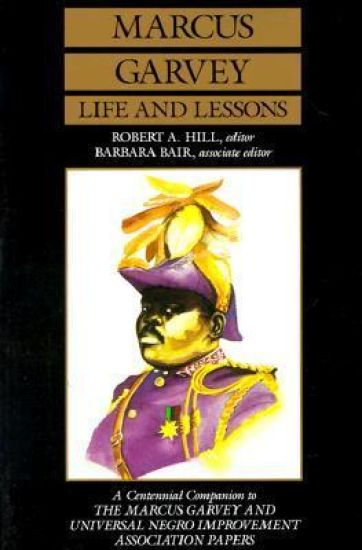
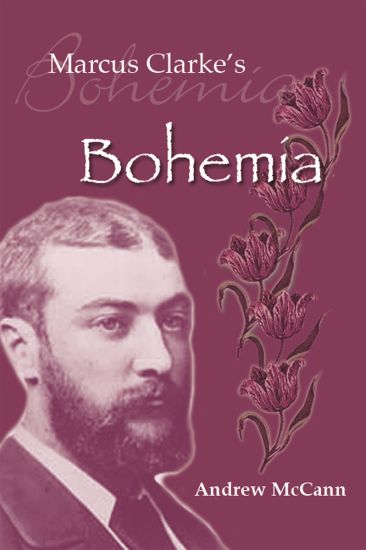
Marcus Clarke's Bohemia

Marcus Clarke's Bohemia

Andrew McCann

Melbourne University Press
2004
nidottu
Marcus Clarke's ""Bohemia"" is the first major critical study of Marcus Clarke - arguably Australia's best known and most important nineteenth-century writer. It situates Clarke both within the bohemian culture of Melbourne and a burgeoning cosmopolitan print-culture extending beyond national borders. Marcus Clarke's ""Bohemia"" offers detailed readings of Clarke's major works, many of which have not previously been discussed, and traces the influence of other European writers on Clarke's writing. Importantly, it focuses on his engagement with the modernity of the place and time in which he worked and lived. McCann's in-depth study unearths the richness of Clarke's writing and brings nineteenth-century Melbourne to life. Impeccably researched and gracefully written, Marcus Clarke's ""Bohemia"" is challenging and compelling reading.