Kirjojen hintavertailu. Mukana 12 390 323 kirjaa ja 12 kauppaa.

Kirjahaku

Etsi kirjoja tekijän nimen, kirjan nimen tai ISBN:n perusteella.

237 tulosta hakusanalla Maribeth Boelts

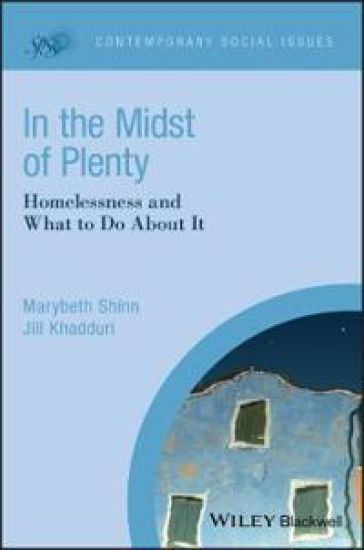
In the Midst of Plenty

In the Midst of Plenty

Marybeth Shinn; Jill Khadduri

Wiley-Blackwell (an imprint of John Wiley Sons Ltd)
2020
nidottu
Foreword by Nan Roman, President and CEO of the National Alliance to End Homelessness This book explains how to end the U.S. homelessness crisis by bringing together the best scholarship on the subject and sharing solutions that both local communities and national policy-makers can apply now. In the Midst of Plenty shifts understanding of homelessness away from individual disability to larger contexts of poverty, income inequality, housing affordability, and social exclusion. Homelessness experts Shinn and Khadduri provide guidance on how to end homelessness for people who experience it and how to prevent so many people from reaching the point where they have no alternative to sleeping on the street or in emergency shelters. The authors show that we know how to end homelessness—if we devote the necessary resources to doing so. In the Midst of Plenty: Homelessness and What to Do About It is an excellent resource for policy-makers, professionals in the homeless services system, and anyone else who wants to end homelessness. It also can serve as a text in undergraduate or masters courses in public policy, sociology, psychology, social work, urban studies, or housing policy. "The knowledgeable and thoughtful authors of this book—two brilliant women who know as much as anyone in the country about the nature of homelessness and its solutions—have done a great service by taking us on a journey through the history of homelessness, how our responses have changed, and how we can end it."—Nan Roman, President and CEO National Alliance to End Homelessness. "Shinn and Khadduri's new book is a thorough yet concise examination of what we know about the nature and causes of homelessness, and the crucial lessons learned. This critically important work provides a roadmap to restoring basic housing and income security as viable policy options, in the face of our daunting inequality divide that otherwise threatens millions with destitution and homelessness."—Dennis Culhane, Dana and Andrew Stone Professor of Social Policy, University of Pennsylvania "Marybeth Shinn and Jill Khadduri have combined their significant expertise to create an essential guide about the history of modern homelessness and to offer a clear path forward to end this American tragedy. Their policy recommendations on ending homelessness are culled from the best about what we know works."—Barbara Poppe, Executive Director US Interagency Council on Homeless, 2009-2014
In the Midst of Plenty

In the Midst of Plenty

Marybeth Shinn; Jill Khadduri

Wiley-Blackwell (an imprint of John Wiley Sons Ltd)
2020
sidottu
Foreword by Nan Roman, President and CEO of the National Alliance to End Homelessness This book explains how to end the U.S. homelessness crisis by bringing together the best scholarship on the subject and sharing solutions that both local communities and national policy-makers can apply now. In the Midst of Plenty shifts understanding of homelessness away from individual disability to larger contexts of poverty, income inequality, housing affordability, and social exclusion. Homelessness experts Shinn and Khadduri provide guidance on how to end homelessness for people who experience it and how to prevent so many people from reaching the point where they have no alternative to sleeping on the street or in emergency shelters. The authors show that we know how to end homelessness—if we devote the necessary resources to doing so. In the Midst of Plenty: Homelessness and What to Do About It is an excellent resource for policy-makers, professionals in the homeless services system, and anyone else who wants to end homelessness. It also can serve as a text in undergraduate or masters courses in public policy, sociology, psychology, social work, urban studies, or housing policy. "The knowledgeable and thoughtful authors of this book—two brilliant women who know as much as anyone in the country about the nature of homelessness and its solutions—have done a great service by taking us on a journey through the history of homelessness, how our responses have changed, and how we can end it."—Nan Roman, President and CEO National Alliance to End Homelessness. "Shinn and Khadduri's new book is a thorough yet concise examination of what we know about the nature and causes of homelessness, and the crucial lessons learned. This critically important work provides a roadmap to restoring basic housing and income security as viable policy options, in the face of our daunting inequality divide that otherwise threatens millions with destitution and homelessness."—Dennis Culhane, Dana and Andrew Stone Professor of Social Policy, University of Pennsylvania "Marybeth Shinn and Jill Khadduri have combined their significant expertise to create an essential guide about the history of modern homelessness and to offer a clear path forward to end this American tragedy. Their policy recommendations on ending homelessness are culled from the best about what we know works."—Barbara Poppe, Executive Director US Interagency Council on Homeless, 2009-2014
The Morehouse Mystique

The Morehouse Mystique

Marybeth Gasman; Barbara Bush

Johns Hopkins University Press
2012
sidottu
The Morehouse School of Medicine in Atlanta, Georgia, is one of only four predominantly Black medical schools in the United States. Among its illustrious alumni are surgeons general of the United States, medical school presidents, and numerous other highly regarded medical professionals. This book tells the engrossing history of this venerable institution. The school was founded just after the civil rights era, when major barriers prevented minorities from receiving adequate health care and Black students were underrepresented in predominantly White medical schools. The Morehouse School of Medicine was conceived to address both problems-it was a minority-serving institution educating doctors who would practice in underserved communities. The school's history involves political maneuvering, skilled leadership, dedication to training African American physicians, and a mission of primary care in disadvantaged communities. Highlighting such influential leaders as former Health and Human Services Secretary Louis W. Sullivan, "The Morehouse Mystique" situates the school in the context of the history of medical education for Blacks and race relations throughout the country. The book features excerpts from personal interviews with prominent African American doctors as well as with former presidents Jimmy Carter and George H. W. Bush, who reveal how local, state, and national politics shaped the development of Black medical schools in the United States. The story of the Morehouse School of Medicine reflects the turbulent time in which it was founded and the lofty goals and accomplishments of a diverse group of African American leaders. Their tireless efforts in creating this eminent Black institution changed the landscape of medical education and the racial and ethnic makeup of physicians and health care professions.
Envisioning Black Colleges

Envisioning Black Colleges

Marybeth Gasman

Johns Hopkins University Press
2018
pokkari
The multifaceted story of the UNCF.Winner, Outstanding Publication Award, American Educational Research AssociationEtched into America's consciousness is the United Negro College Fund's phrase "A mind is a terrible thing to waste." This book tells the story of the organization's efforts on behalf of black colleges against the backdrop of the cold war and the civil rights movement.Founded during the post–World War II period as a successor to white philanthropic efforts, the UNCF nevertheless retained vestiges of outside control. In its early years, the organization was restrained in its critique of segregation and reluctant to lodge a challenge against institutional and cultural racism. Through cogent analysis of written and oral histories, archival documents, and the group's outreach and advertising campaigns, historian Marybeth Gasman examines the UNCF’s struggle to create an identity apart from white benefactors and to evolve into a vehicle for black empowerment.The first history of the UNCF, Envisioning Black Colleges draws attention to the significance of black colleges in higher education and the role they played in Americans’ struggle for equality.
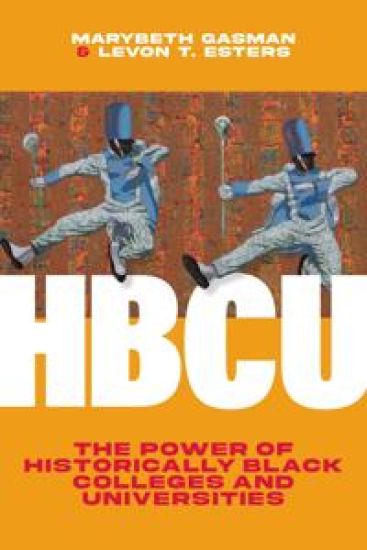
HBCU

HBCU

Marybeth Gasman; Levon T. Esters

Johns Hopkins University Press
2024
sidottu
Showcases the role HBCUs play in empowering Black students, fostering economic development, building community, and mentoring leaders and activists.Historically Black Colleges and Universities (HBCUs) play a pivotal role in promoting social and economic mobility for African Americans and in mentoring the next generation of Black leaders. In HBCU, Marybeth Gasman and Levon T. Esters explore the remarkable impact and contributions of these significant institutions.Through inspiring personal stories and extensive research, Gasman and Esters showcase how HBCUs have mentored generations of leaders and scholars, fostering a collaborative culture of success and empowerment. These schools shape and propel Black students into leadership and intellectual roles where they have a major impact on medicine, literature, law, higher education, art, sports, and business. HBCUs also have a profound impact on local communities and economic development that extends far beyond the classroom. This book sheds light on the unique cultures and identities nurtured within HBCUs while emphasizing the importance of philanthropic support and alumni engagement in maintaining these important institutions. Despite their positive contributions to society, HBCUs face specific challenges like securing adequate funding and support, small endowments, and accreditation. Gasman and Esters sound a compelling call to action and outline practical steps for sustaining HBCUs' invaluable legacy.
Tales of A Jailhouse Librarian: Challenging the Juvenile Justice System One Book At A Time
In a large surburban county jail, a rolling library book cart connects boys with their new counselor, a veteran schoolteacher. Faced with their unquenchable thirst for reading to help ease the unremitting boredom of everyday life, "Mrs. Z", now, "the book-lady," gives them the opportunity to share their hopes, their disappointments, their disillusionment and most of all, their anger at a system that is crushing their spirit and dreams for the future. What Frederick Douglass advised us about education rings true today--"It's easier to build strong children than repair broken men." Tales of a Jailhouse Librarian skillfully captures the sights, sensations and rhythms of jail life. Zeman mixes journalism, memoir and character sketches with facts about the juvenile justice system, describes the various agencies, provides relevant statistics, and specific court cases that become so palatable they are easily digested. Never a "slog". Interesting and engaging. She makes a strong argument that these boys need education, not jail time. "We have to recognize that we have a very narrow window of opportunity left to re-direct incarcerated youth toward education and living productive lives. Jail isn't always the best solution. One million dollars invested in incarceration reduces 350 crimes; one million dollars invested in education reduces 600 crimes. It's difficult to slap the word, criminal, onto a juvenile-someone who is 16 or 17 or 18, someone who has the rest of their lives ahead of them and is just as likely as you or I were at that age to change." Not a screed or an expose. These are real stories about real kids in prison, stories so real and so raw they become our own.
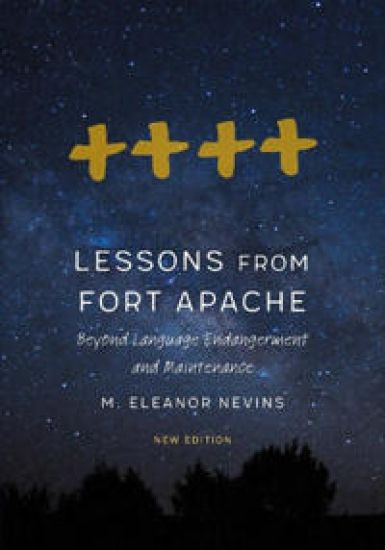
Lessons from Fort Apache

Lessons from Fort Apache

Marybeth Eleanor Nevins; Cline Griggs; Mona Eleando

University of Nebraska Press
2024
pokkari
Lessons from Fort Apache is an ethnography of Indigenous language dynamics on the Fort Apache reservation in Arizona with North American and global implications concerning language endangerment. Moving beyond a narrow focus on linguistic documentation, M. Eleanor Nevins examines how the linguistics and cultural identities of Indigenous populations are attributed with meaning against other sociocultural concerns and interests. While affirming the value of language documentation and maintenance, Nevins also provides a much-needed appraisal of the potential conflicts in authority claims and language practices between community members and the educators and scholars who research their linguistic heritage. Nevins argues that the debates surrounding the revitalization of Indigenous languages need broadening to include larger questions of social mediation, shifting cultural identities, and the politics intrinsic to the relationship between Indigenous community members and university-accredited experts such as language researchers and educators. This engaging ethnography examines these questions and investigates the language dynamics of the Fort Apache Reservation, including the unintended challenges that standardized textual models sometimes pose to local interests. Nevins reveals the community’s historical and contemporary concerns for language documentation, maintenance, and revitalization.Lessons from Fort Apache demonstrates the need for language maintenance programs and for flexibility in finding politically sustainable forms of collaboration and exchange between researchers, teachers, and those community members who base their claims to an Indigenous language in alternate terms.
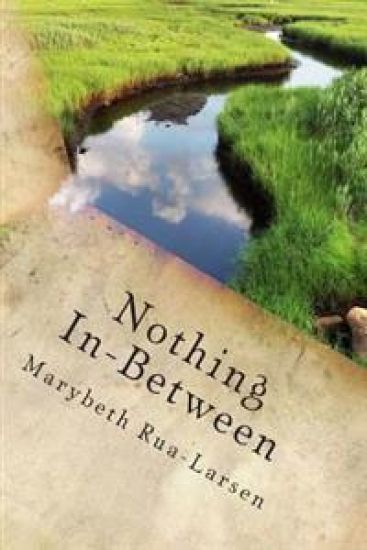
Nothing In-Between

Nothing In-Between

Marybeth Rua-Larsen

Createspace Independent Publishing Platform
2014
nidottu
"This poet shows a flair for the aesthetic as well as unusually juxtaposed ideas... clever poetic technique and beautiful sensual imagery." Elaine Feeney, Judge of the 2011 Over the Edge New Writer of the Year Competition. "Very substantial and exact... a lovely exchange, a way of continuing life." David Constantine Hands To smooth the hair, to hush the lips To squeeze the flesh below the hips To feed the fire in small degrees To test the strength of no and please To seize the book, to mark the page To slam it shut and bar the cage To spring the bird, to melt the snow To linger on what too few know To smudge the ink, to white the lines To blunt the edge and blur the signs To skip the stone or fling it wide To catch what falls or tries to hide To blind the eyes, to free the will To pull the trigger or keep still