Kirjojen hintavertailu. Mukana 11 244 527 kirjaa ja 12 kauppaa.

Kirjahaku

Etsi kirjoja tekijän nimen, kirjan nimen tai ISBN:n perusteella.

1000 tulosta hakusanalla Marius Forte

Marius The Epicurean His Sensations And Ideas Vol-1
Among the works produced by Walter Pater, a critic, and essayist from Victorian England, is the novel "Marius the Epicurean, Vol. 1: His Sensations and Ideas." Throughout its pages, readers get taken on a journey through the life of Marius, a man of noble birth who lived during the time of Emperor Marcus Aurelius. With a spotlight on Marius's emotional and cognitive processes, the novel dissects his pursuit of purpose and fulfillment through the various experiences and intellectual explorations he undergoes. The aestheticism of Pater's writing style, replete with its emphasis on sensuous detail and the art of language itself, is unmistakable throughout the book. Moreover, the narrative incorporates notions of philosophy, specifically Stoicism, in the way it navigates Marius's struggle to balance his yearning for pleasure with his quest for a profound purpose. Exploring the themes of aesthetics and spirituality, 'Marius the Epicurean, Vol. 1: His Sensations and Ideas' is a novel that is both thought-provoking and complex in nature.
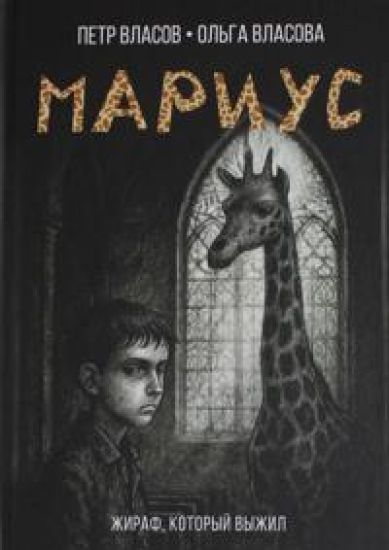
Marius: roman

Marius: roman

P.V. Vlasov; O.A. Vlasova

Eksmo
2026
sidottu
Chto, esli by v sovremennoj Danii pochti ne ostalos tserkvej, nelzja bylo chitat Bibliju, a datchane perestali by govorit o smerti i o perezhivanijakh, s nej svjazannykh? V romane Petra i Olgi Vlasovykh vse tak i proiskhodit. No Kristian, obyknovennyj kopengagenskij podrostok, ispytyvaet potrebnost govorit o smerti, kogda vnezapno umiraet ego dedushka Nils. Malchik otkazyvaetsja verit, chto i ego odnazhdy ne stanet, ved on chuvstvuet: smert - ne absoljutnyj konets. Babushka Anniken rasskazyvaet emu o knige, v kotoroj ranshe ljudi iskali otvety na svoi voprosy, - o Biblii. Imenno s popytki ee razdobyt nachinaetsja dlja Krisa chereda uvlekatelnykh i dazhe opasnykh prikljuchenij...
Caius Marius. A Serious Opera. As Performed at the King's Theatre in the Haymarket. The Music by Signor Piccini, ... The Translation by F. Bottarelli, A.M
The 18th century was a wealth of knowledge, exploration and rapidly growing technology and expanding record-keeping made possible by advances in the printing press. In its determination to preserve the century of revolution, Gale initiated a revolution of its own: digitization of epic proportions to preserve these invaluable works in the largest archive of its kind. Now for the first time these high-quality digital copies of original 18th century manuscripts are available in print, making them highly accessible to libraries, undergraduate students, and independent scholars.The eighteenth-century fascination with Greek and Roman antiquity followed the systematic excavation of the ruins at Pompeii and Herculaneum in southern Italy; and after 1750 a neoclassical style dominated all artistic fields. The titles here trace developments in mostly English-language works on painting, sculpture, architecture, music, theater, and other disciplines. Instructional works on musical instruments, catalogs of art objects, comic operas, and more are also included. ++++The below data was compiled from various identification fields in the bibliographic record of this title. This data is provided as an additional tool in helping to insure edition identification: ++++British LibraryT070019The libretto only, by Gaetano Roccaforte. Parallel Italian and English texts.London: printed by W. Bowyer and J. Nichols; for T. Cadell, 1776. 2],51, 1]p.; 8
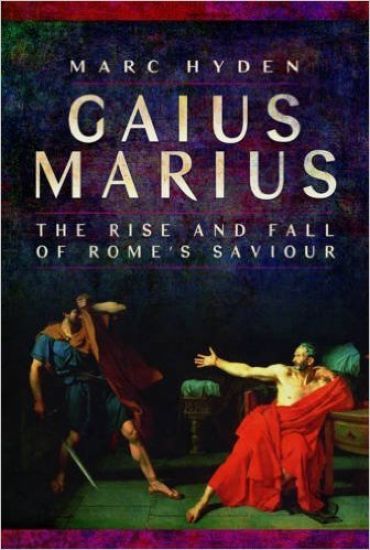
Gaius Marius

Gaius Marius

Marc Hyden

PEN SWORD BOOKS LTD
2023
nidottu
Gaius Marius was one of the most remarkable and significant figures of the late Roman Republic. At a time when power tended to be restricted to a clique of influential families, he rose from relatively humble origins to attain the top office of consul. He even went on to hold the post an unprecedented seven times. His political career flourished but was primarily built on military success. First serving in the Numantine War in Spain, he later rose to high command and brought a long-running war in North Africa to a successful conclusion, bringing the Numidian King Jurgurtha back in chains. His return was timely as northern barbarian tribes threatened Italy and had previously defeated several Roman armies. Marius reformed and retrained the Republic's forces and decisively defeated the invaders that had easily overpowered his predecessors. Marius' subsequent career was primarily that of an elder statesman, but it was dominated by his rivalry with his erstwhile subordinate, Sulla, which ultimately led to the latter's bloody coup. Marius, once hailed as the saviour of Rome, eventually became a desperate fugitive, literally fleeing for his life from his pursuers. However, after several harrowing brushes with death, Marius seized an opportunity to return to Rome and mete out justice to his enemies, which tarnished his once-enviable reputation.
Gaius Marius

Gaius Marius

Marc Hyden

Pen Sword Military
2017
sidottu
Gaius Marius was one of the most remarkable and significant figures of the late Roman Republic. At a time when power tended to be restricted to a clique of influential families, he rose from relatively humble origins to attain the top office of consul. He even went on to hold the post an unprecedented seven times. His political career flourished but was primarily built on military success. First serving in the Numantine War in Spain, he later rose to high command and brought a long-running war in North Africa to a successful conclusion, bringing the Numidian King Jurgurtha back in chains. His return was timely as northern barbarian tribes threatened Italy and had previously defeated several Roman armies. Marius reformed and retrained the Republic's forces and decisively defeated the invaders that had easily overpowered his predecessors. Marius' subsequent career was primarily that of an elder statesman, but it was dominated by his rivalry with his erstwhile subordinate, Sulla, which ultimately led to the latter's bloody coup. Marius, once hailed as the saviour of Rome, eventually became a desperate fugitive, literally fleeing for his life from his pursuers.However, after several harrowing brushes with death, Marius seized an opportunity to return to Rome and mete out justice to his enemies, which tarnished his once-enviable reputation.
Simon Marius and His Research
The margravial court astronomer Simon Marius, was involved in all of the new observations made with the recently invented telescope in the early part of the seventeenth century. He also discovered the Moons of Jupiter in January 1610, but lost the priority dispute with Galileo Galilei, because he missed to publish his findings in a timely manner.The history of astronomy neglected Marius for a long time, finding only the apologists for the Copernican system worthy of attention. In contrast the papers presented on the occasion of the Simon Marius Anniversary Conference 2014, and collected in this volume, demonstrate that it is just this struggle to find the correct astronomical system that makes him particularly interesting. His research into comets, sunspots, the Moons of Jupiter and the phases of Venus led him to abandon the Ptolemaic system and adopt the Tychonic one. He could not take the final step to heliocentricity but his rejection was based on empirical arguments of his time.This volume presents a translation of the main work of Marius and shows the current state of historical research on Marius.