Kirjojen hintavertailu. Mukana 11 577 789 kirjaa ja 12 kauppaa.

Kirjahaku

Etsi kirjoja tekijän nimen, kirjan nimen tai ISBN:n perusteella.

1000 tulosta hakusanalla Mark C. Murphy

Social Science in the Crucible

Social Science in the Crucible

Mark C. Smith

Duke University Press
1994
sidottu
The 1920s and 30s were key decades for the history of American social science. The success of such quantitative disciplines as economics and psychology during World War I forced social scientists to reexamine their methods and practices and to consider recasting their field as a more objective science separated from its historical foundation in social reform. The debate that ensued, fiercely conducted in books, articles, correspondence, and even presidential addresses, made its way into every aspect of social science thought of the period and is the subject of this book. Mark C. Smith first provides a historical overview of the controversy over the nature and future of the social sciences in early twentieth-century America and, then through a series of intellectual biographies, offers an intensive study of the work and lives of major figures who participated in this debate. Using an extensive range of materials, from published sources to manuscript collections, Smith examines "objectivists"-economist Wesley Mitchell and political scientist Charles Merriam-and the more "purposive thinkers"-historian Charles Beard, sociologist Robert Lynd, and political scientist and neo-Freudian Harold Lasswell. He shows how the debate over objectivity and social purpose was central to their professional and personal lives as well as to an understanding of American social science between the two world wars. These biographies bring to vivid life a contentious moment in American intellectual history and reveal its significance in the shaping of social science in this country.
Social Science in the Crucible

Social Science in the Crucible

Mark C. Smith

Duke University Press
1994
pokkari
The 1920s and 30s were key decades for the history of American social science. The success of such quantitative disciplines as economics and psychology during World War I forced social scientists to reexamine their methods and practices and to consider recasting their field as a more objective science separated from its historical foundation in social reform. The debate that ensued, fiercely conducted in books, articles, correspondence, and even presidential addresses, made its way into every aspect of social science thought of the period and is the subject of this book. Mark C. Smith first provides a historical overview of the controversy over the nature and future of the social sciences in early twentieth-century America and, then through a series of intellectual biographies, offers an intensive study of the work and lives of major figures who participated in this debate. Using an extensive range of materials, from published sources to manuscript collections, Smith examines "objectivists"-economist Wesley Mitchell and political scientist Charles Merriam-and the more "purposive thinkers"-historian Charles Beard, sociologist Robert Lynd, and political scientist and neo-Freudian Harold Lasswell. He shows how the debate over objectivity and social purpose was central to their professional and personal lives as well as to an understanding of American social science between the two world wars. These biographies bring to vivid life a contentious moment in American intellectual history and reveal its significance in the shaping of social science in this country.
Hail to Thee Okoboji U!

Hail to Thee Okoboji U!

Mark C. Ebersole

Fordham University Press
1992
sidottu
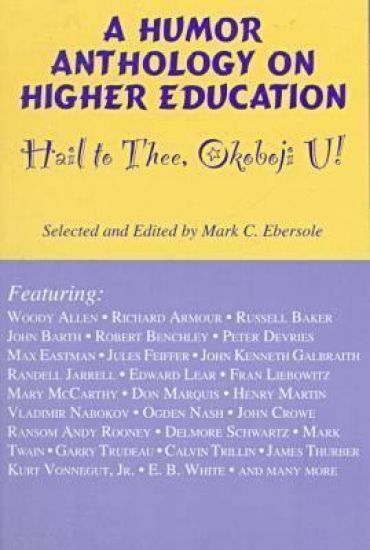
Hail to Thee, Okoboji U! is a collection of articles, stories, poems, and cartoons that pokes irreverent fun at higher education. Nothing is sacrosanct; everything is fair game: admissions procedures, intercollegiate sports, student affairs, professors, college presidents, commencements, alumni affairs, fund-raising and the cirriculum-English, music, art, history, philosophy, science. The anthology includes some of America's most distinguished writers and artists, including: Woody Allen, Richard Armour, Russel Baker, Jeremy Bernstein, Roy Blount, Jr., Robert Benchley, Peter DeVries, Max Eastman, Jules Feiffer, John Kenneth Galbraith, Randall Jarrell, Fran Lebowitz, Henry Martin, Don Marquis, Mary McCarthy, Ogden Nash, Vladimir Nobokov, Samuel F. Pickering, Jr. John Crowe Ransom, Leo Rosten, Frank Sullivan, Delmore Schwartz, James Thurber, Calvin Trillin, Garry Trudeau, Mark Twain, Kurt Vonnegut, Jr., and E.B. White. Though higher education is universally renowned for fostering prodigous learning and wondrous knowledge, Hail to Thee, Okoboji U! is a reminder that eminent intellectual institutions are often caught in the meshes of the nonsensical and the ludicrous- the querolousness of faculty meetings, the posturing of college presidents, the banality of commencement speeches, the inanity of arcane scholarship- and therefore, an institution's important personages had best not take themselves too seriously. Hail to Thee, Okoboji U! offers a light-hearted look at the groves of academe and appeals to administrators and faculty members, graduates and students, and all who would like to have an insiders look at what goes on in the ivory towers.
Hail to Thee Okoboji U!

Hail to Thee Okoboji U!

Mark C. Ebersole

Fordham University Press
1998
pokkari
Hail to Thee, Okoboji U! is a collection of articles, stories, poems, and cartoons that pokes irreverent fun at higher education. Nothing is sacrosanct; everything is fair game: admissions procedures, intercollegiate sports, student affairs, professors, college presidents, commencements, alumni affairs, fund-raising and the cirriculum-English, music, art, history, philosophy, science. The anthology includes some of America's most distinguished writers and artists, including: Woody Allen, Richard Armour, Russel Baker, Jeremy Bernstein, Roy Blount, Jr., Robert Benchley, Peter DeVries, Max Eastman, Jules Feiffer, John Kenneth Galbraith, Randall Jarrell, Fran Lebowitz, Henry Martin, Don Marquis, Mary McCarthy, Ogden Nash, Vladimir Nobokov, Samuel F. Pickering, Jr. John Crowe Ransom, Leo Rosten, Frank Sullivan, Delmore Schwartz, James Thurber, Calvin Trillin, Garry Trudeau, Mark Twain, Kurt Vonnegut, Jr., and E.B. White. Though higher education is universally renowned for fostering prodigous learning and wondrous knowledge, Hail to Thee, Okoboji U! is a reminder that eminent intellectual institutions are often caught in the meshes of the nonsensical and the ludicrous- the querolousness of faculty meetings, the posturing of college presidents, the banality of commencement speeches, the inanity of arcane scholarship- and therefore, an institution's important personages had best not take themselves too seriously. Hail to Thee, Okoboji U! offers a light-hearted look at the groves of academe and appeals to administrators and faculty members, graduates and students, and all who would like to have an insiders look at what goes on in the ivory towers.
Journeys to Selfhood

Journeys to Selfhood

Mark C. Taylor

Fordham University Press
2000
sidottu
Taylor (humanities and religion, Williams College, Massachusetts) reconsiders the two philosophers based on the notion that all modern philosophy lies between the poles of their thought. He has added a new introduction to the 1980 original edition.
Journeys to Selfhood

Journeys to Selfhood

Mark C. Taylor

Fordham University Press
2000
pokkari
Taylor (humanities and religion, Williams College, Massachusetts) reconsiders the two philosophers based on the notion that all modern philosophy lies between the poles of their thought. He has added a new introduction to the 1980 original edition.
Racial Worldmaking

Racial Worldmaking

Mark C. Jerng

FORDHAM UNIVERSITY PRESS
2017
sidottu
When does racial description become racism? Critical race studies has not come up with good answers to this question because it has overemphasized the visuality of race. According to dominant theories of racial formation, we see race on bodies and persons and then link those perceptions to unjust practices of racial inequality. Racial Worldmaking argues that we do not just see race. We are taught when, where, and how to notice race by a set of narrative and interpretive strategies. These strategies are named "racial worldmaking" because they get us to notice race not just at the level of the biological representation of bodies or the social categorization of persons. Rather, they get us to embed race into our expectations for how the world operates. As Mark C. Jerng shows us, these strategies find their most powerful expression in popular genre fiction: science fiction, romance, and fantasy. Taking up the work of H.G. Wells, Margaret Mitchell, Samuel Delany, Philip K. Dick and others, Racial Worldmaking rethinks racial formation in relation to both African American and Asian American studies, as well as how scholars have addressed the relationships between literary representation and racial ideology. In doing so, it engages questions central to our current moment: In what ways do we participate in racist worlds, and how can we imagine and build one that is anti-racist?
Racial Worldmaking

Racial Worldmaking

Mark C. Jerng

Fordham University Press
2017
pokkari
When does racial description become racism? Critical race studies has not come up with good answers to this question because it has overemphasized the visuality of race. According to dominant theories of racial formation, we see race on bodies and persons and then link those perceptions to unjust practices of racial inequality. Racial Worldmaking argues that we do not just see race. We are taught when, where, and how to notice race by a set of narrative and interpretive strategies. These strategies are named "racial worldmaking" because they get us to notice race not just at the level of the biological representation of bodies or the social categorization of persons. Rather, they get us to embed race into our expectations for how the world operates. As Mark C. Jerng shows us, these strategies find their most powerful expression in popular genre fiction: science fiction, romance, and fantasy. Taking up the work of H.G. Wells, Margaret Mitchell, Samuel Delany, Philip K. Dick and others, Racial Worldmaking rethinks racial formation in relation to both African American and Asian American studies, as well as how scholars have addressed the relationships between literary representation and racial ideology. In doing so, it engages questions central to our current moment: In what ways do we participate in racist worlds, and how can we imagine and build one that is anti-racist?
Squares

Squares

Mark C. Childs

University of New Mexico Press
2006
nidottu
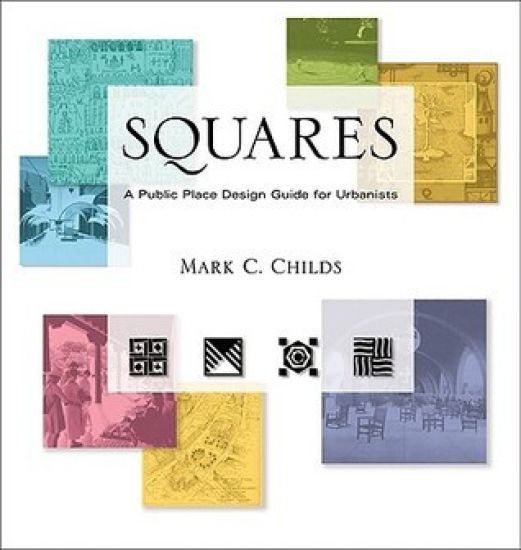
Vital public places - squares, post office steps, playgrounds, street corners - are centres of joyful celebration, heartbroken communion, civic discussion, or for simply hanging out. ""Squares"" is intended to help designers, planners, public officials, students, developers, and community leaders understand the history and theories of public commons, elicit community dialogue and desires, respond to the natural and built environment, and design compelling places. Mark C Childs contends that places built to support conviviality are critical components of a good town. He includes theory, brief case studies, and 126 design queries and discussions. Childs explores the design implications of the automobile, electronic media, the natural environment, urban furniture and structures, public safety, and public art. Interspersed with Childs' text are brief essays by other authors addressing particular kinds of public spaces: parks, urban beaches, farmers' markets, and community gardens.
The Zeon Files

The Zeon Files

Mark C. Childs; Ellen D. Babcock

University of New Mexico Press
2016
nidottu
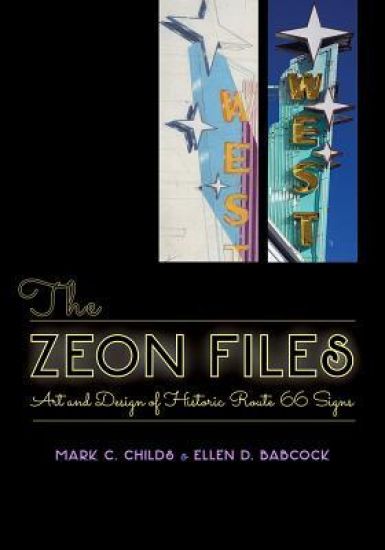
In the mid-twentieth century Eddie’s Inferno Cocktail Lounge, Bunny Bread, Paris Shoe Shop, and many other businesses throughout New Mexico and the Southwest displayed eye-catching roadside signs created by the Zeon Corporation. These works of commercial art featured unique designs, irregular shapes, dynamic compositions, and neon light. The legendary fiesta dancer at the Albuquerque Terrace drive-in theater, for example, was well-known for the grace of its lines, its enormous size, and its flashing neon skirt. Created during a time before the simplified icons of major chains, many of these culturally significant artworks no longer exist. The Zeon Files rescues these historic artifacts from obscurity, presenting a collection of the working drawings of historic Route 66–era signs. In addition to presenting a visually rich archive, the authors discuss the working methods of design and construction and the craft of drafting techniques during this innovative era of American sign making.
The Montana Vigilantes 18631870

The Montana Vigilantes 18631870

Mark C. Dillon

Utah State University Press
2013
sidottu
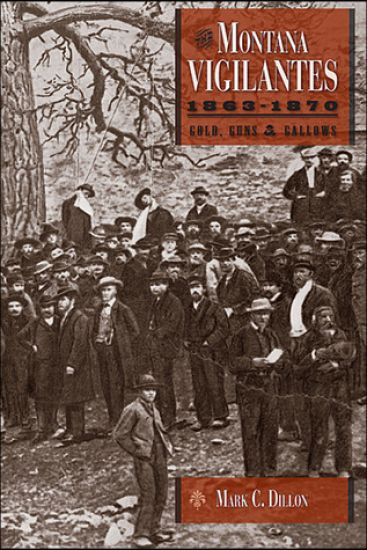
Historians and novelists alike have described the vigilantism that took root in the gold-mining communities of Montana in the mid-1860s, but Mark C Dillon is the first to examine the subject through the prism of American legal history, considering the state of criminal justice and law enforcement in the western territories and also trial procedures, gubernatorial politics, legislative enactments, and constitutional rights. Using newspaper articles, diaries, letters, biographies, invoices, and books that speak to the compelling history of Montanas vigilantism in the 1860s, Dillon examines the conduct of the vigilantes in the context of the due process norms of the time. He implicates the influence of lawyers and judges who, like their non-lawyer counterparts, shaped history during the rush to earn fortunes in gold. Dillons perspective as a state Supreme Court justice and legal historian uniquely illuminates the intersection of territorial politics, constitutional issues, corrupt law enforcement, and the basic need of citizenry for social order.This readable and well-directed analysis of the social and legal context that contributed to the rise of Montana vigilante groups will be of interest to scholars and general readers interested in Western history, law, and criminal justice for years to come.
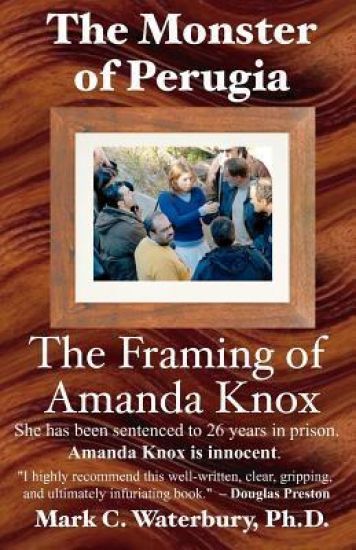
The Monster of Perugia: The Framing of Amanda Knox

The Monster of Perugia: The Framing of Amanda Knox

Mark C. Waterbury Ph. D.

Perception Development
2011
nidottu
The Monster of Perugia - The Framing of Amanda Knox, is a work of literary non-fiction that is unlike any other book about the events surrounding the murder of Meredith Kercher. By framing his narrative in terms of powerful analogies from history and literature, Dr. Waterbury illuminates the dark recesses of a gross miscarriage of justice. This is not only an informative book, it is a "wonderful, good read" in the words of one reviewer. Douglas Preston, bestselling author of The Monster of Florence and numerous other books wrote: "The Monster of Perugia is a fascinating book... I highly recommend this well-written, clear, gripping, and ultimately infuriating book." The Monster of Perugia demolishes the forensic evidence put forth by the prosecution, but this book is not just about forensics. Amanda and Raffaele were wrongfully convicted, but Monster of Perugia doesn't just prove their innocence. It reaches behind the fa ade of justice slowly taking its course to lay bare the baseless demonization, the incompetent framing, and the unconscionable incarceration of Amanda Knox by corrupt and incompetent powers within the justice system of the small city of Perugia, Italy. "By the end, Waterbury makes us understand what it's like to be an entirely innocent victim of a corrupt system. He tells us the truth and calls us to action." Thomas Lee Wright, author.