Kirjojen hintavertailu. Mukana 11 244 527 kirjaa ja 12 kauppaa.

Kirjahaku

Etsi kirjoja tekijän nimen, kirjan nimen tai ISBN:n perusteella.

1000 tulosta hakusanalla Mark R. Conte

Just Immigration

Just Immigration

Mark R. Amstutz

William B Eerdmans Publishing Co
2017
nidottu
Few issues are as complex and controversial as immigration in the United States. The only thing anyone seems to agree on is that the system is broken. Mark Amstutz offers a succinct overview and assessment of current immigration policy and argues for an approach to the complex immigration debate that is solidly grounded in Christian political thought. After analyzing key laws and institutions in the US immigration system, Amstutz examines how Catholics, evangelicals, and main-line Protestants have used Scripture to address social and political issues, including immigration. He critiques the ways in which many Christians have approached immigration reform and offers concrete suggestions on how Christian groups can offer a more credible political engagement with this urgent policy issue.
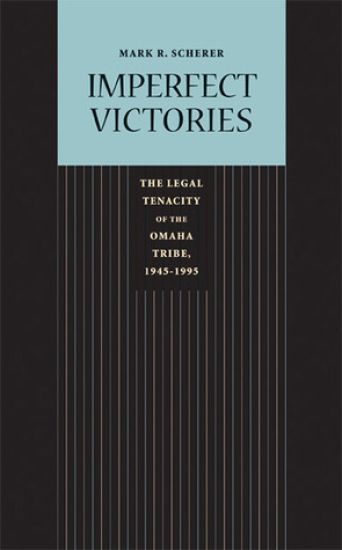
Imperfect Victories

Imperfect Victories

Mark R. Scherer

University of Nebraska Press
2009
pokkari
The Omaha Tribe of Nebraska has borne more than its fair share of the burden created by the federal government's wildly vacillating Indian policy. Mark R. Scherer's Imperfect Victories provides a detailed examination of the Omahas' tenacious efforts to overcome the damaging effects of shifting directions in federal policy during the last fifty years. The Omahas' struggles are particularly significant because the tribe often bore the initial impact of experimental legislation that would later be implemented nationally. Scherer details the disastrous consequences of postwar federal legislation that transferred control over Indian affairs to state authorities as a precursor to the wholesale termination of Indian tribalism. The legislation brought jurisdictional turmoil to the Omaha reservation and placed the Omahas in chronic conflict with local law enforcement agencies. As the tribe fought to become the first Indian group in the nation to escape the effects of that law through retrocession, they waged equally notable struggles for the redress of past wrongs with the Indian Claims Commission and in the federal courts. Scherer demonstrates that the Omahas' successes in those campaigns have been at best imperfect victories, coming only after years of hardship and failing to eliminate many underlying tensions and problems.
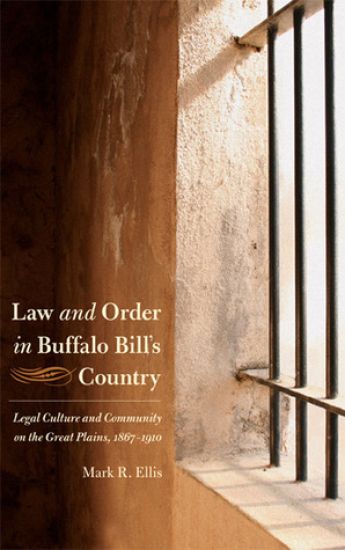
Law and Order in Buffalo Bill's Country

Law and Order in Buffalo Bill's Country

Mark R. Ellis

University of Nebraska Press
2009
pokkari
Celebrated accounts of lawless towns that relied on the extra-legal justice of armed citizens and hired gunmen are part of the enduring cultural legacy of the American West. This image of the frontier has been fueled for more than a century by historians—both amateur and academic—and by various popular images. In the twenty-first century, Great Plains communities continue to perpetuate this image with tourist attractions and events that pay homage to their "lawless" past. But these romanticized depictions of the violent frontier do not accurately portray the legal culture of most early Great Plains communities. Law and Order in Buffalo Bill's Country is a case study of law and legal culture in Lincoln County, Nebraska, during the nineteenth century. Mark R. Ellis argues that nascent nineteenth-century Great Plains communities shared an understanding of the law that allowed for the immediate implementation of legal institutions such as courts, jails, and law enforcement. A common legal culture, imported from New England and the Midwest, influenced frontier communities to uphold traditions of law and order even in the "wild and wooly" frontier community of North Platte, Nebraska. This study is one of the first to examine legal institutions on the Great Plains. By setting aside the issue of a violent frontier West and focusing instead on community building and legal institutions, this study presents a very different image of the frontier-era Great Plains.
Imperfect Victories

Imperfect Victories

Mark R. Scherer

University of Nebraska Press
1999
sidottu
The Omaha Tribe of Nebraska has borne more than its fair share of the burden created by the federal government's wildly vacillating Indian policy. Mark R. Scherer's "Imperfect Victories" provides a detailed examination of the Omahas' tenacious efforts to overcome the damaging effects of shifting directions in federal policy during the last fifty years. The Omahas' struggles are particularly significant because the tribe often bore the initial impact of experimental legislation that would later be implemented nationally. Scherer details the disastrous consequences of postwar federal legislation that transferred control over Indian affairs to state authorities as a precursor to the wholesale termination of Indian tribalism. The legislation brought jurisdictional turmoil to the Omaha reservation and placed the Omahas in chronic conflict with local law enforcement agencies. As the tribe fought to become the first Indian group in the nation to escape the effects of that law through retrocession, they waged equally notable struggles for the redress of past wrongs with the Indian Claims Commission and in the federal courts. Scherer demonstrates that the Omahas' successes in those campaigns have been at best imperfect victories, coming only after years of hardship and failing to eliminate many underlying tensions and problems. Mark R. Scherer is an adjunct instructor of history at the University of Nebraska, an instructor of law at the College of Saint Mary, and a practicing attorney.
Families, Children and the Development of Dysfunction
This unique volume takes a comprehensive approach to child and family mental health by examining the many ways in which family plays a central role in the health and/or dysfunction of the child. Rich in its coverage, this book begins with a presentation of the historical underpinnings of the study of the family's relation to child development and dysfunction. It details issues related to identification, assessment, and treatment of child dysfunction in relation to family processes and offers alternative conceptual views of the family, and critical features of family life and how they operate. Specific types of dysfunction, such as depression, conduct problems, and anxiety, are presented to convey the ways in which family influences can operate. "I can strongly recommend this book as a good general introduction to thinking about the development of child mental health and how this might relate to the context of family. It would be a handy text for trainees, since it fits easily into a large pocket or small briefcase. --ACPP Review and Newsletter "This is a useful and enjoyable book which provides a clear and thoughtful grounding in the field for the novice and a selection of more 'cutting-edge' material for the specialist." --Frances Gardner in British Journal
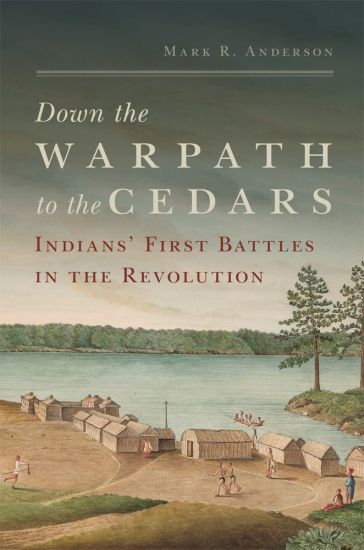
Down the Warpath to the Cedars

Down the Warpath to the Cedars

Mark R. Anderson

University of Oklahoma Press
2021
sidottu
In May 1776 more than two hundred Indian warriors descended the St. Lawrence River to attack Continental forces at the Cedars, west of Montreal. In just three days' fighting, the Native Americans and their British and Canadian allies forced the American fort to surrender and ambushed a fatally delayed relief column. In Down the Warpath to the Cedars, author Mark R. Anderson flips the usual perspective on this early engagement and focuses on its Native participants - their motivations, battlefield conduct, and the event's impact in their world. In this way, Anderson's work establishes and explains Native Americans' centrality in the Revolutionary War's northern theater. Anderson's dramatic, deftly written narrative encompasses decisive diplomatic encounters, political intrigue, and scenes of brutal violence but is rooted in deep archival research and ethnohistorical scholarship. It sheds new light on the alleged massacre and atrocities that other accounts typically focus on. At the same time, Anderson traces the aftermath for Indian captives and military hostages, as well as the political impact of the Cedars reaching all the way to the Declaration of Independence. The action at the Cedars emerges here as a watershed moment, when Indian neutrality frayed to the point that hundreds of northern warriors entered the fight between crown and colonies. Adroitly interweaving the stories of diverse characters - chiefs, officials, agents, soldiers, and warriors - Down the Warpath to the Cedars produces a complex picture, and a definitive account, of the Revolutionary War's first Indian battles, an account that significantly expands our historical understanding of the northern theater of the American Revolution.
Down the Warpath to the Cedars

Down the Warpath to the Cedars

Mark R. Anderson

UNIVERSITY OF OKLAHOMA PRESS
2022
nidottu
In May 1776 more than two hundred Indian warriors descended the St. Lawrence River to attack Continental forces at the Cedars, west of Montreal. In just three days’ fighting, the Native Americans and their British and Canadian allies forced the American fort to surrender and ambushed a fatally delayed relief column. In Down the Warpath to the Cedars, author Mark R. Anderson flips the usual perspective on this early engagement and focuses on its Native participants—their motivations, battlefield conduct, and the event’s impact in their world. In this way, Anderson’s work establishes and explains Native Americans’ centrality in the Revolutionary War’s northern theater. Anderson’s dramatic, deftly written narrative encompasses decisive diplomatic encounters, political intrigue, and scenes of brutal violence but is rooted in deep archival research and ethnohistorical scholarship. It sheds new light on the alleged massacre and atrocities that other accounts typically focus on. At the same time, Anderson traces the aftermath for Indian captives and military hostages, as well as the political impact of the Cedars reaching all the way to the Declaration of Independence. The action at the Cedars emerges here as a watershed moment, when Indian neutrality frayed to the point that hundreds of northern warriors entered the fight between crown and colonies. Adroitly interweaving the stories of diverse characters—chiefs, officials, agents, soldiers, and warriors—Down the Warpath to the Cedars produces a complex picture, and a definitive account, of the Revolutionary War’s first Indian battles, an account that significantly expands our historical understanding of the northern theater of the American Revolution.
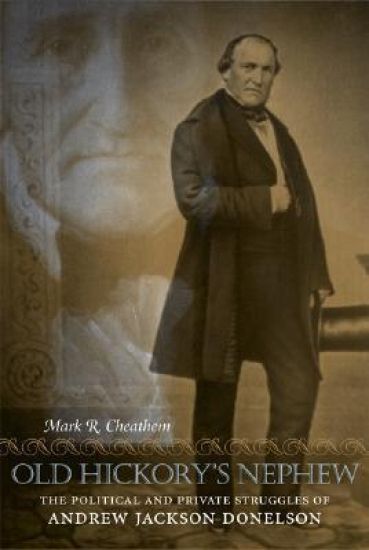
Old Hickory's Nephew

Old Hickory's Nephew

Mark R. Cheathem

Louisiana State University Press
2007
sidottu
Though remembered largely by history as Andrew Jackson's nephew, Andrew Jackson Donelson was himself a significant figure in nineteenth-century America: a politician, planter, diplomat, newspaper editor, and vice-presidential candidate. His relationship with his uncle and mentor defined his life, as he struggled to find the political and personal success that he wanted and his uncle thought he deserved. In Old Hickory's Nephew, the first definitive biography of this enigmatic man, Mark R. Cheathem explores both Donelson's political contributions and his complex, tumultuous, and often-overlooked relationship with Andrew Jackson. Born in Sumner County, Tennessee, in 1799, Donelson lost his father only five years later. Andrew Jackson soon became a force in his nephew's life, seeing in his namesake his political protégé. Jackson went so far as to predict that Donelson would one day become president. After attending West Point, Donelson helped establish the Jacksonian wing of the Democratic party and edited a national Democratic newspaper. As a diplomat, he helped bring about the annexation of Texas and, following in his uncle's footsteps, he became the owner of several plantations. On the surface, Donelson was a political and personal success.But few lives are so straightforward. The strong relationship between the uncle and nephew - defined by the concept of honor that suffused the southern society in which they lived - quickly frayed when Donelson and his wife defied his uncle during the infamous Peggy Eaton sex scandal of Jackson's first presidential administration. This resulted, Cheathem shows, in a tense relationship, full of distrust and suspicion, between Donelson and Jackson that lasted until the ""Hero of New Orleans"" died in 1845. Donelson later left the Democratic party in a tiff and joined the American, or Know Nothing, party, which selected him as Millard Fillmore's running mate in 1856. Though Donelson tried to establish himself as his uncle's political successor and legator, his friends and foes alike accused him of trading on his uncle's name to gain political and financial success.The life of Andrew Jackson Donelson illuminates the expectations placed upon young southern men of prominent families as well as the complexities and contradictions in their lives. In this biography, Cheathem awakens interest in a nearly forgotten but nonetheless intriguing figure in American history.
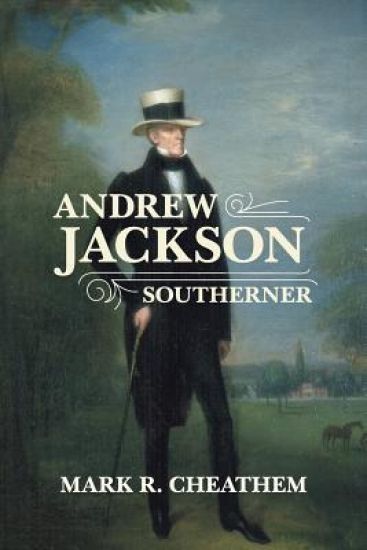
Andrew Jackson, Southerner

Andrew Jackson, Southerner

Mark R. Cheathem

Louisiana State University Press
2013
sidottu
Many Americans view Andrew Jackson as a frontiersman who fought duels, killed Indians, and stole another man's wife. Historians have traditionally presented Jackson as a man who struggled to overcome the obstacles of his backwoods upbringing and helped create a more democratic United States. In his compelling new biography of Jackson, Mark R. Cheathem argues for a reassessment of these long-held views, suggesting that in fact ""Old Hickory"" lived as an elite southern gentleman. Jackson grew up along the border between North Carolina and South Carolina, a district tied to Charleston, where the city's gentry engaged in the transatlantic marketplace. Jackson then moved to North Carolina, where he joined various political and kinship networks that provided him with entrée into society. In fact, Cheathem contends, Jackson had already started to assume the characteristics of a southern gentleman by the time he arrived in Middle Tennessee in 1788.After moving to Nashville, Jackson further ensconced himself in an exclusive social order by marrying the daughter of one of the city's cofounders, engaging in land speculation, and leading the state militia. Cheathem notes that through these ventures Jackson grew to own multiple plantations and cultivated them with the labor of almost two hundred slaves. His status also enabled him to build a military career focused on eradicating the nation's enemies, including Indians residing on land desired by white southerners. Jackson's military success eventually propelled him onto the national political stage in the 1820s, where he won two terms as president. Jackson's years as chief executive demonstrated the complexity of the expectations of elite white southern men, as he earned the approval of many white southerners by continuing to pursue Manifest Destiny and opposing the spread of abolitionism, yet earned their ire because of his efforts to fight nullification and the Second Bank of the United States.By emphasising Jackson's southern identity - characterized by violence, honor, kinship, slavery, and Manifest Destiny - Cheathem's narrative offers a bold new perspective on one of the nineteenth century's most renowned and controversial presidents.
Andrew Jackson, Southerner

Andrew Jackson, Southerner

Mark R. Cheathem

Louisiana State University Press
2015
nidottu
Winner of the 2013 Tennessee History AwardMany Americans view Andrew Jackson as a frontiersman who fought duels, killed Indians, and stole another man's wife. Historians have traditionally presented Jackson as a man who struggled to overcome the obstacles of his backwoods upbringing and helped create a more democratic United States. In his compelling new biography of Jackson, Mark R. Cheathem argues for a reassessment of these long-held views, suggesting that in fact ""Old Hickory"" lived as an elite southern gentleman. Jackson grew up along the border between North Carolina and South Carolina, a district tied to Charleston, where the city's gentry engaged in the transatlantic marketplace. Jackson then moved to North Carolina, where he joined various political and kinship networks that provided him with entrance into society. In fact, Cheathem contends, Jackson had already started to assume the characteristics of a southern gentleman by the time he arrived in Middle Tennessee in 1788.After moving to Nashville, Jackson further ensconced himself in an exclusive social order by marrying the daughter of one of the city's cofounders, engaging in land speculation, and leading the state militia. Cheathem notes that through these ventures Jackson grew to own multiple plantations and cultivated them with the labor of almost two hundred slaves. His status also enabled him to build a military career focused on eradicating the nation's enemies, including Indians residing on land desired by white southerners. Jackson's military success eventually propelled him onto the national political stage in the 1820s, where he won two terms as president. Jackson's years as chief executive demonstrated the complexity of the expectations of elite white southern men, as he earned the approval of many white southerners by continuing to pursue Manifest Destiny and opposing the spread of abolitionism, yet earned their ire because of his efforts to fight nullification and the Second Bank of the United States.By emphasising Jackson's southern identity - characterized by violence, honor, kinship, slavery, and Manifest Destiny - Cheathem's narrative offers a bold new perspective on one of the nineteenth century's most renowned and controversial presidents.
Elusive Victory

Elusive Victory

Mark R. DePue

SOUTHERN ILLINOIS UNIVERSITY PRESS
2026
nidottu
A chronological study of the Equal Rights Amendment fight and failure in the key state of Illinois. Pulling from hundreds of hours of recorded interviews at the Abraham Lincoln Presidential Library and the University of Illinois Springfield, DePue gives readers a comprehensive, balanced view of both sides' experiences and arguments.
Elusive Victory

Elusive Victory

Mark R. DePue

SOUTHERN ILLINOIS UNIVERSITY PRESS
2026
sidottu
A chronological study of the Equal Rights Amendment fight and failure in the key state of Illinois. Pulling from hundreds of hours of recorded interviews at the Abraham Lincoln Presidential Library and the University of Illinois Springfield, DePue gives readers a comprehensive, balanced view of both sides' experiences and arguments.
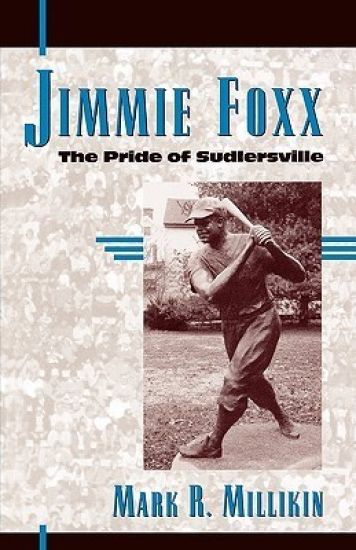
Jimmie Foxx

Jimmie Foxx

Mark R. Millikin

Scarecrow Press
2005
nidottu
While major league baseball gained popularity in large American cities at the beginning of the twentieth century, it was still relatively unseen by small town inhabitants who could only read about it in the newspaper or catch an exhibition game as major league teams traveled through the United States. What was popular was "town baseball," fierce competitions between local teams to best the other in all aspects of baseball, particularly power hitting. It was from this environment that Jimmie Foxx, one of major league baseball's most talented players, began his journey toward the majors. Jimmie Foxx: The Pride of Sudlersville, is the story of one of baseball's most ferocious hitters. Growing up in small town Maryland, Jimmie seemed destined to play major-league baseball. By age 16 he was already playing professionally and wowing fans with his ability to smash homers. During his major-league career he appeared in three straight World Series, played for the Philadelphia Athletics and the Boston Red Sox, and spent the 1932 baseball season closely pursuing Babe Ruth's single-season home run record. The comparison to Babe Ruth has not been lost on many baseball scholars, but goes relatively unknown by the general public and many baseball fans. The most inclusive biography of Jimmie Foxx to date, Millikin's book provides a complete picture of his subject.
Destructive Creation

Destructive Creation

Mark R. Wilson

University of Pennsylvania Press
2018
pokkari
During World War II, the United States helped vanquish the Axis powers by converting its enormous economic capacities into military might. Producing nearly two-thirds of all the munitions used by Allied forces, American industry became what President Franklin D. Roosevelt called "the arsenal of democracy." Crucial in this effort were business leaders. Some of these captains of industry went to Washington to coordinate the mobilization, while others led their companies to churn out weapons. In this way, the private sector won the war-or so the story goes. Based on new research in business and military archives, Destructive Creation shows that the enormous mobilization effort relied not only on the capacities of private companies but also on massive public investment and robust government regulation. This public-private partnership involved plenty of government-business cooperation, but it also generated antagonism in the American business community that had lasting repercussions for American politics. Many business leaders, still engaged in political battles against the New Deal, regarded the wartime government as an overreaching regulator and a threatening rival. In response, they mounted an aggressive campaign that touted the achievements of for-profit firms while dismissing the value of public-sector contributions. This probusiness story about mobilization was a political success, not just during the war, but afterward, as it shaped reconversion policy and the transformation of the American military-industrial complex. Offering a groundbreaking account of the inner workings of the "arsenal of democracy," Destructive Creation also suggests how the struggle to define its heroes and villains has continued to shape economic and political development to the present day.
Destructive Creation

Destructive Creation

Mark R. Wilson

University of Pennsylvania Press
2016
sidottu
During World War II, the United States helped vanquish the Axis powers by converting its enormous economic capacities into military might. Producing nearly two-thirds of all the munitions used by Allied forces, American industry became what President Franklin D. Roosevelt called "the arsenal of democracy." Crucial in this effort were business leaders. Some of these captains of industry went to Washington to coordinate the mobilization, while others led their companies to churn out weapons. In this way, the private sector won the war-or so the story goes. Based on new research in business and military archives, Destructive Creation shows that the enormous mobilization effort relied not only on the capacities of private companies but also on massive public investment and robust government regulation. This public-private partnership involved plenty of government-business cooperation, but it also generated antagonism in the American business community that had lasting repercussions for American politics. Many business leaders, still engaged in political battles against the New Deal, regarded the wartime government as an overreaching regulator and a threatening rival. In response, they mounted an aggressive campaign that touted the achievements of for-profit firms while dismissing the value of public-sector contributions. This probusiness story about mobilization was a political success, not just during the war, but afterward, as it shaped reconversion policy and the transformation of the American military-industrial complex. Offering a groundbreaking account of the inner workings of the "arsenal of democracy," Destructive Creation also suggests how the struggle to define its heroes and villains has continued to shape economic and political development to the present day.
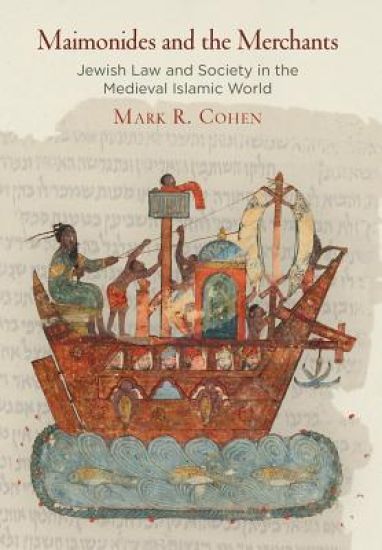
Maimonides and the Merchants

Maimonides and the Merchants

Mark R. Cohen

University of Pennsylvania Press
2017
sidottu
The advent of Islam in the seventh century brought profound economic changes to the Jews living in the Middle East, and Talmudic law, compiled in and for an agrarian society, was ill equipped to address an increasingly mercantile world. In response, and over the course of the seventh through eleventh centuries, the heads of the Jewish yeshivot of Iraq sought precedence in custom to adapt Jewish law to the new economic and social reality. In Maimonides and the Merchants, Mark R. Cohen reveals the extent of even further pragmatic revisions to the halakha, or body of Jewish law, introduced by Moses Maimonides in his Mishneh Torah, the comprehensive legal code he compiled in the late twelfth century. While Maimonides insisted that he was merely restating already established legal practice, Cohen uncovers the extensive reformulations that further inscribed commerce into Jewish law. Maimonides revised Talmudic partnership regulations, created a judicial method to enable Jewish courts to enforce forms of commercial agency unknown in the Talmud, and even modified the halakha to accommodate the new use of paper for writing business contracts. Over and again, Cohen demonstrates, the language of Talmudic rulings was altered to provide Jewish merchants arranging commercial collaborations or litigating disputes with alternatives to Islamic law and the Islamic judicial system. Thanks to the business letters, legal documents, and accounts found in the manuscript stockpile known as the Cairo Geniza, we are able to reconstruct in fine detail Jewish involvement in the marketplace practices that contemporaries called "the custom of the merchants." In Maimonides and the Merchants, Cohen has written a stunning reappraisal of how these same customs inflected Jewish law as it had been passed down through the centuries.
Sandspurs

Sandspurs

Mark R. Lane

University Press of Florida
2008
sidottu
Far from the myth of surf, sand, and orange juice, Mark Lane's snapshots of life in the Sunshine State are more likely to feature gargantuan insects than bikini-clad coeds.Lane has spent nearly thirty years as a reporter and writer for the ""Daytona Beach News-Journal"". Often compared to Carl Hiaasen, Dave Barry, Jeff Klinkenberg, or Roy Blount Jr., over the past decade his columns have built an intensely loyal following.Lane's writing is a model of crisp prose. But he is hard to pin down. One moment full of cynicism from decades of listening to fast-talking real-estate developers and lawyers, the next displaying a fierce defensiveness to those who would sweep away the honky-tonk bars and alligator farms that, in his opinion, define the state.His trips to the all-U-can-eat buffet of Florida eccentricities include gardening in a five-season climate (spring, summer, ultrasummer, fallish, and winterish), insights on home fortifications in the face of oncoming hurricanes (definition of an optimist: somebody who takes down his plywood), notes on the World's Most Famous Beach, and commentary on the two biggest shows in the state: NASCAR and state politics."" Sandspurs"" will allow readers nationwide to discover one of Florida's most gifted writers.This book offers a humorous take on Florida's people, politics, places, and peculiarities.
Self-presentation

Self-presentation

Mark R Leary

Westview Press Inc
1996
nidottu
This book is about the ways which human behavior is affected concerns with people may be doing, their public impressions they typically prefer that No matter what else other people perceive them in certain desired ways and not perceive them in other, undesired ways. Put simply, human beings have a pervasive and ongoing concern with their self-presentations. Sometimes they act in ceflain ways just to make a particular impression on someone else mras when a job applicant responds inthat will satisfactorily impress the interviewer. But more often, people 5 concerns with others’ impressions simply constrain their behavioural options. Most of the time inclined to do things that will lead others to see us as incompetent, inwnoral, maladjusted, or otherwise socially undesirable. As a result, our concerns with others’ impressions limit what we are willing to do.Self-presentation almotives underlie and pervade near corner of interpersonal life.
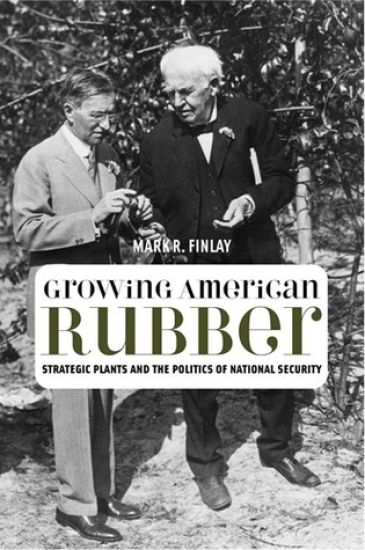
Growing American Rubber

Growing American Rubber

Mark R Finlay

Rutgers University Press
2013
nidottu
Growing American Rubber explores America's quest during tense decades of the twentieth century to identify a viable source of domestic rubber. Straddling international revolutions and world wars, this unique and well-researched history chronicles efforts of leaders in business, science, and government to sever American dependence on foreign suppliers. Mark Finlay plots out intersecting networks of actors including Thomas Edison, Henry Ford, prominent botanists, interned Japanese Americans, Haitian peasants, and ordinary citizensùall of whom contributed to this search for economic self-sufficiency. Challenging once-familiar boundaries between agriculture and industry and field and laboratory, Finlay also identifies an era in which perceived boundaries between natural and synthetic came under review.Although synthetic rubber emerged from World War II as one solution, the issue of ever-diminishing natural resources and the question of how to meet twenty-first-century consumer, military, and business demands lingers today.