

Kirjahaku
Etsi kirjoja tekijän nimen, kirjan nimen tai ISBN:n perusteella.
1000 tulosta hakusanalla Mark T Wayne

Latino Protestants in America
Mark T. Mulder; Aida I. Ramos; Gerardo Martí
Rowman Littlefield
2021
nidottu
Latino Protestantism is growing rapidly in the United States. Researchers estimate that by 2030 half of all Latinos in America will be Protestant. This remarkable growth is not just about numbers. The rise of Latino Protestants will impact the changing nature of American politics, economics, and religion. Latino Protestants in America takes readers inside the numbers to highlight the many reasons Latino Protestants are growing as well as the diversity of this group.The book brings together the best existing scholarship on this group with original research to offer a nuanced picture of Latino Protestants in America, from worship practices to political engagement. The narrative helps readers move beyond misconceptions about Latino religion and offers a window into the diverse ways that religion plays out in real life. Latino Protestants in America is an essential resource for anyone interested in the beliefs and practices of this group, as well as the implications for its growth and areas for further study.
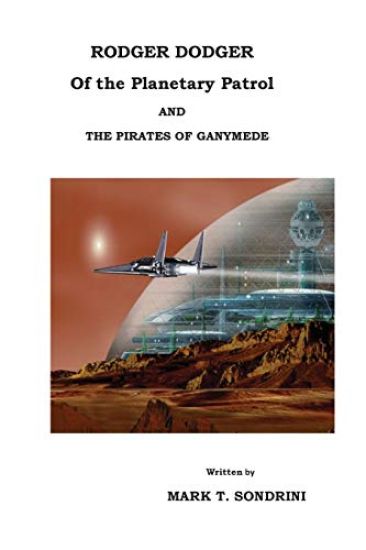
Rodger Dodger of the Planetary Patrol
Mark T Sondrini
Createspace Independent Publishing Platform
2016
pokkari
A nearly broke ship's Captain, Jack Asp, manages to convince seven "tourists" to leave Mars Port City on a 10 day cruise of the giant planets in his second-hand ship, the Robert Trout. A gang of space pirates, based in a cave on Ganymede (one of the large moons of Jupiter) have other plans for two of the passengers, the richest man in the Solar System and his wife.Captain Rodger Dodger of the Planetary Patrol gets the call and has to rescue the Robert Trout from these predators with the help of his partner, Cupcake and some deception by both Dodger and Captain Asp.This "realistic" space opera does not rely on gimmicky physics-busting tricks and gadgets to get the job done, but instead relies on upgraded, existing technology to travel across the immense distances involved in a reasonable span of time.
All Over The Map: 16 Short Stories
Mark T. Sondrini
Createspace Independent Publishing Platform
2016
nidottu
From trained chickens to frustrated postal workers and runaway bears, this collection of short stories dabbles in it all. Science fiction, fantasy, mystery, suspense and mayhem are blended together for a cross section of ideas intended to make you think about the possibilities that exist.Within the framework of a few thousand words, you find yourself immersed in a place in the world (or possibly just outside_ that is different from that place where you are familiar and comfortable. Characters grab your attention and situations make your pulse rate rise as these stories unfold. The familiar can somehow become unfamiliar.Governments plot, aliens and humans explore, forces of nature and the supernatural conspire, in the attempt to twist your imagination from the mundane to something else.
Tolkien and Sanskrit (second, expanded edition): The Silmarillion in the Cradle of Proto-Indo-European
Mark T. Hooker
Createspace Independent Publishing Platform
2016
nidottu
This study is based on the observation that Tolkien calqued the names of the Sapta Sindhavah (Seven Rivers) from the Rig Veda as the Seven Rivers of Ossiriand. In other words, Tolkien created seven Elvish river names that mean the same thing as the river names of the Sapta Sindhavah.Much has been said of Tolkien's use of Welsh, Old English, Gothic, Icelandic, Russian, Greek, and Latin. Little, however, has been said about Tolkien's use of Sanskrit (Refined Speech), the great-great-...grandfather of all the languages above. Sanskrit was spoken in the second millennium B.C. in the valley of the River Indus, the river that put the "Indo" in the name Proto-Indo-European, a linguistic term for the *reconstructed common ancestor of the European languages.All indications to the contrary (C&G ii, 461), there is little doubt about Tolkien's knowledge of Sanskrit from the point of view of a linguist. It is de rigueur for any serious philologist interested in etymologies like Tolkien. Tolkien was on the Language side of the English School at Oxford, where he took Comparative Philology as a special subject for Honour Moderations. (G&G ii, 758)In a certain sense, Tolkien's The Silmarillion can be considered a veiled member of the genre of Raj Literature. The names of The Silmarillion say that in the same way that the names in Tolkien's poem "The Mewlips" are masks that hide the fact that it is a poem about World War I. As the present study shows, the names of The Silmarillion say that the locus of Tolkien's "Mythology for England" (C&G ii, 244-248) is the India of the British Raj.A literary analysis of Tolkien's place in Raj Literature is, however, much more speculative than the linguistic analysis that makes up the core of this study, which stands on solid philological ground. The literary analysis will, therefore, be left to another time and place.While the basis of Tolkien's calque of the names of the Seven Rivers as Ossiriand is Vedic in concept, the superstructure that Tolkien builds upon this foundation is non-Vedic. Some elements of the superstructure are more readily attributable to historical sources, like the history of the India Campaign of Alexander the Great, and the history of the British Raj in India, both of which were a part of the school curriculum when Tolkien was growing up.While the analysis of some of the words names in this study would not be believable in stand-alone articles, in the context of the coherent structure of words and names presented here, they are worthy of serious consideration.The discovery presented here has the potential to more clearly define the linguistic and philosophical cradle of Tolkien's 'Mythology for England, ' which was always The Silmarillion, and never The Lord of the Rings. It is Proto-Indo-European in the same way that the English language stems from Proto-Indo-European. That does not, however, mean that there is no gap between Proto-Indo-European language and culture, and the language and culture of The Shire.The analysis that follows is not a rehash of the discredited ideas of The Shores of Middle-earth (1981). It is instead, a completely new, linguistic approach to Tolkien's Silmarillion nomenclature.Correction: On page 156, the name of the King of Anga is given as Kama. It should read: Karna, which is the correct spelling of the name of this King, who is one of the main protagonists of the Hindu epic Mahabharata.Your attention is invited to: The Tolkienotheca (Llyfrawr, 2019), Part I of which is an "Addendum to Tolkien and Sanskrit."

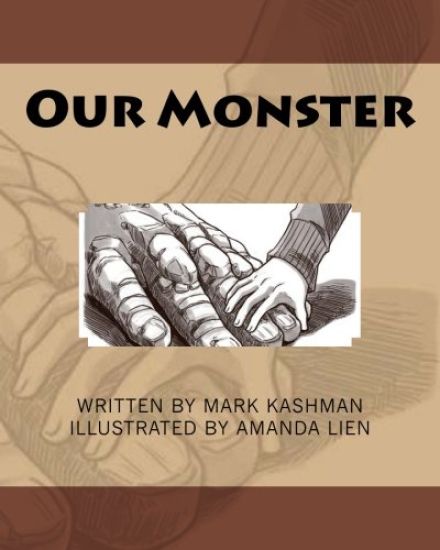
When it's your turn to take care of Our Monster, what do you do? You hang on for the fun ride and do your best to make sure he makes it through the day without too much of a mess. This story follows the journey of a girl, Lily Claire, tasked for the week to care of her family's monster as he transforms daily and becomes what he touches - sometimes a tree, sometimes a rock, even a silly paisley pillow person It is the care, trials and tribulations that bring insight into the love of family and the precarious needs of being in charge to pitch in within the caring bond of family.
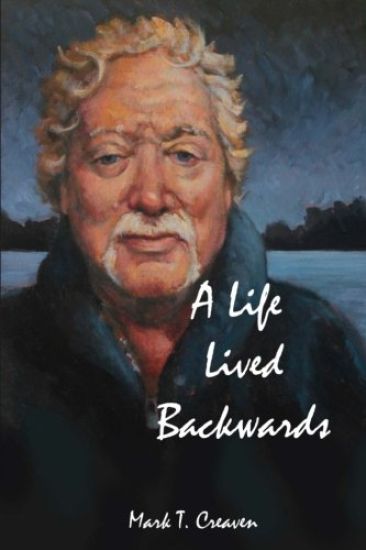
A Life Lived Backwards: Poems by an Emergency Medical Technician
Mark T. Creaven
Createspace Independent Publishing Platform
2017
nidottu
Mental health professionals are just starting to talk about and treat the long-term effects of the trauma that emergency workers - emergency medical technicians, fire fighters, first responders, emergency room personnel - live with every day. Advanced Emergency Medical Technician (AEMT) Mark Creaven's therapy has been writing poetry. And he writes good poetry - at times lyrical, at times harsh and painfully evocative, always honest. Mark's poetry is not just about the things he's seen in his long career as a first responder. As he says, " When you're not in an ambulance, you still have your life to live. Loves and losses, deaths and births." The result is an intimate chronicle of one man's life - and of the way of life in a vanishing corner of rural New England where life is as harsh as the winters. This is poetry that will speak to emergency workers everywhere, and to any man who has reached late middle age carrying his own burdens of love, loss, and loneliness. Critical Acclaim for A Life Lived Backwards... "Mark Creaven's new collection of poems, A Life Lived Backwards, is a starkly lyrical memorial of the harshness of life in the last, rural frontier of Vermont known as the Northeast Kingdom. As an emergency medical technician, a friend, a neighbor, and a caring human being, Mr. Creaven has seen it all: suicide, unspeakable highway wrecks, family violence, livelihoods going up in flames along with house and barns. Yet, in the end, A Life Lived Backwards is a tribute to our ability, through love, not just to endure, but to transcend, just about the worst horrors imaginable." - Howard Frank Mosher, Vermont author "Shelley wrote in 1821, "In a time of violence, the task of poetry is in some way to reconcile us to our world and to allow us a measure of tenderness and grace with which to exist." Creaven's work A Life Lived Backwards offers the reader such grace, creating something from the proverbial nothing of life's lacunae in compassion juxtaposed with indifference. Nearly two hundred years after Shelley's A Defence of Poetry, Creaven's words hold lyrical ground, offering fragile fortitude and tender, tenuous redemption". - Neila Descelles, clinical psychologist Through a full and honorable life that has included service in the military, mental health and emergency medical services Mark Creaven has seen more than his share of the suffering, death and loss that most people carefully protect themselves from experiencing. In the first chapter of A Life Lived Backwards he gives the reader a rare glimpse into the occasional joy and frequent trauma experienced by emergency workers. As an EMS and ER veteran I have become perhaps too numb to traumatic scenes but the jarring imagery of Creaven's poems ripped off my protective layers and lay bare my own unhealed wounds. The concise, evocative and emotionally difficult poems serve their purpose to reader and perhaps writer. Someone must treat the dead and dying and these heroes bear a heavy burden for society. The subsequent chapters contain some lighter passages but continue the theme of devastating loss, still painful to read and effectively exposing my own fears and losses. There is no refuge here from the reality that people and things die, suffering happens, buildings rot and burn, relationships fail and we all die alone in some sense. Whether redemption is found is up to the reader, but Mark Creaven's important work gives voice to the traumas that fill sleepless nights of millions. - Paul Newton, M.D., M.M.M., F.A.A.F.P.

For over six fiscal years Cain has searched in vain to destroy Li, all the while gaining strength from the life energies absorbed through Kyrios's ring. Seeing the first signs of the power promised by the dark Animus, Cain believes his destiny is now to rule over Corporate and all the Realms beyond. Birth of a Goddess is the dramatic conclusion of the Descendants series by Mark T. Bacome, spanning the far reaches of Corporate, beyond Realms and dimensions to the edge of the universe. Where the very fate of existence could be at stake.

Spray Polyurethane Foam in External Envelopes of Buildings
Mark T. Bomberg; Joseph W. Lstiburek
CRC Press Inc
1998
sidottu
Spray Polyurethane Foams in External Envelopes of Buildings presents, for the first time, a book focused on both the theoretical and practical design and applications of spray polyurethane foam (SPF) use. To review the moisture performance of SPF, this book focuses on the design of an assembly where moisture is kept from accumulating and causing deterioration (flow through approach). In this approach, Spray Polyurethane Foam presents two unique parts of theory and practice of various SPF products. FROM THE PREFACE Part 1 of this monograph analyzes SPF performance as the material (product). Being field fabricated, installation of SPF products must include a quality assurance program . . . Laboratory evaluation of foams and their coverings, quality management issues, and quantification of the technical support provided to the SPF contractor are also reviewed. Part 2 presents a systems approach to construction. Starting with principles of environmental control of buildings, different aspects of design and performance of roofing and wall systems are reviewed. Details and design recommendations . . . as well as case studies . . . are included.
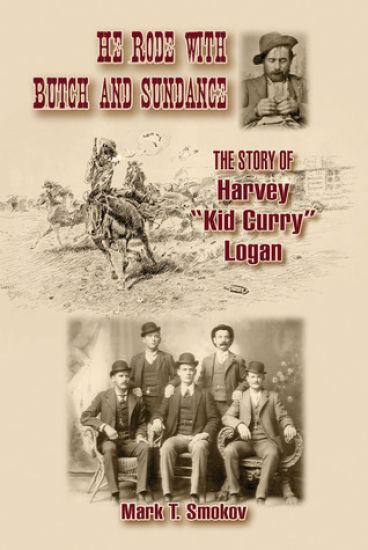
Pinned down by a posse, the wounded outlaw’s companions urged him to escape through the gulch. “Don’t wait for me,” he replied, “I’m all in and might as well end it right here.” Placing his revolver to his right temple, he pulled the trigger for the last time, thus ending the life of the notorious “Kid Curry” of the Wild Bunch.It is long past time for the publication of a well-researched, definitive biography of the infamous western outlaw Harvey Alexander Logan, better known by his alias Kid Curry. He spent his formative years near Kansas City, Missouri, and came west with his older brother to become a cowboy. A violent conflict with a ranching neighbor in Montana caused him to flee to the Hole-in-the-Wall valley in Wyoming, where he became involved in rustling and eventually graduated to bank and train robbing as a member—and soon leader—of the Wild Bunch. This outlaw group was a melding of the best of the Hole-in-the-Wall gang and Butch Cassidy’s Powder Springs gang, from the area where the borders of Utah, Colorado, and Wyoming meet. The core members of the gang came to be Butch Cassidy, the Sundance Kid, George “Flatnose” Currie, Elzy Lay, Ben “the Tall Texan” Kilpatrick, Will Carver, and Kid Curry.Kid Curry has been portrayed as a cold-blooded killer, without any compassion or conscience and possessed of limited intelligence. Curry indeed was a dangerous man with a violent temperament, which was aggravated by alcoholic drink. When he felt taken advantage of or was threatened with losing his freedom, he didn’t hesitate to use force to defend himself by ambushing a posse or shooting at policemen. However, Mark T. Smokov shows that Curry’s record of kills is highly exaggerated, and that he was not the bloodthirsty killer that many have claimed. In fact, when he was brought to trial, he was charged (and convicted) with forging and passing stolen banknotes, instead of murder or even train robbery, due to lack of evidence for the many murders attributed to him.Smokov has researched extensively in areas significant to Curry’s story (Hole-in-the-Wall, Brown’s Park, the Little Rockies), talking to local ranchers and townspeople, visiting museums, and collecting pertinent material and photographs. He corrects the many false statements that have been written about Curry in the past, presenting a much more accurate and balanced account of his life. Curry was a cunning outlaw who planned and executed robberies on par with anything Butch Cassidy is reported to have pulled off. Smokov contends that Curry was the actual train robbing leader of the Wild Bunch—there is no concrete evidence that Cassidy ever robbed a train. He also presents new evidence that is virtually conclusive in resolving whether or not Curry was the “unknown bandit” who was killed after robbing a train near Parachute, Colorado, in 1904.

Chasing Birds across Texas
Mark T. Adams (University of Texas USA); Brush Freeman
Texas A M University Press
2003
sidottu
In ""Chasing Birds Across Texas"", Mark T. Adams invites birders and others with a broad interest in the outdoors to join him in exploring Texas' varied habitats on his quest for birds - from the upper coast to the lower coast; into the Hill Country, the Panhandle and the Chihuahuan Desert.

Chasing Birds across Texas
Mark T. Adams (University of Texas USA); Brush Freeman
Texas A M University Press
2003
nidottu
In ""Chasing Birds Across Texas"", Mark T. Adams invites birders and others with a broad interest in the outdoors to join him in exploring Texas' varied habitats on his quest for birds - from the upper coast to the lower coast; into the Hill Country, the Panhandle and the Chihuahuan Desert.

We live in a Genesis Three World.Even a quick look around reveals that things in this world are not as they should be. Violence, including war and mass shootings and self-inflicted harm such as suicide, occurs more than regularly. In the words of Paul, We know that the whole creation has been groaning as in the pains of childbirth right up to the present time (Rom. 8:22). That groaning began in the days of Genesis chapter three. Genesis chapter two assures the reader that all that God created "was very good". Due to the events recorded in Genesis chapter three, "was" is a key word. Yet not all hope is lost. In fact, another chapter three found in the Bible provides the answer to the problem of the brokenness of our world. The purpose of this book is to equip the reader with biblical and biblically-based tools for navigating through our Genesis Three World.
Many Americans are longing for an alternative politics that is rooted in strong communities, a recognition of limits, and respect for the natural world. These issues are not the possession of one political party. Rather, they refer to ideas rooted deeply in the best aspects of our common tradition, and they represent yearnings that many, regardless of political affiliation, share. This book articulates a cultural and political vision that leads off the couch and into the garden, out of the shopping mall and into the farmer's market, away from Washington and in the direction of home.In this postpartisan call to action, Mitchell develops the concept of the "politics of gratitude," which is centered around four ideas: creatureliness, gratitude, human scale, and place, culminating in a distinctive, fruitful view of human nature and community at odds with the prevailing norms of individualism (and, not so paradoxically, statism), giantism, and hypermobility. Going beyond the liberal-conservative factionalism that has reduced our political and cultural discourse to clichés and vitriol, he urges us to become responsible stewards of the earth who are committed to family and community and who abide in gratitude, taking nothing for granted.The result is a political and cultural vision that is at once local, limited, modest, republican, green—and grateful.


As the world has become increasingly digitally interconnected, military leaders and other actors are ditching symmetric power strategies in favor of cyberstrategies. Cyberpower enables actors to change actual economic outcomes without the massive resource investment required for military force deployments.Cashing In on Cyberpower addresses the question, Why and to what end are state and nonstate actors using cybertools to influence economic outcomes? The most devastating uses of cyberpower can include intellectual property theft, espionage to uncover carefully planned trade strategies, and outright market manipulation through resource and currency values. Offering eight hypotheses to address this central question, Mark T. Peters II considers every major cyberattack (almost two hundred) over the past ten years, providing both a quick reference and a comparative analysis. He also develops new case studies depicting the 2010 intellectual property theft of a gold-detector design from the Australian Codan corporation, the 2012 trade negotiation espionage in the Japanese Trans-Pacific Partnership preparations, and the 2015 cyberattacks on Ukrainian SCADA systems. All these hypotheses combine to identify new data and provide a concrete baseline of how leaders use cybermeans to achieve economic outcomes.