Kirjojen hintavertailu. Mukana 12 026 453 kirjaa ja 12 kauppaa.

Kirjahaku

Etsi kirjoja tekijän nimen, kirjan nimen tai ISBN:n perusteella.

1000 tulosta hakusanalla Massimo D'Azeglio

DIALOGO sopra i due massimi sistemi del PESTO, alla genovese e all'italiana: ove alla guisa del Galileo Linceo si vuol confrontare la cultura ligure d
Questo non il classico libro che parla della ricetta perfetta del Pesto, o di come la mia nonna facesse il Pesto migliore del mondo; e neppure s'intende qui di insegnare a farlo, il Pesto. Qui si vuole invece testimoniare la cultura del Pesto, la storica e l'attuale, in particolare quella ligure contrapposta alla "non ligure", italiana e non. Lo facciamo in modo scienti-fico, senza il classico tono favolistico/romantico/sognatore che racconta della nonnina genovese piccina piccina (ma sempre diabolica) china a scegliere le foglioline piccine piccine di basilico assieme al nipotino piccino piccino e poi tutti a far festa dietro al Pesto come eterni bambini piccini piccini. No Parliamo in realt di una cultura gastronomica e sociale, quella dei liguri per il Pesto, che secolare ma attualissima, tuttora viva e forte, mai decaduta, mai sospesa, mai dimenticata, ma che tanto intrinseca nella vita del ligure da impedirgli di identificarla e di descriverla pienamente al di l della mera ricetta o della tecnica abitudinarie. E' una cultura che si palesa meravigliosamente ogni volta che il ligure discute sul Pesto, sceglie il Pesto, si gode il Pesto, descrive il Pesto, o fa il Pesto.Ma dunque attualmente una cultura poco o male raccontata e riconosciuta. Oggigiorno il Pesto lo si testimonia in termini quasi esclusivamente di ricetta, di scelta degli ingredienti e di tecnica, ma molto meno e in modo superficiale in termini di usi, abitudini e costumi. Vi sono dogmi e controdogmi, verit e luoghi comuni, rigidit e aperture che si sovrappongono e si confondono. Si dice tutto e il contrario di tutto. Questo libro si basa su una minuziosa raccolta di ampio materiale storico originale la cui analisi prover a mettere ordine nella materia del Pesto. Non si vuole qui portare verit di parte, sarebbero solo altre verit in pi , n escluderne alcune a priori. Si voluto soltanto raccogliere il maggior numero di testimonianze tecniche, sociali, economiche e culturali del tempo che fu e del tempo di ora, sia in ambito di Pesto alla Il libro rivolto soprattutto agli appassionati gastronomi, foodblogger, influencer, cuochi e in generale a tutti i curiosi del Pesto, per comprendere al meglio il rapporto tra liguri e Pesto, e ai liguri per conoscere i segreti inconfessabili sulla loro salsa pi identitaria che possiedono, ma anche per comprendere meglio come i non liguri interpretano il Pesto. Non un libro di cucina, n di specialit liguri, ma solo critica storico-culturale sul Pesto genovese che di "pesti e pestati".
Massimo Bottura: Nunca Confies En Un Chef Italiano Delgado (Never Trust a Skinny Italian Chef) (Spanish Edition)
El primer gran libro de cocina realizado por fin por uno de los principales embajadores de la moderna cocina italiana.El restaurante propiedad de Bottura, La Osteria Francescana alcanzo tercera posicion en la lista de los 50 Mejores restaurantes del Mundo y posee 3 estrellas Michelin.Este libro nos ayuda a descubrir y entender el proceso creativo y la inspiracion de este gran Chef para finalmente presentarnos 48 recetas ineditas como resultado de este mismo proceso.Ilustrado con fotografias de Stefano Graziani y Carlo Benvenuto que muestran tanto las fuentes de inspiracion de Bottura como el resultado final, las recetas.
Massimo Listri. The World’s Most Beautiful Libraries

Massimo Listri. The World’s Most Beautiful Libraries

Elisabeth Sladek; Georg Ruppelt

Taschen GmbH
2018
sidottu
From the mighty halls of ancient Alexandria to the coffered ceilings of the Morgan Library in New York, human beings have had a long, enraptured relationship with libraries. Like no other concept and like no other space, the collection of knowledge, learning, and imagination offers a sense of infinite possibility. It’s the unrivaled realm of discovery, where every faded manuscript or mighty clothbound tome might reveal a provocative new idea, a far-flung fantasy, an ancient belief, a religious conviction, or a whole new way of being in the world. In this new photographic journey, Massimo Listri travels to some of the oldest and finest libraries to reveal their architectural, historical, and imaginative wonder. Through great wooden doors, up spiraling staircases, and along exquisite, shelf-lined corridors, he leads us through outstanding private, public, educational, and monastic libraries, dating as far back as 766. Between them, these medieval, classical, baroque, rococo, and 19th-century institutions hold some of the most precious records of human thought and deed, inscribed and printed in manuscripts, volumes, papyrus scrolls, and incunabula. In each, Listri’s poised images capture the library’s unique atmosphere, as much as their most prized holdings and design details. Featured libraries include the papal collections of the Vatican Apostolic Library, Trinity College Library, home to the Book of Kells and Book of Durrow, and the holdings of the Laurentian Library in Florence, the private library of the powerful House of Medici, designed by Michelangelo. With meticulous descriptions accompanying each featured library, we learn not only of the libraries’ astonishing holdings—from which highlights are illustrated—but also of their often lively, turbulent, or controversial pasts. Like Altenburg Abbey in Austria, an outpost of imperial Catholicism repeatedly destroyed during the European wars of religion, or the Franciscan monastery in Lima, Peru, with its horde of archival Inquisition documents. At once a bibliophile beauty pageant, an ode to knowledge, and an evocation of the particular magic of print, Massimo Listri. The World’s Most Beautiful Libraries is above all a cultural-historical pilgrimage to the heart of our halls of learning, to the stories they tell, as much as those they gather in printed matter along polished shelves.
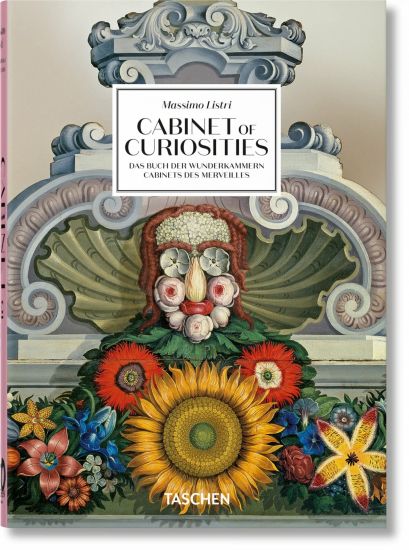
Massimo Listri. Cabinet of Curiosities

Massimo Listri. Cabinet of Curiosities

Antonio Paolucci; Giulia Carciotto

Taschen GmbH
2020
sidottu
The Wunderkammer, or “cabinet of curiosities,” saw collectors gathering objects from many strands of artistic, scientific, and intellectual endeavor, in an ambitious attempt to encompass all of humankind’s knowledge in a single room. From the Grand Duke Francesco I de’ Medici and Holy Roman Emperor Rudolf II to Archduke Ferdinand II of Habsburg, these aristocratic virtuosos acquired, selected, and displayed the objects in real-life catalogues that represented the entire world—spanning architecture, interior design, painting, sculpture, gemology, geology, botany, biology and taxonomy, astrology, alchemy, anthropology, ethnography, and history. Marvel at the unicorn horns (narwhal tusks), gems, rare coral growths, Murano glasswork, paintings and peculiar mechanical automata. Browse through illustrations of exotic and mythical creatures and discover the famed “Coburg ivories,” an astounding collection of crafted artifacts. These collections are nothing short of a journey through time, from the Renaissance and Age of Discovery, the Mannerist and Baroque periods, up to the present day. Although many of these cabinets of curiosities no longer exist, others have been meticulously reconstructed, and new ones born. These marvelous cabinets of curiosities can now be explored by all in this XXL collection. To realize this mammoth undertaking, Massimo Listri traveled to seven European countries over several decades; the result is a set of gorgeous photographs, an authoritative yet accessible introduction, and detailed commentary on each of the 19 chambers highlighting the most remarkable items in each collection. Discover how these timeless treasures both describe and defined civilization, the modern concept of the museum, and our very knowledge of the universe.
Massimo Listri. Cabinet of Curiosities. 40th Ed.

Massimo Listri. Cabinet of Curiosities. 40th Ed.

Antonio Paolucci; Giulia Carciotto

TASCHEN GMBH
2022
sidottu
The Wunderkammer, or “cabinet of curiosities,” saw collectors gathering objects from many strands of artistic, scientific, and intellectual endeavor, in an ambitious attempt to encompass all of humankind’s knowledge in a single room. From the Grand Duke Francesco I de’ Medici and Holy Roman Emperor Rudolf II to Archduke Ferdinand II of Habsburg, these aristocratic virtuosos acquired, selected, and displayed the objects in real-life catalogues that represented the entire world—spanning architecture, interior design, painting, sculpture, gemology, geology, botany, biology and taxonomy, astrology, alchemy, anthropology, ethnography, and history. Marvel at the unicorn horns (narwhal tusks), gems, rare coral growths, Murano glasswork, paintings and peculiar mechanical automata. Browse through illustrations of exotic and mythical creatures and discover the famed “Coburg ivories,” an astounding collection of crafted artifacts. These collections are nothing short of a journey through time, from the Renaissance and Age of Discovery, the Mannerist and Baroque periods, up to the present day. Many of these cabinets of curiosities no longer exist, others have been meticulously reconstructed, and new ones born. These marvelous cabinets of curiosities can now be explored by all in this collection. To realize this mammoth undertaking, Massimo Listri traveled to seven European countries over several decades; the result is a set of gorgeous photographs, an authoritative yet accessible introduction, and detailed commentary on each of the 19 chambers highlighting the most remarkable items in each collection. Discover how these timeless treasures both describe and defined civilization, the modern concept of the museum, and our very knowledge of the universe.
Massimo Listri. The World’s Most Beautiful Libraries. 45th Ed.

Massimo Listri. The World’s Most Beautiful Libraries. 45th Ed.

Elisabeth Sladek; Georg Ruppelt

TASCHEN GMBH
2023
sidottu
From the mighty halls of ancient Alexandria to the coffered ceilings of the Morgan Library in New York, human beings have had a long, enraptured relationship with libraries. Like no other concept and like no other space, the collection of knowledge, learning, and imagination offers a sense of infinite possibility. It’s the unrivaled realm of discovery, where every faded manuscript or mighty clothbound tome might reveal a provocative new idea, a far-flung fantasy, an ancient belief, a religious conviction, or a whole new way of being in the world.In this new photographic journey, Massimo Listri travels to some of the oldest and finest libraries to reveal their architectural, historical, and imaginative wonder. Through great wooden doors, up spiraling staircases, and along exquisite, shelf-lined corridors, he leads us through outstanding private, public, educational, and monastic libraries, dating as far back as 766. Between them, these medieval, classical, baroque, rococo, and 19th-century institutions hold some of the most precious records of human thought and deed, inscribed and printed in manuscripts, volumes, papyrus scrolls, and incunabula. In each, Listri’s poised images capture the library’s unique atmosphere, as much as their most prized holdings and design details.Featured libraries include the papal collections of the Vatican Apostolic Library and the Trinity College Library, home to the Book of Kells and Book of Durrow. With meticulous descriptions accompanying each featured library, we learn not only of the libraries’ astonishing holdings—from which highlights are illustrated—but also of their often lively, turbulent, or controversial pasts. Like the Franciscan monastery in Lima, Peru, with its horde of archival Inquisition documents.At once a bibliophile beauty pageant, an ode to knowledge, and an evocation of the particular magic of print, this compact edition of our best-selling XXL-title is above all a cultural-historical pilgrimage to the heart of our halls of learning, to the stories they tell, as much as those they gather in printed matter along polished shelves.
Massimo Vitali

Massimo Vitali

Massimo Vitali

Steidl Publishers
2011
sidottu
Catalogues the work of Massimo Vitali, an Italian master of the photographic medium. This title includes a giant poster which maps the family tree of Vitali's works, a visual geneology which is also the history of the artist's work.
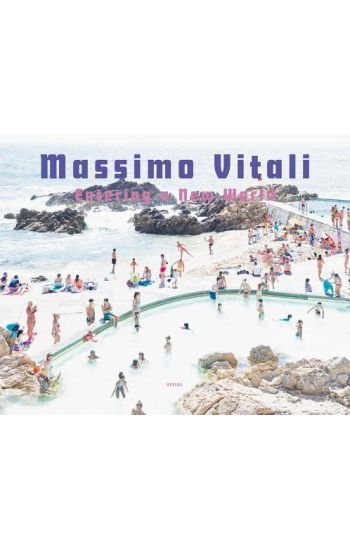
Massimo Vitali: Entering a New World

Massimo Vitali: Entering a New World

Massimo Vitali

Steidl Verlag
2019
sidottu
After nearly 30 years working in large-format photography, Massimo Vitali (born 1944), famed for his images of beaches and discos, brings together his 12 "best" photographs in a beautiful volume. Vitali began his career as a photojournalist in the 1960s, collaborating with magazines and agencies throughout Europe, before turning to cinematography for television and cinema in the early '80s. He eventually returned to still photography as an artist, taking up large-format photography in 1993 and beginning his famous Beach Series in 1995.The selection of just 12 works gathered for this volume was made following many lengthy conversations with collaborators and curators who know his work deeply. These works are not necessarily his best-known pieces; rather each one speaks to a particular moment of his artistic research, like short stories of a long career.