Paul's letter to the Romans is very different than any of his other letters. Paul addresses many of the important questions that arise when one considers the relationship between God and creation, as well as topics such assalvation and grace. Participants will engage in vibrant discussion around each of these topics in the course. This 6-session Bible study explores selected passages from the book of Romans. For groups wanting to enhance the study by covering the entire book of Romans, homework and enrichment activities are included in this study. What must I do to be saved? (Romans 3:9-31) Saved by grace . . .isn't that too good to be true? (Romans 5:1-11) If what I do doesn't save me, does it matter how I live? (Romans 6:1-23) Where is God when we suffer? (Romans 8:18-39) How can I keep from singing? (Romans 10:1-21) What does God want from us? (Romans 12:1-21)
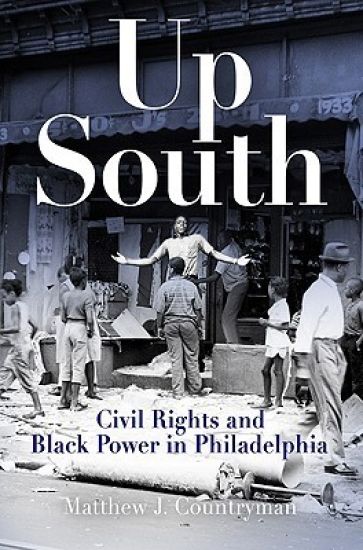
Up South traces the efforts of two generations of black Philadelphians to turn the City of Brotherly Love into a place of promise and opportunity for all. Although Philadelphia rarely appears in histories of the modern civil rights struggle, the city was home to a vibrant and groundbreaking movement for racial justice in the years between World War II and the 1970s. By broadening the chronological and geographic parameters of the civil rights movement, Up South explores the origins of civil rights liberalism, the failure of the liberal program of antidiscrimination legislation and interracial coalition-building to deliver on its promise of racial equality, and the subsequent rise of the Black Power movement. The Philadelphia movement occurred in three stages. During the 1940s and 1950s, liberal civil rights groups in the city successfully campaigned for Philadelphia's new City Charter to be the first in the nation to include a ban on racial discrimination in municipal employment, services, and contracts. Within a decade, however, black activists in the city were leading consumer boycotts and street protests against the city's liberal establishment for failing to overcome entrenched structures of racial inequality in labor markets, residential neighborhoods, and public schools. These protests set the stage both for some of the earliest experiments in affirmative action and for the emergence of the Black Power movement in Philadelphia. Challenging the view that it was the inflammatory rhetoric of Black Power and the rising demands of black activists that derailed the civil rights movement, Up South documents the efforts of Black Power activists in Philadelphia to construct a vital and effective social movement that combined black nationalism's analysis of racism's constitutive role in American society with a program of grassroots community organizing and empowerment. On issues ranging from public education and urban renewal to police brutality and welfare, Philadelphia's Black Power movement remade the city's political landscape. And, in contrast to the top-down middle-class leadership of traditional civil rights groups, Black Power in Philadelphia fundamentally altered the composition of black leadership in the city to include a new cohort of neighborhood-based working-class and female black community activists.
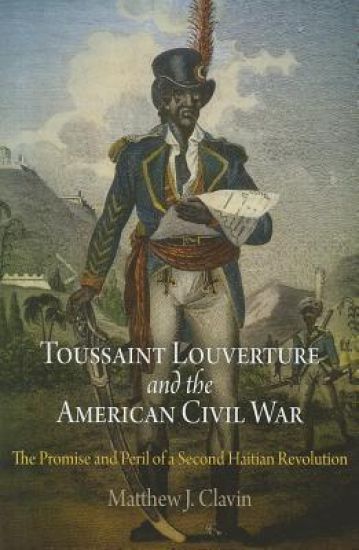
At the end of the eighteenth century, a massive slave revolt rocked French Saint Domingue, the most profitable European colony in the Americas. Under the leadership of the charismatic former slave François Dominique Toussaint Louverture, a disciplined and determined republican army, consisting almost entirely of rebel slaves, defeated all of its rivals and restored peace to the embattled territory. The slave uprising that we now refer to as the Haitian Revolution concluded on January 1, 1804, with the establishment of Haiti, the first "black republic" in the Western Hemisphere. The Haitian Revolution cast a long shadow over the Atlantic world. In the United States, according to Matthew J. Clavin, there emerged two competing narratives that vied for the revolution's legacy. One emphasized vengeful African slaves committing unspeakable acts of violence against white men, women, and children. The other was the story of an enslaved people who, under the leadership of Louverture, vanquished their oppressors in an effort to eradicate slavery and build a new nation. Toussaint Louverture and the American Civil War examines the significance of these competing narratives in American society on the eve of and during the Civil War. Clavin argues that, at the height of the longstanding conflict between North and South, Louverture and the Haitian Revolution were resonant, polarizing symbols, which antislavery and proslavery groups exploited both to provoke a violent confrontation and to determine the fate of slavery in the United States. In public orations and printed texts, African Americans and their white allies insisted that the Civil War was a second Haitian Revolution, a bloody conflict in which thousands of armed bondmen, "American Toussaints," would redeem the republic by securing the abolition of slavery and proving the equality of the black race. Southern secessionists and northern anti-abolitionists responded by launching a cultural counterrevolution to prevent a second Haitian Revolution from taking place.
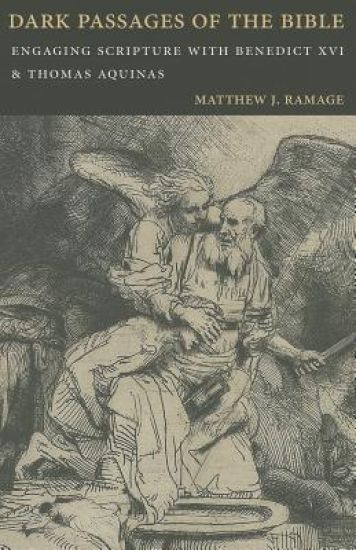
Multiple gods? Divinely mandated genocide? Rejection of an afterlife? If the Scriptures are the inspired and inerrant word of God that Christians claim them to be, how can they contain these things? For many believers in the modern age, traditional Christian answers to these challenges are no longer convincing. Though spiritually edifying, they are unable to account for the sheer scope and depth of problems raised through the advent of historical-critical scholarship.Following the lead of Pope Benedict XVI, in Dark Passages of the Bible Matthew Ramage weds the historical-critical approach with a theological reading of Scripture based in the patristic-medieval tradition. Whereas these two approaches are often viewed as mutually exclusive or even contradictory, Ramage insists that the two are mutually enriching and necessary for doing justice to the Bible’s most challenging texts.Ramage applies Benedict XVI’s hermeneutical principles to three of the most theologically problematic areas of the Bible: its treatment of God’s nature, the nature of good and evil, and the afterlife. Teasing out key hermeneutical principles from the work of Thomas Aquinas, Ramage analyses each of these themes with an eye to reconciling texts whose presence would seem to violate the doctrines of biblical inspiration and inerrancy. At the same time, Ramage directly addresses the problems of concrete biblical texts in light of both patristic and modern exegetical methods.
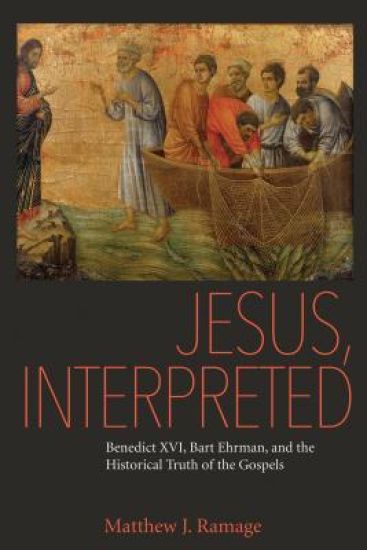
In this sequel volume to his Dark Passages of the Bible (CUA, 2013), author Matthew Ramage turns his attention from the Old to the New Testament, now tackling truth claims bearing directly on the heart of the Christian faith cast into doubt by contemporary New Testament scholarship: Did God become man in Jesus, or did the first Christians make Jesus into God? Was Jesus’ resurrection a historical event, or rather a myth fabricated by the early Church? Will Jesus indeed return to earth on the last day, or was this merely the naïve expectation of ancient believers that reasonable people today ought to abandon?In addition to examining the exegetical merits of rival answers to these questions, Ramage considers also the philosophical first principles of the exegetes who set out to answer them. This, according to Joseph Ratzinger, is the debate behind the debate in exegesis: whose presuppositions best position us for an accurate understanding of the nature of things in general and of the person of Jesus in particular?Insisting upon the exegetical vision of Joseph Ratzinger/Benedict XVI as a privileged avenue by which to address the thorniest issues in contemporary biblical exegesis, Ramage puts the emeritus pontiff’s hermeneutic of faith into dialogue with contemporary exponents of the historical-critical school. Carrying forth the “critique of the critique” called for by Joseph Ratzinger, Ramage offers the emeritus pontiff’s exegesis of the gospels as a plausible and attractive alternative to the mainstream agnostic approach exemplified in the work of Bart Ehrman.As in the case of Benedict’s Jesus trilogy upon which he draws extensively, Ramage’s quest in this book is not merely academic but also existential in nature. Benedict’s scholarship represents the fruit of hispersonal quest for the face of Christ, a quest which involves the commitment to engage, critique, and learn from the most serious challenges posed by modern biblical criticism while affirming the foundations of the Christian faith.
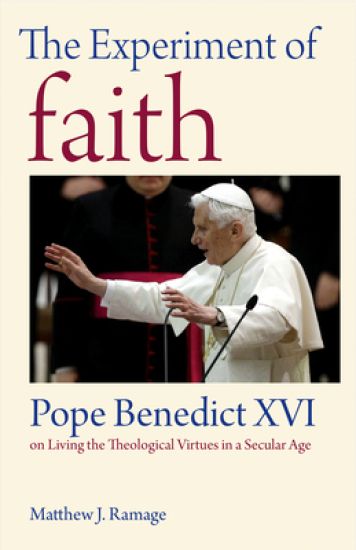
Pope Benedict XVI memorably remarked that the Christian faith is a lot like a Gothic cathedral with its stained-glass windows. From the outside, the Church can appear dark, dreary, and worn with age—the crumbling relic of an institution that no longer speaks to men and women living in our modern world. Indeed, for many people today, Christian morality with all of its commandments appears to be a source not of life and joy but instead of suffering and oppression. Even within the Church, many wonder: why should I submit to ancient doctrines and outdated practices that restrict my freedom and impede my happiness?In this timely and original book, his third exploring the riches of Benedict XVI’s vast corpus, theologian Matthew Ramage sets out to meet this challenge with an in-depth study of the emeritus pontiff’s wisdom on how to live Christian discipleship in today’s increasingly secularized world. Taking as his starting point Benedict’s conviction that the truth of Christianity—like the beauty of a cathedral’s glorious windows—can be grasped only from the inside, Ramage draws on Benedict’s insights to show how all Christians can make the “experiment of faith” by living the theological virtues of faith, hope, and charity in daily life. Along the way, he shares his personal reflections on how Benedict’s wisdom has helped him to navigate difficulties in embracing the faith and provides a way forward to those struggling to live as disciples in a way that is intellectually serious without remaining merely intellectual. In so doing, he also presents a highly nuanced yet accessible approach to defending the truth of the gospel in a world where life in Jesus Christ tends to be seen as unfulfilling, irrelevant, or just one lifestyle choice among others.
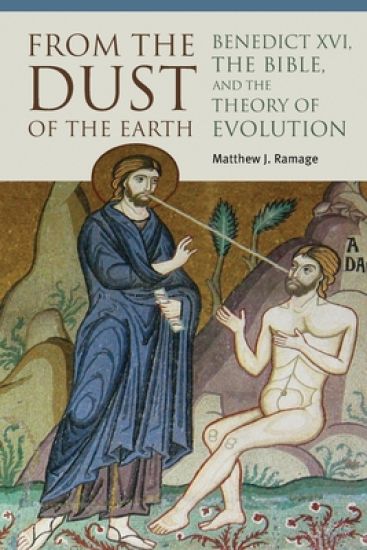
The claim that evolution undermines Christianity is standard fare in our culture. Indeed, many today have the impression that the two are mutually exclusive and that a choice must be made between faith and reason—rejecting Christianity on the one hand or evolutionary theory on the other. Is there a way to square advances in this field of study with the Bible and Church teaching?In this book—his fourth dedicated to applying Joseph Ratzinger/Benedict XVI's wisdom to pressing theological difficulties—Matthew Ramage answers this question decidedly in the affirmative. Distinguishing between evolutionary theory properly speaking and the materialist attitude that is often conflated with it, Ramage's work meets the challenge of evolutionary science to Catholic teaching on human origins, guided by Ratzinger's conviction that faith and evolutionary theory mutually enrich one another.Pope Benedict gifted the Church with many pivotal yet often-overlooked resources for engaging evolution in the light of faith, especially in those instances where he addressed the topic in connection with the Book of Genesis. Ramage highlights these contributions and also makes his own by applying Ratzinger's principles to such issues as the meaning of man's special creation, the relationship between sin and death, and the implications of evolution for eschatology. Notably, Ramage shows that many apparent conflicts between Christianity and evolutionary theory lose their force when we interpret creation in light of the Paschal Mystery and fix our gaze on Jesus, the New Adam who reveals man to himself.Readers of this text will find that it does more than merely help to resolve apparent contradictions between faith and modern science. Ramage's work shows that discoveries in evolutionary biology are not merely difficulties to be overcome but indeed gifts that yield precious insight into the mystery of God's saving plan in Christ.
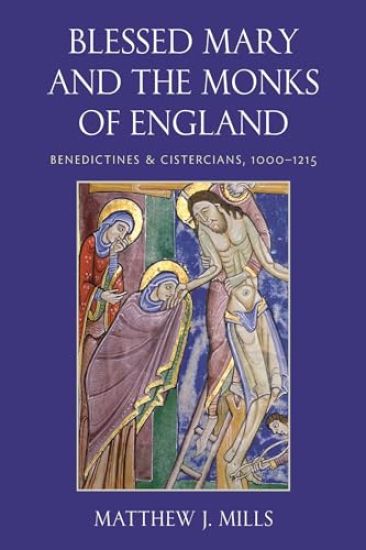
In the study of historical Mariology, the monastic communities of England before and after the Norman conquest receive too little attention. Classic surveys, such as Hilda Graef's, Mary: A History of Doctrine and Devotion (2 vols, orig. 1963, 1965), highlight key figures and developments; and a fine book by Mary Clayton, The Cult of the Virgin Mary in Anglo-Saxon England (1990), takes scholarship as far as the early-eleventh century. The present volume, building upon such works, delves more deeply into the prayerful, intellectual and artistic contemplation of Mary during the age of monasticism, roughly the two hundred years prior to the advent of the mendicant orders in the thirteenth century. In the history of England, this was a time of high drama: conquest, power struggle, martyrdom; for English monasticism, it was marked by suppression, reform and renewal, patronage, and new currents of prayer and thought. Against this backdrop, Matthew Mills uncovers many vibrant contributions to Marian doctrine and devotion by theologians and communities living according to the sixth-century Rule of St Benedict: the Benedictines and their successors, the Cistercians, who arrived in England in 1128. In a thematic unfolding of Mary's life and identity, from conception to assumption and intercession, a picture emerges of a Mariology shaped by the constant of monastic liturgy, anchored in deep biblical and patristic wisdom, cherished and transmitted by the Englishman, St Bede (d. 735), and animated by profound love. Towering figures, St Anselm (d. 1109) and St Ælred (d. 1167), are placed within a wider landscape, alongside lesser-known but still significant individuals, including the Cistercian abbot, John of Forde (d. 1214), royal confessor and pioneer of Marian exegesis of the Song of Songs. England's monastic Mariology was colored by Greek as well as Latin influences and touched by key experiences of the contemporary church at large: apocalyptic disappointment, eleventh-century reform (sometimes called, 'Gregorian'), sacramentalism, intense yearning for salvation. This book also sheds light upon the significance of Mary for medieval monks' understanding of their own profession; their mother and their lady, she was, in addition, their icon and exemplar of life in St Benedict's 'school for the Lord's service' (Rule, Prol. 45).
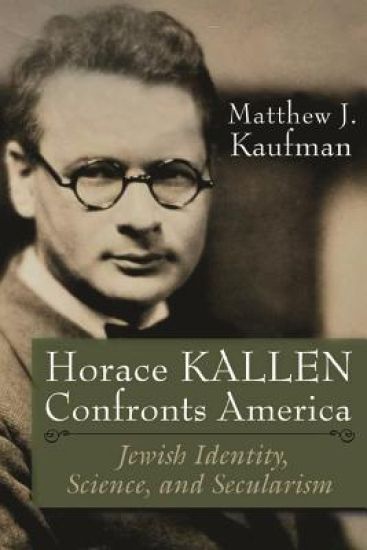
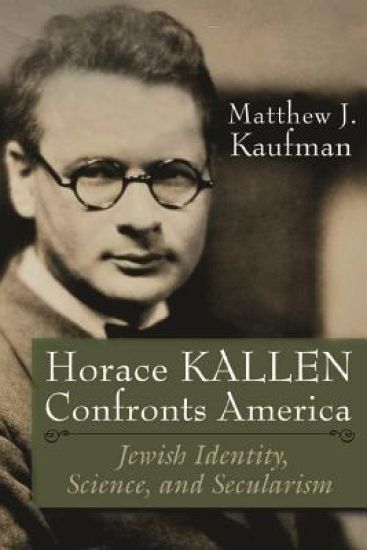
During his more than fifty-year writing career, American Jewish philosopher Horace Kallen (1882–1974) incorporated a deep focus on science into his pragmatic philosophy of life. He exemplified the hope among Jews that science would pave the way to full and equal integration. In this intellectual biography, Kaufman explores Kallen's life and illumines how American scientific culture inspired not only Kallen's thought but that of an entire generation.Kaufman reveals the ways in which Kallen shaped the direction of discussions on race, ethnicity, modernism, and secularism that influenced the entire American Jewish community. An ardent secularist, Kallen was also a serious religious thinker whose Jewish identity, as unique and idiosyncratic as it was, exemplifies the modern responsiveness to the moral ideal of ""authenticity."" Kaufman shows how one man's quest for authenticity contributed to a gradual shift in Jewish self perception in America and how, in turn, his struggle led to America's embrace of Kallen's well-known term ""cultural pluralism.
During his more than fifty-year writing career, American Jewish philosopher Horace Kallen (1882–1974) incorporated a deep focus on science into his pragmatic philosophy of life. He exemplified the hope among Jews that science would pave the way to full and equal integration. In this intellectual biography, Kaufman explores Kallen's life and illumines how American scientific culture inspired not only Kallen's thought but that of an entire generation.Kaufman reveals the ways in which Kallen shaped the direction of discussions on race, ethnicity, modernism, and secularism that influenced the entire American Jewish community. An ardent secularist, Kallen was also a serious religious thinker whose Jewish identity, as unique and idiosyncratic as it was, exemplifies the modern responsiveness to the moral ideal of ""authenticity."" Kaufman shows how one man's quest for authenticity contributed to a gradual shift in Jewish self perception in America and how, in turn, his struggle led to America's embrace of Kallen's well-known term ""cultural pluralism.
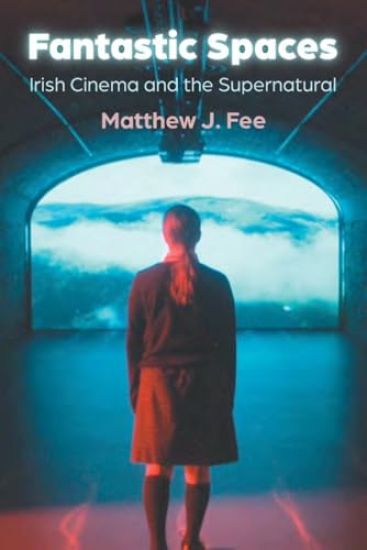
While the connection between Ireland and the otherworldly has long been a staple of literature and the arts, it finds its most consistent and compelling expression in the medium of cinema. In the first comprehensive scholarly study of the fantastic in Irish film, Fantastic Space explores how the spatial dimensions of supernatural phenomena in Irish cinema interpret and engage with the dynamic changes that have swept across Ireland over the past four decades. Drawing on a wide range of both canonical and lesser-known Irish films, Matthew J. Fee closely examines how the fantastic—including a multiplicity of supernatural occurrences and creatures drawn from Irish folklore as well as global popular culture—functions to make meaning across a period of profound social, political, and cultural transformation in Ireland. From providing platforms for female agency and interrogating rural heritage and nostalgic to articulating anxieties over modernization and globalization and questioning national identities, the fantastic spaces of Irish cinema reveal a sophisticated capacity to grapple with the complexities and contradictions of historical change.
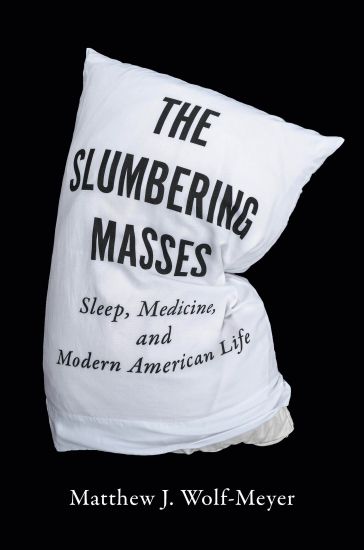
Americans spend billions of dollars every year on drugs, therapy, and other remedies trying to get a good night’s sleep. Anxieties about not getting enough sleep and the impact of sleeplessness on productivity, health, and happiness pervade medical opinion, the workplace, and popular culture. In The Slumbering Masses, Matthew J. Wolf-Meyer addresses the phenomenon of sleep and sleeplessness in the United States, tracing the influence of medicine and industrial capitalism on the sleeping habits of Americans from the nineteenth century to the present.Before the introduction of factory shift work, Americans enjoyed a range of sleeping practices, most commonly two nightly periods of rest supplemented by daytime naps. The new sleeping regimen-eight uninterrupted hours of sleep at night-led to the pathologization of other ways of sleeping. Arguing that the current model of sleep is rooted not in biology but in industrial capitalism’s relentless need for productivity, The Slumbering Masses examines so-called Z-drugs that promote sleep, the use of both legal and illicit stimulants to combat sleepiness, and the contemporary politics of time. Wolf-Meyer concludes by exploring the extremes of sleep, from cases of perpetual sleeplessness and the use of the sleepwalking defense in criminal courts to military experiments with ultra-short periods of sleep.Drawing on untapped archival sources and long-term ethnographic research with people who both experience and treat sleep abnormalities, Wolf-Meyer analyzes and sharply critiques how sleep and its supposed disorders are understood and treated. By recognizing the variety and limits of sleep, he contends, we can establish more flexible expectations about sleep and, ultimately, subvert the damage of sleep pathology and industrial control on our lives.
Historically, race has always been at the heart of American politics, and southern politics more specifically. Southern elections revolved almost entirely around racial issues during the 1950s and 1960s as debates raged over integration of schools, voting rights, and busing patterns. The election of George Wallace as governor of Alabama in 1962 underscored the electoral power of ruthless racial rhetoric, not only in Alabama, but throughout the South and the entire country. Almost 40 years later, segregation is no longer legal, tensions between blacks and whites have lessened, and the influx of large numbers of African Americans into the electorate has forced politicians to court black voters. Matthew Streb finds, however, that although extreme racial rhetoric has disappeared from the modern campaign trall, voters are still polarized along racial lines. By comparing gubernatorial campaigns in four southern and three northern states - Alabama, Georgia, Arkansas, Virginia, Ohio, Iowa, and Massachusetts - the author examines how candidates use, or fall to use, race in their campaign strategies. He demonstrates that race indeed remains a significant factor in American elections, couched in alternative issues, such as affirmative action, profiling, and social welfare. Streb's analysis of the appeal by politicians for the elite vote and the public vote reveals that class has replaced race as a definitive issue in American politics. This book will, therefore, be important not only to academic libraries and students and scholars of political science, southern history, and civil rights, but also to pollsters, campaign strategists, and state political party officials.
This book presents a sociolinguistic study of the Northern Cities Shift, a complex pattern of vowel changes heard across the traditional Inland North dialect region of the United States. The study reports on how residents of small towns are reacting to these changes, which are associated with urban speech. Utilizing both quantitative and qualitative evidence, the author offers a richly detailed account of the sociolinguistic distribution of the changes in the communities investigated. This work sheds new light on this important pattern of change as well as on the processes involved in the diffusion of language change in general. Matthew J. Gordon is Assistant Professor of English at Purdue University Calumet.
Working with the complete collection of Tender is the Night manuscripts in the Princeton University Library, Matthew J. Bruccoli reconstructs seventeen drafts and three versions of the novel to answer questions about F. Scott FitzgeraldAEs major work that have long puzzled critics of modern literature.In 1934, nine years after the appearance of The Great Gatsby, Fitzgerald permitted publication of Tender is the Night. Disappointed by its critical reception, Fitzgerald suggested that the structure of the novel should be drastically rearranged. In 1951, eleven years after his death, Charles ScribnerAEs Sons brought out an edition that incorporated FitzgeraldAEs changes. Controversy arose over the merits of the two published versions and over the \u201cnine lost years\u201d in FitzgeraldAEs life between his two great novels, years of rewriting before publication of Tender is the Night that resulted in six cartons of notes and drafts. After analyzing this wealth of material, Bruccoli reconstructs every working stage in the novel and reaches his own conclusions about which edition is the most valid.
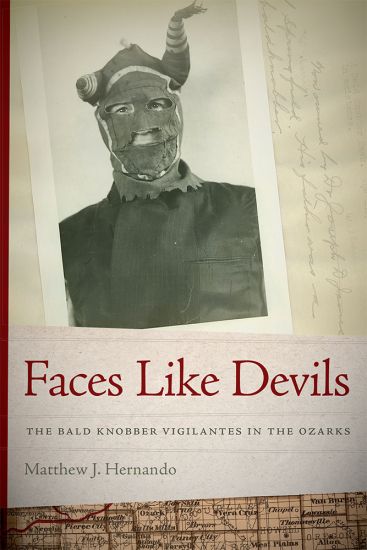
In the twenty-first century, the word vigilante usually conjures up images of cinematic heroes like Batman, Zorro, the Lone Ranger, or Clint Eastwood in just about any film he's ever been in. But in the nineteenth century, vigilantes roamed the country long before they ever made their way onto the silver screen. In Faces Like Devils, Matthew J. Hernando closely examines one of the most famous of these vigilante groups—the Bald Knobbers.Hernando sifts through the folklore and myth surrounding the Bald Knobbers to produce an authentic history of the rise and fall of Missouri’s most famous vigilantes. He details the differences between the modernizing Bald Knobbers of Taney County and the anti-progressive Bald Knobbers of Christian County, while also stressing the importance of Civil War-era violence with respect to the foundation of these vigilante groups.Despite being one of America's largest and most famous vigilante groups during the nineteenth century, the Bald Knobbers have not previously been examined in depth. Hernando's exhaustive research, which includes a plethora of state and federal court records, newspaper articles, and firsthand accounts, remedies that lack. This account of the Bald Knobbers is vital to anyone not wanting to miss out on a major part of Missouri's history.
"Secret Identity Crisis" follows the trajectory of the breakdown of the Cold War consensus after 1960 through the lens of superhero comic books. The superhero comic books developed by Marvel, because of their conscious setting in the contemporary world, and because of attempts to maintain a continuous story line across and within books, constitute a system of signs that reflect, comment upon, and at times have interacted with the American political economy.Physicist Bruce Banner, caught in the nuclear explosion of his experimental gamma bomb is transformed into the rampaging green monster, the Hulk. High school student Peter Parker, bitten by an irradiated spider, gains the powers of the spider and becomes Spiderman. Reed Richards and his friends are caught in a belt of cosmic radiation while orbiting the Earth in a spacecraft and are transformed into the Fantastic Four. While Stan Lee suggests he clung to the hackneyed idea of radioactivity in creating Marvel's stable of superheroes because of his limited imagination, radiation and the bomb are nonetheless the big bang that spawned the Marvel universe.The Marvel superhero comic that came to dominate the comic book industry for most of the last five decades was born under the mushroom cloud of potential nuclear war that was a cornerstone of the four-decade bipolar division of the world between the US and USSR. These stories were consciously set in this world and reflect the changing culture of Cold War (and post-Cold War) America. Like other forms of popular entertainment, comic books tend to be very receptive to cultural trends, reflect them, comment on them, and sometimes inaugurate them. This groundbreaking study focuses on a handful of titles and signs that specifically involve political economic codes, to reveal how the American self was transformed and/or reproduced during the late Cold War and after.
Jesus Creed Book of the Year 2018What did Paul mean by "works of the law"? Paul writes that we are justified by faith apart from "works of the law," a disputed term that represents a fault line between "old" and "new" perspectives on Paul. Was the apostle reacting against the Jews' good works done to earn salvation, or the Mosaic law's practices that identified the Jewish people? Matthew J. Thomas examines how Paul's second-century readers understood these points in conflict, how their readings relate to "old" and "new" perspectives, and what their collective witness suggests about the apostle's own meaning. Surprisingly, these early witnesses align closely with the "new" perspective, though their reasoning often differs from both modern viewpoints. They suggest that Paul opposes these works neither due to moralism, nor primarily for experiential or social reasons, but because the promised new law and covenant, which are transformative and universal in scope, have come in Christ.
This authoritative guide presents managers and engineers with proven strategies for implementing sustainable systems and practices in their manufacturing operations. Readers will gain a solid understanding of the challenges involved in sustainability by examining integrated strategies and practical tactics in the context of real-world industry applications. In this discussion, the authors effectively address the issues, costs, and value of sustainable design, environmentally sound resource, process, and facility management, waste minimization and pollution prevention, maximizing energy efficiency and sustainable energy sources, and green supply chain management.FeaturesA coordinated road map of proven, integrated strategies for creating value through sustainable manufacturing systems and practices applies to a broad range of industry applications and organizations.Ready-to-use assessment techniques, performance evaluations, and economic and cost-benefit analyses, plus case studies, provide guidelines for managerial and engineering practitioners in the field.Clear discussions cover key areas of sustainable manufacturing—from design, facility, material, resource, waste, and energy management to supply chain, logistics, and maintaining sustainability.Dr. Matthew Franchetti (Toledo, OH) is an Associate Professor of Mechanical, Industrial, and Manufacturing Engineering and the Director of Undergraduate Studies for the Mechanical Engineering Program at the University of Toledo in Ohio. He is the Director of the Environmentally Conscious Design and Manufacturing Laboratory and the Principal Investigator for the Business Waste Reduction Assistance Program, a joint effort with local government. Prior to his work in academia, Dr. Franchetti served as an industrial engineer and technical manager for the U.S. Postal Service. A Certified Six Sigma Black Belt and a professionally licensed engineer, he has helped numerous companies reap the benefits of sustainable practices. Behin Elahi (Toledo, OH) is a Ph.D. candidate in Industrial Engineering at the University of Toledo, having received her M.S. in this field in 2011. Her research interests include green supply chain, operation research, quality control, and mathematical programming, and she has published more than sixteen conference and journal papers. Since 2012, Elahi has been a consultant and one of the project managers of the Business Waste Reduction Assistance Program under the supervision of Dr. Franchetti. She is an executive officer for the Institute of Electrical and Electronics Engineers (IEEE) Toledo section and a member of the University of Toledo Engineering Council (UTEC), the Golden Key International Honour Society, and the Society of Women Engineers. Somik Ghose (Tokyo, Japan) also is pursuing his Ph.D. in Industrial Engineering at the University of Toledo. He completed his M.S. in the field of Civil Engineering in 2003 and has worked for eight years as an engineer and manager at the Center for Innovative Food Technology/Edison Industrial Systems Center, one of Ohio’s Manufacturing Excellence Partnership (MEP) centers. Ghose has participated in projects involving implementation of water and wastewater improvements, waste-to-energy processes, biofuels, energy efficiency, and renewable energy technologies in the automotive, manufacturing, food-processing industries. Toledo, OHCh 1. Introduction to Sustainable Manufacturing Ch 2. Proactive Sustainable Manufacturing Road-Map Ch 3. Management Strategies and Tactics for Sustainable Manufacturing Ch 4. Sustainable Facility Management Ch 5. Environmental Resource Management and Pollution Prevention Ch 6. Waste Minimization and Material Recycling Ch 7. Hazardous Waste Management Ch 8. Energy Resource Management and Energy Effciency Ch 9. Sustainable Energy and Sustainable Energy Sources Ch 10. Green Supply Chain, Logistics, and Transportation Ch 11. Enabling and Maintaining Sustainable Manufacturing Systems Ch 12. Sustainable Manufacturing Case Studies Ch 13. Conclusions and Further Information