The Alexander Technique is practised by many thousands of people throughout the world and has been the subject of dozens of books and numerous articles. This book is not about the technique, but about its originator, his origins as a descendant of convicts transported to Tasmania, and his life spent developing, practising and teaching his methods; first in Australia, then in England and America. In this well-researched book the author (the great-niece of Alexander) provides a fascinating picture of his background, family and early career.
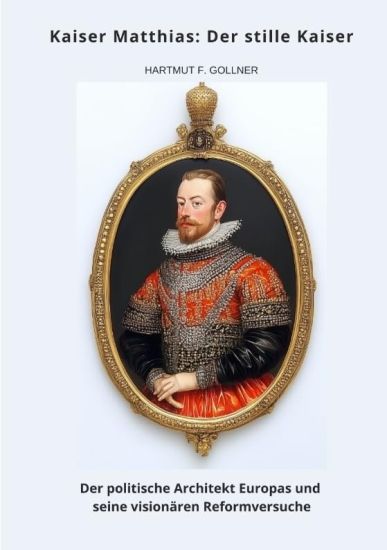
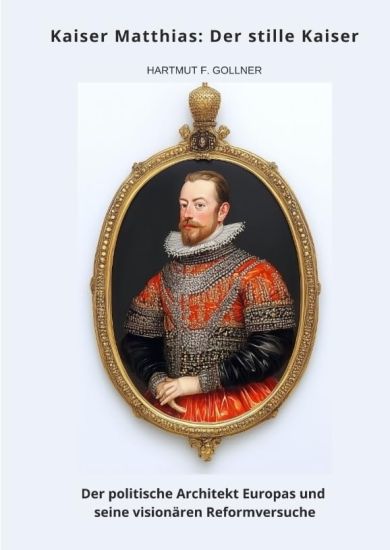
Kaiser Matthias, der oft im Schatten seiner ber hmteren Habsburger Verwandten steht, war ein Herrscher, der in einer Epoche tiefgreifender Ver nderungen Europas agierte. Doch hinter der Fassade des "stillen Kaisers" verbirgt sich ein vision rer Staatsmann, der entschlossen versuchte, ein fragmentiertes Heiliges R misches Reich zu einen und Reformen voranzutreiben, die ihrer Zeit weit voraus waren. Dieses Buch beleuchtet das Leben eines Monarchen, der trotz innerfamili rer Rivalit ten und politischer Instabilit ten einen diplomatischen Balanceakt zwischen den konfessionellen Spannungen und den territorialen Anspr chen Europas wagte. Mit einem Blick auf seine strategische Geschicklichkeit, seine politische Weitsicht und die Herausforderungen seiner kurzen Regierungszeit, zeigt Hartmut F. Gollner, warum Matthias zu den untersch tzten Gestalten der Habsburgerdynastie z hlt. Erfahren Sie, wie Kaiser Matthias nicht nur die Macht der Habsburger im Heiligen R mischen Reich festigte, sondern auch als Architekt einer toleranten und stabilen politischen Ordnung hervorstach. Eine faszinierende Reise in die Welt eines Herrschers, dessen stiller Einfluss bis heute nachhallt.
Kaiser Matthias, der oft im Schatten seiner ber hmteren Habsburger Verwandten steht, war ein Herrscher, der in einer Epoche tiefgreifender Ver nderungen Europas agierte. Doch hinter der Fassade des "stillen Kaisers" verbirgt sich ein vision rer Staatsmann, der entschlossen versuchte, ein fragmentiertes Heiliges R misches Reich zu einen und Reformen voranzutreiben, die ihrer Zeit weit voraus waren. Dieses Buch beleuchtet das Leben eines Monarchen, der trotz innerfamili rer Rivalit ten und politischer Instabilit ten einen diplomatischen Balanceakt zwischen den konfessionellen Spannungen und den territorialen Anspr chen Europas wagte. Mit einem Blick auf seine strategische Geschicklichkeit, seine politische Weitsicht und die Herausforderungen seiner kurzen Regierungszeit, zeigt Hartmut F. Gollner, warum Matthias zu den untersch tzten Gestalten der Habsburgerdynastie z hlt. Erfahren Sie, wie Kaiser Matthias nicht nur die Macht der Habsburger im Heiligen R mischen Reich festigte, sondern auch als Architekt einer toleranten und stabilen politischen Ordnung hervorstach. Eine faszinierende Reise in die Welt eines Herrschers, dessen stiller Einfluss bis heute nachhallt.
Unver nderter Nachdruck der Originalausgabe von 1883. Der Verlag Antigonos spezialisiert sich auf die Herausgabe von Nachdrucken historischer B cher. Wir achten darauf, dass diese Werke der ffentlichkeit in einem guten Zustand zug nglich gemacht werden, um ihr kulturelles Erbe zu bewahren.
Onkel Matthias ist ein unver nderter, hochwertiger Nachdruck der Originalausgabe aus dem Jahr 1869. Hansebooks ist Herausgeber von Literatur zu unterschiedlichen Themengebieten wie Forschung und Wissenschaft, Reisen und Expeditionen, Kochen und Ern hrung, Medizin und weiteren Genres. Der Schwerpunkt des Verlages liegt auf dem Erhalt historischer Literatur. Viele Werke historischer Schriftsteller und Wissenschaftler sind heute nur noch als Antiquit ten erh ltlich. Hansebooks verlegt diese B cher neu und tr gt damit zum Erhalt selten gewordener Literatur und historischem Wissen auch f r die Zukunft bei.
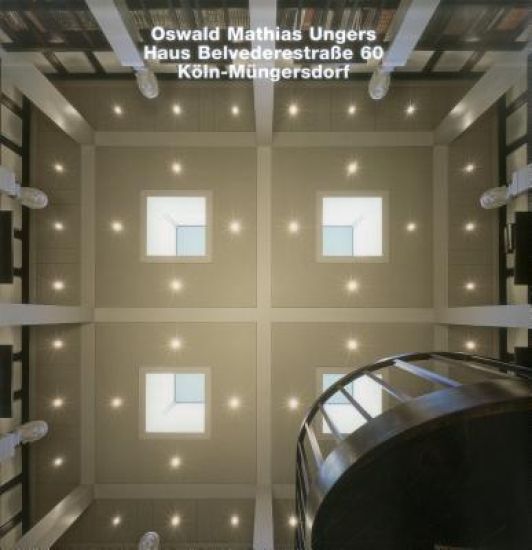
A house is a representation of the idea of the world, of life, of existence. For the Cologne architect Oswald Mathias Ungers (19262007), owner of a famous collection of books on architecture, who also repeatedly addressed the theoretical aspects of building, the construction of his own house, in 1958/59, was more than a private adventure. For him it meant a chance to gain spatial experience and explore what was possible. It was a laboratory, a little universe, a piece of world. In the course of his life, Ungers built himself and his family no less than three houses, two in the Cologne suburb of Müngersdorf, one in the Eifel highlands. Even the first house, to which this richly illustrated volume is dedicated, caused an international sensation; it was considered to be an important example of so-called Brutalism. It showed "everything I knew how to do at the time", Ungers wrote regarding the building. He wanted a house that enveloped and sheltered, he wanted metamorphosis and transformation; architecture that was autonomous but at the same time respected the genius loci. At the time, architects preferred to build their private homes as freestanding bungalows in the countryside. Ungers, on the other hand, settled in a place where there were traces of the Roman past and purchased a plot of land adjacent to an already existing row of terraced houses. Three decades later, Ungers expanded the cataract of forms of his first home by adding a geometrically strict cube, intended to house his library. The shock aesthetics of the early work had evolved into the rigorous abstractness of his late work. This building too one of a kind, and in interplay with its predecessor became a manifesto. It corresponded to the idea of a house as a small town and the town as a large house, an idea that has run through European architectural history since Alberti. In spite of all their differences, the two contrasting formats make common cause. They show a world full of contradictions, illusions and realities that reflects the entire spectrum of the image of architecture, from the fiction to the reality of the function. Today the house and the library are the seat of the UAA, the Ungers Archiv für Architekturwissenschaft, and open to the public. The architectural historian Wolfgang Pehnt often visited Ungers. The author of an authoritative book about the architecture of Expressionism, he profited by Ungers' collection of material back in the years when Ungers was still interested in Expressionism. Thus he is familiar with the house in its details and has witnessed its modifications. As portrayed by him, the history of the origins of the house gives access to the impressive uvre of a great German architect.
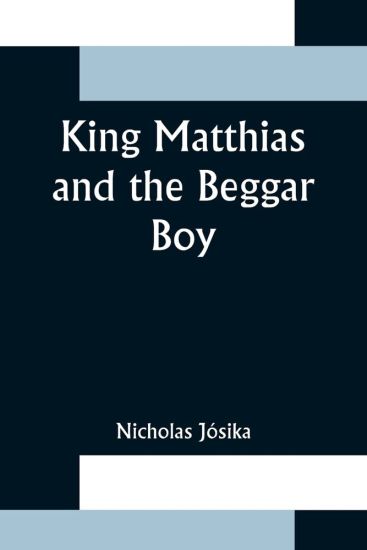
King Matthias and the Beggar Boy, a classic since it was first published. Has been considered important throughout the human history, and so that this work is never forgotten we have made efforts in its preservation by republishing this book in a modern format for present and future generations. This whole book has been reformatted, retyped and designed. These books are not made of scanned copies and hence the text is clear and readable.
Dieses klassische Buch wurde urspr nglich vor Jahrzehnten ver ffentlicht als "A Man of Business" . Es wurde jetzt von Writat f r seine deutschsprachigen Leser ins Deutsche bersetzt. Bei Writat liegt uns die Bewahrung des literarischen Erbes der Vergangenheit sehr am Herzen. Wir haben dieses Buch ins Deutsche bersetzt, damit es heutige und zuk nftige Generationen lesen und bewahren k nnen.
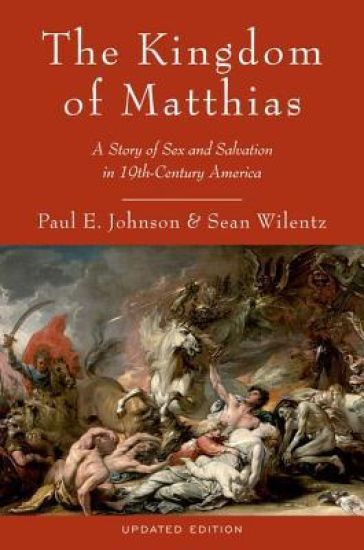
Paul Johnson and Sean Wilentz brilliantly recapture the forgotten story of Matthias the Prophet, imbuing their richly researched account with the dramatic force of a novel. In the hands of Johnson and Wilentz, the strange tale of Matthias opens a fascinating window into the turbulent movements of the religious revival known as the Second Great Awakening--movements that swept up great numbers of evangelical Americans and gave rise to new sects like the Mormons. Into this teeming environment walked a down-and-out carpenter named Robert Matthews, who announced himself as Matthias, prophet of the God of the Jews. His hypnotic personality drew in a cast of unforgettable characters--the meekly devout businessman Elijah Pierson, who once tried to raise his late wife from the dead; the young attractive Christian couple, Benjamin Folger and his wife Ann (who seduced the woman-hating Prophet); and the shrewd ex-slave Isabella Van Wagenen, regarded by some as "the most wicked of the wicked." None was more colorful than the Prophet himself, a bearded, thundering tyrant who gathered his followers into an absolutist household, using their money to buy an elaborate, eccentric wardrobe, and reordering their marital relations. By the time the tensions within the kingdom exploded into a clash with the law, Matthias had become a national scandal. "Written with the sweep and narrative drive of a best seller.... It has sex and sexual depravity, violence, murder, a courtroom drama, a media feeding frenzy, prostitution, lunacy, theft, religion (plenty of that), politics, social commentary, subtle humor, a fascinating if weird cast of characters, and a surprise ending." --Atlantic Monthly "The Kingdom of Matthias is about marginality, fantasy, commerce, sex, and the soul's hunger, and the classically American combustion of all of the above.... A delicious and disturbing book." --Leon Wieseltier "As exciting as a novel...a wonderful book that will keep you up all night." --Katha Pollitt
This work has been selected by scholars as being culturally important and is part of the knowledge base of civilization as we know it.This work is in the public domain in the United States of America, and possibly other nations. Within the United States, you may freely copy and distribute this work, as no entity (individual or corporate) has a copyright on the body of the work.Scholars believe, and we concur, that this work is important enough to be preserved, reproduced, and made generally available to the public. To ensure a quality reading experience, this work has been proofread and republished using a format that seamlessly blends the original graphical elements with text in an easy-to-read typeface.We appreciate your support of the preservation process, and thank you for being an important part of keeping this knowledge alive and relevant.
This comprehensive genealogy of the Hatfield family traces its lineage back to Matthias Hatfield, one of the earliest settlers in New Jersey. Abraham Hatfield provides detailed information on each family member, including birth and death dates, marriages, children, and more. Whether you're a Hatfield descendant or simply a lover of genealogy, this book is an essential resource for anyone interested in the history of this prominent family.This work has been selected by scholars as being culturally important, and is part of the knowledge base of civilization as we know it.This work is in the "public domain in the United States of America, and possibly other nations. Within the United States, you may freely copy and distribute this work, as no entity (individual or corporate) has a copyright on the body of the work.Scholars believe, and we concur, that this work is important enough to be preserved, reproduced, and made generally available to the public. We appreciate your support of the preservation process, and thank you for being an important part of keeping this knowledge alive and relevant.