

Kirjahaku
Etsi kirjoja tekijän nimen, kirjan nimen tai ISBN:n perusteella.
1000 tulosta hakusanalla Maxime Rodinson

Index Verborum Ac Phrasium Luciani, Sive Lexicon Lucianeum Ad Editiones Omnes, Maxime Novissimam Wetstenianam Concinnatum A Car. Conr. Reitzio...
Karel Koenraad Reitz
Hutson Street Press
2025
sidottu
Index Verborum Ac Phrasium Luciani, Sive Lexicon Lucianeum Ad Editiones Omnes, Maxime Novissimam Wetstenianam Concinnatum A Car. Conr. Reitzio...
Karel Koenraad Reitz
Hutson Street Press
2025
pokkari

Elenchus Novus Privilegiorum Regularium, Tam Mendicantium, Quam Non Mendicantium, Maxime Cisterciensium (1744)
Raphael Koendig
KESSINGER PUBLISHING, LLC
2009
pokkari
Lettre de M. Le Dr Thomson, Au Sujet Des Débats Qui Ont Eu Lieu Entre M. Maxime Vernois
Thomson-A
Hachette Livre - BNF
2013
pokkari
Lettre de M. le Dr Thomson, au sujet des debats qui ont eu lieu entre M. Maxime Vernois, interne a la Pitie, et M. Ph. Ricord, chirurgien de l'Hopital du MidiDate de l'edition originale: 1834Sujet de l'ouvrage: Vernois, MaximeCe livre est la reproduction fidele d'une oeuvre publiee avant 1920 et fait partie d'une collection de livres reimprimes a la demande editee par Hachette Livre, dans le cadre d'un partenariat avec la Bibliotheque nationale de France, offrant l'opportunite d'acceder a des ouvrages anciens et souvent rares issus des fonds patrimoniaux de la BnF.Les oeuvres faisant partie de cette collection ont ete numerisees par la BnF et sont presentes sur Gallica, sa bibliotheque numerique.En entreprenant de redonner vie a ces ouvrages au travers d'une collection de livres reimprimes a la demande, nous leur donnons la possibilite de rencontrer un public elargi et participons a la transmission de connaissances et de savoirs parfois difficilement accessibles.Nous avons cherche a concilier la reproduction fidele d'un livre ancien a partir de sa version numerisee avec le souci d'un confort de lecture optimal. Nous esperons que les ouvrages de cette nouvelle collection vous apporteront entiere satisfaction.Pour plus d'informations, rendez-vous sur www.hachettebnf.frhttp: //gallica.bnf.fr/ark: /12148/bpt6k63776359
Cour d'Assises Du Loiret. Seconde Session Extraordinaire. Affaire de MM. Louis Et Maxime
Sans Auteur
Hachette Livre - BNF
2017
pokkari
Cour d'assises du Loiret. Seconde session extraordinaire. Affaire de MM. Louis et Maxime de La Soriniere, Gaudin et autres, relative aux troubles de l'Ouest. (15-17 mars.)Date de l'edition originale: 1833Sujet de l'ouvrage: France (1830-1848, Louis-Philippe)Appartient a l'ensemble documentaire: Centre1Ce livre est la reproduction fidele d'une oeuvre publiee avant 1920 et fait partie d'une collection de livres reimprimes a la demande editee par Hachette Livre, dans le cadre d'un partenariat avec la Bibliotheque nationale de France, offrant l'opportunite d'acceder a des ouvrages anciens et souvent rares issus des fonds patrimoniaux de la BnF.Les oeuvres faisant partie de cette collection ont ete numerisees par la BnF et sont presentes sur Gallica, sa bibliotheque numerique.En entreprenant de redonner vie a ces ouvrages au travers d'une collection de livres reimprimes a la demande, nous leur donnons la possibilite de rencontrer un public elargi et participons a la transmission de connaissances et de savoirs parfois difficilement accessibles.Nous avons cherche a concilier la reproduction fidele d'un livre ancien a partir de sa version numerisee avec le souci d'un confort de lecture optimal. Nous esperons que les ouvrages de cette nouvelle collection vous apporteront entiere satisfaction.Pour plus d'informations, rendez-vous sur www.hachettebnf.fr


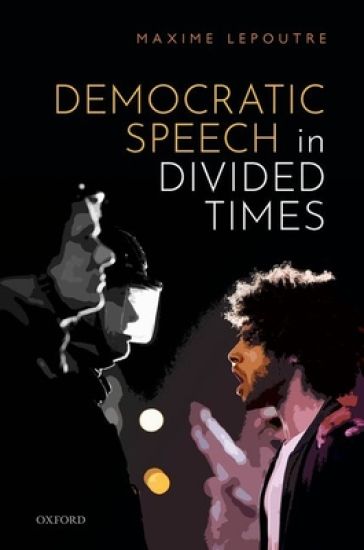
In an ideal democracy, people from all walks of life would come together to talk meaningfully and respectfully about politics. But we do not live in an ideal democracy. In contemporary democracies, which are marked by deep social divisions, different groups for the most part avoid talking to each other. And when they do talk to each other, their speech often seems to be little more than a vehicle for rage, hatred, and deception. Democratic Speech in Divided Times argues that we should nevertheless not give up on the ideal of democratic public speech. Drawing on the resources of political theory, epistemology, and philosophy of language, this book develops a sustained account of the norms that should govern public discourse in deeply divided circumstances. Should we try to find common ground when we talk to our political opponents, even though they seem unreasonable? Should we refrain from expressing anger, if we want to get things done? How can we use our speech to fight hate speech and disinformation? And is it even possible to speak to 'the other side,' in settings where different groups dislike one another, live apart from one another, and don't know much about one another? By tackling these questions, Lepoutre demonstrates that, when governed by the right set of norms, public speech can be a powerful force for good even amidst profound social divisions.
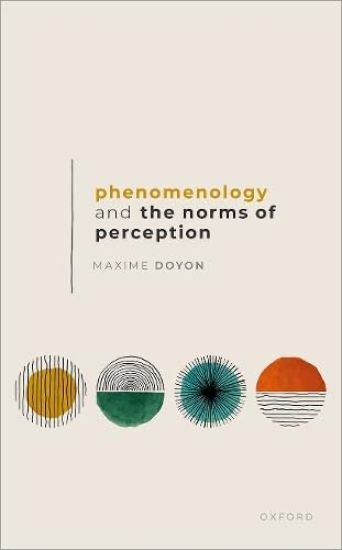
In the philosophical literature, it is customary to think of perception as being assessable with respect to epistemic norms. E.g., the whole discussion around disjunctivism, which is now often considered to be the dominant, if not the default position in philosophy of perception, is, by and large, framed and motivated by epistemological concerns about truth and falsity. This book argues that perception is normative in another, more fundamental sense. Perception is governed by norms that Doyon calls perceptual, that is, immanent to its own structure. This does not mean that perceptual norms are cut-off from external facts; it rather means that they are constitutive moments of our experience of these facts. Perceptual norms are, in that sense, constitutive or enabling norms in that they establish what perception is. To articulate this view, he draws in the repertoire of the phenomenological tradition, in the work of Edmund Husserl and Maurice Merleau-Ponty in particular. Like Kant, both phenomenologists were concerned with the question of the unity of experience and sought to identify the conditions of possibility for having a perception, which they conceive not as a mere sensible experience of the outer world, but as a continuous and meaningful experience of reality. Unlike Kant, however, neither phenomenologist immediately identified these conditions with cognition or epistemic criteria. For both phenomenologists, perception has its own standards, its own conditions of possibility. Perception obtains when it unfolds concordantly or coherently; and when the perceptual progression corresponds to or is in harmony with one's goal or interest, perception can also be said to be optimal. From the phenomenological point of view, concordance (Einstimmigkeit) and optimality (Optimalität) are the two basic perceptual norms governing over perceptual experience, and much of the book is devoted to clarifying their meaning and to address the philosophical consequences that follow from this insight.
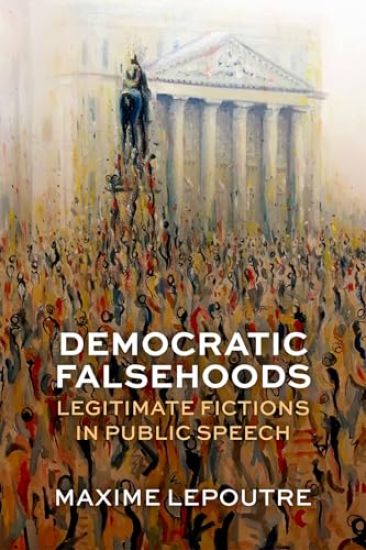
Falsehoods can gravely endanger democratic societies. When disinformation circulates widely, it can alter the outcome of elections, erode trust in democratic institutions, undermine support for critically important policies, or even incite violence. It is therefore natural to conclude that falsehoods should have no place whatsoever in democratic life. Democratic Falsehoods argues that this conclusion is nevertheless too quick. Although many falsehoods pose a clear and serious democratic threat, other falsehoods are more benign, and others still can play an actively positive role within democratic public discourse. This book explores how falsehoods can contribute to performing key functions of democratic public discourse, such as countering hate speech, mobilising collective action, supporting just wars of self-defence, representing constituents, or even promoting public understanding of pressing scientific matters. Can falsehoods advance, rather than hinder, such goals? Under what conditions are they likely to do so? And when, if ever, is it permissible to deploy such falsehoods in a democratic society? By investigating these questions, Democratic Falsehoods aims to show that falsehoods can sometimes play a legitimate role in democratic public life. It demonstrates, moreover, that some falsehoods are legitimate, not in spite of, but precisely because of our commitment to democracy. Finally, but crucially, it provides a comprehensive account of how these falsehoods differ from-and, indeed, can help to counteract-the dangerous falsehoods plaguing contemporary democracies.

Paris, Ses Organes, Ses Fonctions Et Sa Vie Dans La Seconde Moitie Du Xixe Siècle; Volume 2
Maxime Du Camp
Wentworth Press
2018
sidottu
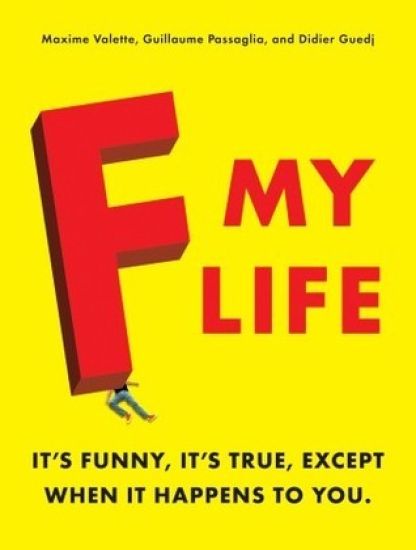
F My Life: It's Funny, It's True, Except When It Happens to You
Maxime Valette; Guillaume Passaglia; Didier Guedj
Random House Publishing Group
2009
nidottu
Today, my boss fired me via text message. I don't have a text messaging plan. I paid 25 cents to get fired. Your girlfriend dumped you, your car broke down, your boss passed you up for the big promotion. Life's not fair, but there is one sure-fire way to ease your pain-laughing at someone else who had an even worse day than you did. Enter the devastatingly funny world of F My Life, where calamity is comedy. Covering every disastrous pratfall in love, work, family-life, and more, F My Life proffers other people's ruinous, real-life happenings to brighten your gloomiest day: someone getting dumped through a greeting card, ignored at their birthday party, or insulted by their own grandmother. Spanning everything from ironic twists of fate to down-right shameful moments, F My Life's squirm-inducing stories are schadenfreude at its finest. So today, take solace in knowing that at least you're not that guy. There now, don't you feel better? Today, my boyfriend broke up with me. I cried and told him that I loved him. He gave me a quarter and told me to call someone who cared. I threw the quarter in his face and ran. I waited for the bus, but when I got on, I realized I was 25 cents short of the fare. I walked home in the rain. Today, my mom walked in on me looking at a 1978 Playboy. She asked if I found it in the basement. I said yes. Then I realized she was the centerfold. Today, I got in line at the grocery store. The woman in front of me looked right at me, turned to her friend, and said "That reminds me, I forgot to get acne cream."

Dr. Larivé questions whether there is such a thing as a European defense and security policy. This book analyzes the integration process by clearly illustrating to the reader the two sides of the argument in order to understand the complexity of the problems in the different stages of the creation and implementation of the European defense policy. In doing so, this study asks the question of why has the process been so halting and of such limited scope? Structured in three parts: Theories, analyzing the theoretical debates raised by the positivist paradigms of neorealism, liberalism and constructivism on European security; History, reflecting on the impacts of the Cold War, American foreign policy, the 2008 economic crisis, and the evolution of European strategy; and, Actors, by looking at the role of European institutions, Member States, and the CSDP on the transformation of the European defense policy since 1998. Each chapter is composed of sub questions allowing the reader to grasp the different forces explaining the deepening or lack of the deepening process of the CSDP. Ultimately, this book offers a unique base for fostering discussion, understanding and critical thinking on the CSDP.