Kirjojen hintavertailu. Mukana 11 244 527 kirjaa ja 12 kauppaa.

Kirjahaku

Etsi kirjoja tekijän nimen, kirjan nimen tai ISBN:n perusteella.

1000 tulosta hakusanalla May Mars

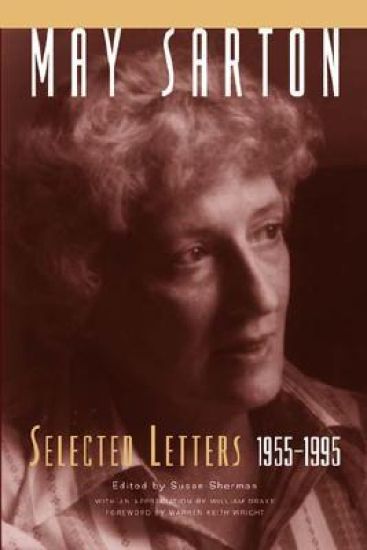
May Sarton

May Sarton

May Sarton; Warren Keith Wright

WW Norton Co
2002
sidottu
The engrossing drama begun in May Sarton: Selected Letters 1916–1954 culminates in this gathering of 200 quintessential letters, culled from thousands. Copiously annotated, they propel the reader with passionate immediacy through the rich years of this beloved author's maturity and world-wide fame, to her death. "Sarton is one of the great letter writers of our time," Library Journal affirmed of the first volume. And here once again we see her in every aspect: the hard-pressed writer, the tormented lover, at her fiercest and most fond; the friend, confidante and passionate traveler, intensely engaged by public issues, ceaselessly searching for the elusive muse which made poetry and the creative transformation of life possible. In addition to longtime friends and intimates familiar from Volume One—Louise Bogan, Eva Le Gallienne, Bill Brown, Muriel Rukeyser and the Huxleys—the more than 150 recipients in this volume include Robert Frost and Elizabeth Bowen, Carolyn Heilbrun and Doris Grumbach, Madeleine L'Engle, Pat Carroll, and Marianne Moore. "No topic escapes her," Susan Kenney wrote of the first volume, and in the breadth and amplitude of these vibrant missives to friends and strangers, poets and scientists, actors and scholars, teachers and editors from every corner of the States and throughout Europe, the reader will partake of her joys, and learn well her griefs; it is no coincidence she always capitalized Hell. Particularly rich are her letters to members of the religious community who were drawn to the spiritual center in her work; her magnificent letters of condolence; her fiery replies to critics; her trenchant, generous responses to the many young writers who touched her; and her life-enhancing responses to hordes of admirers. Here, too, we are privy to several intense love relationships, and live beside her through the landmark publications of Mrs. Stevens Hears the Mermaids Singing and her revolutionary Journal of a Solitude. We accompany her as she writes the celebrated lyric poems which, with missionary fervor, she brought alive in dynamic readings to standing-room-only audiences across America, as long as she could do so. And finally we are witness to the gradual diminishments of age as, with characteristic courage, she charges into her ninth decade, "ardent and alone." Selected Letters 1955–1995 offers new insights and throws fascinating sidelights on Sarton's multi-faceted character, presenting an awesome self-portrait—more revealing than anything yet published—of this truly singular woman who, faithful to her "vision of life"—and like the legendary phoenix which marks her grave —never ceased to be reborn over and over again. As critic William Drake put it, "May Sarton always seems to be speaking to each one of us personally, as if we were a friend." In this richly moving and nourishing collection—the capstone of her literary legacy—this unforgettable woman speaks to each of us, as to each correspondent, once again in her timeless voice. "Readers will find this volume a valuable companion to Sarton's other work; reading it put me back in touch with her keen intelligence, her restless but rich spirit, and I enjoyed it tremendously." —Eleanor Dwight, author of Edith Wharton: An Extraordinary Life "In a century of cruel inhumanity, 'life-enhancing' poet, novelist and journal-keeper May Sarton showed us, most of all, how to be human. . . . That is why we find in her a friend, and will keep rereading these thoughtful letters and her books for clues about the journey ahead." —Father John Dear, author of Living Peace "Those who know her journals will find here a Sarton willing to examine the underside of creativity, a Sarton who refuses to stay stuck in life or work. This book passes on that courage to readers." —Alexandra Johnson, author of Leaving a Trace: On Keeping a Journal "A searingly honest self-portrait of a complex and many-sided woman. . . . What a feast!" —Dr. Claire Douglas, author of Translate This Darkness: The Life of Christiana Morgan, the Veiled Woman in Jung's Circle
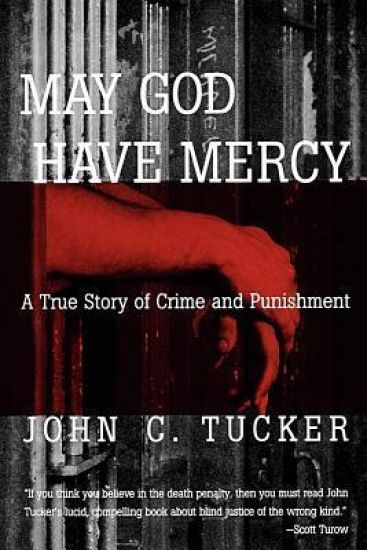
May God Have Mercy

May God Have Mercy

John C Tucker

W. W. Norton Company
1997
pokkari
In 1982, in Grundy, Virginia, a young miner named Roger Coleman was sentenced to death for the murder of his sister-in-law. Ten years later, Coleman's case had become an international cause celebre as a result of the extraordinary efforts of Kitty Behan, a brilliant and dedicated young lawyer who devoted two years of her life to gathering evidence of Coleman's innocence. Despite the mounting demands of the public, the media, and world religious leaders that Coleman's conviction be reexamined, the courts refused to consider new evidence because of a lawyer's mistake: years earlier, an appointed lawyer had filed a document one day late. The governor of Virginia offered Coleman only one chance for a reprieve--the opportunity to take a lie-detector test on the morning of his scheduled execution. May God Have Mercy explores the legal and moral complexities of this dramatic case with devastating impact.
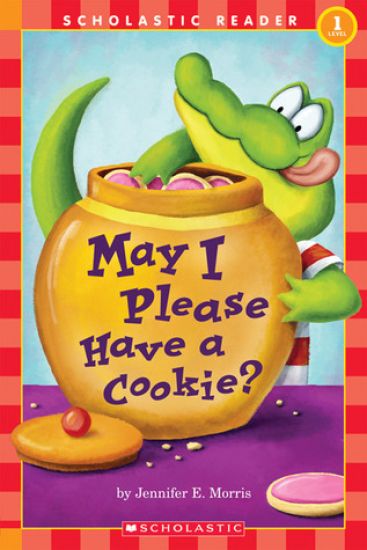
May I Please Have a Cookie? (Scholastic Reader, Level 1)
Alfie loves cookies -- how can he get one? A sweet, funny book about manners in the bestselling Scholastic Level 1 reader format Alfie loves his mommy's cookies, and he wants one more than anything But grabbing for one, fishing for one, and dressing up as a cookie inspector don't seem to work. His mommy says there is a better way. What is it?Scholastic Readers encourage the joy and fun of reading with topics that kids love -- perfect for children beginning to read on their own
May You be the Mother of 100 Sons
"The most stimulating and thought-provoking book on India in a long time..Bumiller has made India new and immediate again."THE WASHINGTON POST BOOK WORLDIn a chronicle rich in diversity, detail, and empathy, Elisabeth Bumiller illuminates the many women's lives she shared--from wealthy sophisticates in New Delhi, to villagers in the dusty northern plains, to movie stars in Bombay, intellectuals in Calcutta, and health workers in the south--and the contradictions she encountered, during her three and a half years in India as a reporter for THE WASHINGTON POST. In their fascinating, and often tragic stories, Bumiller found a strength even in powerlessness, and a universality that raises questions for women around the world.
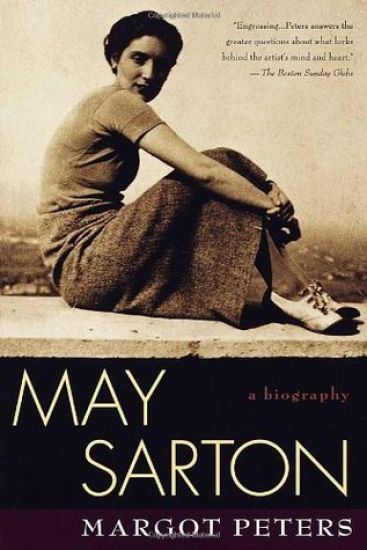
May Sarton

May Sarton

Margot Peters

Ballantine Books Inc.
1998
pokkari
From acclaimed writer Margot Peters comes the first, completely authorized biography of novelist, poet, and feminist May Sarton. Granted unprecedented access to personal papers and diaries, Peters gives us a compelling look at the woman who influenced a legion of readers with rich and intimate writings, and reveals the fascinating life that Sarton herself kept hidden. Beginning with a young Sarton largely ignored by her parents, Peters traces the compulsive quest for recognition and artistic inspiration that would characterize most of Sarton's life. We witness her at nineteen as she chooses a life in the theater, only to discover later her real passion: writing. As her literary career takes shape, we watch her personal and professional struggles for acceptance, her intense relationships with such learned friends as Muriel Rukeyser and Louise Bogan, and her secret turmoil over her sexuality. But ultimately, we see Sarton begin to create in her works the image of a strong, independent woman who lived peacefully with solitude--an image that often contradicted the reality of her life.
May Her Likes Be Multiplied

May Her Likes Be Multiplied

Marilyn Booth

University of California Press
2001
pokkari
Marilyn Booth's elegantly conceived study reveals the Arabic tradition of life-writing in an entirely new light. Though biography had long been male-authored, in the late nineteenth century short sketches by and about women began to appear in biographical dictionaries and women's journals. By 1940, hundreds of such biographies had been published, featuring Arabs, Turks, Indians, Europeans, North Americans, and ancient Greeks and Persians. Booth uses over five hundred 'famous women' biographies - which include subjects as diverse as Joan of Arc, Jane Austen, Aisha bt. Abi Bakr, Sarojini Naidu, and Lucy Stone - to demonstrate how these narratives prescribed complex role models for middle-class girls, in a context where nationalist programs and emerging feminisms made defining the ideal female citizen an urgent matter. Booth begins by asking how cultural traditions shaped women's biography, and to whom the Egyptian biographies were directed. The biographies were published at a time of great cultural awakening in Egypt, when social and political institutions were in upheaval. The stories suggested that Islam could be flexible on social practice and gender, holding out the possibility for women to make their own lives. Yet ultimately they indicate that women would find it extremely difficult to escape the nationalist ideal: the nuclear family with 'woman' at its center. This conflict remains central to Egyptian politics today, and in her final chapter Booth examines Islamic biographies of women's lives that have been published in more recent years.
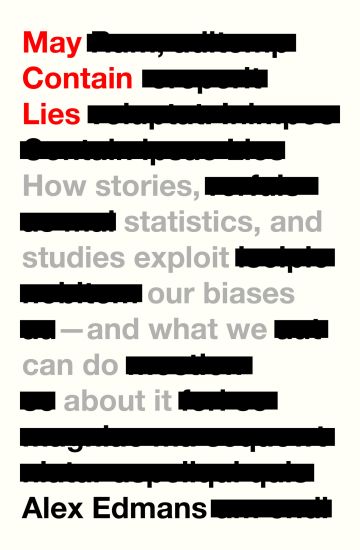
May Contain Lies: How Stories, Statistics, and Studies Exploit Our Biases--And What We Can Do about It
Adam Grant's "8 New Idea Books to Start Spring" Next Big Idea Club's Must-Read Books for May 2024 "A wonderful litany of the myriad ways in which we can be deceived, and deceive ourselves."--The Guardian "Entertaining, thorough and full of current examples. . . . It's excellent." --The Wall Street Journal How our biases cause us to fall for misinformation--and how to combat it. Our lives are minefields of misinformation. It ripples through our social media feeds, our daily headlines, and the pronouncements of politicians, executives, and authors. Stories, statistics, and studies are everywhere, allowing people to find evidence to support whatever position they want. Many of these sources are flawed, yet by playing on our emotions and preying on our biases, they can gain widespread acceptance, warp our views, and distort our decisions. In this eye-opening book, renowned economist Alex Edmans teaches us how to separate fact from fiction. Using colorful examples--from a wellness guru's tragic but fabricated backstory to the blunders that led to the Deepwater Horizon disaster to the diet that ensnared millions yet hastened its founder's death--Edmans highlights the biases that cause us to mistake statements for facts, facts for data, data for evidence, and evidence for proof. Armed with the knowledge of what to guard against, he then provides a practical guide to combat this tide of misinformation. Going beyond simply checking the facts and explaining individual statistics, Edmans explores the relationships between statistics--the science of cause and effect--ultimately training us to think smarter, sharper, and more critically. May Contain Lies is an essential read for anyone who wants to make better sense of the world and better decisions.
MAY CONTAIN LIES

MAY CONTAIN LIES

University of California Press
2024
nidottu
Adam Grant's "8 New Idea Books to Start Spring" Next Big Idea Club's Must-Read Books for May 2024 "A wonderful litany of the myriad ways in which we can be deceived, and deceive ourselves."--The Guardian "Highlights how first recognizing our biases and then taking small but intentional steps to overcome them can have an outsized effect on the quality of our decisions."--Inc. How our biases cause us to fall for misinformation--and how to combat it. Our lives are minefields of misinformation. It ripples through our social media feeds, our daily headlines, and the pronouncements of politicians, executives, and authors. Stories, statistics, and studies are everywhere, allowing people to find evidence to support whatever position they want. Many of these sources are flawed, yet by playing on our emotions and preying on our biases, they can gain widespread acceptance, warp our views, and distort our decisions. In this eye-opening book, renowned economist Alex Edmans teaches us how to separate fact from fiction. Using colorful examples--from a wellness guru's tragic but fabricated backstory to the blunders that led to the Deepwater Horizon disaster to the diet that ensnared millions yet hastened its founder's death--Edmans highlights the biases that cause us to mistake statements for facts, facts for data, data for evidence, and evidence for proof. Armed with the knowledge of what to guard against, he then provides a practical guide to combat this tide of misinformation. Going beyond simply checking the facts and explaining individual statistics, Edmans explores the relationships between statistics--the science of cause and effect--ultimately training us to think smarter, sharper, and more critically. May Contain Lies is an essential read for anyone who wants to make better sense of the world and better decisions.
May Queen Murders

May Queen Murders

Sarah Jude

Houghton Mifflin
2017
nidottu
Those are the rules in Rowan's Glen, a remote farming community in the Missouri Ozarks where Ivy Templeton's family has lived for centuries. It's an old-fashioned way of life, full of superstition and traditions, and sixteen-year-old Ivy loves it. The other kids at school may think the Glen kids are weird, but Ivy doesn't care--she has her cousin Heather as her best friend. The two girls share everything with each other--or so Ivy thinks. When Heather goes missing after a May Day celebration, Ivy discovers that both her best friend and her beloved hometown are as full of secrets as the woods that surround them.
May I Please Have a Cookie? /¿Me Puedes Dar Una Galleta, Por Favor? (Scholastic Bilingual)
A board book version of the bestselling story that's all about how to say please Alfie loves his mommy's cookies, and he wants one more than anything But grabbing for one, fishing for one, and dressing up as a cookie inspector don't seem to work. His mommy says there is a better way. What is it? The littlest of readers will learn proper manners with Alfie as his mommy teaches him to say the magic words.A Alfie le encantan las galletas que hornea su mam , y desea comer una m s que ninguna otra cosa Pero tomar una galleta sin permiso o tratar de obtenerla disfraz ndose de inspector de galletas no va a funcionar. Su mam dice que hay un mejor manera de pedir una galleta. Cu l ser ? Los m s peque itos aprender n a pedir educadamente junto a Alfie.