Kirjojen hintavertailu. Mukana 11 244 527 kirjaa ja 12 kauppaa.

Kirjahaku

Etsi kirjoja tekijän nimen, kirjan nimen tai ISBN:n perusteella.

1000 tulosta hakusanalla Maya Eisel

Maya and Spaniard in Yucatan, 1648-1812

Maya and Spaniard in Yucatan, 1648-1812

Robert W. Patch

Stanford University Press
1994
sidottu
A study of the development of human society in Yucatan during the colonial period, this book poses a challenge to a variety of accepted views, including the notion that Yucatan was largely isolated from the main part of Spain's New World empire and thus from international markets and the world economy - an isolation often cited as the principal reason for the extended survival of indigenous culture in the region. In the seventeenth and eighteenth centuries, Yucatan society was composed of both Maya and Spanish commonwealths, each with its own economic, social, and political organization. This book represents several new departures, both for what is known about colonial Yucatan and for colonial Latin American history in general. It forces the reader to rethink much of the received knowledge about acculturation, the hacienda, and inter-regional relations.
Maya Archaeologist

Maya Archaeologist

J. Eric S. Thompson; Norman Hammond

University of Oklahoma Press
1974
nidottu
Maya Archaeologist is an autobiographical account of explorations in Mayan ruins by J. Eric Thompson, one of the world's foremost authorities on the Maya Indians of Mexico and Central America. Based on his expeditions from 1926 to 1936 - when conditions in the Maya area were very close to those in the years of the Conquest - this book is an intensely personal account of the investigation of the ""stone cities,"" such as Uxmal, Chichén Itzá, Copán, Tikal, and Quirigua, as well as lively portraits of the archaeologists who probed this civilization - Morley, Gann, Ruppert, Vaillant, Roys, and many others.
Maya History and Religion

Maya History and Religion

J. Eric S. Thompson

University of Oklahoma Press
1990
nidottu
Believing that Maya studies today are ""suffering from imbalance,"" J. Eric S. Thompson here approaches Maya history and religion from the standpoint of ethno-history. Present-day archaeologists often tend to restrict their curiosity to their excavations and social anthropologists to observe the modern Maya as members of a somewhat primitive society in an era of change. In this volume, a distinguished Maya scholar seeks to correlate data from colonial writings and observations of the modern Indian with archaeological information in order to extend and clarify the panorama of Maya culture.The shock of the Spanish Conquest was devastating to the Maya. Not only were they placed under the domination of a people uninterested in their ancient ways, but their religion was proscribed, they were removed from their familiar settlements into new areas, and new diseases were introduced which ravaged their civilization. In spite of these ordeals, the Maya have clung closely to the old ways, and Maya culture is still very much alive, though slowly giving way before modern technology and influences.Topics discussed include Putun Maya expansion in Yucatan and the Pasión drainage, the depopulation of the Maya Central area at the time of the Conquest on account of newly introduced diseases, the location of the controversial eastern boundary of the Maya area, trade relations between the highlands and the lowlands, the use of hallucinatory drugs and tobacco, lowlands Maya religion, and the creation myths of the Maya in relation to those of other Middle American cultures.Mr. Thompson's approach to Maya life will prove thought-provoking to archaeologists, ethnologists, historians, and all others interested in the ancient Maya civilization.
Maya Resurgence in Guatemala

Maya Resurgence in Guatemala

Richard Wilson

University of Oklahoma Press
2002
nidottu
Across Guatemala, Mayan peoples are struggling to recover from decades of cataclysmic upheaval--religious conversions, civil war, displacement, military repression. Richard Wilson carried out long-term research with Q'eqchi'-speaking Mayas in the province of Alta Verapaz to ascertain how these events affected social organization and identity. He finds that their rituals of fertility and healing--abandoned in the 1970s during Catholic and Protestant evangelizations--have been reinvented by an ethnic revivalist movement led by Catholic lay activists, who seek to renovate the earth cult in order to create a new pan-Q'eqchi' ethnic identity.
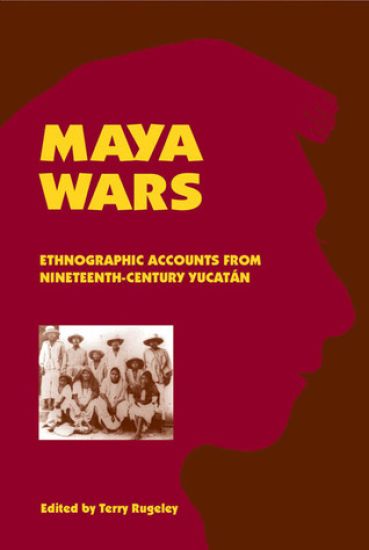
Maya Wars

Maya Wars

Terry Rugeley

University of Oklahoma Press
2001
sidottu
Maya Wars is the first collection of documents devoted entirely to the nineteenth-century Yucatec Mayas. This compilation includes writings by priests, missionaries, Hispanic officials and military officers, foreign travelers and explorers, and the Mayas themselves. It follows the Mayas through the early national republic, the upheavals of the mid-century Caste War (1847-1901), the short-lived period of French Imperialism (1864-1867), and the repressive monoculture of the century's last two decades.Providing an unparalleled window into the daily lives of the rural Mayas, the book covers social organization, religion, family life, agriculture, recreation, military readiness, and medicinal beliefs and practices. In addition, rare captivity narratives offer insight into the experiences of prisoners of war held by Caste War rebels.Terry Rugeley's concise introductions to the documents and helpful notes place this material in historical and cultural context, and his clear translations of the Spanish and Maya documents into English make them easily readable.
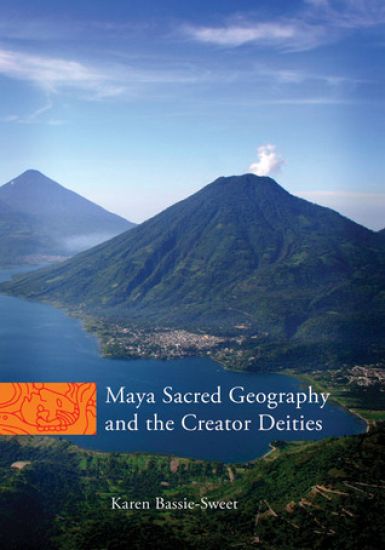
Maya Sacred Geography and the Creator Deities

Maya Sacred Geography and the Creator Deities

Karen Bassie-Sweet

University of Oklahoma Press
2008
sidottu
The K'iche' Maya creation story preserved in the sixteenth-century manuscript Popol Vuh describes the origin of the world and its people in a setting long assumed to be the Guatemalan central highlands. Now a scholar with a deep knowledge of Maya history shows that all of these mythological events occurred at specific locations and that this landscape was the template for the Maya worldview.Examining the primary Maya deities, Karen Bassie-Sweet links geographic features to gods and beliefs. She reconstructs key elements of the Popol Vuh to argue that the three volcanoes around Lake Atitlan were the three thunderbolt gods and that the lake was the center of the world. She also shows that the Maya view of the creation of humans is centered on corn and examines core beliefs about the corn cycle to propose that the creation myth was established much earlier in Maya history than previously supposed. Generously illustrated, Maya Sacred Geography and the Creator Deities is a detailed ethnohistorical analysis of Maya religion, cosmology, and ritual practice that convincingly links mythology to the land. A comprehensive treatment of Maya religion, it provides an essential resource for scholars and will fascinate any reader captivated by these ancient beliefs.
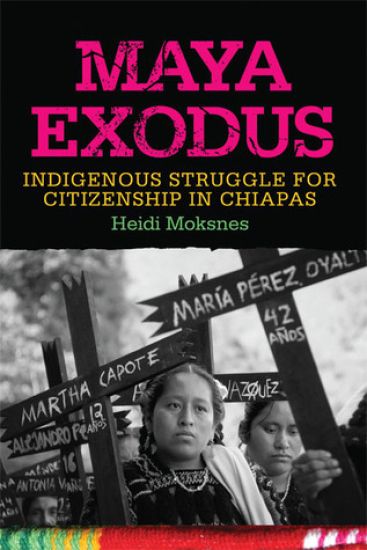
Maya Exodus

Maya Exodus

Heidi Moksnes

University of Oklahoma Press
2012
nidottu
Maya Exodus offers a richly detailed account of how a group of indigenous people has adopted a global language of human rights to press claims for social change and social justice. Anthropologist Heidi Moksnes describes how Catholic Maya in the municipality of Chenalhó in Chiapas, Mexico, have changed their position vis-à-vis the Mexican state - from being loyal clients dependent on a patron, to being citizens who have rights - as a means of exodus from poverty.Moksnes lived in Chenalhó in the mid-1990s and has since followed how Catholic Maya have adopted liberation theology and organized a religious and political movement to both advance their sociopolitical position in Mexico and restructure local Maya life. She came to know members of the Catholic organization Las Abejas shortly before they made headlines when forty-five members, including women and children, were killed by Mexican paramilitary troops because of their sympathy with the Zapatistas. In the years since the massacre at Acteal, Las Abejas has become a global symbol of indigenous pacifist resistance against state oppression.The Catholic Maya in Chenalhó see their poverty as a legacy of colonial rule perpetuated by the present Mexican government, and believe that their suffering is contrary to the will of God. Moksnes shows how this antagonism toward the state is exacerbated by the government's recent neoliberal policies, which have ended pro-peasant programs while employing a discourse on human rights. In this context, Catholic Maya debate the value of pressing the state with their claims. Instead, they seek independent routes to influence and resources, through the Catholic Diocese and nongovernmental organizations - relations, however, that also help to create new dependencies.This book incorporates voices of Maya men and women as they form new identities, rethink central conceptions of being human, and assert citizenship rights. Maya Exodus deepens our understanding of the complexities involved in striving for social change. Ultimately, it highlights the contradictory messages marginalized peoples encounter when engaging with the globally celebrated human rights discourse.
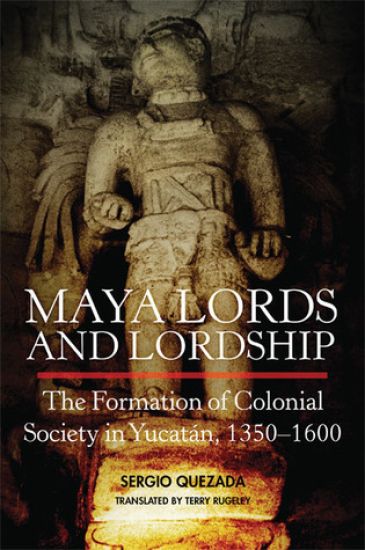
Maya Lords and Lordship

Maya Lords and Lordship

Sergio Quezada

University of Oklahoma Press
2014
sidottu
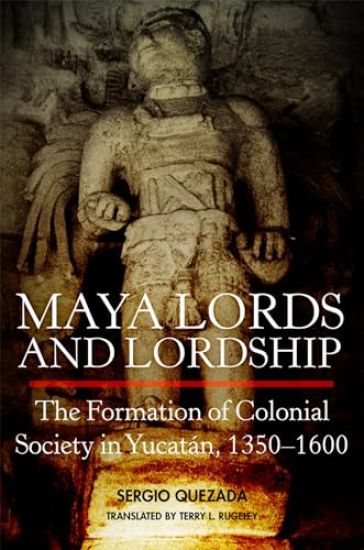
When the Spanish arrived in Yucatán in 1526, they found an established political system based on lordship, a system the Spanish initially integrated into their colonial rule, but ultimately dismantled. In Maya Lords and Lordship, Sergio Quezada builds on the work of earlier scholars and reexamines Yucatec Maya political and social power, arguing that it operated not over territory, as previous scholars assumed, but rather through interpersonal relationships. The changes to Maya culture imposed by Franciscan friars and Spanish lords worked to unravel the networks of personal ties that had empowered the highest Maya lords, and political power devolved to second-tier Maya lords. By 1600 Spanish rule had fragmented what was left of the interpersonal networks, draining power from the indigenous political structure. Building on Quezada's seminal 1993 study, Maya Lords and Lordship offers a fundamentally new vision of Maya political power, challenging the established views of anthropologists and ethnohistorians. Grounded in archival sources as well as historical and ethnographic literature, Quezada's insights and conclusions will influence studies of the Postclassic and sixteenth-century Maya periods.
Maya Sculpture of Copán

Maya Sculpture of Copán

Claude-Francois Baudez

University of Oklahoma Press
2015
nidottu
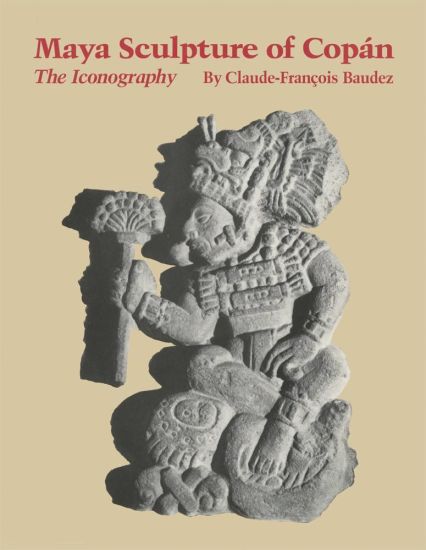
Copán, one of the most important Classic Maya sites, is renowned for the artistry of its high-relief stelae and altars and for the wealth of detail on its freestanding and architectural sculpture. In Maya Sculpture of Copán: The Iconography, internationally known Mayanist Claude-François Baudez provides a masterful survey of these elaborate and intriguing carved images. In Part I, Baudez identifies and deciphers the specific motifs on each monument and shows how the elements were combined to produce meaningful iconographic messages. The architectural sculpture expresses the meaning and function of the buildings and complexes, many designed to represent the sky, earth, and underworld and to serve as stages for rituals. Photographs and drawings clarify the intricate forms. Part II relates the iconography to the religion and politics of the city-state. Baudez traces the evolution of the motifs in relation to the history of Copán and the multiple functions of the king - his cosmic role, the continuous reference to his ancestors, and the dynastic cycles. Sacrifice - bloodletting by the king and the sacrifice of captives - is of paramount importance. Growth and rebirth required constant offerings of blood to the earth and to the sun, to ensure its rebirth at dawn after its nocturnal journey through the underworld. The monuments give a coherent picture of Maya cosmology.
Maya Caciques in Early National Yucatán

Maya Caciques in Early National Yucatán

Rajeshwari Dutt

University of Oklahoma Press
2017
sidottu
Andrés Canché became the cacique, or indigenous leader, of Cenotillo, Yucatán, in January 1834. By his retirement in 1864, he had become an expert politician, balancing powerful local alliances with his community's interests as early national Yucatán underwent major political and social shifts. In Maya Caciques in Early National Yucatán, Rajeshwari Dutt uses Canché's story as a compelling microhistory to open a new perspective on the role of the cacique in post-independence Yucatán. In most of the literature on Yucatán, caciques are seen as remnants of Spanish colonial rule, intermediaries whose importance declined over the early national period. Dutt instead shows that at the individual level, caciques became more politicized and, in some cases, gained power. Rather than focusing on the rebellion and violence that inform most scholarship on post-independence Yucatán, Dutt traces the more quotidian ways in which figures like Canché held onto power. In the process, she presents an alternative perspective on a tumultuous period in Yucatán's history, a view that emphasizes negotiation and alliance-making at the local level. At the same time, Dutt's exploration of the caciques' life stories reveals a larger narrative about the emergence, evolution, and normalization of particular forms of national political conduct in the decades following independence. Over time, caciques fashioned a new political repertoire, forming strategic local alliances with villagers, priests, Spanish and Creole officials, and other caciques. As state policies made political participation increasingly difficult, Maya caciques turned clientelism, or the use of patronage relationships, into the new modus operandi of local politics. Dutt's engaging exploration of the life and career of Andrés Canché, and of his fellow Maya caciques, illuminates the realities of politics in Yucatán, revealing that seemingly ordinary political relationships were carefully negotiated by indigenous leaders. Theirs is a story not of failure and decline, but of survival and empowerment.
Maya Lords and Lordship

Maya Lords and Lordship

Sergio Quezada

UNIVERSITY OF OKLAHOMA PRESS
2024
nidottu
When the Spanish arrived in Yucatán in 1526, they found an established political system based on lordship, a system the Spanish initially integrated into their colonial rule, but ultimately dismantled. In Maya Lords and Lordship, Sergio Quezada builds on the work of earlier scholars and reexamines Yucatec Maya political and social power, arguing that it operated not over territory, as previous scholars assumed, but rather through interpersonal relationships. The changes to Maya culture imposed by Franciscan friars and Spanish lords worked to unravel the networks of personal ties that had empowered the highest Maya lords, and political power devolved to second-tier Maya lords. By 1600 Spanish rule had fragmented what was left of the interpersonal networks, draining power from the indigenous political structure. Building on Quezada's seminal 1993 study, Maya Lords and Lordship offers a fundamentally new vision of Maya political power, challenging the established views of anthropologists and ethnohistorians. Grounded in archival sources as well as historical and ethnographic literature, Quezada's insights and conclusions will influence studies of the Postclassic and sixteenth-century Maya periods.
Rainbow in the Cloud: The Wisdom and Spirit of Maya Angelou
"Words mean more than what is set down on paper," Maya Angelou wrote in her groundbreaking memoir I Know Why the Caged Bird Sings. Indeed, Angelou's words have traveled the world and transformed lives--inspiring, strengthening, healing. Through a long and prolific career in letters, she became one of the most celebrated voices of our time. Now, in this collection of sage advice, humorous quips, and pointed observations culled from the author's great works, including The Heart of a Woman, On the Pulse of Morning, Gather Together in My Name, and Letter to My Daughter, Maya Angelou's spirit endures. Rainbow in the Cloud offers resonant and rewarding quotes on such topics as creativity and culture, family and community, equality and race, values and spirituality, parenting and relationships. Perhaps most special, Maya Angelou's only son, Guy Johnson, has contributed some of his mother's most powerful sayings, shared directly with him and the members of their family. A treasured keepsake as well as a beautiful tribute to a woman who touched so many, Rainbow in the Cloud reminds us that "If one has courage, nothing can dim the light which shines from within."
Maya Architecture

Maya Architecture

Kenneth Treister

University Press of Florida
2013
sidottu
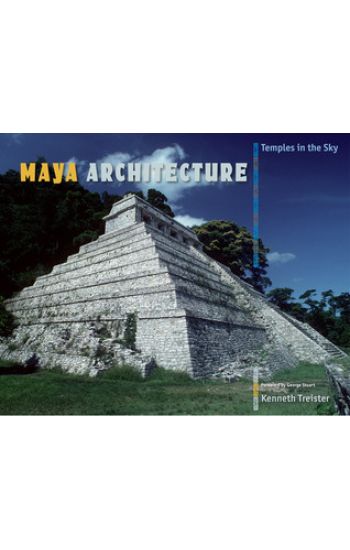
Great civilisations are built upon multiple layers of accumulated knowledge. By examining the remains of Maya cities, we can learn valuable principles of architectural design and how their dynamic society—in a hostile environment and in a relatively short time—was able to blossom and create such harmonious architectural masterpieces.The vivid images that accompany the text offer examples of art and architecture from many Maya cities spanning some 3,000 years, from the Preclassic through the Postclassic period and into modern times. Treister also examines Maya domestic styles and the richness of their textile motifs.By observing these ancient cities Treister seeks to unlock the secret of the Maya’s mysterious collapse. The energy, enterprise, and pride that enabled these people to create such majesty may hold the seeds of their destruction. In their buildings, Treister finds not only the mortar that held their civilisation together but the competitiveness that was the cause of its ruin as well.
Maya and Catholic Cultures in Crisis

Maya and Catholic Cultures in Crisis

John D. Early

University Press of Florida
2017
nidottu
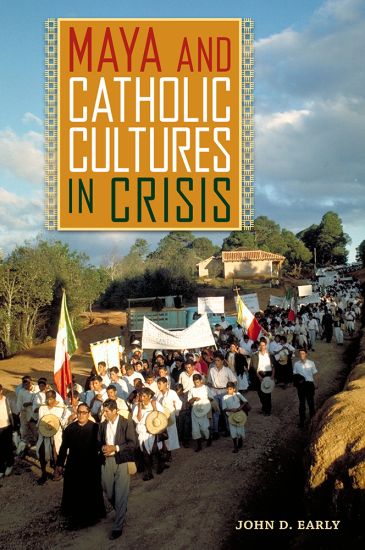
In his most recent book, The Maya and Catholicism: An Encounter of Worldviews, John Early examined the relationship between the Maya and the Catholic Church from the sixteenth century through the colonial and early national periods. In Maya and Catholic Cultures in Crisis, he returns to delve into the changing worldviews of these two groups in the second half of the twentieth century--a period of great turmoil for both.Drawing on his personal experiences as a graduate student, a Roman Catholic priest in the region and his extensive archival research, Early constructs detailed case histories of the Maya uprisings against the governments of Guatemala and Mexico, exploring Liberation Catholicism’s integral role in these rebellions as well as in the evolutions of Maya and Catholic theologies. His meticulous and insightful study is indispensable to understanding Maya politics, society, and religion in the late twentieth century.
Maya E Groups

Maya E Groups

University Press of Florida
2017
sidottu
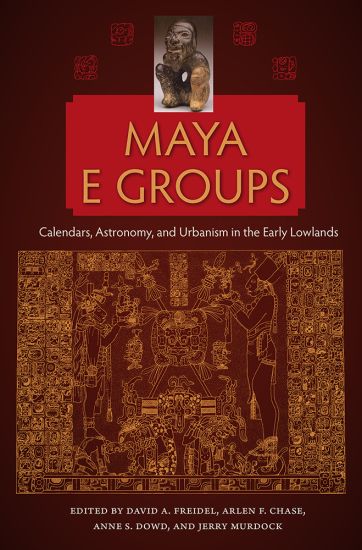
In ancient Maya cities, “E Groups” are sets of buildings aligned with the movements of the sun. This volume presents new archaeological data to reveal that E Groups were constructed earlier than previously thought—in fact, they are the earliest identifiable architectural plan at many Maya settlements. More than just astronomical observatories or calendars, E Groups were gathering places for emerging communities and centers of ritual: the very first civic-religious public architecture in the Maya lowlands. Investigating a wide variety of E Group sites in different contexts, this volume pieces together the development of social and political complexity in the ancient Maya civilization. A volume in the series Maya Studies, edited by Diane Z. Chase and Arlen F. Chase.
Maya Salt Works

Maya Salt Works

Heather McKillop

University Press of Florida
2019
sidottu
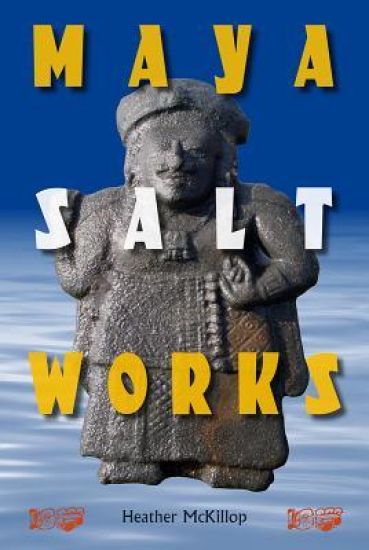
In Maya Salt Works, Heather McKillop details her archaeological team’s groundbreaking discovery of a unique and massive salt production complex submerged in a lagoon in southern Belize. Exploring the organization of production and trade at the Paynes Creek Salt Works, McKillop offers a fascinating new look at the role of salt in the ancient Maya economy. McKillop maps over 4,042 wooden posts and wedges, the first known wooden structures preserved underwater from the Classic period, describing new methods of underwater archaeology developed specifically for this shallow maritime setting. She explains the technology of salt production, examining fragments of briquetage?the pots that boiled brine over fires in the kitchens. McKillop theorizes that different households operated different salt kitchens and distributed their goods via canoe to sell at marketplaces at nearby inland cities. By evaluating the scale, concentration, intensity, and context of the Paynes Creek Salt Works, McKillop provides a model for interpreting existing salt works sites as well as future discoveries along the Yucatan Peninsula. A volume in the series Maya Studies, edited by Diane Z. Chase and Arlen F. Chase.
Maya E Groups

Maya E Groups

University Press of Florida
2020
pokkari
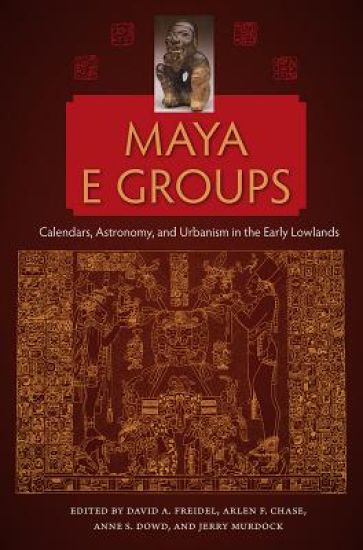
As complex societies emerged in the Maya lowlands during the first millen¬nium BCE, so did stable communities focused around public squares and the worship of a divine ruler tied to a Maize God cult. "E Groups," central to many of these settle¬ments, are architectural complexes: typically, a long platform supporting three struc¬tures and facing a western pyramid across a formal plaza. Aligned with the movements of the sun, E Groups have long been interpreted as giant calendrical devices crucial to the rise of Maya civilization. This volume presents new archaeological data to reveal that E Groups were constructed earlier than previously thought. In fact, they are the earliest identifiable architectural plan at many Maya settlements. More than just astronomical observatories or calendars, E Groups were a key ele¬ment of community organization, urbanism, and identity in the heart of the Maya lowlands. They served as gathering places for emerging communities and centers of ritual; they were the very first civic-religious public architecture in the Maya lowlands. Investigating a wide variety of E Group sites—including some of the most famous like the Mundo Perdido in Tikal and the hitherto little known complex at Chan, as well as others in Ceibal, El Palmar, Cival, Calakmul, Caracol, Xunantunich, Yaxnohcah, Yaxuná, and San Bartolo—this volume pieces together the development of social and political complexity in ancient Maya civilization.
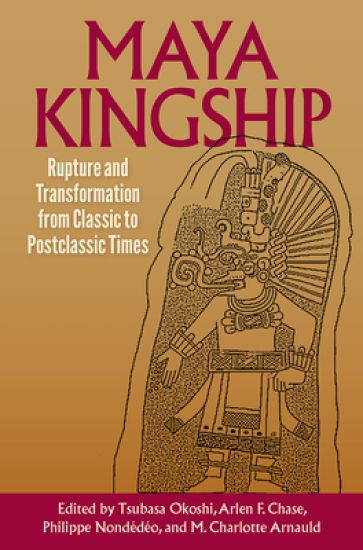
Maya Kingship

Maya Kingship

University Press of Florida
2021
sidottu
Examining changes to the institution of divine kingship from 750 to 950 CE in the Maya lowland cities, Maya Kingship presents a new way of studying the collapse of that civilization and the transformation of political systems between the Terminal Classic and Postclassic Periods.Leading experts in Maya studies offer insights into the breakdown of kingship regimes, as well as the gradual urban collapse and settlement relocations that followed. The volume illuminates historical factors and actions that led to the end of the institution across kingdoms and the mechanisms that enabled societies to eventually recover with new political structures. Contributors provide archaeological, iconographic, epigraphic, and ethnohistorical perspectives, exploring datasets in the spheres of warfare, social dynamics, economics, and architecture.Unfolding with precision the chains of processes and events that occurred during the ninth and tenth centuries in the southern lowlands, and slightly later in the north, this volume displays an original and ambitious historical approach central to understanding one of the most radical political shifts to occur in the pre-Columbian Americas.
Maya Christians and Their Churches in Sixteenth-Century Belize
Based on her analysis of archaeological evidence from the excavations of Maya churches at Tipu and Lamanai, Elizabeth Graham seeks to understand why the Maya sometimes actively embraced Catholicism during the period of European conquest and continued to worship in this way even after the end of Spanish occupation.The Maya in Belize appear to have continued to bury their dead in Christian churchyards long after the churches themselves had fallen into disuse. They also seem to have hidden pre-Hispanic objects of worship in Christian sacred spaces during times of persecution, and excavations reveal the style of the early churches to be unmistakably Franciscan. The evidence suggests that the Maya remained Christian after 1700, when Spaniards were no longer in control, which challenges the widespread assumption that because Christianity was imposed by force it was never properly assimilated by indigenous peoples.Combining historical and archaeological data with her experience of having been raised as a Roman Catholic, Graham proposes a way of assessing the concept of religious experience and processes of conversion that takes into account the material, visual, sensual, and even olfactory manifestations of the sacred.