This book gives its reader a potent enabling tool because it is it. It helps you instantly increase personal, social and environmental well-being that is accredited and free. Savor momentous 54 sense contact with the breathtaking balance and beauty in natural areas, backyard or backcountry.Improve your every relationship by 85% as you help the natural world help you help yourself and others integrate Nature's wisdom into your life and livelihood.We have learned to reject nature-connected interactions and endure our miseries because we teach ourselves to deny we are doing this as well as refute the social technology that enables us to remedy it. This white paper lets you invoke a special revolutionary wisdom tool, one that stops us from injuring our Planet along with our life, heart, spirit and soul. This paper helps us create moments in Nature that let the life of Earth teach us what we need to know to transform our madness, disorders and discontents into reasonable relationships. It works because it interlaces us with authentic Nature, in and around us, the fountainhead of authority in how its perfections work.Do you know what the greatest truth in your life is that you can trust and it is not God, Love, Honesty or Nature? Most people think they do while their heartaches demonstrate that they don't. Today's catastrophic excessiveness and earth misery result from us learning to omit our greatest asset while "How to Liberate your Natural Essence" warranties: "Reading this white paper is the greatest truth in your life that you can trust because it is it" -It empowers you to use it anytime and it is the essence of love.-It feelingly registers in your psyche. -It contains 54 natural senses/sensibilities, not just five. It is self-evident.-It is the missing film in your sensing and thinking camera. It enables you to live in balance. It holds all things and forms of life together, including humanity.-It is the nucleus of friendship. It connects your consciousness to the eternal. It is purely and fully organic. -It enables you to sense and feel responsibly. It stops the production of destructive garbage, pollution and relationships.-It prevents an atom from exploding. It keeps life alive.-It binds any and all things together. It produces peaceful and balanced relationships.-It gives you undeniably accurate information. It is the core of trust.-It is the only way you can connect with God if or when you want to. -It catalyzes happiness. It is the heart of reverence. -It creates optimums of life, diversity, attraction, and cooperation.-It sustains all things in equilibrium and is the foundation of beauty.-It reduces stress, anxiety, and disorders. It creates a reverence for life and is the core of spirit, nature, earth, and humanity.-It is free. It unifies. It is whole-life science. It purifies any relationship.-It is the love of love. It is created by creation and is creation in action.-It is the mainstay of empirical knowledge. It is a quantum leap that helps you make one.-It connects all forms of consciousness except one. It is the foundation of sustainability.-It only knows how to unify and ground you. Its absence in our thinking results in our suffering.-It is intelligent. It is the source of enlightenment and increases it. -It is the basic element of Planet Earth. It is the crux of whole-life thinking.-It is the focal point for courage and the deepest joy of self-It produces seamless, loving togetherness. It is the soul of pure scientific inquiry. It is the key to cheerfulness.-It is the prime antidote for abusiveness and violence.-It is always honest, kind and fair. It is the reality of time.-It is pristine ecological grounding. It makes space for anything and is your deepest ideal.-It empowers you to be. It is the most attractive thing.-It helps you be a special personification of our planet's life.-It is the essence of personal and global creation.
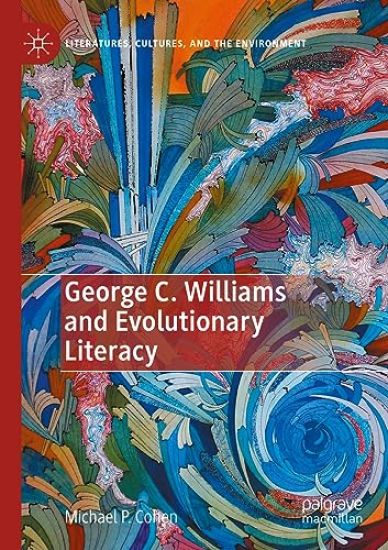
In this book, a case study of a humanistic reading of an essential evolutionary theorist, George C. Williams (May 12, 1926–September 8, 2010), the author contends that certain classic works of evolutionary theory and history are the most important nature writing of recent times. What it means to be scientifically literate—is essential for humanistic scholars, who must ground themselves with literary reading of scientific texts. As the most influential American evolutionary theorist of the second half of the twentieth century, Williams masters critique, frames questions about adaptation and natural selection, and answers in a plain, aphoristic writing style. Williams aims for parsimony—to “recognize adaptation at the level necessitated by the facts and no higher”—through a minimalist writing style. This voice articulates a powerful process that operates at very low levels by blind and selfish chance at the expense of its designed products, using purely trial and error.
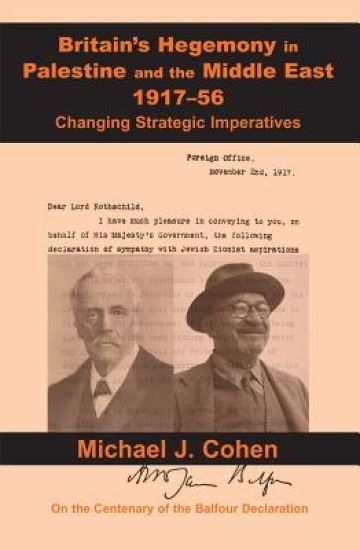
From the Balfour Declaration of 1917 to the Suez Crisis of 1956, Britain's strategic interests in Palestine and in the Middle East underwent radical changes. A leading authority on the British Mandate in Palestine and the rise of the state of Israel, Professor Michael J. Cohen focuses on these changing interests in this anthology of some of his seminal works. This book includes previously unpublished material and an introductory chapter surveying the changing views and interpretations of the Declaration over the past 100 years. Britain's imperial interests are the key to understanding these changes, why she supported the Zionist cause until the mid-1930s, and why her priorities changed thereafter. After the Second World War her priorities changed once again and Allied strategic planners drew up contingency plans to meet the threat of a potential Third World War against the Soviet bloc. This anthology closes with an analysis of the botched Suez War. This caused not only the failure of the military operation, but a grave crisis with the Americans, Eden's fall from power, and the denouement of Britain's Middle East hegemony. Professor Cohen's essays are essential reading for anyone wanting a clear understanding of the Middle Eastern context of the Palestine Mandate, and the rise of the State of Israel during this period.
Responding to the widespread and continued acceleration of virtual working practices in recent years, Virtual Presenting provides a clear guide to producing, presenting, and broadcasting in a remote context. Unlike traditional studio production where a presenter is surrounded by a crew and cameras, the virtual presenter is often isolated or connected to a remote crew. Virtual Presenting explains how to make an authentic connection across great spaces, linked only via the Internet. Topics covered include how to build a virtual setup; how to appear on camera; how to appear confident and comfortable; and how to optimize your presentation voice. The authors demonstrate how to tell effective stories across the entire new media landscape of webcasting, webinars, livestreams, and virtual events. Finally, success stories and case studies from teachers, students, and professionals are interwoven to show how these guidelines translate into best practices. Virtual Presenting will be a valuable resource for students of media production and remote broadcasting as well as professionals looking to become stronger communicators and visual presenters.
• A police officer kills a twelve-year-old boy. It’s caught on video. The officer gets off.• A police officer strangles a man selling cigarettes. It’s caught on video. The officer gets off.• A police officer shoots a man in his car. It’s live-streamed. The officer gets off. It happens over and over again. The culprit here, alongside the cops, is Qualified Immunity (QI), a legal principle which Reuters describes as “a nearly failsafe tool to let police brutality go unpunished and deny victims their constitutional rights.” Originally intended to protect cops from being sued over good faith mistakes, courts have interpreted QI so broadly that police are shielded from accountability in all but the rarest of circumstances. Only when the exact same abusive behavior was already deemed unconstitutional by a court in the exact same jurisdiction can victims succeed in a prosecution. Above the Law recounts 12 cases in which justice was denied because of QI. The stories are accompanied by infographics, timelines, and contextualizing background to create a concise and compelling indictment of an outrageously unjust legal principle that must be changed.
"The section on testing your new business concept is unlike anything in any other book on start-ups. How much is it worth to know that your new business is something your customers will want--before you invest in it?" --Pat Cunningham, Wall Street Journal Advertising Advisor and former Vice Chairman, N. W. Ayer Global Advertising Agency "Start-Up Smarts is an explosive work of ten powerful, practical steps that lay out reality." --Dr. Jeffrey Magee, Publisher, Performance Magazine To make sure your start-up succeeds in the most profitable way, you need to plan and prepare your way to prosperity. This means learning the secrets of successful entrepreneurs--from knowing whom to trust to adapting in a changing marketplace. Start-up specialists and thriving business owners Barry H. Cohen and Michael Rybarski reveal the critical keys to getting your new business up and running a profit, in-cluding how to: * Create a Flexible Business Plan * Find Out What Your Customers Really Want * Capitalize on the Right Trends * Hire the Best People * Choose the Most Lucrative Partners Complete with real-life success stories from first-time entrepreneurs and the best businesses to start right now, Start-Up Smarts guarantees your new business will prosper in any market!
Fortran marches on, remaining one of the principal programming languages used in high-performance scientific, numerical, and engineering computing. A series of significant revisions to the standard versions of the language have progressively enhanced its capabilities, and the latest standard - Fortran 2018 - includes many additions and improvements. This edition of Modern Fortran Explained expands on the last. Given the release of updated versions of Fortran compilers, the separate descriptions of Fortran 2003 and Fortran 2008 have been incorporated into the main text, which thereby becomes a unified description of the full Fortran 2008 version of the language. This clearer standard has allowed many deficiencies and irregularities in the earlier language versions to be resolved. Four new chapters describe the additional features of Fortran 2018, with its enhancements to coarrays for parallel programming, interoperability with C, IEEE arithmetic, and various other improvements. Written by leading experts in the field, two of whom have actively contributed to Fortran 2018, this is a complete and authoritative description of Fortran in its latest form. It is intended for new and existing users of the language, and for all those involved in scientific and numerical computing. It is suitable as a textbook for teaching and, with its index, as a handy reference for practitioners.
Fortran remains one of the principal programming languages used in high-performance scientific, numerical, and engineering computing. A series of significant revisions to the standard versions of the language have progressively enhanced its capabilities, and the current standard - Fortran 2023 - brings with it further additions and improvements. The language as defined by its most recent standards, with their introduction of object-oriented programming and of coarrays, is often referred to generically as 'Modern Fortran', and this term is increasingly used in the literature. Thus, we see that Fortran's particular advantages as a high-end numerical language, especially where arrays are the main form of data object and/or where complex arithmetic is involved, are still to the fore. It is able to attain the highest achievable optimization, mainly because multi-dimensional arrays are 'natural' objects and because its pointers are highly constrained. There is every sign that Modern Fortran will continue to be used to tackle major scientific computing problems in the next decade and beyond and will long remain a living tribute to its early pioneers. This third edition of Modern Fortran Explained expands on the second. The material contained in the four final chapters of the second edition have been merged into the main text, thereby offering, in 20 chapters, a comprehensive and uniform description of Fortran 2018. The additional features now brought by the 2023 standard, which are mostly relatively minor in nature, are described in two final chapters, the first on generic programming and the second on the other features. This structure enables the reader to distinguish clearly between what is old and what is new. This new edition, written by experts in the field, three of whom have actively contributed to Fortran 2023, is thus a complete and authoritative description of Fortran in its latest form, with the intention that it remain the main reference work in the field.
Fortran remains one of the principal programming languages used in high-performance scientific, numerical, and engineering computing. A series of significant revisions to the standard versions of the language have progressively enhanced its capabilities and the latest standard, Fortran 2008, includes many modern features, such as object orientation, coarrays for parallel programming, interoperability with C and various other enhancements. Modern Fortran Explained expands on its predecessor, Fortran 95/2003 Explained. The opening chapters contain a complete description of Fortran 95, extended by Fortran 2003 allocatable array features. Coverage of the other additional features of Fortran 2003 follows, before new chapters on coarrays and the many other enhancements of Fortran 2008. The distinction between the three language levels is maintained throughout, allowing readers to understand and amend legacy code as well as the new features. Authored by three experts in the field, two of whom have actively contributed to Fortran 2008, this is a complete and authoritative description of Fortran in its modern form. It is intended for new and existing users of the language and for all those involved in scientific and numerical computing. It is suitable as a textbook for teaching and, with its extensive Appendices and an Index, as a handy reference for practitioners.
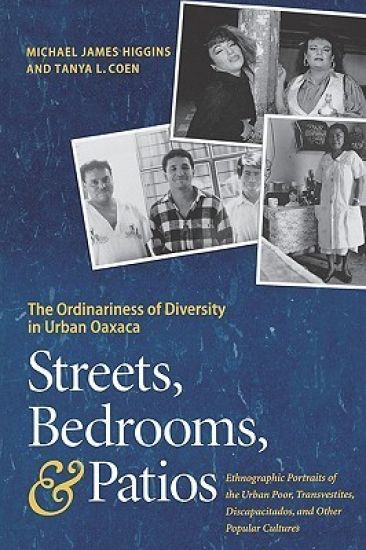
Diversity characterizes the people of Oaxaca, Mexico. Within this city of half a million, residents are rising against traditional barriers of race and class, defining new gender roles, and expanding access for the disabled. In this rich ethnography of the city, Michael Higgins and Tanya Coen explore how these activities fit into the ordinary daily lives of the people of Oaxaca. Higgins and Coen focus their attention on groups that are often marginalized-the urban poor, transvestite and female prostitutes, discapacitados (the physically challenged), gays and lesbians, and artists and intellectuals. Blending portraits of and comments by group members with their own ethnographic observations, the authors reveal how such issues as racism, sexism, sexuality, spirituality, and class struggle play out in the people's daily lives and in grassroots political activism. By doing so, they translate the abstract concepts of social action and identity formation into the actual lived experiences of real people.
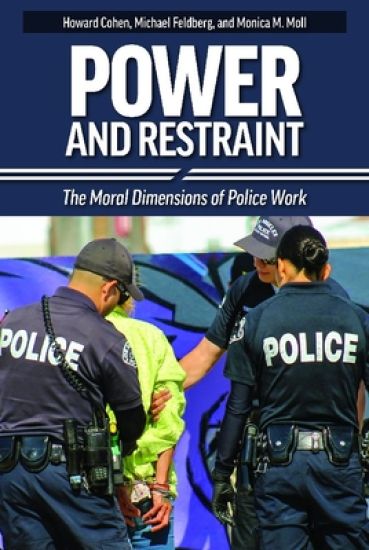
Thoroughly revised and updated, this edition of the classic casebook on police ethics explores the moral complexities of situations faced by law enforcement officers every day across the United States.This updated edition of Power and Restraint maintains its place as a leading set of standards for evaluating police behavior. It extends our understanding of the basis of police accountability by grounding it in principles of the social contract and constitutional democracy. It applies the standards of fair access, public trust, public safety first, role discipline, and neutral professionalism to a variety of modern policing situations that help identify best practices and increase understanding of the challenges of policing in 21st-century America.Power and Restraint first locates itself in the context of other significant studies by scholars from various disciplines on moral issues in police work. Next, it establishes a foundation for moral evaluation of police work grounded in social contract theory as expressed in the U.S. Constitution and Declaration of Independence. Third, the authors generate five standards derived from the social contract for judging the actions of police. In the second half of the book, the reader is asked to apply these standards to a variety of typical but morally ambiguous policing situations.