Kirjojen hintavertailu. Mukana 12 083 983 kirjaa ja 12 kauppaa.

Kirjahaku

Etsi kirjoja tekijän nimen, kirjan nimen tai ISBN:n perusteella.

1000 tulosta hakusanalla Michael G. Simpson

The Impact of the First World War on U.S. Policymakers
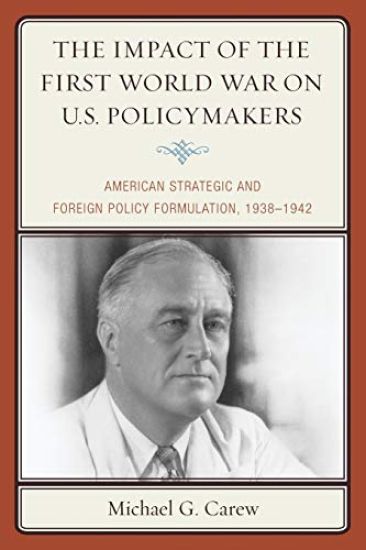
The Impact of the First World War on U.S. Policymakers: American Strategic and Foreign Policy Formulation, 1938–1942 is designed to recount the formulation of foreign and defense policies through an examination of the background of the policymakers, with specific emphasis on the World War I experience. The introduction provides an analysis of the literature of the history of this American World War II policy formulation. The events and factors that led to the reorientation of priorities in 1938-1939 are examined. From that base, Michael Carew reviews the unfolding events of the European and Japanese degeneration into war through the spring of 1940, and their perception for the American policy-makers. He also recounts the tectonic shifts of the subsequent eighteen months and the scramble for an American response. The immediate consequences of Pearl Harbor brought the policymaking to a crisis, and the Casablanca conference of January 1943 signified the completion of the formulation of American foreign policy and naval-military strategy. Carew emphasizes the leadership of President Roosevelt and his cadre of planners in the policy formulation realm, the assertion of leadership of the alliance, and Roosevelt's specific tasks in managing the American war effort. These presidential tasks included the industrial mobilization of the American economy, the domestic political leadership of the war, the persuasion of the alliance to the propriety of American policy, and the defeat of the Axis.
The Impact of the First World War on U.S. Policymakers
The Impact of the First World War on U.S. Policymakers: American Strategic and Foreign Policy Formulation, 1938–1942 is designed to recount the formulation of foreign and defense policies through an examination of the background of the policymakers, with specific emphasis on the World War I experience. The introduction provides an analysis of the literature of the history of this American World War II policy formulation. The events and factors that led to the reorientation of priorities in 1938-1939 are examined. From that base, Michael Carew reviews the unfolding events of the European and Japanese degeneration into war through the spring of 1940, and their perception for the American policy-makers. He also recounts the tectonic shifts of the subsequent eighteen months and the scramble for an American response. The immediate consequences of Pearl Harbor brought the policymaking to a crisis, and the Casablanca conference of January 1943 signified the completion of the formulation of American foreign policy and naval-military strategy. Carew emphasizes the leadership of President Roosevelt and his cadre of planners in the policy formulation realm, the assertion of leadership of the alliance, and Roosevelt's specific tasks in managing the American war effort. These presidential tasks included the industrial mobilization of the American economy, the domestic political leadership of the war, the persuasion of the alliance to the propriety of American policy, and the defeat of the Axis.
Introduction to Surface and Superlattice Excitations

Introduction to Surface and Superlattice Excitations

Michael G. Cottam; D.R. Tilley

Institute of Physics Publishing
2004
nidottu
Cottam and Tilley provide an introduction to the properties of wave-like excitations associated with surfaces and interfaces. The emphasis is on acoustic, optic and magnetic excitations, and apart from one section on liquid surfaces, the text concentrates on solids. The important topic of superlattices is also discussed, in which the different kinds of excitation are considered from a unified point of view. Throughout the book, the authors are careful to relate theory and experiment and all of the most important experimental techniques are described. The theoretical treatment assumes only a knowledge of undergraduate physics, except for Green function methods that are used in a few sections; these methods are developed in an appendix. The book also contains extensive references, enabling the reader to consult the research and review literature. Each of the main chapters contains problems to allow the reader to develop topics presented in the text.
Change Forces - The Sequel

Change Forces - The Sequel

Michael G. Fullan

Routledge Falmer
1999
nidottu
Fullan's first book on this subject was an instant and best-selling success. Now in Change Forces - The Sequel he extends and expands the use of chaos theory as a lens through which to view and comprehend change, and the forces which govern it. Educators have already widely embraced this approach, and taken on board the idea that change is not so straightforward as we might hope. As Fullan worked on his ideas relating them to school systems, higher education and research, the field of change forces was also developing significantly. This volume covers new aspects of this 'science of complexity' and helps educators obtain insights for delving deeper into moral purpose, and expanding into fresh dimensions of changing forces in the environment.The first volume appealed to a wide market from classroom teachers, through school administrators, to student teachers and academics. This volume will appeal to a similar cross-section.
Change Forces - The Sequel

Change Forces - The Sequel

Michael G. Fullan

Routledge Falmer
1999
sidottu
Fullan's first book on this subject was an instant and best-selling success. Now in Change Forces - The Sequel he extends and expands the use of chaos theory as a lens through which to view and comprehend change, and the forces which govern it. Educators have already widely embraced this approach, and taken on board the idea that change is not so straightforward as we might hope. As Fullan worked on his ideas relating them to school systems, higher education and research, the field of change forces was also developing significantly. This volume covers new aspects of this 'science of complexity' and helps educators obtain insights for delving deeper into moral purpose, and expanding into fresh dimensions of changing forces in the environment.The first volume appealed to a wide market from classroom teachers, through school administrators, to student teachers and academics. This volume will appeal to a similar cross-section.
Forget the Anorak

Forget the Anorak

Michael G Harvey

Sutton Publishing Ltd
2004
sidottu
Michael Harvey's new book brings to its readers the excitement of trainspotting in the 1950s and '60s, the hobby's heyday. It was the advent of the famous Ian Allan ABC Locospotters books that really gave the hobby its impetus, as they gave trainspotters all the information they required. Forget the Anorak sets out to provide the reader with a personal account of what the hobby entailed - teenagers roaming the railways of Britain, sleeping on deserted platforms on porters' trolleys, 'bunking' dimly lit depots and eluding capture, travelling hundreds of miles on a platform ticket, and stink bombs on the Underground. You'll be able to smell the steam, soot and unwashed socks, and taste the boiled egg sandwiches, the chips wrapped in newspaper and the hot jam doughnuts, all washed down with warm Tizer. Illustrated with Michael Harvey's own photographs and a selection of maps, Forget the Anorak will appeal to anyone who experienced the golden days of trainspotting, as well as to anyone interested in the social history of Britain after the Second World War.
Forget the Anorak

Forget the Anorak

Michael G Harvey

The History Press Ltd
2009
nidottu
Michael Harvey's book brings to its readers the excitement of trainspotting in the 1950s and '60s, the hobby's heyday. It was the advent of the famous Ian Allan ABC Locospotters books that really gave the hobby its impetus, as they gave trainspotters all the information they required. Forget the Anorak sets out to provide the reader with a personal account of what the hobby entailed - teenagers roaming the railways of Britain, sleeping on deserted platforms on porters' trolleys, 'bunking' dimly lit depots and eluding capture, travelling hundreds of miles on a platform ticket, and stink bombs on the Underground. You'll be able to smell the steam, soot and unwashed socks, and taste the boiled egg sandwiches, the chips wrapped in newspaper and the hot jam doughnuts, all washed down with warm Tizer. Illustrated with Michael Harvey's own photographs and a selection of maps, Forget the Anorak appeals to anyone who experienced the golden days of trainspotting, as well as to anyone interested in the social history of Britain after the Second World War.
The Sidneys of Penshurst and the Monarchy, 1500–1700

The Sidneys of Penshurst and the Monarchy, 1500–1700

Michael G. Brennan

Ashgate Publishing Limited
2006
sidottu
The Sidneys rank amongst the most influential families in early modern England, and can count amongst their number many leading lights of the Tudor and Stuart period. From the Elizabethan poet and soldier Philip, to the republican Algernon, the Sidney family were intimately bound up with the political, cultural and courtly life of early modern England. Taking a broadly chronological approach, this volume offers an overview of the Sidneys across several generations. By analysing various individuals and their writings, an intriguing new perspective is offered, not only on the culture of English politics, but also on the self-perception and ambitions of a leading renaissance family. During the Tudor period their long and fruitful (but sometimes problematical) association with the Dudley family in court and royal affairs is reassessed with regard to their relations with Edward VI, Mary I and Elizabeth I. During the Stuart period the Sidneys intimacy and loyalty to James I, Queen Anne and Charles I is contrasted to their more neutral (even hostile) attitudes to Charles II and James II. Against the backdrop of this shifting royal favour and religious and political upheaval, the Sidneys' political and domestic tactics used to preserve the family's reputation, estates and property are explored. The first book length study of the Sidney family's relationship with the English monarchy, this work will be welcomed by all those with an interest in English political and cultural history. Drawing upon both historical and literary sources it offers an absorbing insight into the self-perceptions of a leading renaissance family and how they adapted to the vicissitudes of the sixteenth and seventeenth century world.
The Correspondence (c. 1626–1659) of Dorothy Percy Sidney, Countess of Leicester

The Correspondence (c. 1626–1659) of Dorothy Percy Sidney, Countess of Leicester

Michael G. Brennan; Noel J. Kinnamon

Ashgate Publishing Limited
2010
sidottu
The letters of Dorothy Percy Sidney, Countess of Leicester, dating predominantly from about 1636 until 1643, cover a wide range of issues and vividly illustrate her centrality to her illustrious family's personal and public affairs. These c.100 letters are here for the first time fully transcribed and edited. The edition includes a biographical and historical introduction, setting the context of the Sidneys' family and political activities at the time of Dorothy's marriage to Robert in 1615 and then tracing the major events and involvements of her life until her death in 1659. A key to the cipher used in the letters to disguise identities of individuals is also supplied. Following the introduction is the complete text of each of Dorothy Percy Sidney's letters to her husband, Robert, second Earl of Leicester, and to and from William Hawkins, the Sidney family solicitor, along with several others, including letters from Dorothy to Archbishop Laud and the Earl of Holland. Her husband's account of her last moments in 1659, and testamentary directions relating to her will, are also included. The letters are arranged in chronological order and supported by a series of footnotes that elucidate their historical context and briefly to identify key individuals, places, political issues and personal concerns. These notes are further supported by selective quotations from Dorothy's incoming correspondence and other related letters and documents. A glossary supplies more detailed information on 'Persons and Places.' Dorothy Percy Sidney's letters eloquently convey how, even with her undoubted personal potency and shrewd intelligence, the multifaceted roles expected of an able and determined aristocratic early modern Englishwoman-especially when her husband was occupied abroad on official business-were intensely demanding and testing.
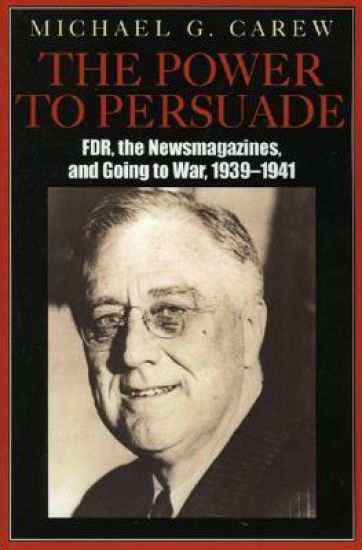
The Power to Persuade

The Power to Persuade

Michael G. Carew

University Press of America
2005
nidottu
The Power to Persuade is the true story of four magazines that persuaded the opposition to support America's entry into World War II, and rallied the electorate to demand belligerent military confrontation against the Nazi-led Axis. In the decisive pre-war years of 1939-1941, four major news magazines, Life, Look, Newsweek, and Time, reached over 40 million readers weekly, or almost 50% of the American electorate. The national audience of these magazines was a key component of the American electorate. Generally middle to upper class, this readership was not an element of President Roosevelt's electoral coalition. Indeed, it was the main component of Roosevelt's political opposition. Yet, by the end of November 1941, that opposition had joined Roosevelt's electoral consensus. The transformation of the American electorate, from the fervent neutrality in 1939, to active belligerence against the Axis powers in 1941, is at the heart of the electorate's evolving support for a role for the United States as the leader of the western alliance. The American Role as the leader of the alliance against the Axis, was rooted in this radical transformation of the American electorate. American unity during WWII and consensus after the war was formulated in this transformation and leadership role. What drove this radical transformation is the question at the center of this book.
Frank Aydelotte and the Oxford Approach to English Studies in America
Using a biographical approach, this book examines Frank Aydelotte's enduring contributions to English studies in America and the various social, cultural, educational, and personal forces that shaped his pedagogy. Educated at Harvard and Indiana, Aydelotte's seminal experience was becoming a Rhodes Scholar at Oxford in 1904. While at Oxford University, he experienced a system of teaching writing that he found superior to the Harvard formalism that dominated many American English departments at the time. This comprehensive work explores the three curriculums developed by Aydelotte: the 'thought' approach to composition developed at Indiana University, the technical communication curriculum developed at MIT, and the influential Honor's Program developed at Swarthmore College.
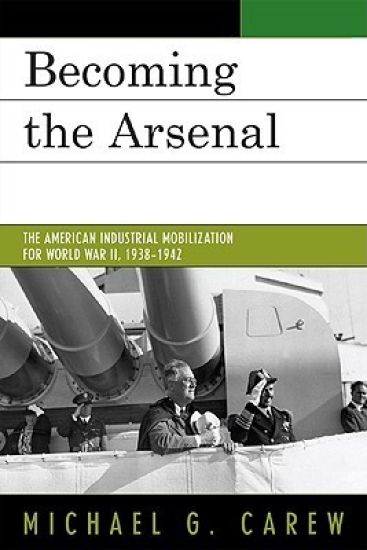
Becoming the Arsenal

Becoming the Arsenal

Michael G. Carew

University Press of America
2009
sidottu
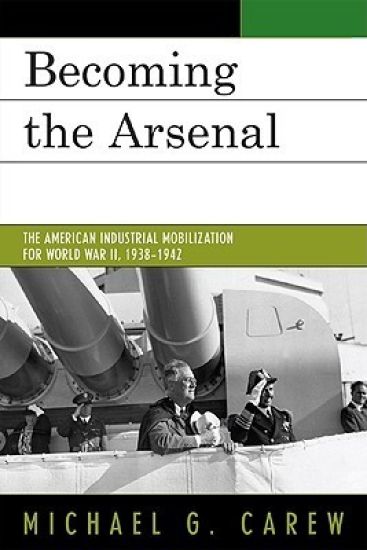
Becoming the Arsenal discusses one of the three signal events that transformed the relationship of government and the private sector in directing the American economy. The first was the Great Depression and the government's New Deal recovery program. The second was the gradual abandonment of the monetary Gold Standard, or the "floating" of the dollar between 1933 and the 1970s. Third, and least appreciated, was the mobilization of the American economy to confront the threat of the Axis ascendancy in World War II. Becoming the Arsenal places the events of this economic mobilization in its political-economic context and evaluates its performance in terms of prevailing military and political realities. The book is structured in three parts. The first deals with the decision to mobilize in May-June 1940. The second part relates the importance of the World War I experience and the economic diplomatic environment of the late 1930s. The final part examines the shift from a partial mobilization to the commitment to a "Victory Plan" in the fall of 1941, and achievement of complete mobilization and its consequences, in early 1943.
Becoming the Arsenal

Becoming the Arsenal

Michael G. Carew

University Press of America
2009
nidottu
Becoming the Arsenal discusses one of the three signal events that transformed the relationship of government and the private sector in directing the American economy. The first was the Great Depression and the government's New Deal recovery program. The second was the gradual abandonment of the monetary Gold Standard, or the 'floating' of the dollar between 1933 and the 1970s. Third, and least appreciated, was the mobilization of the American economy to confront the threat of the Axis ascendancy in World War II. Becoming the Arsenal places the events of this economic mobilization in its political-economic context and evaluates its performance in terms of prevailing military and political realities. The book is structured in three parts. The first deals with the decision to mobilize in May-June 1940. The second part relates the importance of the World War I experience and the economic diplomatic environment of the late 1930s. The final part examines the shift from a partial mobilization to the commitment to a 'Victory Plan' in the fall of 1941, and achievement of complete mobilization and its consequences, in early 1943.
The Ethical Use of Touch in Psychotherapy

The Ethical Use of Touch in Psychotherapy

Michael G. Hunter; Jim Struve

SAGE Publications Inc
1997
sidottu
Is ethical touch an oxymoron? Is the bias against touch in psychotherapy justified? Can the recovery process be complete without healing touch? Mental health professionals are entrusted with the awesome responsibility of providing appropriate treatment for clients in a safe environment that nurtures trust, a necessary ingredient for optimum movement through the therapeutic process. Though treatment approaches vary, most modalities are verbally based and, in theory, exclude physical contact. Fearing that any form of touch would likely lead to sexual feelings or interaction, clinicians tend to shy away from the topic. In The Ethical Use of Touch in Psychotherapy, however, authors Mic Hunter and Jim Struve skillfully demonstrate that touch--a most basic human need--is intrinsic to the healing process along with talk-therapy, regardless of the practitioner's theoretical orientation. While the use of touch is a given in other health care settings, it remains a benefit denied as taboo in psychotherapeutic relationships, due to transgressors whose unscrupulous use of a valuable technique have marred its reputation. This book encourages readers to conduct a meaningful self-reflection and explore possible misconceptions related to touch in order to rejuvenate its acceptance. Based on years of sound research and clinical experience, The Ethical Use of Touch in Psychotherapy promises to enrich clinical discussion and stimulate further empirical research. This insightful and progressive presentation is a must read for clinicians, interns, and advanced students, as well as lay readers interested in the dynamics and innovations in psychotherapy.