Kirjojen hintavertailu. Mukana 11 699 587 kirjaa ja 12 kauppaa.

Kirjahaku

Etsi kirjoja tekijän nimen, kirjan nimen tai ISBN:n perusteella.

1000 tulosta hakusanalla Michael J. Samways

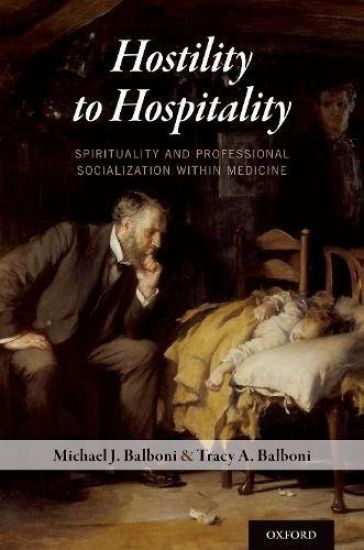
Hostility to Hospitality

Hostility to Hospitality

Michael J. Balboni; Tracy A. Balboni

Oxford University Press Inc
2018
nidottu
Spiritual sickness troubles American medicine. Through a death-denying culture, medicine has gained enormous power-an influence it maintains by distancing itself from religion, which too often reminds us of our mortality. As a result of this separation of medicine and religion, patients facing serious illness infrequently receive adequate spiritual care, despite the large body of empirical data demonstrating its importance to patient decision-making, quality of life, and medical utilization. This secular-sacred divide also unleashes depersonalizing, social forces through the market, technology, and legal-bureaucratic powers that reduce clinicians to tiny cogs in an unstoppable machine. Hostility to Hospitality is one of the first books of its kind to explore these hostilities threatening medicine and offer a path forward for the partnership of modern medicine and spirituality. Drawing from interdisciplinary scholarship including empirical studies, interviews, history and sociology, theology, and public policy, the authors argue for structural pluralism as the key to changing hostility to hospitality.

From the Closet to the Altar

From the Closet to the Altar

Michael J. Klarman

Oxford University Press Inc
2014
nidottu
Same-sex marriage has become one of the most volatile issues in American politics. But if most young people support gay marriage, and if there are clear indicators that a substantial majority of the population will soon favor it, why has the outcry against it been so strong? Bancroft Prize-winning historian and legal expert Michael Klarman here offers an illuminating and engaging account of modern litigation over same-sex marriage. After looking at the treatment of gays in the decades after World War II and the birth of the modern gay rights movement with the Stonewall Rebellion in 1969, Klarman describes the key legal cases involving gay marriage and the dramatic political backlashes they ignited. He examines the Hawaii Supreme Court's ruling in 1993, which sparked a vast political backlash--with more than 35 states and Congress enacting defense-of-marriage acts--and the Massachusetts decision in Goodridge in 2003, which inspired more than 25 states to adopt constitutional bans on same-sex marriage. Klarman traces this same pattern--court victory followed by dramatic backlash--through cases in Vermont, California, and Iowa, taking the story right up to the present. He also describes some of the collateral political damage caused by court decisions in favor of gay marriage--Iowa judges losing their jobs, Senator Majority Leader Tom Daschle losing his seat, and the possibly dispositive impact of gay marriage on the 2004 presidential election. But Klarman also notes several ways in which litigation has accelerated the coming of same-sex marriage: forcing people to discuss the issue, raising the hopes and expectations of gay activists, and making other reforms like civil unions seem more moderate by comparison. In the end, Klarman discusses how gay marriage is likely to evolve in the future, predicts how the U.S. Supreme Court might ultimately resolve the issue, and assesses the costs and benefits of activists' pursuing social reforms such as gay marriage through the courts. From the Closet to the Altar will stand as the definitive one-volume history of the tumultuous emergence of same-sex marriage in American life as well as a landmark study of litigation, social reform, and the phenomenon of political backlash to court decisions.
The Forgotten Presidents

The Forgotten Presidents

Michael J. Gerhardt

Oxford University Press Inc
2014
nidottu
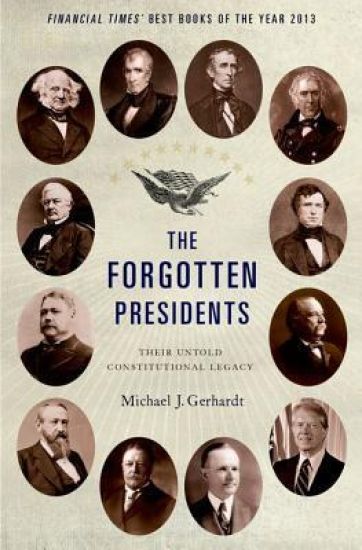
Their names linger in memory mainly as punch lines, synonyms for obscurity: Millard Fillmore, Chester Arthur, Calvin Coolidge. They conjure up not the White House so much as a decaying middle school somewhere in New Jersey. But many forgotten presidents, writes Michael J. Gerhardt, were not weak or ineffective. They boldly fought battles over constitutional principles that resonate today. Gerhardt, one of our leading legal experts, tells the story of The Forgotten Presidents. He surveys thirteen administrations in chronological order, from Martin Van Buren to Franklin Pierce to Jimmy Carter, distinguishing political failures from their constitutional impact. Again and again, he writes, they defied popular opinion to take strong stands. Martin Van Buren reacted to an economic depression by withdrawing federal funds from state banks in an attempt to establish the controversial independent treasury system. His objective was to shrink the federal role in the economy, but also to consolidate his power to act independently as president. Prosperity did not return, and he left office under the shadow of failure. Grover Cleveland radically changed his approach in his second (non-consecutive) term. Previously he had held back from interference with lawmakers; on his return to office, he aggressively used presidential power to bend Congress to his will. Now seen as an asterisk, Cleveland consolidated presidential authority over appointments, removals, vetoes, foreign affairs, legislation, and more. Jimmy Carter, too, proves surprisingly significant. In two debt-ceiling crises and battles over the Panama Canal treaty, affirmative action, and the First Amendment, he demonstrated how the presidency's inherent capacity for efficiency and energy gives it an advantage in battles with Congress, regardless of popularity. Incisive, myth-shattering, and compellingly written, this book shows how even obscure presidents championed the White House's prerogatives and altered the way we interpret the Constitution.
'Orientalist Jones'

'Orientalist Jones'

Michael J. Franklin

Oxford University Press
2011
sidottu
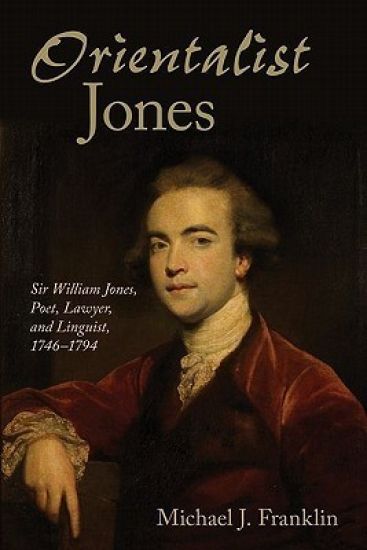
Sir William Jones (1746-94) was the foremost Orientalist of his generation and one of the greatest intellectual navigators of all time. He re-drew the map of European thought. 'Orientalist' Jones was an extraordinary man and an intensely colourful figure. At the age of twenty-six, Jones was elected to Dr Johnson's Literary Club, on terms of intimacy with the metropolitan luminaries of the day. The names of his friends in Britain and India present a roll-call of late eighteenth-century glitterati: Samuel Johnson and James Boswell, Sir Joshua Reynolds, Benjamin Franklin, Joseph Priestley, Edmund Burke, Warren Hastings, Johannes Zoffany, Edward Gibbon, Oliver Goldsmith, Richard Brinsley Sheridan, Charles James Fox, William Pitt, and David Garrick. In Bengal his Sanskrit researches marked the beginning of Indo-European comparative grammar, and modern comparative-historical linguistics, of Indology, and the disciplines of comparative literature, philology, mythology, and law. He did more than any other writer to destroy Eurocentric prejudice, reshaping Western perceptions of India and the Orient. His commitment to the translation of culture, a multiculturalism fascinated as much by similitude as difference, profoundly influenced European and British Romanticism, offering the West disconcerting new relationships and disorienting orientations. Jones's translation of the Hindu myth of Sakuntala (1789) led to an Oriental renaissance in the West and cultural revolution in India. Remembered with great affection throughout the subcontinent as a man who facilitated India's cultural assimilation into the modern world, Jones helped to build India's future on the immensity, sophistication, and pluralism of its past. Michael J. Franklin's extensive archival research reveals new insights into this radical intellectual: a figure characterized by Goethe as 'a far-seeing man, he seeks to connect the unknown to the known', and described by Dr Johnson as 'the most enlightened of the sons of men'. Unpublished poems and new letters shed fresh light upon Jones in rare moments of relaxation, while Franklin's research of the legal documents in the courts of the King's Bench, the Carmarthen circuit, and the Supreme Court of Bengal illustrates his passion for social justice, his legal acumen, and his principled independence.
Volcanoes

Volcanoes

Michael J Branney; Jan Zalasiewicz

Oxford University Press
2020
nidottu
Volcanoes are some of the most dramatic expressions of the powerful tectonic forces at work in the Earth beneath our feet. But volcanism, a profoundly important feature of Earth, and indeed of other planets and moons too, encompasses much more than just volcanoes themselves. On a planetary scale, volcanism is an indispensable heat release mechanism, which on Earth allows the conditions for life. IIt releases gases into the atmosphere and produces enormous volumes of rock, and spectacular landscapes - landscapes which, during major eruptions, can be completely reshaped in a matter of hours. Through geological time volcanism has shaped both climate and biological evolution, and volcanoes can affect human life, too, for both good and ill. Yet, even after much study, some of the fundamental aspects of volcanicity remain mysterious. This Very Short Introduction takes the readers into the inferno of a racing pyroclastic current, and the heart of a moving lava flow, as understood through the latest scientific research. Exploring how volcanologists forensically decipher how volcanoes work, Michael Branney and Jan Zalasiewicz explain what we do (and don't) understood about the fundamental mechanisms of volcanism, and consider how volcanoes interact with other physical processes on the Earth, with life, and with human society. ABOUT THE SERIES: The Very Short Introductions series from Oxford University Press contains hundreds of titles in almost every subject area. These pocket-sized books are the perfect way to get ahead in a new subject quickly. Our expert authors combine facts, analysis, perspective, new ideas, and enthusiasm to make interesting and challenging topics highly readable.
Freedom, God, and Worlds

Freedom, God, and Worlds

Michael J. Almeida

Oxford University Press
2012
sidottu
Michael J. Almeida presents a powerful argument which holds that several widely believed and largely undisputed objections to the idea of the existence of God are in fact just philosophical dogmas. He challenges some of the most well-entrenched principles in philosophical theology, which have served as basic assumptions in influential apriori, atheological arguments. But most theists also maintain that the principles express apriori necessary truths, including those principles that are presumed to follow from the nature of an essentially omnipotent, essentially omniscient, essentially perfectly good and necessarily existing being. Among the atheological arguments that deploy these philosophical dogmas are the Logical Problem of Evil, the Logical Problem of the Best Possible World, the Logical Problem of Good Enough Worlds, the Problem of Divine Freedom, the Problem of No Best World, and the Evidential Problem of Evil. In Freedom, God, and Worlds Almeida claims that these arguments present no important challenge to the existence of an Anselmian God. Not only are these philosophical principles false, they are necessarily false.
Ignorance and Moral Obligation

Ignorance and Moral Obligation

Michael J. Zimmerman

Oxford University Press
2014
sidottu
Ignorance and Moral Obligation concerns whether and how our ignorance about ourselves and our circumstances affects what our moral obligations and moral rights are. Michael J. Zimmerman begins by distinguishing three well-established views about the nature of moral obligation: the Objective, Subjective, and Prospective Views. Some philosophers have attempted to reconcile the three views in question, but these attempts are shown to fail. The question thus arises: which of the three views ought to be accepted and which rejected? Zimmerman argues that, in light of the ignorance that besets us, the Objective and Subjective Views should be rejected and the Prospective View accepted. The argument is based on close consideration of a kind of case provided by Frank Jackson, one in which an agent has deficient evidence regarding the outcomes of his options. Many objections to this argument are entertained and rebutted, by means of which the Prospective View is itself elaborated and defended. Among those who accept the Prospective View, the primary motivation for doing so has often been that of finding a useful guide to action, but Zimmerman argues that the Prospective View can be only of strictly limited help in providing such a guide. Finally, he addresses some implications that the Prospective View has regarding the nature of moral rights. Our possession of moral rights is precarious, being dependent on the evidence possessed by others. Once again, several objections are entertained and rebutted. The distinction between rights and desert is stressed, and the relevance of risk to rights is explored.
Geostatistical Reservoir Modeling

Geostatistical Reservoir Modeling

Michael J. Pyrcz; Clayton V. Deutsch

Oxford University Press Inc
2014
sidottu
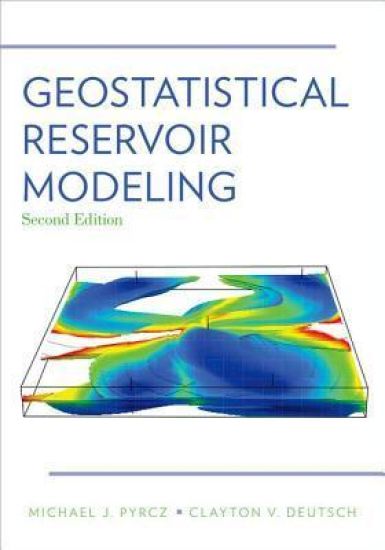
Published in 2002, the first edition of Geostatistical Reservoir Modeling brought the practice of petroleum geostatistics into a coherent framework, focusing on tools, techniques, examples, and guidance. It emphasized the interaction between geophysicists, geologists, and engineers, and was received well by professionals, academics, and both graduate and undergraduate students. In this revised second edition, Deutsch collaborates with co-author Michael Pyrcz to provide a full update on the latest tools, methods, practice, and research in the field of petroleum Geostatistics. Key geostatistical concepts such as integration of production data, scale-up, and cosimulation receive greater attention, and new topics like model checking, multiple point simulation, and production data integration are included in detail. Geostatistical methods are extensively illustrated through enhanced schematics, work flows and examples. A greater number of examples also are included, such as the integration of a single geostatistical study developed from data analysis and cleaning to post-processing, ranking and flow simulation. New methods, which have developed in the field since the publication of the first edition, are discussed, such as models for integration of diverse data sources, surface-based, advanced object-based, event-based and multiple point-based simulation, and spatial boot-strap.
The Grand Chorus of Complaint

The Grand Chorus of Complaint

Michael J. Everton

Oxford University Press Inc
2011
sidottu
When Lord Byron toasted Napoleon for executing a bookseller, and when American satirist Fitz-Greene Halleck picketed his New York publisher for trying to starve him, both writers were taking part in a time-honored tradition--calling out publishers as unregenerate capitalists. However apocryphal, both stories speak to what writer Gail Hamilton called "the conflict of the ages," the feud between and writers and publishers over the way the business of print ought to be conducted. The Grand Chorus of Complaint is a study of the terms of that feud in early America. Ranging from the Revolution to the Civil War, Michael Everton explores moral propriety in American literary culture, arguing that debates over the business of authorship and publishing in the first century of the United States were simultaneously debates over the ethics and character of capitalism. The Grand Chorus of Complaint shows that the moral discourse authors and publishers used in these debates was not intended as a distraction from the "real" issues affecting American literary culture. Instead, morality was itself at issue. Drawing on a diverse archive, Everton argues that in their business correspondence and fiction, in their diaries and essays, authors and publishers talked so much about ethics not to obfuscate their convictions but to clarify them in a commercial world preoccupied by the meanings and efficacy of moral beliefs. This study illustrates that ethics should matter as much to literary and book historians as much as it has come to matter--again--to literary critics and theorists.
The Crisis of Authority in Catholic Modernity

The Crisis of Authority in Catholic Modernity

Michael J. Lacey; Francis Oakley

Oxford University Press Inc
2011
sidottu
One deep problem facing the Catholic church is the question of how its teaching authority is understood today. It is fairly clear that, while Rome continues to teach as if its authority were unchanged from the days before Vatican II (1962-65), the majority of Catholics - within the first-world church, at least - take a far more independent line, and increasingly understand themselves (rather than the church) as the final arbiters of decision-making, especially on ethical questions. This collection of essays explores the historical background and present ecclesial situation, explaining the dramatic shift in attitude on the part of contemporary Catholics in the U.S. and Europe. The overall purpose is neither to justify nor to repudiate the authority of the church's hierarchy, but to cast some light on: the context within which it operates, the complexities and ambiguities of the historical tradition of belief and behavior it speaks for, and the kinds of limits it confronts - consciously or otherwise. The authors do not hope to fix problems, although some of the essays make suggestions, but to contribute to a badly needed intra-Catholic dialogue without which, they believe, problems will continue to fester and solutions will remain elusive.
The Crisis of Authority in Catholic Modernity

The Crisis of Authority in Catholic Modernity

Michael J. Lacey; Francis Oakley

Oxford University Press Inc
2011
nidottu
One deep problem facing the Catholic church is the question of how its teaching authority is understood today. It is fairly clear that, while Rome continues to teach as if its authority were unchanged from the days before Vatican II (1962-65), the majority of Catholics - within the first-world church, at least - take a far more independent line, and increasingly understand themselves (rather than the church) as the final arbiters of decision-making, especially on ethical questions. This collection of essays explores the historical background and present ecclesial situation, explaining the dramatic shift in attitude on the part of contemporary Catholics in the U.S. and Europe. The overall purpose is neither to justify nor to repudiate the authority of the church's hierarchy, but to cast some light on: the context within which it operates, the complexities and ambiguities of the historical tradition of belief and behavior it speaks for, and the kinds of limits it confronts - consciously or otherwise. The authors do not hope to fix problems, although some of the essays make suggestions, but to contribute to a badly needed intra-Catholic dialogue without which, they believe, problems will continue to fester and solutions will remain elusive.
The Theology of Jonathan Edwards

The Theology of Jonathan Edwards

Michael J. McClymond; Gerald R. McDermott

Oxford University Press Inc
2012
sidottu
The Theology of Jonathan Edwards is the first survey of the religious thought of America's theologian--Jonathan Edwards--that draws on all of his writings, now available in a 73-volume online Yale critical edition. In 48 chapters, McClymond and McDermott, two of the world's leading Edwards scholars, treat topics in Edwards's thought that have rarely been analyzed in depth, and never in coordination with a close analysis of the rest of his theology. Such topics include the implications of his doctrine of the Trinity for the divide between Roman Catholicism and Orthodoxy, his enduring appeal among both conservative and liberal Protestants, his ecclesial and sacramental theologies, his conflicted relationship with the history of Calvinism, the cultural-historical and comparative-religious turn he made toward the end of his career (as the leading colonial thinker on the topic of world religions), the appeals to his ideas in nineteenth- and twentieth-century debates over Methodist, Holiness, Pentecostal, and Charismatic revivals, and the reception of his writings in the England, Scotland, continental Europe, and, more recently, in the evangelical communities of Latin America, Africa, Asia, and Oceania. Many of these topics have only been treated in passing in the existing literature, and never in connection with one another and with the whole bulk of Edwards's writings.
The Power of Precedent

The Power of Precedent

Michael J. Gerhardt

Oxford University Press Inc
2011
nidottu
The role that precedent plays in constitutional decision making is a perennially divisive subject among scholars of law and American politics. The debate rages over both empirical and normative aspects of the issue: To what extent are the Supreme Court, Congress, and the executive branch constrained by precedent? To what extent should they be? Taking up a topic long overdue for comprehensive treatment, Michael Gerhardt connects the vast social science data and legal scholarship to provide the most wide-ranging assessment of precedent in several decades. Updated to reflect recent legal cases, The Power of Precedent clearly outlines the major issues in the continuing debates on the significance of precedent and evenly considers all sides. For the Supreme Court, precedents take many forms, including not only the Court's past opinions, but also norms, historical practices, and traditions that the justices have deliberately chosen to follow. In these forms, precedent exerts more force than is commonly acknowledged. This force is encapsulated in the implementation and recognition of what Gerhardt calls the "golden rule of precedent," a major dynamic in constitutional law. The rule calls upon justices and other public authorities to recognize that since they expect others to respect their own precedents, they must provide the same respect to others' precedents. Gerhardt's extensive exploration of precedent leads him to formulate a more expansive definition of it, one that encompasses not only the prior constitutional decisions of courts but also the constitutional judgments of other public authorities. Gerhardt concludes his study by looking at what the future holds for the concept, as he examines the decisions and attitudes toward precedent exhibited by the shift from the Rehnquist to the Roberts Court. Authoritative and incisive, Gerhardt presents an in-depth look at this central yet understudied phenomenon at the core of all constitutional conflicts and one of undeniable importance to American law and politics. Ultimately, The Power of Precedent vividly illustrates how constitutional law is made and evolves both in and outside of the courts.
From the Closet to the Altar

From the Closet to the Altar

Michael J. Klarman

Oxford University Press Inc
2012
sidottu
Same-sex marriage has become one of the most volatile issues in American politics. But if most young people support gay marriage, and if there are clear indicators that a substantial majority of the population will soon favor it, why has the outcry against it been so strong? Bancroft Prize-winning historian and legal expert Michael Klarman here offers an illuminating and engaging account of modern litigation over same-sex marriage. After looking at the treatment of gays in the decades after World War II and the birth of the modern gay rights movement with the Stonewall Rebellion in 1969, Klarman describes the key legal cases involving gay marriage and the dramatic political backlashes they ignited. He examines the Hawaii Supreme Court's ruling in 1993, which sparked a vast political backlash--with more than 35 states and Congress enacting defense-of-marriage acts--and the Massachusetts decision in Goodridge in 2003, which inspired more than 25 states to adopt constitutional bans on same-sex marriage. Klarman traces this same pattern--court victory followed by dramatic backlash--through cases in Vermont, California, and Iowa, taking the story right up to the present. He also describes some of the collateral political damage caused by court decisions in favor of gay marriage--Iowa judges losing their jobs, Senator Majority Leader Tom Daschle losing his seat, and the possibly dispositive impact of gay marriage on the 2004 presidential election. But Klarman also notes several ways in which litigation has accelerated the coming of same-sex marriage: forcing people to discuss the issue, raising the hopes and expectations of gay activists, and making other reforms like civil unions seem more moderate by comparison. In the end, Klarman discusses how gay marriage is likely to evolve in the future, predicts how the U.S. Supreme Court might ultimately resolve the issue, and assesses the costs and benefits of activists' pursuing social reforms such as gay marriage through the courts. From the Closet to the Altar will stand as the definitive one-volume history of the tumultuous emergence of same-sex marriage in American life as well as a landmark study of litigation, social reform, and the phenomenon of political backlash to court decisions.
Foreign Affairs Federalism

Foreign Affairs Federalism

Michael J. Glennon; Robert D. Sloane

Oxford University Press Inc
2016
sidottu
In the U.S. legal system, the federal government has traditionally been the only rightful arena for the conduct of foreign affairs, especially in the case of national security, military action, international trade, and treaty-making. However, the pervasiveness of globalization and the attendant ease of cross-border interactions, with implications for commerce and terrorism, have brought U.S. states, counties, and municipalities increasingly into the federal government's long-standing province of international relations. For example, states now forge trade relationships with foreign governments through energy and investment contracts that very much resemble treaties. If a foreign sovereign violates any of these contracts or statutes, then civil or criminal action against that sovereign could interfere with the U.S. federal government's diplomatic relations overseas. Consequently, the legal status of states and local governments in the conduct of foreign affairs is unclear and in need of thoughtful analysis and guidance. In Foreign Affairs Federalism, Michael Glennon and Robert Sloane study the constitutional allocation of foreign affairs powers between the federal government and the states. They explain the current law clearly and accessibly, identifying those areas where the law can be confidently ascertained. Where the law cannot be determined, they suggest the most plausible or compelling perspectives on existing doctrine. They also appraise existing doctrine against the background of the diverse and incompatible goals and challenges facing the United States in the twenty-first century.
The Framers' Coup

The Framers' Coup

Michael J. Klarman

Oxford University Press Inc
2016
sidottu
Most Americans revere their Constitution yet know relatively little about its origins. Indeed, until now, nobody has written a comprehensive history of the Constitution's making. Based on prodigious research and told largely through participants' voices, Michael J. Klarman's The Framers' Coup: The Making of the United States Constitution fills that void. Klarman's narrative features colorful characters and riveting stories, such as the rebellion by debtor farmers in Massachusetts that contributed enormously to the Constitution's creation, George Washington's agonized deliberations over whether to attend the Philadelphia convention, Patrick Henry's demagogic efforts to defeat ratification in Virginia, and the political machinations of Alexander Hamilton and John Jay at the New York ratifying convention that produced an improbable victory for ratification. Three principal themes characterize Klarman's narrative. The first is contingency. The Philadelphia convention almost did not take place; once assembled, it nearly failed; and the Constitution it produced almost went unratified. Second, the Constitution was more a product of ordinary political struggle than of disinterested political philosophizing. Creditors and debtors, city dwellers and backcountry farmers, northerners and southerners-all had competing interests and fought for them with the weapons of ordinary politics, such as the disparaging of adversaries' motives, character assassination, and even threats of violence. Finally, the Framers wrote a Constitution very different from what most Americans anticipated or wanted. Many of its features were designed to insulate the national government from populist political influence. Why was the Philadelphia convention so unrepresentative of national opinion, and how did the Framers convince ordinary Americans to approve a scheme that drastically reduced their political influence? For anyone interested in a comprehensive, lively, and provocative account of the making of the American Constitution, this is the ideal volume.
Messages from the Gods

Messages from the Gods

Michael J. Balick; Rosita Arvigo

Oxford University Press Inc
2015
nidottu
Despite its small size, Belize is one of the most ecologically and culturally diverse nations in Central America. Over 3,400 species of plants can be found here, within a diversity of ecological habitats. Because of this, Belize is paradise for ecotourists, hosting over 900,000 visitors annually, who enjoy the natural habitat and friendly people of this nation. Many of the plants of Belize have a long history of being "useful," with properties that have served traditional herbal healers of the region as well as those who use plants as food, forage, fiber, ornament, in construction and ritual, along with many other purposes. With Messages from the Gods: A Guide to the Useful Plants of Belize, Drs. Michael Balick and Rosita Arvigo give us the definitive resource on the many species of plants in Belize and their folklore, as well as the natural history of the region and a detailed discussion of "bush" uses of plants, including for traditional healing and life in the forest, past and present. Both Balick and Arvigo bring important perspectives to the project, Balick as ethnobotanical scientist from The New York Botanical Garden, and Arvigo as a former apprentice to a Belizean healer and an experienced physician. The book has been decades in the making, a culmination of a biodiversity research project that The New York Botanical Garden and international and local collaborators have had in motion since 1987. Drs. Balick, Arvigo and their colleagues have collected and identified thousands of plants from the region, and have worked extensively with hundreds of Belizean people, many of them herbal healers and bushmasters, to record uses for many of the species. This collaboration with local plant experts has produced a fascinating discussion of the intersection of herbal medicine and spiritual belief in the area, and these interviews are used to compliment and contextualize the numerous species accounts presented. The book is both a cultural study and a specialized field guide; information is provided on many different native and introduced plants in Belize and their traditional and contemporary uses including as food, medicine, fiber, in spiritual practices and many other purposes. Richly illustrated with over 600 images and photographs, Messages from the Gods: A Guide to The Useful Plants of Belize will serve as the primary reference and guide to the ethnobotany of Belize for many years to come.
The Forgotten Presidents

The Forgotten Presidents

Michael J. Gerhardt

Oxford University Press Inc
2013
sidottu
In The Constitutional Legacy of Forgotten Presidents, eminent constitutional scholar Michael Gerhardt covers the presidencies of thirteen "forgotten" presidents and shows why their presidencies were far more consequential than most believe. Through engaging chapters on Martin Van Buren, Chester Arthur, William Howard Taft, and Jimmy Carter (among others), Gerhardt explains how forgotten presidencies have ushered in some most important constitutional changes in American history. From the early nineteenth century onward, the lesser presidents played an important role in shaping major developments such as the growth of federal power at the expense of the states and the expansion of executive authority vis-à-vis Congress. Gerhardt claims that the problem with forgotten presidents, such as Millard Fillmore and Franklin Pierce, was not that they were weak, ineffective, or indecisive but rather that they had remarkably strong constitutional convictions that provoked stronger, often overwhelming political opposition. These presidents are forgotten because they sacrificed their political fortunes for the sake of defending constitutional commitments that often placed them on the losing side of history. By revealing these often-untold presidential legacies, Gerhardt debunks some of the most widely-believed myths about the American presidency. Most importantly, perhaps, is his assertion that Abraham Lincoln and Andrew Jackson, two of the most famous American presidents of the nineteenth century, were not the only strong presidents in their era. Gerhardt's analysis also points to another startling conclusion about the American presidency: that the presidency's gradual pull is institutional and not the product of individual great men's wills. A powerfully insightful study, The Constitutional Legacy of Forgotten Presidents will reshape our understanding of American political and legal history.
Adaptation in Metapopulations

Adaptation in Metapopulations

Michael J. Wade

University of Chicago Press
2016
sidottu
All organisms live in clusters, but such fractured local populations, or demes, nonetheless maintain connectivity with one another by some amount of gene flow between them. Most such metapopulations occur naturally, like clusters of amphibians in vernal ponds or baboon troops spread across the African veldt. Others have been created as human activities fragment natural landscapes, as in stands of trees separated by roads. As landscape change has accelerated, understanding how these metapopulations function—and specifically how they adapt—has become crucial to ecology and to our very understanding of evolution itself. With Adaptation in Metapopulations, Michael J. Wade explores a key component of this new understanding of evolution: interaction. Synthesizing decades of work in the lab and in the field in a book both empirically grounded and underpinned by a strong conceptual framework, Wade looks at the role of interaction across scales from gene selection to selection at the level of individuals, kin, and groups. In so doing, he integrates molecular and organismal biology to reveal the true complexities of evolutionary dynamics from genes to metapopulations.
Adaptation in Metapopulations

Adaptation in Metapopulations

Michael J. Wade

University of Chicago Press
2016
nidottu
All organisms live in clusters, but such fractured local populations, or demes, nonetheless maintain connectivity with one another by some amount of gene flow between them. Most such metapopulations occur naturally, like clusters of amphibians in vernal ponds or baboon troops spread across the African veldt. Others have been created as human activities fragment natural landscapes, as in stands of trees separated by roads. As landscape change has accelerated, understanding how these metapopulations function—and specifically how they adapt—has become crucial to ecology and to our very understanding of evolution itself. With Adaptation in Metapopulations, Michael J. Wade explores a key component of this new understanding of evolution: interaction. Synthesizing decades of work in the lab and in the field in a book both empirically grounded and underpinned by a strong conceptual framework, Wade looks at the role of interaction across scales from gene selection to selection at the level of individuals, kin, and groups. In so doing, he integrates molecular and organismal biology to reveal the true complexities of evolutionary dynamics from genes to metapopulations.