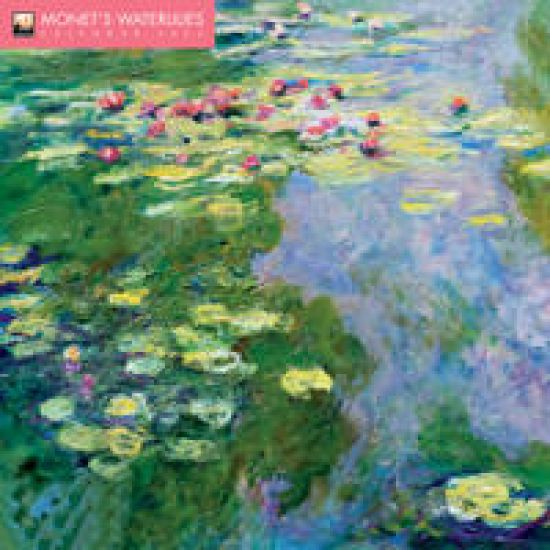
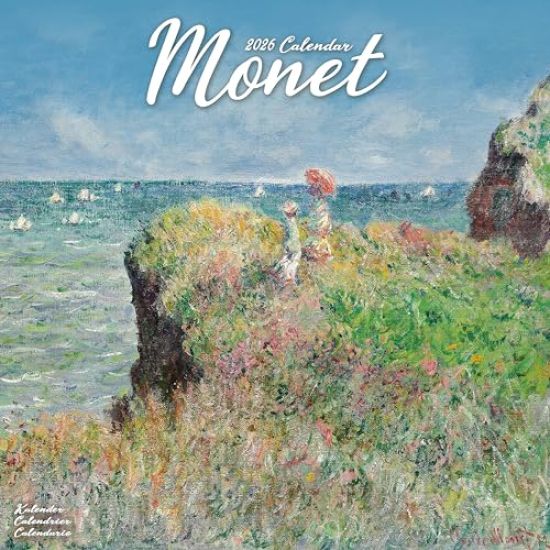
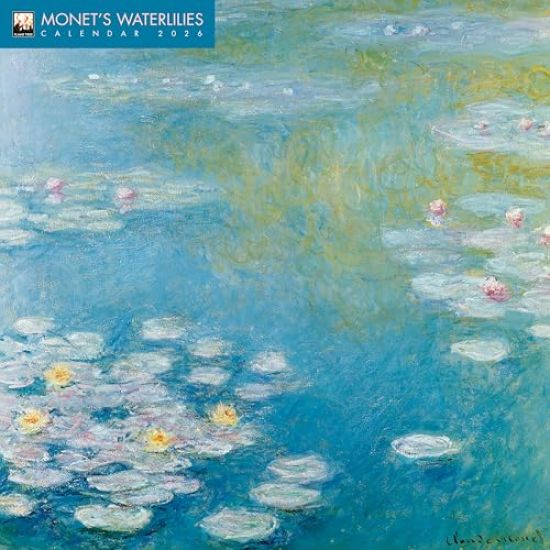
Considered a founder of Impressionism, Claude Monet was fascinated by the changing of light and repeatedly painted the same scene in order to capture these subtle changes. His waterlily paintings are some of the most famous artworks in the world, and this exquisite calendar features 12 of these stunning works. Informative text accompanies each work and the datepad features previous and next month’s views. Printed on FSC-certified paper.
Considered a founder of Impressionism, Claude Monet was fascinated by the changing of light, and he repeatedly painted the same scenes in order to capture these subtle changes. His waterlily paintings are some of the most famous artworks in the world, and this exquisite calendar features 12 of these stunning works. Informative text accompanies each work and the datepad features previous and next month’s views. Printed on FSC-certified paper, with plastic-free packaging.
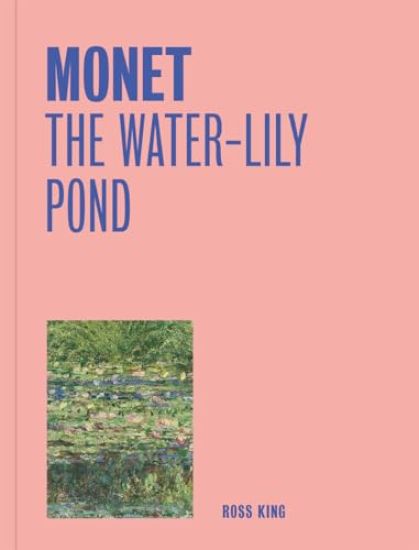
In 1893 Claude Monet, a keen gardener, bought a plot of land next to his house in Giverny, where he wanted to create a water garden ‘both for the pleasure of the eye and for the purpose of having subjects to paint’. He filled the pond with water lilies and built a bridge at one end, inspired by examples he had seen in Japanese prints. This water garden became the focus of Monet’s later career and the subject of some 250 paintings. Alongside an overview of the painter’s life, Ross King considers the profound impact of Japanese art on Monet’s working practice, the historical events of the time, the artist’s fascination with painting bridges, and the personal tragedy that led to his ultimate desire to capture and immortalise on canvas a succession of ever-changing moments in his garden.Published by National Gallery Global/Distributed by Yale University Press
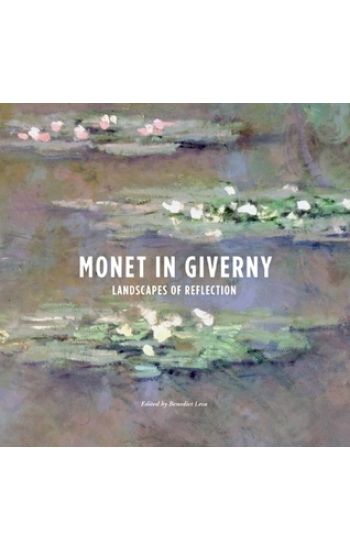
This beautifully illustrated volume takes a fresh look at some of the most enduring landscapes painted by Claude Monet between 1883 and 1926 in and around his garden at Giverny, some 50 miles northwest of Paris. His depiction of sites in the surrounding countryside and of iconic garden motifs such as the Japanese footbridge, water lilies, and wisterias are characterised by subtle colouring and expressive brushwork, making these paintings among the most innovative of the late nineteenth and early twentieth centuries, as well as some of the most beloved masterpieces of French art. Unlike many recent books on Giverny that have tended to focus on planting and garden design, 'Monet in Giverny: Landscapes of Reflection' looks at the theme of reflection in all its forms, focusing on the garden as a continuing source of inspiration for Monet, as well as a reflection of his own theories on art. Featuring 12 seminal paintings from major collections, this volume also examines Monet's paintings at Giverny in the context of contemporary developments in art and photography. A first-hand account of the garden, written in 1891 by French author and critic Octave Mirbeau, has been translated for the first time for this volume by Benedict Leca, and is illustrated with 15 historic photos of the artist and his garden. Published to accompany an exhibition at the Cincinnati Art Museum, February 4 - May 13, 2012.
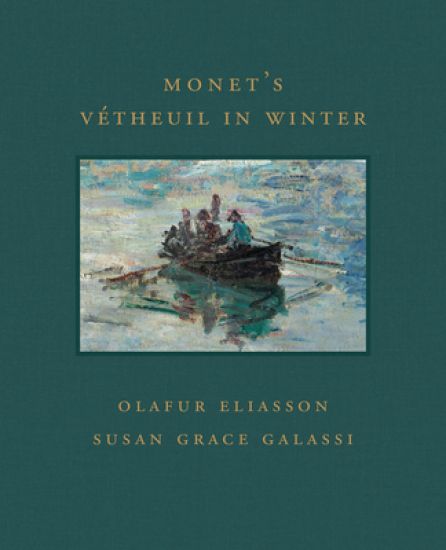
Claude Monet’s Vétheuil in Winter (1878-79), painted during the artist’s first winter in the village, depicts his new home on the Seine, seen from the opposite bank of the river. Monet’s two and a half years in Vétheuil, a small farming community northwest of Paris, saw two severe winters, the inspiration for this impressionist masterpiece, which is the subject of this ninth volume in the Frick Diptych series. Susan Grace Galassi has written an insightful and engaging essay about Monet’s difficult but productive time in Vétheuil, which saw the death of his wife Camille. The Frick's Monet painting, the only work by the artist in the collection is the basis for other significant canvases made during his stay in the village in both winter and summer. Galassi's essay is accompanied by a text and intriguing new work—Colour experiment no. 109—by the artist Olafur Eliasson, created in response to the Monet painting. Eliasson’s work will be shown at the Frick next to the painting that inspired it.
Monet’s Cat tells the story of a magical pottery cat, Chika, who comes alive to explore Monet’s paintings from within. Join her as she visits four famous works of art – causing chaos at a picturesque picnic lunch, getting lost in the smog at a train station, running riot at the beach and making a splash at the water lily pond. But can her famous owner keep up with her exploits? Featuring beautiful illustrations inspired by Monet’s paintings, as well as gallery pages showcasing reproductions of his work, this charming story encourages even the youngest children to engage with, explore and enjoy Monet’s art.
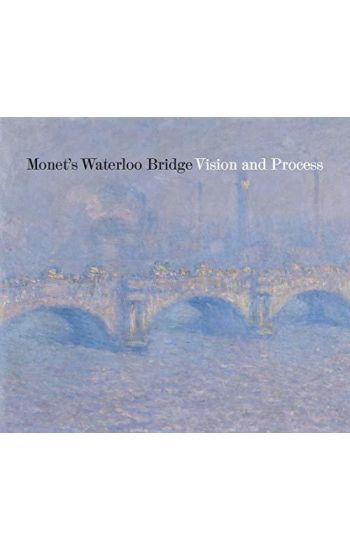
The catalogue of an exhibition comparing versions of Monet's Waterloo Bridge at the Memorial Art Gallery in Rochester, NY. Impressionist master Claude Monet began over forty versions of Waterloo Bridge during his three London sojourns between 1899 and 1901. He viewed his paintings of the landmark bridge both individually and as an ensemble, collectively expressing his sense of the essential subject - the atmosphere and colors of the fog-bound landscape of London's Thames River. Monet struggled to complete these paintings after his return to France, where he re-worked many of the canvases in his Giverny studio, releasing them for sale over the course of several years. The exhibition Monet's Waterloo Bridge: Vision and Process brings together eight paintings from the famous London series. Scholarly essays and an in-depth technical study of the Memorial Art Gallery's Waterloo Bridge, Veiled Sun (1903) explore Monet's artistic vision as well as the process by which he struggled to achieve that vision. NANCY NORWOODis Curator of European Art, Memorial Art Gallery, Rochester, New York.
In his third book this year, Matt Brand explores themes of ephemerality and reflection, turning a book of poems into an exhibition space of impressionistic tableaus. As in the author's prior collections, time and our relationship to it still take center stage here. However, in these poems, Brand paints with a palette of emotions untypical for his prior work-joy, epiphany, celebration, contentment. This book-sized art exhibition makes pitstops in a James Benning film, Walter Benjamin's critical theory, a wine fair in France, a first date in Berlin, a Jane's Addiction music video, a long-distance COVID film club, and a Bernie Sanders meme. The outcome is a text that highlights the richness of our finite passing moments and the gratitude that can be found therein.
No one truly know what could be hiding in the woods.When fearless Monet spots a tiny monster while wandering in the woods near her home, she tells her parents, but they do not believe her. The next day she sets out in search of the monster and discovers friendship, dessert, and the secret of the monster magic.Join Monet on her quest to find the truth.From writer/illustrator R.E. Lockett comes this charming tale of friendship, mystery, and magic.An illustrated rhyming adventure.
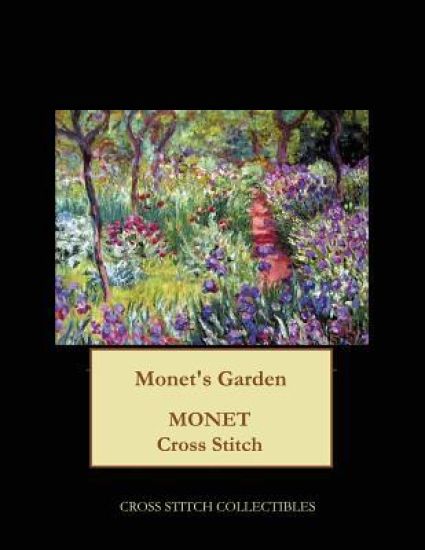
Monet's Garden - Monet extra large print cross stitch pattern by Cross Stitch Collectibles Finished size (depending upon the fabric you choose) : 14 count aida: 25" x 18.5"18 count aida: 19.5" x 13.5"24 count aida: 16" x 11.75"Stitches: 350w x 260h Pattern Features: * Extra-Large-print for easy reading* Full cross stitches only* Black/White chart with easy-to-read symbols* Comprehensive instruction sheet* Complete materials list included Benefits of Large-Print Cross Stitch Patterns: : This book is an "Extra-Large-Print" cross stitch pattern. Stitching our beautiful cross stitch patterns is a labor of love and very time-consuming. Reading such large patterns for hours at a time can pose a challenge for stitchers of all ages. The large grids and alphabetic symbols used in this cross stitch pattern book makes tackling such a large project much easier and more enjoyable. Cross Stitch Collectibles specializes in high quality cross stitch reproductions of fine art paintings by the Great Masters, including Italian Renaissance, Impressionist, Pre-Raphaelite, Asian, Fractal art, and many more styles. You will find something to love and cherish in our vast collection. Cross stitch your own masterpiece today
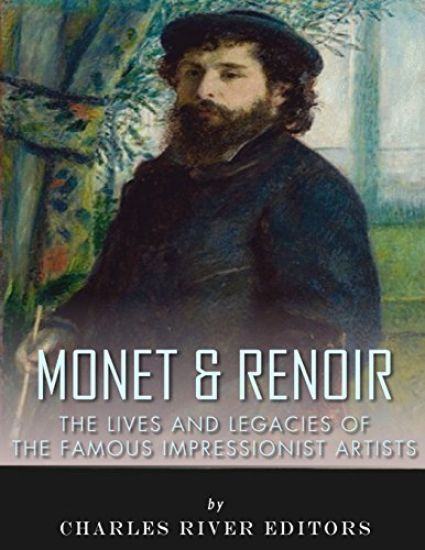
*Includes pictures *Includes the artists' quotes about their lives and art *Includes online resources and a bibliography for further reading *Includes a table of contents To get a sense of the kind of prestige that Claude Monet enjoys within the art world, one need only learn that his Le Bassin Aux Nymphe s (1919) - from his series of paintings featuring water lilies - sold for the equivalent of more than $70 million. This is an incredibly staggering price, especially considering that early in his life, Monet had been so poor and debt-ridden that some of his paintings were taken from him by creditors. How, exactly, did Monet progress from being an impoverished young Impressionist artist working at the vanguard of European art to the legendary Master whose works command prices near the very pinnacle of the art world? Naturally, Monet's commercial success soared exponentially in the decades following his death in 1926, at a time in which the prices commanded by the great Masters of Western art began rising in price at exponential rates. Yet even during his own lifetime, Monet enjoyed a sharp rise to fame and was canonized as one of the greatest painters in France. Following sharply in the footsteps of Edouard Manet, Claude Monet was one of the first painters identified within the Impressionist circle (indeed, it was Monet himself who coined the label of Impressionist after using it in the title of one of his paintings). Where some artists reach the peak of their acclaim early in life, Monet's star continued to rise even throughout his old age; although some would argue that the last decade or so of his life were anticlimactic, at least from an artistic standpoint, his landmark water lilies were made during his elderly years. And even though Monet would continue to paint well after the canonical period of Impressionism had ended, his name was and remains synonymous with Impressionism, along with cherished acquaintances of his, including such luminaries as Pierre-August Renoir, Camille Pissarro, and Edouard Manet. Simply put, Monet is a monumental figure when it comes to examining Western art during the second half of the 19th century. Pierre-Auguste Renoir stands alongside Claude Monet at the very peak of Impressionist painting, and though neither of them can be credited with founding the movement (that honor likely goes to Edouard Manet or Edgar Degas), Renoir and Monet remain inextricably tied to the key characteristics of Impressionism: loose brushwork; outdoor painting; an emphasis on capturing natural light and shadow; and a focus on remaining in Paris and the surrounding countryside. Yet if Monet and Renoir are each remembered for their affiliation with these descriptors, differences nevertheless distinguish them, especially the fact that Renoir concentrated less on nature than did Monet, attending instead to scenes depicting Parisian leisure activity. This thematic concern for depicting scenes of idyllic Parisian enjoyment, such as rowing in boats or grand luncheons, imbues Renoir with a greater sense of joie-de-vivre than Monet or perhaps any of the other members of the Impressionist cohort. Even though Renoir's art shares much in common with his Impressionist colleagues, both his handling of paint and even his subject matter contain significant differences that render him truly unique as a painter. That Renoir captured scenes of leisure better than any of his contemporaries was surprising and unlikely considering the background in which he was raised. Denied the opportunity for a proper education, Renoir's painting, which started at a young age, was borne more out of a need to work than in pursuit of a lifelong passion. Renoir certainly loved to paint, but like Monet, painting always remained his profession, and he treated it as such. Monet & Renoir looks at the personal background that led to the two becoming artists and the cultural climate in which they rose to fame.
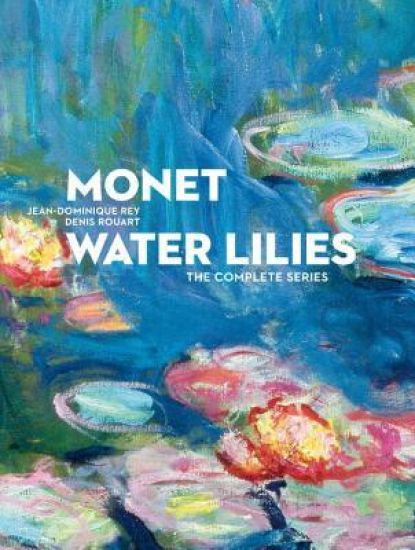
A complete catalog of Monet's famous Water Lilies, featuring 210 paintings from private and public collections. Monet devoted the last twenty-five years of his life to painting the water lilies that floated on the pond of his garden in Giverny. In capturing the reflections on the mirror-like water and the subtle interplay of light, the artist's genius went "beyond painting," committing to his canvas the otherwise ephemeral. The Water Lilies brought together in this volume, are "mirrors of time" that influenced the greatest painters of modern times. A catalogue raisonn of the 251 Water Lilies known to exist, essays of art historians Jean-Dominique Rey and the late Denis Rouart, panoramic photographs of the Orangerie murals in Paris, period photographs of Giverny by Henri Cartier-Bresson, and rare archival documents complete the work.
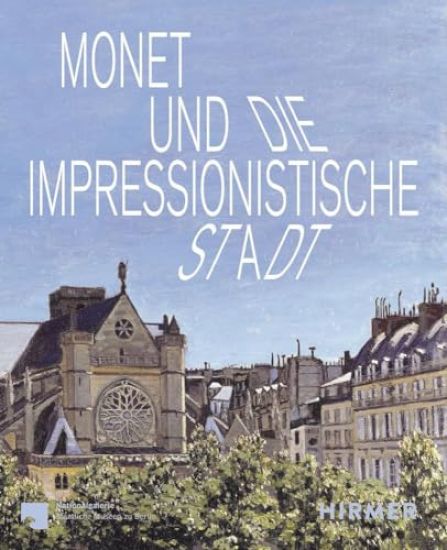
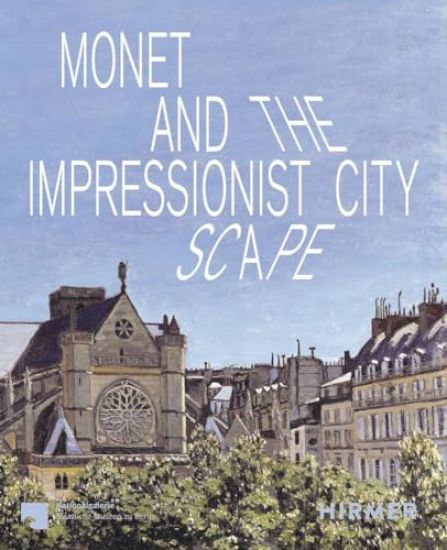
In 1867, Monet (1840–1925) turned his back on tradition when he focused on the bustling life of Paris from the balcony of the Louvre. He was fascinated by the present in the growing French capital rather than the old masters. In a series of three paintings he created a new pictorial topic. The important works from Berlin, Den Haag and Oberlin come together in exhibitions and this lavishly illustrated book. Monet’s cityscapes of Saint-Germain-l’Auxerrois, the Jardin de l’Infante and the Quai du Louvre are considered to be the earliest Impressionist city views. In them he casts a completely new artistic eye over the modern metropolis being rebuilt by Haussmann. By doing so he also inspired artists like Caillebotte and Pissarro to create their own cityscapes. A new subject was born which the publication reveals in all its beauty through the example of Monet’s three principal works as well as others by famous Impressionist and Post-Impressionist artists. Artists include Claude Monet with Gustave Caillebotte, Johan Barthold Jongkind, Maximilien Luce, Henri Matisse, Camille Pissarro.