Kirjojen hintavertailu. Mukana 11 244 527 kirjaa ja 12 kauppaa.

Kirjahaku

Etsi kirjoja tekijän nimen, kirjan nimen tai ISBN:n perusteella.

1000 tulosta hakusanalla Moses Garba

Moses in the Qur'an and Islamic Exegesis

Moses in the Qur'an and Islamic Exegesis

Brannon M. Wheeler

RoutledgeCurzon
2002
sidottu
Relating the Muslim understanding of Moses in the Qur'an to the Epic of Gilgamesh, Alexander Romances, Aramaic Targums, Rabbinic Bible exegesis, and folklore from the ancient and medieval Mediterranean, this book shows how Muslim scholars authorize and identify themselves through allusions to the Bible and Jewish tradition. Exegesis of Qur'an 18:60-82 shows how Muslim exegetes engage Biblical theology through interpretation of the ancient Israelites, their prophets, and their Torah. This Muslim use of a scripture shared with Jews and Christians suggests fresh perspectives for the history of religions, Biblical studies, cultural studies, and Jewish-Arabic studies.
Moses and His Sister

Moses and His Sister

Lois Rock

Lion Children's Books
2018
muu
10 copies of the popular bible story Moses and His Sister are in the multipack. Part of the My Very First Bible Stories series, there are 10 little paperback books of Moses and His Sister. These 10 paperbacks offer a smart and economical way of collecting multiple books for use in groups and classes, for award-giving, or for anyone wanting a pocket-money gift. This shrink-wrapped pack of 10 copies of Moses and His Sister enables an easy, multiple-purchase of this wonderful bible story.
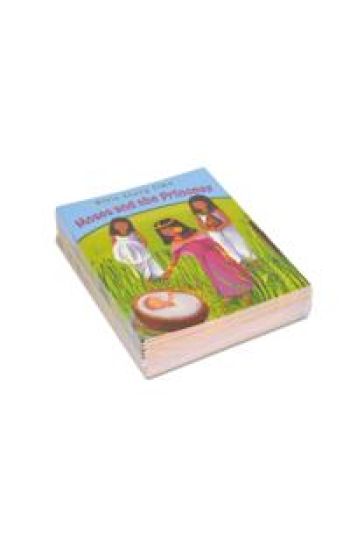
Moses and the Princess

Moses and the Princess

Sophie Piper

Lion Children's Books
2019
nidottu
This shrink-wrapped pack of 10 copies of Moses and the Princess enables easy multiple-purchase of a key Bible story. This is one of 12 key Bible stories that have been made available as part of the Bible Story Time My Little Library. Each story is retold in about 500 words with bright and cheerful pictures.
Moses' Staff and Aeneas' Shield

Moses' Staff and Aeneas' Shield

Patrick V. Reid

University Press of America
2005
nidottu
Moses' Staff and Aeneas' Shield uses two emblems to symbolize the important differences between the tragic but triumphant heroism of Virgil's Aeneid and the kenotic heroism of Moses in the Exodus story of Aeneas' shield and Moses' staff. The shield of Aeneas represents Rome's imperial destiny to rule the earth's peoples by strength, and Aeneas' personal destiny to end in triumph as a warrior. In contrast, the staff of Moses represents the saving wonders the Lord works through him to save the children of Israel from slavery in Egypt and bind them to himself in covenant, and his mission to go beyond being simply a wonder worker to "a man of words" who preaches the Lord's Torah.
Moses Maimonides' Treatise On Resurrection

Moses Maimonides' Treatise On Resurrection

Fred Rosner

Jason Aronson Inc. Publishers
1997
nidottu
One of Maimonides' classic works, the Treatise on Resurrection is an extended discussion of resurrection, the immortality of the soul, the mysteries of the Messianic Age, and the World to Come. The Treatise on Resurrection was controversial in its day for its departure from accepted Jewish theology. Despite opposition to his ideas, Maimonides defended his view with skill and confidence. Fred Rosner's notes provide the background necessary to fully understand Maimonides' position, and his translation is an articulate rendering of this influential text, which validates resurrection as one of the cardinal principles of Judaism.
Moses Mendelssohn and the Enlightenment

Moses Mendelssohn and the Enlightenment

Allan Arkush

State University of New York Press
1994
pokkari
Moses Mendelssohn, the author of numerous works on natural theology and ethics, was also the first modern philosopher of Judaism. This book places Mendelssohn's thought within the context of the Leibnizian-Wolffian school, the writings of Kant and Lessing and other major figures of the Enlightenment, and within the age-old tradition of Jewish rationalism. More than any previous treatment of this subject, it questions the extent to which Mendelssohn truly succeeded in reconciling his allegiance to the philosophy of the Enlightenment with his adherence to Judaism.
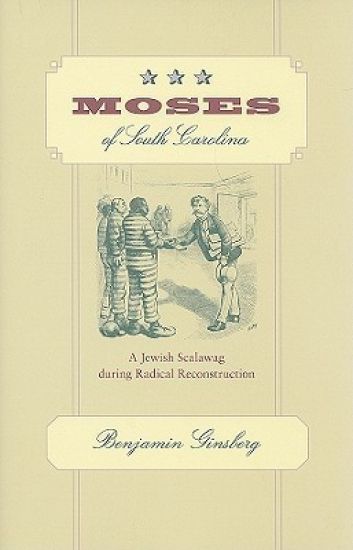
Moses of South Carolina

Moses of South Carolina

Benjamin Ginsberg

Johns Hopkins University Press
2010
sidottu
Franklin Moses Jr. is one of the great forgotten figures in American history. Scion of a distinguished Jewish family in South Carolina, he was a firebrand supporter of secession and an officer in the Confederate army. Moses then reversed course. As Reconstruction governor of South Carolina, he shocked and outraged his white constituents by championing racial equality and socializing freely with former slaves. Friends denounced him, his family disowned him, and enemies ultimately drove him from his home state. In Moses of South Carolina, Benjamin Ginsberg rescues this protean figure and his fascinating story from obscurity. Though Moses was far from a saint-he was known as the "robber governor" for his corrupt ways-Ginsberg suggests that Moses nonetheless deserves better treatment in the historical record. Despite his moral lapses, Moses launched social programs, integrated state institutions, and made it possible for blacks to attend the state university. As a Jew, Moses grew up on the fringe of southern plantation society. After the Civil War, Moses envisioned a culture different from the one in which he had been raised, one that included the newly freed slaves. From the margins of southern society, Franklin Moses built America's first black-Jewish alliance, a model, argues Ginsberg, for the coalitions that would help reshape American politics in the decades to come. Revisiting the story of the South's "most perfect scalawag," Ginsberg contributes to a broader understanding of the essential role southern Jews played during the Civil War and Reconstruction.
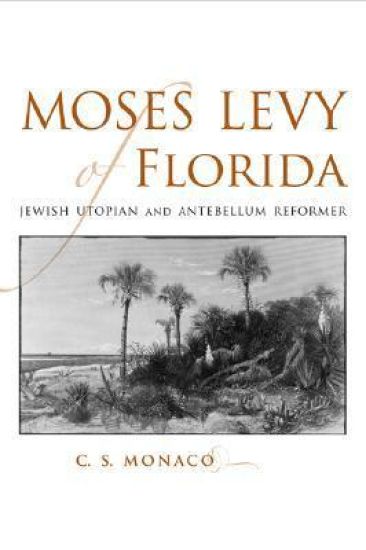
Moses Levy of Florida

Moses Levy of Florida

C. S. Monaco

Louisiana State University Press
2005
sidottu
Moses Elias Levy (1782-1854) was one of the antebellum South's most influential and interesting Jewish citizens. Only recently, however, have historians begun to appreciate his role as a social activist. C. S. Monaco discovered Levy's Plan for the Abolition of Slavery in the late 1990s, and now, in the first full-scale biography of Levy, Monaco completes the picture of his life and work. Long known only as the father of David L. Yulee, the first Jew elected to the U.S. Senate, Levy appears here in all his many, sometimes contradictory roles: abolitionist and slave owner, utopian coloniser and former arms-dealer, religious reformer and biblical conservative. Each aspect of Levy's life and character comes into sharp relief as Monaco follows him from his affluent upbringing in a Sephardic Jewish household in Morocco, where his father was a courtier to the sultan, through his career as a successful merchant shipper, to his radical reform activities in Florida. With his many residences abroad, in Morocco, Gibraltar, Danish Virgin Islands, Puerto Rico, Cuba, Curacao, England, Levy virtually epitomized the Atlantic world, and Monaco escorts readers from country to country, considering Levy's accomplishments in each. The sole Jewish voice during the British abolitionist crusade, Levy was so extraordinary in his activism in London that some Protestants believed he heralded the millennium. In his search for equilibrium between Enlightenment thinking and pre-modern religion, Levy founded the United States' first Jewish communitarian settlement in the wilds of the East Florida frontier. As one of the region's largest landowners, he also reintroduced sugarcane as a viable crop, organised the first Florida development corporation, helped establish the earliest free public school, and served as the territory's first education commissioner. In Moses Levy of Florida, C. S. Monaco offers a radical reappraisal of this complex and formerly underestimated figure, bringing to light for the first time the full and fascinating extent of his remarkable contributions to nineteenth-century America.
Moses Brown

Moses Brown

Thompson Mack

The University of North Carolina Press
2012
nidottu
Moses Brown carried on a wide range of business activities, seeking profit as capital for humanitarian purposes. He became a reluctant participant and eventually a leader in many reform movements--crusades against slavery and war; efforts to provide education for the underprivileged, orphans, and Afro-Americans; and programs of urban redevelopment and public health.Originally published in 1962.A UNC Press Enduring Edition -- UNC Press Enduring Editions use the latest in digital technology to make available again books from our distinguished backlist that were previously out of print. These editions are published unaltered from the original, and are presented in affordable paperback formats, bringing readers both historical and cultural value.
Moses Hazen and the Canadian Refugees in the American Revolution
Moses Hazen, commander of the Second Canadian Reiment, was an unusual and influential man during the period of the American Revolution. The Tories who fled to Canada have received careful study, but little attention has been paid to the Canadians who came south to aid the colonists in their fight against the British.Hazen was one of the leading agents of the Continental Congress in the efforts to recruit Canadians from Quebec and Nova Scotia. This book is more than a biography of Hazen; it is also the story of the Canadians who left their homes, farms, and businesses to join the Continental Army. Allan Everest analyzes the war, in particular its norther theater, and discusses the shabby treatment the Canadians and their families received during and right after the war. In addition, he provides new information on frontier land grants as a reward for army service, the vast speculation in land, and finances of the young republic. Hazen, a prime example of the speculators right after the war, stuck by his Canadian troops until they, too, were rewarded with land grants on the northern frontiers of New York State.This book was published for the New York State American Revolution Bicentennial Commission. The Commission was created by the New York State legislature in 1968 to plan and conduct statewide commemorative programs for the 200th anniversary of the American Revolution and the birth of New York State.
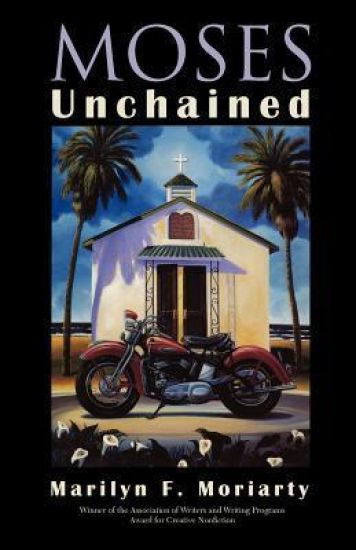
Moses Unchained

Moses Unchained

Marilyn F. Moriarty

University of Georgia Press
2012
pokkari
Moses Unchained is the moving true story of a modern outlaw’s struggle with faith, betrayal, and the accidental nature of life. Zack Rosen was a simple man, but one with many contrasts. An urban Jew from New Jersey who moved south and converted to fundamentalist Christianity, he was not a philosopher or theologian but a man’s man, a tattooed truck driver who built a classic Harley-Davidson from spare parts. Zack met and married Shelley, another converted Jew, but their happiness was brief. Secrets from Shelley’s past came back to haunt them, and her sudden death from pneumon/ia revealed that she had AIDS and she had given the virus to Zack.Suddenly faced with the loss of his family, his job, his income, and eventually, his own life, Zack became an itinerant evangelist. He introduced himself to author Marilyn F. Moriarty in 1993 with the words, “I got an honorable testimony.” She listened to this story and became his friend and caregiver. At his request, she has told his story here.
Moses, Jesus, and the Trickster in the Evangelical South

Moses, Jesus, and the Trickster in the Evangelical South

Paul Harvey

University of Georgia Press
2013
pokkari
Paul Harvey uses four characters that are important symbols of religious expression in the American South to survey major themes of religion, race, and southern history.The figure of Moses helps us better understand how whites saw themselves as a chosen people in situations of suffering and war and how Africans and African Americans reworked certain stories in the Bible to suit their own purposes. By applying the figure of Jesus to the central concerns of life, Harvey argues, southern evangelicals were instrumental in turning him into an American figure. The ghostly presence of the Trickster, hovering at the edges of the sacred world, sheds light on the Euro-American and African American folk religions that existed alongside Christianity. Finally, Harvey explores twentieth-century renderings of the biblical story of Absalom in William Faulkner’s Absalom, Absalom and in works from Toni Morrison and Edward P. Jones.Harvey uses not only biblical and religious sources but also draws on literature, mythology, and art. He ponders the troubling meaning of “religious freedom” for slaves and later for blacks in the segregated South. Through his cast of four central characters, Harvey reveals diverse facets of the southern religious experience, including conceptions of ambiguity, darkness, evil, and death.
Moses and God in Dialogue

Moses and God in Dialogue

Karla R. Suomala

Peter Lang Publishing Inc
2004
sidottu
In Exodus 32-34, through a series of dialogues, Moses persuades God to spare the Israelites from destruction after they have made and worshipped a golden calf. The significance of this passage was not lost on ancient interpreters. At the heart of their concerns was the relationship between Moses and God, as well as the extent to which the Divine could be swayed by human reason and passion. For some, the idea that God could be moved by human efforts was welcome, providing hope in difficult times. For others, it was alarming; after all, God was not only supposed to be all-powerful, but immune to change. This book evaluates the ancient reworkings of these dialogues - translations, rewritten Bible, Midrash, and Targum - in light of the difference in power and position between Moses and God and its influences on the form of their communication.
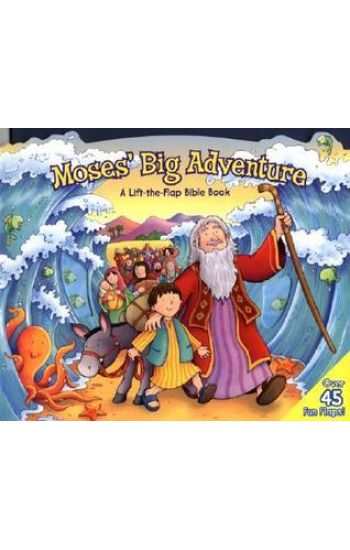
Moses' Big Adventure

Moses' Big Adventure

Allia Zobel Nolan

Kregel Publications,U.S.
2004
pahvisivuinen
A lift-the-flap book of mammoth proportions - big size, big f laps, big learning, big fun! Following the successful format of Noah 's Big Boat, this book uses flaps with hidden images and information to teach children amazing facts about the great adventures of God 's servant, Moses.
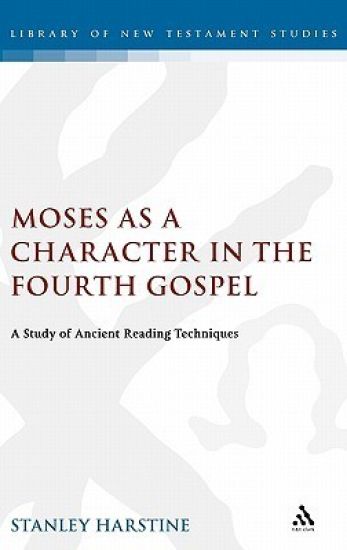
Moses as a Character in the Fourth Gospel

Moses as a Character in the Fourth Gospel

Stanley Harstine

CONTINUUM PUBLISHING CORPORATION
2002
sidottu
Did first century Mediterranean readers of the Fourth Gospel have comparable literary examples to inform their comprehension of Moses as a character? In addressing this question, Harstine's study falls into two parts. The first is an analysis of the character Moses as utilized in the text of the Fourth Gospel. The second is an examination of other Hellenistic narrative texts, in which the character of Homer is also considered, as another important legendary figure with whom the readers of the Fourth Gospel would have been familiar.
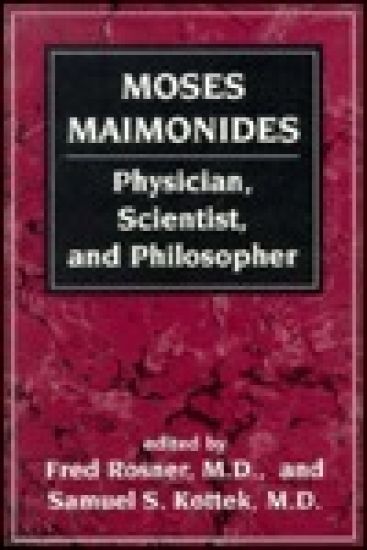
Moses Maimonides

Moses Maimonides

Fred Rosner

Jason Aronson Inc. Publishers
1992
nidottu
Papers from a conference held in Jerusalem, October 1990, present a fresh look at Maimonides' contributions in light of newly discovered sources and the relevance of his work to modern medicine, science, and philosophy. Annotation copyright Book News, Inc. Portland, Or.
Moses' Footprints

Moses' Footprints

Milorad Krystanovic

Nine Arches Press
2012
nidottu
In the shadows of war, loss and longing, a poet seeking his homeland finds his memories and dreams of its distinctive beauty refracted through a second language. These subtle, elusive and potent poems build bridges of imagery and language between the past and present, the lost and found."Here is a rich legacy bypassing Milorad's difficult final years. The poems seem driven, necessary; Croatia and its language call him back, his distinctively developed English finds image after pertinent image. The book is a bounty of metaphor as he is led by Moses and by delight and necessity of observation and discovery; the natural world seems to come to him to be named. I wonder if the frequent 'you' is himself or an other - or heightened to an Other - or these variously. I understand from this book that if we do not see, hear, experience in our own truthful way and make poems with the openness of these poems, then in some crucial sense many of the human world's possibilities cease to exist."David Hart."I can't stop reading these poems. This is work of atmosphere and tone first, narrative second, but it's a narrative that combines deep melancholy with a hard-won sense of joy in the slightest shaft of light, and the thought it provokes. At times it's like trying to recall a receding dream or encountering an oracle with an urgent, impossible message for you alone. It's difficult for me to separate the poems from Milorad's generosity, gentleness and intense imagination, and in a sense that doesn't matter as these are so clearly poems by a man who found beauty, saw mystery and took dignity even in confinement."Luke Kennard.Milorad Krystanovich was born in 1950 in Dalmatia, then part of the former Yugoslavia. After conflict engulfed the region, Milorad was sent to safety with relations in the UK in 1992. He learnt English and later joined The Cannon Poets, becoming a founder member of Writers Without Borders and an active and well-respected figure within Birmingham's poetry and writing community.Hailed by Jonathan Morley in 2007 as "Birmingham's finest émigré poet", Milorad's published work includes three volumes published by Writers Without Borders. Heaventree Press published the bilingual Four Horizons / Cetiri Vidika (2005) and, in English, The Yasen Tree (2007). His penultimate volume, Improvising Memory, was published by Nine Arches Press in 2010. Milorad also taught Croatian, Bosnian and Serbian at the Brasshouse Language Centre in Birmingham and wrote numerous plays and novels for children and young people. Milorad Krystanovich was diagnosed with a brain tumour in 2009 and died in September 2011.