Kirjojen hintavertailu. Mukana 11 244 527 kirjaa ja 12 kauppaa.

Kirjahaku

Etsi kirjoja tekijän nimen, kirjan nimen tai ISBN:n perusteella.

1000 tulosta hakusanalla Muhammad Anwar

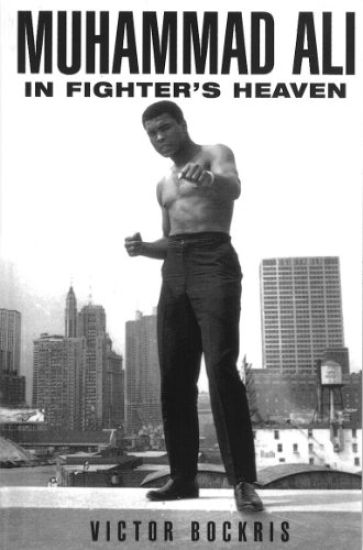
Muhammad Ali In Fighter's Heaven

Muhammad Ali In Fighter's Heaven

Victor Bockris

Arrow Books Ltd
2011
pokkari
'The man who has no imagination Stands on earth He has no wings He cannot fly' Muhammad Ali Just off Highway 61 in northern Pennsylvania, up the dirt drive of a wooded hill lay a place called Fighter's Heaven. This was once the training camp of the 'greatest of all times'. From early '73 through the summer of '74 Victor Bockris visited Muhammad Ali, while Ali was preparing for his epic battle in Zaire to regain the World Heavyweight crown from the fearsome George Foreman. Bockris, who was later to write about people like William Burroughs, Andy Warhol and Lou Reed was less interested in his subject's boxing career and ambitions than in his extraordinary gifts as a poet, preacher and performer. As Muhammad Ali said himself of this book, 'These are some of the things I don't reveal to the public too much'.
Muhammad Bin Tughlaq

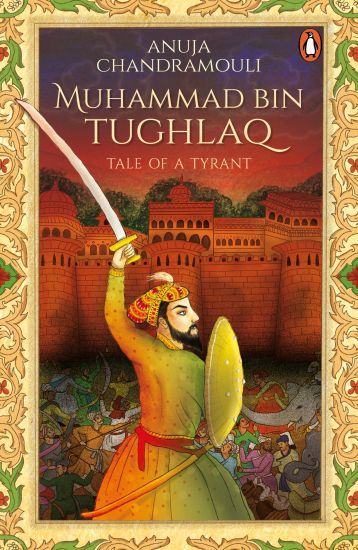
Muhammad Bin Tughlaq

Anuja Chandramouli

Penguin Ebury Press
2019
pokkari
When his father dies, Prince Jauna Khan succeeds to the throne of Delhi as Muhammad bin Tughlaq. His reign will prove to be epic and bloody, but unsurpassed in splendour, innovation and defeat. A formidable strategist and remarkable scholar, the Sultan will go down in history for his brutality as well as his brilliance, unfairly remembered only as a cruel tyrant who might have been raving mad. His high-flown aspirations and grandiose ambitions may have met with crushing failure, but even so, Tughlaq was a great hero of the fourteenth century, albeit a tragic and fatally flawed one. In this fictional retelling, Anuja Chandramouli, one of India's best mythology writers, reimagines Muhammad bin Tughlaq's life and times in incredible detail to bring to life the man behind the monarch.
Muhammad's Military Expeditions

Muhammad's Military Expeditions

Ayman S. Ibrahim

OXFORD UNIVERSITY PRESS INC
2024
sidottu
The last ten years of Muhammad's life are vitally important not only to the study of Islam's prophet, but to the development of the religion itself. Prior to that last decade, Muhammad and his followers were tribally weak, and were persecuted by the Arabian elites of Mecca. Yet, according to Muslim accounts, by the end of his life Muhammad had become the sole leader of Western Arabia. This last decade was colored by strategic military expeditions and tactical treaties, in which Muhammad overcame all his tribal enemies. Yet English speakers have long had limited access to thorough studies of these expeditions based on the original Arabic primary sources. In this book, Ayman S. Ibrahim seeks to fill this scholarly gap, presenting an exhaustive account of Muhammad's final decade, with specific emphasis on his military raids against various non-Muslim groups. What can the Muslim tradition reveal about Muhammad's military career? Did he really launch over seventy military campaigns? Why? Can we be certain that the military incursions described in Islamic sources actually took place? These are fundamental questions in any study of the life and activities of Muhammad, and Ibrahim looks for answers in this thoroughly-researched book. Considering the views of Muslims and non-Muslims, the motivations behind raids, and the development of Islam itself, Muhammad's Military Expeditions leaves no stone unturned.
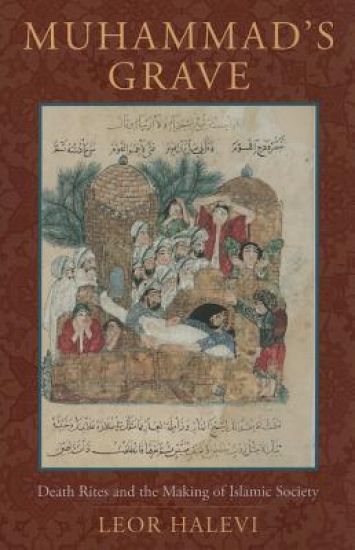
Muhammad's Grave

Muhammad's Grave

Leor Halevi

Columbia University Press
2007
sidottu
In his probing study of the role of death rites in the making of Islamic society, Leor Halevi imaginatively plays prescriptive texts against material culture and advances new ways of interpreting highly contested sources. His original research reveals that religious scholars of the early Islamic period produced codes of funerary law not only to define the handling of a Muslim corpse but also to transform everyday urban practices. Relying on oral traditions, these scholars established new social patterns in the cities of Arabia, Mesopotamia, and the eastern Mediterranean. They distinguished Islamic rites from Christian, Jewish, and Zoroastrian rites and changed the way men and women interacted publicly and privately. In each chapter Halevi explores a different layer of human interaction, following the movement of the corpse from the deathbed to the grave. In the process he analyzes the real and imaginary relationships between husbands and wives, prayer leaders and mourners, and even dreamers and the dead. He describes how Muslims wailed for the deceased, prepared corpses for burial, marched in funerary processions, and prayed for the dead, highlighting the specific economic and political factors involved in these rituals as well as key religious and sexual divisions. Offering a unique perspective on the making of Islamic social and religious ideals during this early period, Halevi forges a fascinating link between the development of funerary rites and the efforts of an emerging religion to carve out its own, distinct identity. Muhammad's Grave is a groundbreaking history of the rise of Islam and the roots of contemporary Muslim attitudes toward the body and society.
Muhammad's Grave

Muhammad's Grave

Leor Halevi

Columbia University Press
2011
pokkari
In his probing study of the role of death rites in the making of Islamic society, Leor Halevi imaginatively plays prescriptive texts against material culture and advances new ways of interpreting highly contested sources. His original research reveals that religious scholars of the early Islamic period produced codes of funerary law not only to define the handling of a Muslim corpse but also to transform everyday urban practices. Relying on oral traditions, these scholars established new social patterns in the cities of Arabia, Mesopotamia, and the eastern Mediterranean. They distinguished Islamic rites from Christian, Jewish, and Zoroastrian rites and changed the way men and women interacted publicly and privately. In each chapter Halevi explores a different layer of human interaction, following the movement of the corpse from the deathbed to the grave. In the process he analyzes the real and imaginary relationships between husbands and wives, prayer leaders and mourners, and even dreamers and the dead. He describes how Muslims wailed for the deceased, prepared corpses for burial, marched in funerary processions, and prayed for the dead, highlighting the specific economic and political factors involved in these rituals as well as key religious and sexual divisions. Offering a unique perspective on the making of Islamic social and religious ideals during this early period, Halevi forges a fascinating link between the development of funerary rites and the efforts of an emerging religion to carve out its own, distinct identity. Muhammad's Grave is a groundbreaking history of the rise of Islam and the roots of contemporary Muslim attitudes toward the body and society.
Muhammad Ali, the People's Champ

Muhammad Ali, the People's Champ

University of Illinois Press
1998
nidottu
For years recognized as the world's best-known athlete, Muhammad Ali played a fascinating role in American culture, with an influence that reached far beyond sports and, in many ways, defined his times. Ali the boxer stood side by side with Ali the vocal Black Muslim, Ali the cultural force, Ali the anti-war protestor, Ali the celebrity, Ali the narcissist, and more. In Muhammad Ali, the People's Champ, experts unpack Ali's various incarnations to build a vivid portrait of an iconic figure in the ring of public history and reveal how he touched people's lives in ways unprecedented by any sports figure before or since.
Muhammad and the Golden Bough

Muhammad and the Golden Bough

Jaroslav Stetkevych

Indiana University Press
2000
pokkari
Now in Paperback! Muhammad and the Golden Bough Reconstructing Arabic Myth Jaroslav Stetkevych Connects pre-Islamic Arabian myth to world mythic traditions. A Choice Outstanding Academic Book "Stetkevych succeeds brilliantly in reconstructing the myth of the destruction of the Thamud, an ancient people of north Arabia. . . . This book will add a new dimension to the study of Near Eastern and Mediterranean myth and legend." —Choice "Stetkevych's critical and wide-ranging perspective reveals a wealth of insights. This book is must reading for everyone in the field of religion and one of the most important works in recent years." —Religious Studies Review "The graceful writing, interdisciplinary scope, and hermeneutical depth should make it compelling reading for those interested in the mythos of Arabia before and at the birth of Islam and in comparable myths in neighboring civilizations." —MESA Bulletin "It opens up new dimensions of how to think about, how to study, how to see interrelationships in the ancient Arabian world and their connections with the Mediterranean world in general. . . . a stunning piece of work." —Chronicle of Higher Education Through its development of a methodology for analyzing the mythic and folkloric traditions of pre-Islamic Arabia and the process of their incorporation into Islamic myth and Qur'anic texts, Muhammad and the Golden Bough offers compelling insights for students of Islam, comparative religion, and cultural anthropology. By linking Arabic myth with a broad range of ancient and classical texts—including Gilgamesh, Homer, and the Hebrew Bible—the book makes a provocative contribution to biblical and ancient Near Eastern studies, classics, and comparative literature. Jaroslav Stetkevych is Professor Emeritus of Arabic Literature at the University of Chicago. He is author of The Modern Arabic Literary Language: Lexical and Stylistic Developments and The Zephyrs of Najd: The Poetics of Nostalgia in the Classical Arabic Nasib. His articles on classical and modern Arabic literature have appeared in Spanish, English, Arabic, and Ukrainian. Contents Introduction: Reclaiming Arabian Myth The Textual Puzzle The Thamudic Backdrop to the Puzzle The First Answer to the Puzzle: The Raid on Tabuk The Totem and the Taboo Poeticizing the Thamud Demythologizing the Thamud The Scream The Arabian Golden Bough and Kindred Branches: Frazer, Vergil, Homer, and Gilgamesh Conclusion
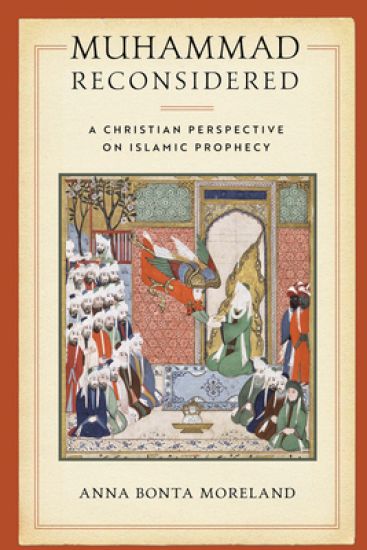
Muhammad Reconsidered

Muhammad Reconsidered

Anna Bonta Moreland

University of Notre Dame Press
2020
sidottu
Muhammad Reconsidered rectifies the failures of scholarly attempts to understand Islam in the West and to take Islamic theology seriously. Engaging Islam from deep within the Christian tradition by addressing the question of the prophethood of Muhammad, Anna Bonta Moreland calls for a retrieval of Thomistic thought on prophecy. Without either appropriating the prophet as an unwitting Christian or reducing both Christianity and Islam to a common denominator, Moreland studies Muhammad within a Christian theology of revelation. This lens leads to a more sophisticated understanding of Islam, one that honors the integrity of the Catholic tradition and argues for the possibility in principle of Muhammad as a religious prophet. Moreland sets the stage for this inquiry through an intertextual reading of the key Vatican II documents on Islam and on Christian revelation. She then uses Aquinas's treatment of prophecy to address the case of whether Muhammad is a prophet in Christian terms. Muhammad Reconsidered examines the work of several Christian theologians, including W. Montgomery Watt, Hans Küng, Kenneth Cragg, David Kerr, and Jacques Jomier, O.P., and then draws upon the practice of analogical reasoning in the theology of religious pluralism to show that a term in one religion—in this case "prophecy"—can have purchase in another religious tradition. Muhammad Reconsidered not only is a constructive contribution to Catholic theology but also has enormous potential to help scholars reframe and comprehend Christian-Muslim relations.
Muhammad Ali

Muhammad Ali

Anthony O. Edmonds

Greenwood Press
2005
sidottu
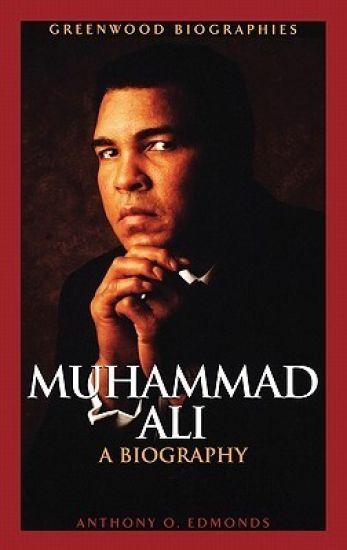
At the pinnacle of his boxing career during the 1960s and early 1970s, Muhammad Ali seemed to be a cultural symbol of the times. He has been viewed by some as a hero and by others as a rebel, but either way he is arguably the most famous American in the world. In this volume, Ali's life is described from his birth to the present, with an emphasis on his career through 1975. The work covers such topics as his various boxing matches including The Thrilla in Manilla, his religious conversion to the Nation of Islam, the Vietnam War, and his efforts to promote world peace.A timeline provides key events in Ali's life, and the work concludes with a bibliography of print and electronic sources for additional research.
Muhammad Ali

Muhammad Ali

Matt Christopher

Little, Brown Company
2005
nidottu
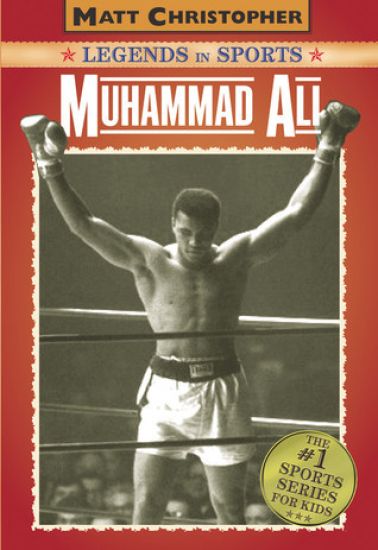
Paints a fascinating portrait of heavyweight champion Muhammad Ali, who was not only a legendary boxer, but a staunch supporter of the Civil Rights movement who continues to support charitable causes and peace efforts today, while battling against a debilitative disease. Original.
Muhammad Ali and Malcolm X

Muhammad Ali and Malcolm X

Johnny Smith; Margeaux Weston; Randy Roberts

LITTLE, BROWN COMPANY
2023
sidottu
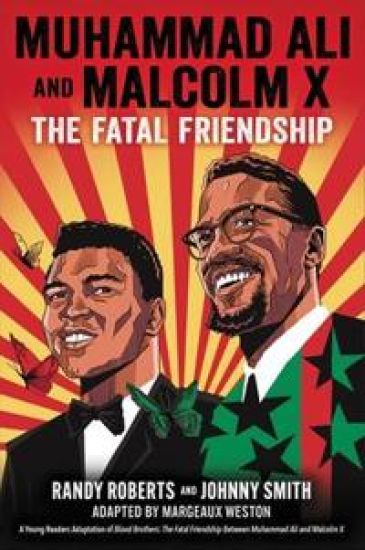
Discover the remarkable relationship between Muhammad Ali and Malcolm X, and how their bond affected the movement for Black pride and independence in the 1960s in this nonfiction book for young readers.Freshly adapted for young readers, this in-depth portrait showcases the complex bond between Muhammad Ali and Malcolm X, revealing how Malcolm helped mold Cassius Clay into Muhammad Ali and influenced his rise as an international symbol of Black pride and Black independence. Yet when Malcolm was expelled from the Nation of Islam for criticizing the conduct of its leader, Elijah Muhammad, Ali turned his back on Malcolm, a choice that some believe tragically contributed to the minister's assassination in February 1965.Muhammad Ali and Malcolm X is the story of how Ali redefined what it means to be a Black athlete in America, informed by Malcolm's leadership. An extraordinary portrait of love, friendship, and power as well as deceit and betrayal, here is a window into the public and private lives of two national icons, and the tumultuous period in the American Civil Rights Movement that they helped to shape.
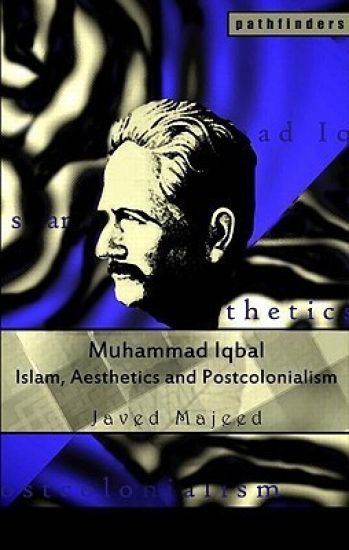
Muhammad Iqbal

Muhammad Iqbal

Javed Majeed

Routledge India
2009
nidottu
Bringing together Islamic studies, a postcolonial literary perspective, and a focus on the interaction between aesthetics and politics, this book analyses Iqbal’s Islamism through his poetry. It argues that his notion of an Islamist selfhood was expressed in his verse through the interplay between poetic tradition and creative innovation. It also considers how Iqbal expressed an Islamist geopolitical imagination in his work, and examines his exploration of the relationship between the modern West and a reconstructed Islam. For the first time, Iqbal’s personal letters have been drawn upon to provide an insight into his inner conflicts as articulated in his poetry. Concentrating on the complexity of his work in its own right, the book eschews the standard appropriation of Iqbal into any one political agenda — be it Indian nationalism, Muslim separatism or Iranian Islamic republicanism. With its analytical and in-depth reading of Iqbal’s verse and prose, this book opens a fresh perspective on Islam and postcolonialism. It will be a fascinating study for general readers and readers with interests in the intellectual and political history of modern South Asia, colonialism and postcolonialism, Islamic studies, and modern South Asian literature (especially Urdu and Persian poetry).
Muhammad and the Supernatural

Muhammad and the Supernatural

Rebecca Williams

Routledge
2013
sidottu
Muhammad and the Supernatural: Medieval Arab Views examines the element of the supernatural (or miracle stories) in the life of the Prophet Muhammad as depicted in two genres: prophetic biography (sira) and Qur'an exegesis (tafsir).
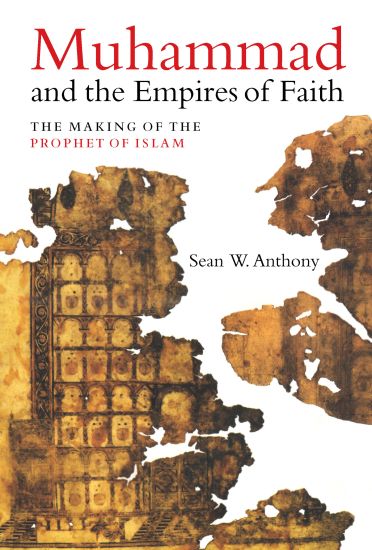
Muhammad and the Empires of Faith

Muhammad and the Empires of Faith

Sean W. Anthony

University of California Press
2020
sidottu
In Muhammad and the Empires of Faith, Sean W. Anthony demonstrates how critical readings of non-Muslim and Muslim sources in tandem can breathe new life into the historical study of Muhammad and how his message transformed the world. By placing these sources within the intellectual and cultural world of Late Antiquity, Anthony offers a fresh assessment of the earliest sources for Muhammad’s life, taking readers on a grand tour of the available evidence, and suggests what new insights stand to be gained from the techniques and methods pioneered by countless scholars over the decades in a variety of fields. Muhammad and the Empires of Faith offers both an authoritative introduction to the multilayered traditions surrounding the life of Muhammad and a compelling exploration of how these traditions interacted with the broader landscape of Late Antiquity.
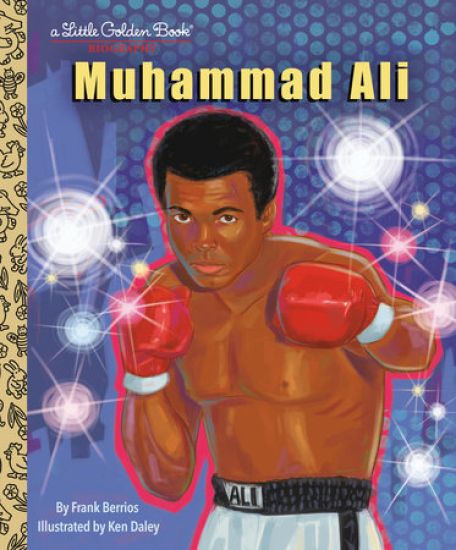
Muhammad Ali

Muhammad Ali

Frank Berrios; Ken Daley

RANDOM HOUSE USA INC
2024
sidottu
Help your little one dream big with a Little Golden Book biography about legendary boxer and activist Muhammad Ali. Little Golden Book biographies are the perfect introduction to nonfiction for young readers--as well as fans of all ages This Little Golden Book about Muhammad Ali--the boxing heavyweight champion, civil rights activist, and the original GOAT (Greatest of All Time)--is an inspiring read-aloud for young readers. Look for more Little Golden Book biographies: Jackie RobinsonMartin Luther King Jr.Simone BilesMisty Copeland
Muhammad's ALLAH

Muhammad's ALLAH

Ahmed Hulusi

Muhammad's Allah
2012
pokkari
Why not just Allah? Why Muhammad's Allah?This unique book explains that Allah is not a god (deity) and that this god-concept we have all come to embrace, as a result of misleading information and conditioning, is not the Allah expounded by Muhammad (saw).Everyone, from the most learned to the most ignorant, has a concept of God.A God that we love, get angry with, judge and even accuse, at times, for doing wrong by us We imagine this God, who sits on a star in the heavens or dwells somewhere in space, to be like a benevolent paternal figure or a majestic sultan Those with broader views ( ) are well aware, of course, that such a God cannot exist and claim they do not believe in a God, proudly declaring themselves as atheists.Whereas, neither the aforementioned believers who postulate a God with their hearsay knowledge and conditionings, nor the atheists who deny and reject the idea of a God, have any awareness of Allah as explained by Muhammad (saw) So what is the reality of Allah revealed by Muhammad (saw)?Muhammad (saw), who articulated the Quran to us, taught us there is no God, that there is only Allah; that there is a System present within life, by which those who fail to comply, are led to suffer the consequences of their own actions.If we live with the awareness of the existence of an afterlife, our primary concern should be to know Allah and the life awaiting us after death, so that we may prepare accordingly.Taking this into consideration, let us now try to understand the One denoted by the name Allah disclosed by Muhammad (saw).
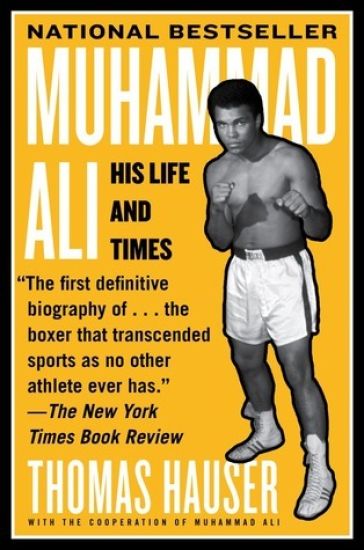
Muhammad Ali

Muhammad Ali

Thomas Hauser

Pocket Books
1992
nidottu
In the words of more than 200 of Ali's family members, opponents, friends, world leaders, and others who have known him best, the real Muhammad Ali emerges: deeply religious, mercurial, generous, a showman in and out of the ring. Thirty years after he burst onto the scene as a gold medal light-heavyweight at the Rome Olympics, Muhammad Ali is still a magical figure. His accomplishments in the ring were the stuff of legend--the two fights with Sonny Liston, when he proclaimed himself "The Greatest" and proved he was; the three epic wars against Joe Frazier; the stunning victory over George Foreman in Zaire; and the shocking loss and final win that made him the first man to win back the heavyweight crown twice, fourteen years after he had first claimed it. Ali's life has been played out as much on the front pages as on the sports pages. With brilliant immediacy and unprecedented candor, bestselling author Thomas Hauser recreates this extraordinary man.