Kirjojen hintavertailu. Mukana 11 627 220 kirjaa ja 12 kauppaa.

Kirjahaku

Etsi kirjoja tekijän nimen, kirjan nimen tai ISBN:n perusteella.

1000 tulosta hakusanalla Napoleone Colajanni

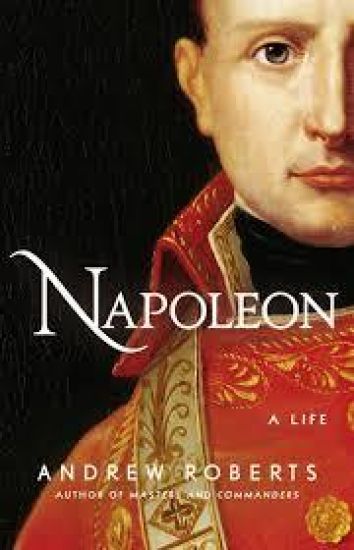
Napoleon: A Life

Napoleon: A Life

Andrew Roberts

PENGUIN BOOKS
2015
nidottu
The definitive biography of the great soldier-statesman by the acclaimed author of Churchill and The Last King of America--winner of the LA Times Book prize, finalist for the Plutarch prize, winner of the Fondation Napoleon prize and a New York Times bestseller "A thrilling tale of military and political genius... Roberts is an uncommonly gifted writer." --The Washington Post Austerlitz, Borodino, Waterloo: his battles are among the greatest in history, but Napoleon Bonaparte was far more than a military genius and astute leader of men. Like George Washington and his own hero Julius Caesar, he was one of the greatest soldier-statesmen of all times. Andrew Roberts's Napoleon is the first one-volume biography to take advantage of the recent publication of Napoleon's thirty-three thousand letters, which radically transform our understanding of his character and motivation. At last we see him as he was: protean multitasker, decisive, surprisingly willing to forgive his enemies and his errant wife Josephine. Like Churchill, he understood the strategic importance of telling his own story, and his memoirs, dictated from exile on St. Helena, became the single bestselling book of the nineteenth century. An award-winning historian, Roberts traveled to fifty-three of Napoleon's sixty battle sites, discovered crucial new documents in archives, and even made the long trip by boat to St. Helena. He is as acute in his understanding of politics as he is of military history. Here at last is a biography worthy of its subject: magisterial, insightful, beautifully written, by one of our foremost historians.
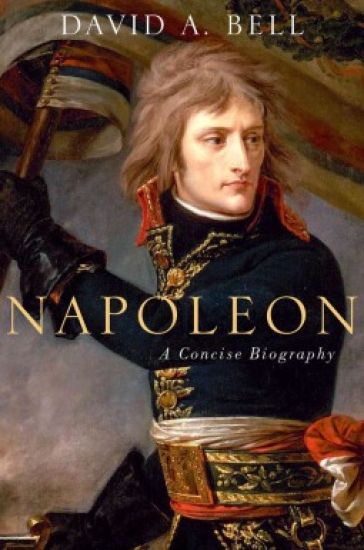
Napoleon: A Concise Biography

Napoleon: A Concise Biography

David Bell

Oxford University Press Inc
2016
sidottu
This book provides a concise, lively, up-to-date portrait of Napoleon Bonaparte's character and career, including his most important battles, while situating him firmly in historical context. David Bell emphasizes the astonishing sense of human possibility - for both good and ill - that Napoleon represented. By his late twenties, Napoleon was already one of the greatest generals in European history. At thirty, he had become absolute master of Europe's most powerful country. In his early forties, he ruled a European empire more powerful than any since Rome, fighting wars that changed the shape of the continent and brought death to millions. Then everything collapsed, leading him to spend his last years in miserable exile in the South Atlantic. Bell underlines the importance of the French Revolution of 1789 in understanding Napoleon's career. It was the Revolution that made possible the unprecedented concentration of political authority that Napoleon developed, as well as his unprecedented success in mobilizing human and material resources. The Revolution gave birth to the radically new, intense form of warfare that Napoleon later practiced. Without the political changes brought about by the Revolution, Napoleon could not have fought his wars. Without the wars, he could not have seized and held onto power. He did betray much of the Revolution's heritage of liberty and equality, and ruled as a virtual dictator. But his life and career were, nonetheless, revolutionary.
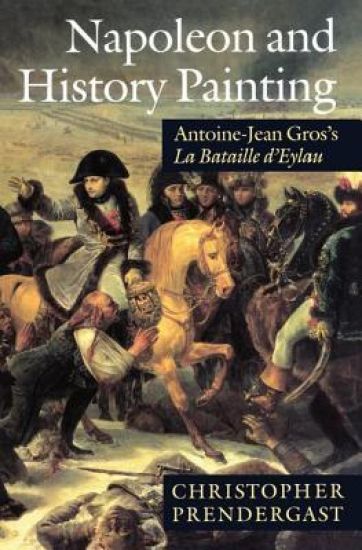
Napoleon and History Painting

Napoleon and History Painting

Prendergast

Clarendon Press
1998
nidottu
This study is an inquiry into the fortunes, in both theory and practice, of the idea of history painting during the Napoleonic period. Its main argument is that under Napoleon, French history painting, especially battle painting, encountered a series of questions as to its nature and function. These questions arose in part from the (often contradictory) demands of a propaganda-machine operating within a postrevolutionary crisis of political legitimation, but also from changes in artistic taste which both retained and re-directed an earlier notion of the civic responsibilities of the history painter. This is a resolutely interdisciplinary book: drawing on perspectives from political thought and history, military theory and practice and art history, it centres on the work of the painter, Antoine-Jean Gros, and his controversial painting, La Bataille d'Eylau.
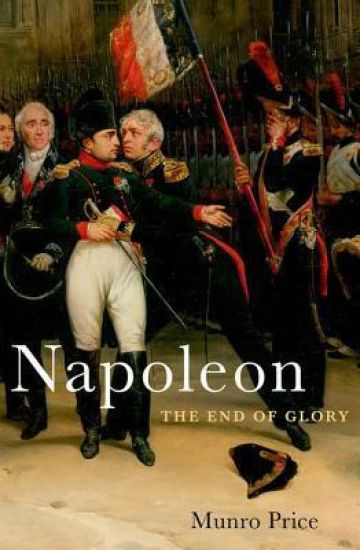
Napoleon

Napoleon

Munro Price

Oxford University Press
2016
nidottu
Napoleon: The End of Glory tells the story of the dramatic two years that led to Napoleon's abdication in April 1814. Though crucial to European history, they remain strangely neglected, lying between the two much better-known landmarks of the retreat from Moscow and the battle of Waterloo. Yet this short period saw both Napoleon's loss of his European empire, and of his control over France itself. In 1813 the massive battle of Leipzig - the bloodiest in modern history before the first day of the Somme - forced his armies back to the Rhine. The next year, after a brilliant campaign against overwhelming odds, Napoleon was forced to abdicate and exiled to Elba. He regained his throne the following year, for just a hundred days, in a doomed adventure whose defeat at Waterloo was predictable. The most fascinating - and least-known - aspect of these years is that at several key points Napoleon's enemies offered him peace terms that would have allowed him to keep his throne, if not his empire, a policy inspired by the brilliant and devious Austrian foreign minister Metternich. Napoleon: The End of Glory sheds fascinating new light on Napoleon, Metternich, and many other key figures and events in this dramatic period of European history, drawing on previously unused archives in France, Austria, and the Czech Republic. Through these it seeks to answer the most important question of all - why, instead of accepting a compromise, Napoleon chose to gamble on total victory at the risk of utter defeat?
Napoleon

Napoleon

David A. Bell

Oxford University Press Inc
2018
nidottu
This Very Short Introduction provides a concise, accurate, and lively portrait of Napoleon Bonaparte's character and career, situating him firmly in historical context. David Bell emphasizes the astonishing sense of human possibility--for both good and ill--that Napoleon represented. By his late twenties, Napoleon was already one of the greatest generals in European history. At thirty, he had become absolute master of Europe's most powerful country. In his early forties, he ruled a European empire more powerful than any since Rome, fighting wars that changed the shape of the continent and brought death to millions. Then everything collapsed, leading him to spend his last years in miserable exile in the South Atlantic. Bell emphasizes the importance of the French Revolution in understanding Napoleon's career. The revolution made possible the unprecedented concentration of political authority that Napoleon accrued, and his success in mobilizing human and material resources. Without the political changes brought about by the revolution, Napoleon could not have fought his wars. Without the wars, he could not have seized and held onto power. Though his virtual dictatorship betrayed the ideals of liberty and equality, his life and career were revolutionary.
Napoleon

Napoleon

Munro Price

Oxford University Press
2014
sidottu
Napoleon: The End of Glory tells the story of the dramatic two years that led to Napoleon's abdication in April 1814. Though crucial to European history, they remain strangely neglected, lying between the two much better-known landmarks of the retreat from Moscow and the battle of Waterloo. Yet this short period saw both Napoleon's loss of his European empire, and of his control over France itself. In 1813 the massive battle of Leipzig - the bloodiest in modern history before the first day of the Somme - forced his armies back to the Rhine. The next year, after a brilliant campaign against overwhelming odds, Napoleon was forced to abdicate and exiled to Elba. He regained his throne the following year, for just a hundred days, in a doomed adventure whose defeat at Waterloo was predictable. The most fascinating - and least-known - aspect of these years is that at several key points Napoleon's enemies offered him peace terms that would have allowed him to keep his throne, if not his empire, a policy inspired by the brilliant and devious Austrian foreign minister Metternich. Napoleon: The End of Glory sheds fascinating new light on Napoleon, Metternich, and many other key figures and events in this dramatic period of European history, drawing on previously unused archives in France, Austria, and the Czech Republic. Through these it seeks to answer the most important question of all - why, instead of accepting a compromise, Napoleon chose to gamble on total victory at the risk of utter defeat?
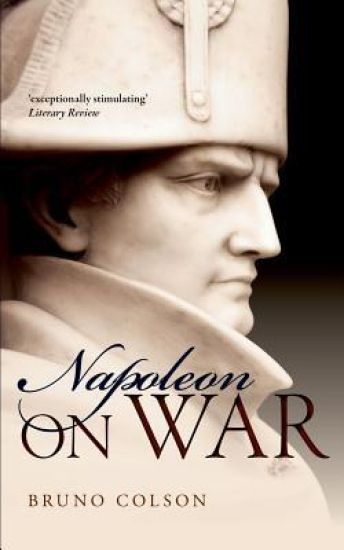
Napoleon: On War

Napoleon: On War

Oxford University Press
2015
sidottu
This is the book on war that Napoleon never had the time or the will to complete. In exile on the island of Saint-Helena, the deposed Emperor of the French mused about a great treatise on the art of war, but in the end changed his mind and ordered the destruction of the materials he had collected for the volume. Thus was lost what would have been one of the most interesting and important books on the art of war ever written, by one of the most famous and successful military leaders of all time. In the two centuries since, several attempts have been made to gather together some of Napoleon's 'military maxims', with varying degrees of success. But not until now has there been a systematic attempt to put Napoleon's thinking on war and strategy into a single authoritative volume, reflecting both the full spectrum of his thinking on these matters as well as the almost unparalleled range of his military experience, from heavy cavalry charges in the plains of Russia or Saxony to counter-insurgency operations in Egypt or Spain. To gather the material for this book, military historian Bruno Colson spent years researching Napoleon's correspondence and other writings, including a painstaking examination of perhaps the single most interesting source for his thinking about war: the copy-book of General Bertrand, the Emperor's most trusted companion on Saint-Helena, in which he unearthed a Napoleonic definition of strategy which is published here for the first time. The huge amount of material brought together for this ground-breaking volume has been carefully organized to follow the framework of Carl von Clausewitz's classic On War, allowing a fascinating comparison between Napoleon's ideas and those of his great Prussian interpreter and adversary, and highlighting the intriguing similarities between these two founders of modern strategic thinking.
Napoleon: On War

Napoleon: On War

Oxford University Press
2017
nidottu
This is the book on war that Napoleon never had the time or the will to complete. In exile on the island of Saint-Helena, the deposed Emperor of the French mused about a great treatise on the art of war, but in the end changed his mind and ordered the destruction of the materials he had collected for the volume. Thus was lost what would have been one of the most interesting and important books on the art of war ever written, by one of the most famous and successful military leaders of all time. In the two centuries since, several attempts have been made to gather together some of Napoleon's 'military maxims', with varying degrees of success. But not until now has there been a systematic attempt to put Napoleon's thinking on war and strategy into a single authoritative volume, reflecting both the full spectrum of his thinking on these matters as well as the almost unparalleled range of his military experience, from heavy cavalry charges in the plains of Russia or Saxony to counter-insurgency operations in Egypt or Spain. To gather the material for this book, military historian Bruno Colson spent years researching Napoleon's correspondence and other writings, including a painstaking examination of perhaps the single most interesting source for his thinking about war: the copy-book of General Bertrand, the Emperor's most trusted companion on Saint-Helena, in which he unearthed a Napoleonic definition of strategy which is published here for the first time. The huge amount of material brought together for this ground-breaking volume has been carefully organized to follow the framework of Carl von Clausewitz's classic On War, allowing a fascinating comparison between Napoleon's ideas and those of his great Prussian interpreter and adversary, and highlighting the intriguing similarities between these two founders of modern strategic thinking.
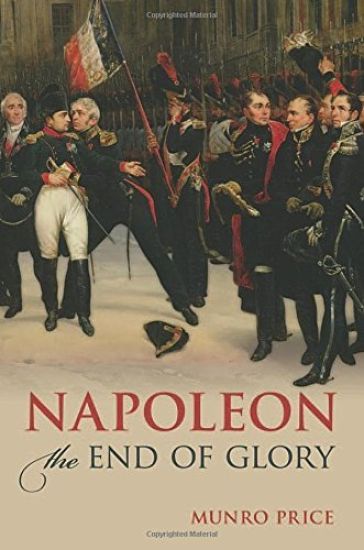
Napoleon: The End of Glory

Napoleon: The End of Glory

Munro Price

Oxford University Press
2014
sidottu
On April 20, 1814, after a dizzying series of battles, campaigns, and diplomatic intrigues, a defeated Napoleon Bonaparte made his farewell speech to the Old Guard in the courtyard of the Chateau de Fontainebleau and set off for exile on the island of Elba. Napoleonic legend asserts that the Emperor was brought down by foreign powers determined to destroy him and discredit his achievements, with the aid of highly placed domestic traitors. Others argue that once Napoleon's military defeats began in 1812, his fall became inevitable. But in fact, as Munro Price shows in this brilliant new book, Napoleon's fall could have been avoided altogether. Exploring a critical and often neglected period of Napoleonic history between 1812 and 1814, Napoleon: The End of Glory offers a more complete picture of the Emperor's decline and fall than any previous work. Price analyzes the political, military, and diplomatic events of the period, from Napoleon's disastrous invasion of Russia in 1812 to the multiple failed attempts by Austria to broker peace. He illuminates the dynamic relationships between Napoleon and the wily Austrian foreign minister Metternich-whose desire for equilibrium within the European states system clashed with Napoleon's unshakeable belief in hegemony and subjection-and the charming and enigmatic Alexander I of Russia. And he explores the lasting impact of the bloody Terror of the French Revolution on Napoleon's decisions once he came to power. Rejecting the assumption that defeat was unavoidable, Price considers instead why Napoleon failed to explore a compromise peace that could have allowed him to keep his crown, arguing that the answer to this question has powerful implications for our understanding of the Napoleonic wars.
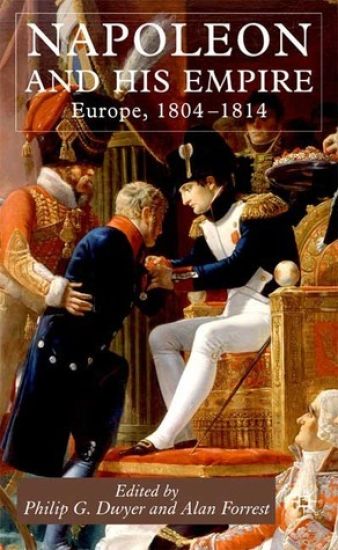
Napoleon and His Empire

Napoleon and His Empire

Palgrave Macmillan
2006
sidottu
Napoleon and His Empire brings together some of the world's leading Napoleonic historians to provide a timely overview of current trends in research and historiography. It not only revisits traditional themes but also looks at new research on questions of citizenship, gender, education and local government.
Napoleon and the Rebel

Napoleon and the Rebel

Simonetta Marcello; Arikha Noga

Palgrave Macmillan
2011
sidottu
Lucien was the most talented of the Bonaparte brothers, who not only can be credited for helping Napoleon seize power, but who also had a promising political career of his own. He was a romantic, an idealist, and an anti-monarchist whose love for Alexandrine, the woman he married in spite of Napoleon's objections, caused him to fall out of favour with his powerful brother. Here, authors Simonetta and Arikha draw from a massive trove of first-hand documents, allowing them to present a rare, detailed portrait of this remarkable dynasty that reveals Emperor Napoleon and his family at their most intimate and vulnerable moments. The turbulent relationship between Napoleon and his favorite brother, Lucien, of whom the emperor said, 'of all my siblings, he was the most gifted, and the one who hurt me most,' creates the perfect springboard to illustrate the bloody power struggles, romantic idealism, and corruption that characterized nineteenth-century Europe, as well as the rise and fall of the French empire.
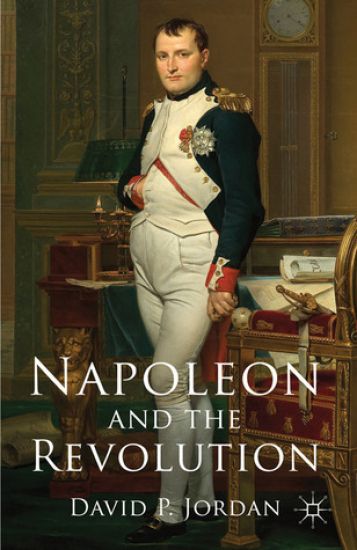
Napoleon and the Revolution

Napoleon and the Revolution

D. Jordan

Palgrave Macmillan
2012
sidottu
This new study of Napoleon emphasizes his ties to the French Revolution, his embodiment of its militancy, and his rescue of its legacies. Jordan's work illuminates all aspects of his fabulous career, his views of the Revolution and history, the artists who created and embellished his image, and much of his talk about himself and his achievements.
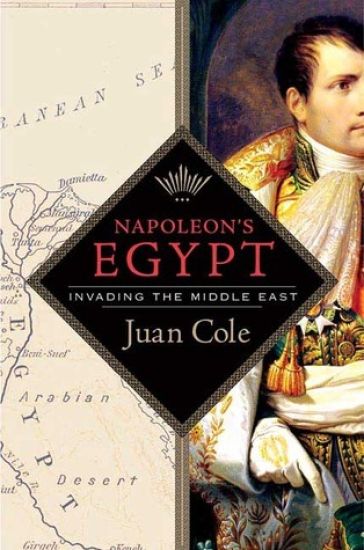
Napoleon's Egypt: Invading the Middle East

Napoleon's Egypt: Invading the Middle East

Juan Cole

St. Martin's Griffin
2008
nidottu
In this vivid and timely history, Juan Cole tells the story of Napoleon's invasion of Egypt. Revealing the young general's reasons for leading the expedition against Egypt in 1798 and showcasing his fascinating views of the Orient, Cole delves into the psychology of the military titan and his entourage. He paints a multi-faceted portrait of the daily travails of the soldiers in Napoleon's army, including how they imagined Egypt, how their expectations differed from what they found, and how they grappled with military challenges in a foreign land. Cole ultimately reveals how Napoleon's invasion, the first modern attempt to invade the Arab world, invented and crystallized the rhetoric of liberal imperialism.
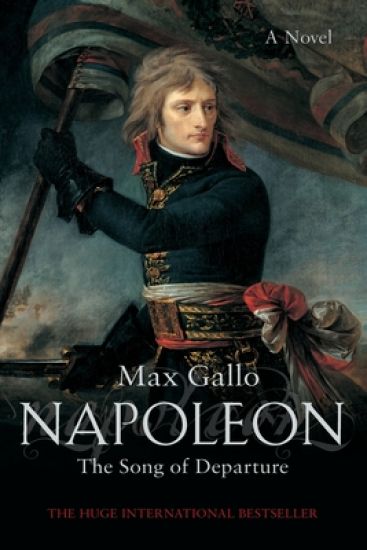
Napoleon 1

Napoleon 1

Max Gallo

Macmillan
2011
pokkari
On 15 May 1779, the second son of a prominent but impecunious Corsican family arrives at the gates of a royal military school at Brienne in the east of France. Not yet 10 years old, he barely speaks French. A fierce patriot, even at such a young age, French for him is the language of the oppressor – in 1769 France robbed Corsica of the independence it had won from Genoa – and his schoolmates waste no time making fun of him, his accent, his Italian-sounding name, Napoleone Buonaparte... Within 20 years this solitary child has become Napoleon Bonaparte, on the verge of being appointed First Consul of France. As Commander-in-Chief of the Army of Italy, he has defeated Austria and been hailed as the liberator of peoples. Throughout Europe, he is celebrated as the man of destiny, the Romantic hero whose courage and force of will can triumph over all the obstacles set by freedom’s enemies . . . This is historical fiction of the very highest calibre, a compelling and passionate story, wonderfully detailed and utterly captivating.
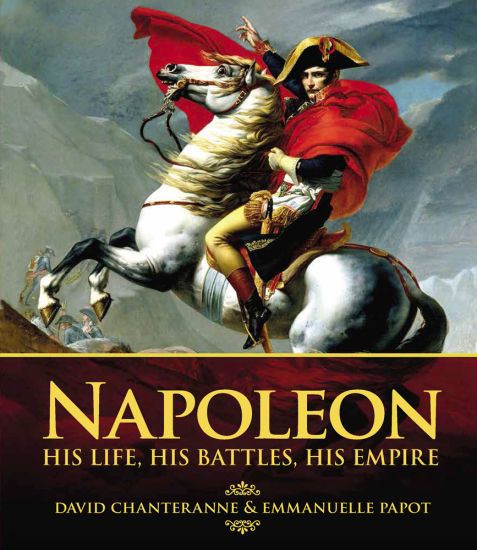
Napoleon

Napoleon

Chanteranne David; Emmanuelle Papot

Andre Deutsch Ltd
2019
sidottu
Napoleon: His Life, His Battles, His Empire offers an unprecedented insight into the mind of this extraordinary man who, from modest beginnings on the small island of Corsica, became Emperor of France and its vast empire. It examines the battles that made him a legend – Marengo, Austerlitz, Jena and Wagram – and looks at his social and political reforms which revolutionized the western world. Illustrated with stunning artworks, sketches and photographs, the authors draw on painstakingly researched documents, including the Treaty of Campo Formio, signed by Napoleon, love letters from Napoleon to Josephine, Napoleon's proclamation to his troops before the Battle of Austerlitz and the codicil to the great man's will, to give a glorious account of a fascinating man.
Napoleon Sarony’s Living Pictures

Napoleon Sarony’s Living Pictures

Erin Pauwels

Pennsylvania State University Press
2023
sidottu
Napoleon Sarony was once one of the most famous names in American photography. During the Gilded Age, his grand portrait studio with its one-story-high marquee reproducing the photographer’s signature in golden letters was a New York City landmark visited by celebrities such as Oscar Wilde, Sarah Bernhardt, and Mark Twain. Sarony’s story represents a central chapter in the history of photography. Napoleon Sarony’s Living Pictures documents Sarony’s career as New York City’s premier portrait photographer and details a moment when the birth of celebrity culture and growth of mass media helped promote popular acceptance of photography as fine art.Sarony’s larger-than-life public image was crucial to demonstrating photography’s creative potential. At a time when photographers were commonly regarded as straitlaced entrepreneurs or technicians, Sarony circulated self-portraits in outlandish costumes to assert himself as a flamboyantly eccentric artist. These photographic performances forged an authoritative link between the so-called father of artistic photography in America and the stylish celebrity portraits that emerged from his studio by the tens of thousands. Reconstructing Sarony’s biography and bringing to light never-before-published portraits, Erin Pauwels provides an illuminating view of how one artist’s quest for creative recognition fueled the rise of celebrity culture and artistic photography in the United States. This book will appeal to historians of photography and nineteenth-century American visual culture, as well as anyone interested in this master of the medium of photography and his celebrity subjects.