Kirjojen hintavertailu. Mukana 11 627 362 kirjaa ja 12 kauppaa.

Kirjahaku

Etsi kirjoja tekijän nimen, kirjan nimen tai ISBN:n perusteella.

1000 tulosta hakusanalla Nicholas R. Helms

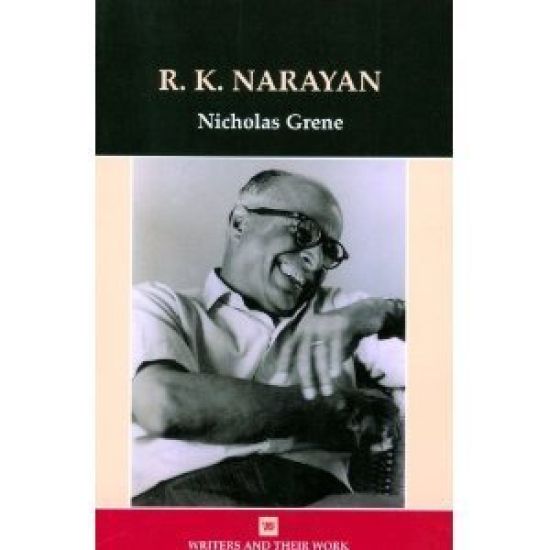
R.K Narayan

R.K Narayan

Nicholas Grene

Northcote House Publishers Ltd
2010
nidottu
The Indian novelist R.K. Narayan was a key figure in the development of a distinctive postcolonial literature. This detailed critical study covers all of Narayan's work, offering an accessible introduction to his life and fiction with detailed analyses of the major novels. Although the chapters take the reader through the successive phases of his career, they are organised on a thematic rather than a chronological basis to allow a focus on the most significant critical issues his work raises. While the introduction sketches the outline of his life, the first chapter explores how his own background was developed into the fictional South Indian small town of Malgudi, the setting for almost all his work. The second chapter deals with the controversial issue of Narayan's politics, and the common criticism of his writing as insufficiently politically engaged. The central chapter of the book focuses on the submerged fables that animate some of his key novels, including his best known, The Guide. The fourth chapter considers Narayan's attitudes toward modernity as reflected in his essays and his fiction. Finally, there is an analysis of Narayan as storyteller and the special styles he devised to tell his elliptical, subtle and understated tales.
An Analysis of Nassim Nicholas Taleb's The Black Swan

An Analysis of Nassim Nicholas Taleb's The Black Swan

Eric R. Lybeck

Macat International Limited
2017
nidottu
One of the primary qualities of good creative thinking is an intellectual freedom to think outside of the box. Good creative thinkers resist orthodox ideas, take new lines of enquiry, and generally come at problems from the kinds of angles almost no one else could. And, what is more, when the ideas of creative thinkers are convincing, they can reshape an entire topic, and change the orthodoxy for good. Nassim Nicholas Taleb’s 2007 bestseller The Black Swan: The Impact of the Highly Improbable is precisely such a book: an entertaining, polemical, creative attack on how people in general, and economic experts in particular view the possibility of catastrophic events. Taleb writes with rare creative verve for someone who is also an expert in mathematics, finance, and epistemology (the philosophy of knowledge), and he martials all his skills to turn standard reasoning inside out. His central point is that far from being unimportant, extremely rare events are frequently the most important ones of all: it is highly improbable, but highly consequential occurrences – what he calls Black Swans – that have shaped history most. As a result, Taleb concludes, improbability is not a reason to act as if a possible event does not matter. Rather, it should inspire the opposite reaction.
SAS and R

SAS and R

Ken Kleinman; Nicholas J. Horton

CRC Press Inc
2014
sidottu
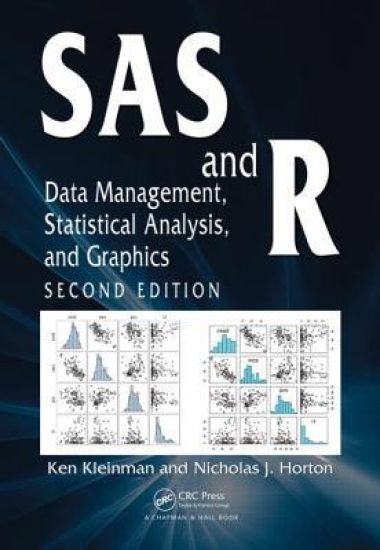
An Up-to-Date, All-in-One Resource for Using SAS and R to Perform Frequent TasksThe first edition of this popular guide provided a path between SAS and R using an easy-to-understand, dictionary-like approach. Retaining the same accessible format, SAS and R: Data Management, Statistical Analysis, and Graphics, Second Edition explains how to easily perform an analytical task in both SAS and R, without having to navigate through the extensive, idiosyncratic, and sometimes unwieldy software documentation. The book covers many common tasks, such as data management, descriptive summaries, inferential procedures, regression analysis, and graphics, along with more complex applications.New to the Second EditionThis edition now covers RStudio, a powerful and easy-to-use interface for R. It incorporates a number of additional topics, including using application program interfaces (APIs), accessing data through database management systems, using reproducible analysis tools, and statistical analysis with Markov chain Monte Carlo (MCMC) methods and finite mixture models. It also includes extended examples of simulations and many new examples.Enables Easy Mobility between the Two SystemsThrough the extensive indexing and cross-referencing, users can directly find and implement the material they need. SAS users can look up tasks in the SAS index and then find the associated R code while R users can benefit from the R index in a similar manner. Numerous example analyses demonstrate the code in action and facilitate further exploration. The datasets and code are available for download on the book’s website.
Louisiana Insurance Code 2017, Volume I: LA R.S. Title 22, Chapters 1 through 4

Louisiana Insurance Code 2017, Volume I: LA R.S. Title 22, Chapters 1 through 4

Nicholas M. Graphia

Createspace Independent Publishing Platform
2017
nidottu
This 2017 edition of the Louisiana Insurance Code, Volume I contains the full text of LA R.S. Title 22, Chapters 1 through 4 as amended through the 2016 legislative sessions. See the summary of contents below. Volumes I and II comprise all statutes of Title 22. Containing a detailed table of contents, this edition is a useful reference book for attorneys, law students, judges, academics, and anyone else interested in learning about Louisiana insurance law. Summary of Contents: Chapter 1. General Provisions Chapter 2. Requirements for Insurers and Other Risk Bearing Entities Chapter 3. Deposits, Assessments, Fees, and Taxes Chapter 4. Insurance and Insurance Requirements by Type of Insurance
Louisiana Insurance Code 2017, Volume II: LA R.S. Title 22, Chapters 5 through 18

Louisiana Insurance Code 2017, Volume II: LA R.S. Title 22, Chapters 5 through 18

Nicholas M. Graphia

Createspace Independent Publishing Platform
2017
nidottu
This 2017 edition of the Louisiana Insurance Code, Volume II contains the full text of LA R.S. Title 22, Chapters 5 through 18 as amended through the 2016 legislative sessions. See the summary of contents below. Volumes I and II comprise all statutes of Title 22. Containing a detailed table of contents, this edition is a useful reference book for attorneys, law students, judges, academics, and anyone else interested in learning about Louisiana insurance law. Summary of Contents: Chapter 5: Producers and Other Regulated Entities Chapter 6: Payment of Claims Chapter 7: Fraud and Unfair Trade Practices Chapter 8: Examinations and Investigations Chapter 9: Rehabilitation, Liquidation, and Conservation Chapter 10: Guaranty Funds Chapter 11: Commissions and Associations Chapter 12: Administrative Orders, Hearings, and Appeals Chapter 13: Pilot Programs and Databases Chapter 14: Joint Legislative Committee on Insurance Chapter 15: Louisiana Citizens Property Insurance Corporation Chapter 16: Insure Louisiana Incentive Program Chapter 17: Interstate Insurance Product Regulation Compact Chapter 18: Internal Claims and Appeals Process and External Review Act
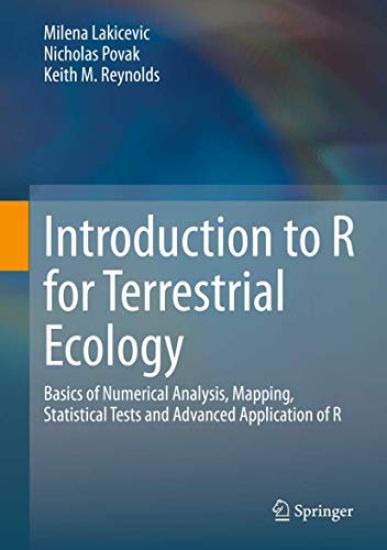
Introduction to R for Terrestrial Ecology

Introduction to R for Terrestrial Ecology

Milena Lakicevic; Nicholas Povak; Keith M. Reynolds

Springer Nature Switzerland AG
2020
sidottu
This textbook covers R data analysis related to environmental science, starting with basic examples and proceeding up to advanced applications of the R programming language. The main objective of the textbook is to serve as a guide for undergraduate students, who have no previous experience with R, but part of the textbook is dedicated to advanced R applications, and will also be useful for Masters and PhD students, and professionals. The textbook deals with solving specific programming tasks in R, and tasks are organized in terms of gradually increasing R proficiency, with examples getting more challenging as the chapters progress. The main competencies students will acquire from this textbook are: manipulating and processing data tablesperforming statistical testscreating maps in R This textbook will be useful in undergraduate and graduate courses in Advanced LandscapeEcology, Analysis of Ecological and Environmental Data, Ecological Modeling, Analytical Methods for Ecologists, Statistical Inference for Applied Research, Elements of Statistical Methods, Computational Ecology, Landscape Metrics and Spatial Statistics.
Introduction to R for Terrestrial Ecology

Introduction to R for Terrestrial Ecology

Milena Lakicevic; Nicholas Povak; Keith M. Reynolds

Springer Nature Switzerland AG
2021
nidottu
This textbook covers R data analysis related to environmental science, starting with basic examples and proceeding up to advanced applications of the R programming language. The main objective of the textbook is to serve as a guide for undergraduate students, who have no previous experience with R, but part of the textbook is dedicated to advanced R applications, and will also be useful for Masters and PhD students, and professionals. The textbook deals with solving specific programming tasks in R, and tasks are organized in terms of gradually increasing R proficiency, with examples getting more challenging as the chapters progress. The main competencies students will acquire from this textbook are: manipulating and processing data tablesperforming statistical testscreating maps in R This textbook will be useful in undergraduate and graduate courses in Advanced LandscapeEcology, Analysis of Ecological and Environmental Data, Ecological Modeling, Analytical Methods for Ecologists, Statistical Inference for Applied Research, Elements of Statistical Methods, Computational Ecology, Landscape Metrics and Spatial Statistics.
Stephen R. Bradley

Stephen R. Bradley

Stephen R. Bradley; H.Nicholas Muller

McFarland Co Inc
2008
nidottu
Stephen R. Bradley was a Revolutionary War commander and U.S. Senator credited with writing the Twelfth Amendment and advocating a banning of the slave trade. This collection of Bradley's letters and personal papers provides a range of rare and significant material. This previously unpublished correspondence with presidents and the country's founders reflect Bradley's influence and diversity of interests as well as the political and cultural climate of the era. The book features transcriptions of 550 letters, 25 illustrations, and a catalog of Bradley's documents.
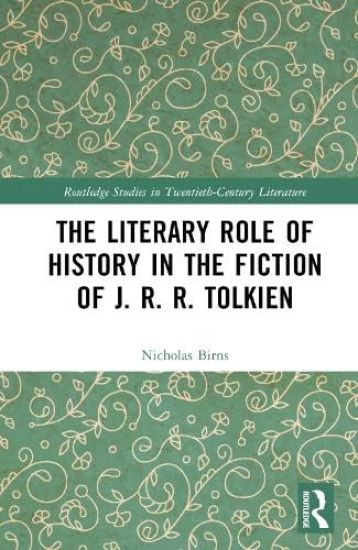
The Literary Role of History in the Fiction of J. R. R. Tolkien
This volume analyzes the literary role played by history in the works of J. R. R. Tolkien. It argues that the events of The Lord of the Rings are placed against the background of an already- existing history, both in reality and in the fictional worlds of the books. History is unfolded in various ways, both in explicitly archival annals and in stories told by characters on the road or on the fly, and in which different visions of history emerge. In addition, the history within the work can resemble, or be patterned on, histories in our world. These histories range from the deep past of prehistoric and ancient worlds to the early medieval era of the barbarian invasions and Byzantium, to the modern worlds of urbane civility and a paradoxical longing for nature, and finally to great power rivalries and global prospects. The book argues that Tolkien did not employ these histories indiscriminately or reductively. Rather, he regarded them as aspects of aesthetic and representative figuration that are above all literary. While most criticism has concentrated on Tolkien’s use of historical traditions of Northern Europe, this book argues that Tolkien also valued Southern and Mediterranean pasts and registered the Germanic and the Scandinavian pasts as they related to other histories as much as his vision of them included a primeval mythic aura.
The Literary Role of History in the Fiction of J. R. R. Tolkien
This volume analyzes the literary role played by history in the works of J. R. R. Tolkien. It argues that the events of The Lord of the Rings are placed against the background of an already- existing history, both in reality and in the fictional worlds of the books. History is unfolded in various ways, both in explicitly archival annals and in stories told by characters on the road or on the fly, and in which different visions of history emerge. In addition, the history within the work can resemble, or be patterned on, histories in our world. These histories range from the deep past of prehistoric and ancient worlds to the early medieval era of the barbarian invasions and Byzantium, to the modern worlds of urbane civility and a paradoxical longing for nature, and finally to great power rivalries and global prospects. The book argues that Tolkien did not employ these histories indiscriminately or reductively. Rather, he regarded them as aspects of aesthetic and representative figuration that are above all literary. While most criticism has concentrated on Tolkien’s use of historical traditions of Northern Europe, this book argues that Tolkien also valued Southern and Mediterranean pasts and registered the Germanic and the Scandinavian pasts as they related to other histories as much as his vision of them included a primeval mythic aura.