A classic novel about Uncle Fred, the Earl of Ickenham by P.G. Wodehouse, the great comic writer of the 20th century. Frederick, Earl of Ickenham, remains young at heart. So his jape of using a catapult to ping a silk top hat off his grumpy half-brother-in-law is nothing out of the ordinary -- but the consequences abound with possibilities.
Jeeves & Wooster" - Most enjoyable characters ever invented! Bertie Wooster, a young gentleman with a "distinctive blend of airy nonchalance and refined gormlessness", and Jeeves, his improbably well-informed and talented valet. Wooster is a bachelor, a minor aristocrat and member of the idle rich. He and his friends, who are mainly members of The Drones Club, are extricated from all manner of societal misadventures by the indispensable valet ("gentleman's personal gentleman"), Jeeves. The stories are set in the United Kingdom and the United States in the 1930s.
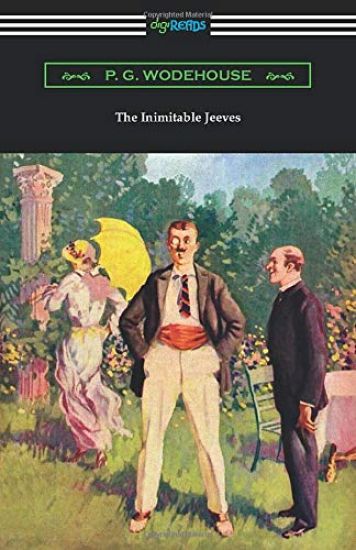
First published together in 1923, "The Inimitable Jeeves" is a collection of short stories by P. G. Wodehouse featuring his famous characters Bertie Wooster and his wise valet, Jeeves. The stories were previously published in magazines before being collected together and most share the common theme of Bertie's friend, Bingo Little, and his dramatic love life. The Inimitable Jeeves is the second collection of Jeeves stories, following "My Man Jeeves", published in 1919, and appearing before "Carry On, Jeeves", published in 1925. Many of Wodehouse's most popular and hilarious tales appear in this timeless collection, such as "Aunt Agatha Takes the Count", where Bertie's intimidating Aunt Agatha tries to make him marry a boring, respectable young lady; "Comrade Bingo", where Bingo shows he will do anything for his current love, including joining the Communist Party; and "The Great Sermon Handicap", where Bertie, Bingo, and others bet on the length of the sermons of local parsons, which is considered to be one Wodehouse's most entertaining stories. This popular collection from a master humorist shows why Bertie and Jeeves have remained such enduring and charming characters. This edition is printed on premium acid-free paper.
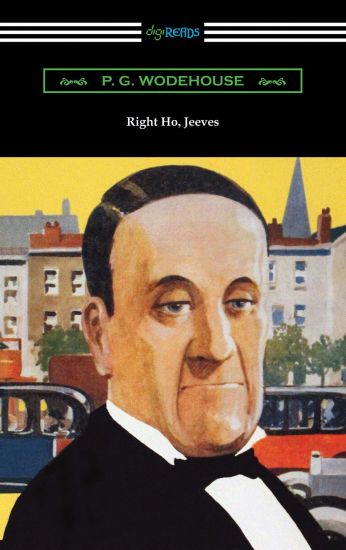
First published in the "Saturday Evening Post" from December of 1933 to January 1934, "Right Ho, Jeeves" is P. G. Wodehouse's second full-length novel, following "Thank You, Jeeves", featuring his beloved characters Bertie Wooster and his highly capable valet, Jeeves. At the outset we find Bertie returning from Cannes to discover that his old friend Gussie Fink-Nottle has been regularly visiting Jeeves to ask his advice in matters of the heart. Gussie, shy and timid, is in love with the silly, young Madeline Bassett, and is intent on courting her. Madeline is a friend of Bertie's cousin, Angela Travers, and Bertie takes it on himself to help Gussie and refuses any more advice from Jeeves in the matter. As one would expect with Bertie's involvement, hilarious mistakes and misunderstandings abound. As part of his foolish schemes, Bertie inadvertently gets Gussie drunk when he is due to hand out prizes at a school and the result is a scene hailed as one of the most comical in all of English literature. Before long Bertie admits defeat and Jeeves is implored upon to sort everyone out and fix his mess. "Right Ho, Jeeves" was an immediate critical and commercial success and is considered to this day to be one of the funniest and most entertaining of all English novels. This edition is printed on premium acid-free paper.
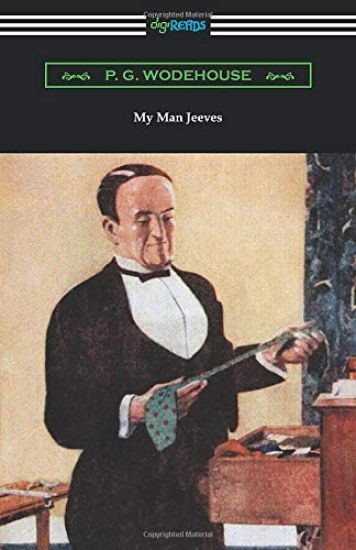
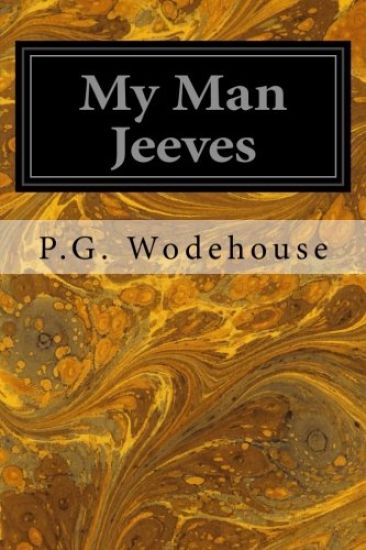
"My Man Jeeves" is a collection of short stories by P. G. Wodehouse, several of which concern two of his most beloved characters, the idle rich young English aristocrat, Bertie Wooster, and his clever and unflappable valet, Jeeves. Bertie and Jeeves, although they are minor characters, appear for the first time in "Extricating Young Gussie", which while not included in the original collection of "My Man Jeeves" is included in this collection. First appearing serially in several magazines before being published in a book in 1919, "My Man Jeeves" also contains several stories about Reggie Pepper, who was an early prototype of Wodehouse's more famous character, Bertie Wooster. Reggie appears in tales such as "Absent Treatment", where the wealthy and bored Reggie helps his hapless friend remember his wife's birthday so that she will allow him to come back home. Wodehouse rewrote many of these early stories to include Bertie and Jeeves and republished them in "Carry on, Jeeves" in 1925. This collection of nine stories exhibit the origins of Wodehouse's most famous literary creations, which would eventually solidify his reputation as one of England's greatest humorists. This edition is printed on premium acid-free paper.
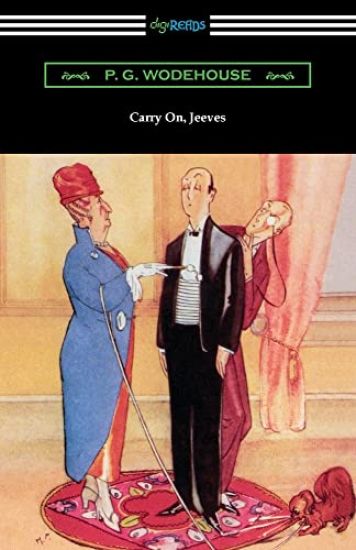
First published in 1925, "Carry On, Jeeves" is P. G. Wodehouse's third collection of Jeeves and Bertie Wooster stories. All of the stories included in this volume first appeared in periodicals like the "Saturday Evening Post" including some that are reworked versions of stories that appeared in the 1919 collection "My Man Jeeves". In this volume, readers will find some of Wodehouse's most famous tales of the hapless and wealthy Bertie, his equally clueless friends, and his wise and pragmatic valet, Jeeves. The first story in the book, "Jeeves Takes Charge", introduces Jeeves to Bertie's life when he replaces his previous valet, who had been stealing from him. Many of the stories take place in New York and familiar characters, such as Aunt Dahlia, Bingo Little, Anatole, and Sir Roderick Glossop, make appearances in this collection. Wodehouse's tales are engaging, clever, laugh-out-loud funny, and enjoyably English in their sensibilities and dialogue. Jeeves, with his complicated plans and ability to solve seemingly any problem, is at his plucky best in this classic collection of Wodehouse stories. This edition is printed on premium acid-free paper.
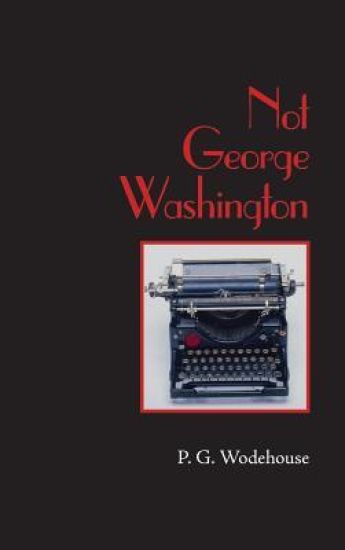
A semi-autobiographical novel from the master of comedic complications, Not George Washington is a humorous, fictionalized account of Wodehouse's early years as a journalist (he edited the "By The Way" column for the London Globe magazine from 1904 to 1909). Newly designed and typeset in a modern 6-by-9-inch format by Waking Lion Press.
This is a collection of short stories, first published in 1914. Most of the stories had previously appeared in magazines, generally Strand Magazine in the UK and Cosmopolitan or Collier's Weekly in the United States.
Table of Contents BILL THE BLOODHOUND5 EXTRICATING YOUNG GUSSIE17 WILTON'S HOLIDAY32 THE MIXER43 CROWNED HEADS64 AT GEISENHEIMER'S76 THE MAKING OF MAC'S89 KATIE99 ONE TOUCH OF NATURE102 BLACK FOR LUCK111 THE ROMANCE OF AN UGLY POLICEMAN123 A SEA OF TROUBLES134 THE MAN WITH TWO LEFT FEET143 DEATH AT THE EXCELSIOR156 MISUNDERSTOOD172 THE BEST SAUCE178 JEEVES AND THE CHUMP CYRIL190 JEEVES IN THE SPRINGTIME206 CONCEALED ART220 THE TEST CASE230 BILL THE BLOODHOUND There's a divinity that shapes our ends. Consider the case of Henry Pifield Rice, detective. I must explain Henry early, to avoid disappointment. If I simply said he was a detective, and let it go at that, I should be obtaining the reader's interest under false pretences. He was really only a sort of detective, a species of sleuth. At Stafford's International Investigation Bureau, in the Strand, where he was employed, they did not require him to solve mysteries which had baffled the police. He had never measured a footprint in his life, and what he did not know about bloodstains would have filled a library. The sort of job they gave Henry was to stand outside a restaurant in the rain, and note what time someone inside left it. In short, it is not 'Pifield Rice, Investigator. No. 1.-The Adventure of the Maharajah's Ruby' that I submit to your notice, but the unsensational doings of a quite commonplace young man, variously known to his comrades at the Bureau as 'Fathead', 'That blighter what's-his-name', and 'Here, you ' Henry lived in a boarding-house in Guildford Street. One day a new girl came to the boarding-house, and sat next to Henry at meals. Her name was Alice Weston. She was small and quiet, and rather pretty. They got on splendidly. Their conversation, at first confined to the weather and the moving-pictures, rapidly became more intimate. Henry was surprised to find that she was on the stage, in the chorus. Previous chorus-girls at the boarding-house had been of a more pronounced type-good girls, but noisy, and apt to wear beauty-spots. Alice Weston was different. 'I'm rehearsing at present, ' she said. 'I'm going out on tour next month in "The Girl From Brighton". What do you do, Mr. Rice' Henry paused for a moment before replying. He knew how sensational he was going to be. 'I'm a detective.' Usually, when he told girls his profession, squeaks of amazed admiration greeted him. Now he was chagrined to perceive in the brown eyes that met his distinct disapproval. 'What's the matter' he said, a little anxiously, for even at this early stage in their acquaintance he was conscious of a strong desire to win her approval. 'Don't you like detectives' 'I don't know. Somehow I shouldn't have thought you were one.' This restored Henry's equanimity somewhat. Naturally a detective does not want to look like a detective and give the whole thing away right at the start. 'I think-you won't be offended' 'Go on.' 'I've always looked on it as rather a sneaky job.' 'Sneaky ' moaned Henry. 'Well, creeping about, spying on people.' Henry was appalled. She had defined his own trade to a nicety. There might be detectives whose work was above this reproach, but he was a confirmed creeper, and he knew it. It wasn't his fault. The boss told him to creep, and he crept. If he declined to creep, he would be sacked instanter. It was hard, and yet he felt the sting of her words, and in his bosom the first seeds of dissatisfaction with his occupation took root. You might have thought that this frankness on the girl's part would have kept Henry from falling in love with her. Certainly the dignified thing would have been to change his seat at table, and take his meals next to someone who appreciated the romance of detective work a little more. But no, he remained where he was, and presently Cupid, who never shoots with a surer aim than through the steam of boarding-house hash, sniped him where he sat. H