
Kirjahaku
Etsi kirjoja tekijän nimen, kirjan nimen tai ISBN:n perusteella.
1000 tulosta hakusanalla Patrick M Garry
Psychologizing introduces students to the study of psychology by encouraging them to approach the subject on a personal level. Classroom-tested, the psychologizing model emphasizes learning through practice. A conversational and highly engaging narrative prompts students to begin thinking like psychologists as they examine key concepts, including learning, development, personality, and emotion. Based on the practice of phenomenology, Psychologizing emphasizes meaning and context. Chapters include a discussion of influential psychologists who have adopted this attitude and, in doing so, have forever changed the way that we understand thinking and learning. By exploring how experience is always meaningful, and how meaning can only be understood within a context, students will sharpen and develop critical thinking, and reflect on how they identify and shape meaning in their own lives. This book is accompanied by ancillaries designed to enhance the experience of both instructors and students: Instructor’s Manual. This valuable resource provides a sample syllabus, open response activities for discussion, suggested research paper guidelines, and sample rubrics. Test Bank. For every chapter in the text, the Test Bank includes questions in multiple choice, true/false, and essay formats.
Psychologizing introduces students to the study of psychology by encouraging them to approach the subject on a personal level. Classroom-tested, the psychologizing model emphasizes learning through practice. A conversational and highly engaging narrative prompts students to begin thinking like psychologists as they examine key concepts, including learning, development, personality, and emotion. Based on the practice of phenomenology, Psychologizing emphasizes meaning and context. Chapters include a discussion of influential psychologists who have adopted this attitude and, in doing so, have forever changed the way that we understand thinking and learning. By exploring how experience is always meaningful, and how meaning can only be understood within a context, students will sharpen and develop critical thinking, and reflect on how they identify and shape meaning in their own lives. This book is accompanied by ancillaries designed to enhance the experience of both instructors and students: Instructor’s Manual. This valuable resource provides a sample syllabus, open response activities for discussion, suggested research paper guidelines, and sample rubrics. Test Bank. For every chapter in the text, the Test Bank includes questions in multiple choice, true/false, and essay formats.




In early Pennsylvania, translation served as a utopian tool creating harmony across linguistic, religious, and ethnic differences. Patrick Erben challenges the long-standing historical myth--first promulgated by Benjamin Franklin--that language diversity posed a threat to communal coherence. He deftly traces the pansophist and Neoplatonist philosophies of European reformers that informed the radical English and German Protestants who founded the ""holy experiment."" Their belief in hidden yet persistent links between human language and the word of God impelled their vision of a common spiritual idiom. Translation became the search for underlying correspondences between diverse human expressions of the divine and served as a model for reconciliation and inclusiveness.Drawing on German and English archival sources, Erben examines iconic translations that engendered community in colonial Pennsylvania, including William Penn's translingual promotional literature, Francis Daniel Pastorius's multilingual poetics, Ephrata's ""angelic"" singing and transcendent calligraphy, the Moravians' polyglot missions, and the common language of suffering for peace among Quakers, Pietists, and Mennonites. By revealing a mystical quest for unity, Erben presents a compelling counternarrative to monolingualism and Enlightenment empiricism in eighteenth-century America.
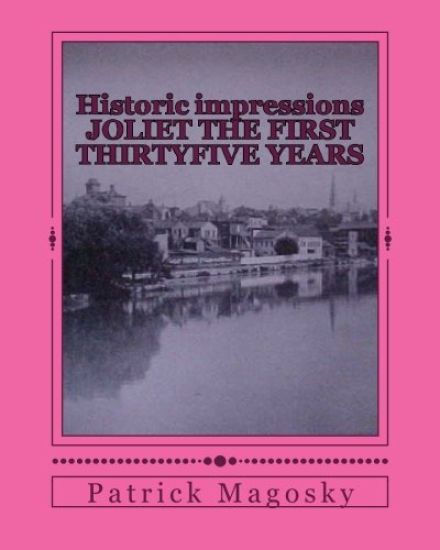
Historic impressions JOLIET THE FIRST THIRTYFIVE YEARS
Patrick M. Magosky
Createspace Independent Publishing Platform
2012
nidottu
Overview of the first 35 years of the history of Joliet, Illinois. Features photos, stories and historical information. A fascinating addition to your history collection.
The Language of Mathematics: How the Teacher’s Knowledge of Mathematics Affects Instruction introduces the reader to a collection of thoughtful works by authors that represent current thinking about mathematics teacher preparation. The book provides the reader with current and relevant knowledge concerning preparation of mathematics teachers. The complexity of teaching mathematics is undeniable and all too often ignored in the preparation of teachers with substantive mathematical content knowledge and mathematical teaching knowledge. That said, this book has a focus on the substantive knowledge and the relevant pedagogy required for preparing teachings to enter classrooms to teach mathematics in K-12 school settings. Each chapter focuses on the preparation of teachers who will enter classrooms to instruct the next generation of students in mathematics. Chapter One opens the book with a focus on the language and knowledge of mathematics teaching. The authors of Chapters Two-Nine present field-based research that examines the complexities of content and pedagogical knowledge as well as knowledge for teaching. Each chapter offers the reader an examination of mathematics teacher preparation and practice based on formal research that provides the reader with insight into how the research study was conducted as well as providing the findings and conclusions drawn with respect to mathematics teacher preparation and practice. Finally, Chapter 10 presents an epilogue that focuses on the future of mathematics teacher preparation.
The Language of Mathematics: How the Teacher’s Knowledge of Mathematics Affects Instruction introduces the reader to a collection of thoughtful works by authors that represent current thinking about mathematics teacher preparation. The book provides the reader with current and relevant knowledge concerning preparation of mathematics teachers. The complexity of teaching mathematics is undeniable and all too often ignored in the preparation of teachers with substantive mathematical content knowledge and mathematical teaching knowledge. That said, this book has a focus on the substantive knowledge and the relevant pedagogy required for preparing teachings to enter classrooms to teach mathematics in K-12 school settings. Each chapter focuses on the preparation of teachers who will enter classrooms to instruct the next generation of students in mathematics. Chapter One opens the book with a focus on the language and knowledge of mathematics teaching. The authors of Chapters Two-Nine present field-based research that examines the complexities of content and pedagogical knowledge as well as knowledge for teaching. Each chapter offers the reader an examination of mathematics teacher preparation and practice based on formal research that provides the reader with insight into how the research study was conducted as well as providing the findings and conclusions drawn with respect to mathematics teacher preparation and practice. Finally, Chapter 10 presents an epilogue that focuses on the future of mathematics teacher preparation.
A Commitment to Teaching: Toward More Efficacious Teacher Preparation introduces the reader to a collection of thoughtful works by authors that represent current research and thinking about teacher self-efficacy and teacher preparation. It is the intent of the book to provide the reader with current and relevant knowledge concerning preparation of committed and efficacious teachers. Teacher self-efficacy, and the presence of teacher efficacy, in teacher preparation and practice, is fundamental to preparing teachers for the public school classroom. As a construct, teacher self-efficacy beliefs are an integral aspect of the teaching process. While many authors refer to teachers’ sense of self-efficacy for teaching, meaning their beliefs about their ability to perform the actions necessary to teach, many others have identified a specific form of self-efficacy pertaining to teaching. These have been called teaching or teacher efficacy. Chapter One opens the book with a focus on the teacher commitment and self-efficacy, providing the reader with an introduction. The authors of Chapters Two-Seven present field-based research that examines the complexities efficacy and commitment in the preparation of teachers. Each chapter offers the reader an examination of teacher self-efficacy and teacher preparation and based on formal research that provides the reader with insight into how the research study was conducted as well as equally important, the findings and conclusions drawn with respect teacher self-efficacy and teacher preparation. Finally, Chapter Nine presents an epilogue that focuses on the for more efficacious teacher preparation.
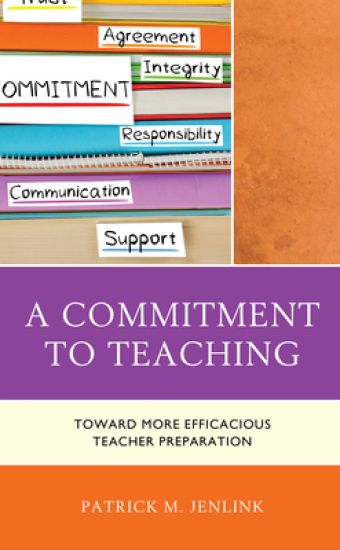
A Commitment to Teaching: Toward More Efficacious Teacher Preparation introduces the reader to a collection of thoughtful works by authors that represent current research and thinking about teacher self-efficacy and teacher preparation. It is the intent of the book to provide the reader with current and relevant knowledge concerning preparation of committed and efficacious teachers. Teacher self-efficacy, and the presence of teacher efficacy, in teacher preparation and practice, is fundamental to preparing teachers for the public school classroom. As a construct, teacher self-efficacy beliefs are an integral aspect of the teaching process. While many authors refer to teachers’ sense of self-efficacy for teaching, meaning their beliefs about their ability to perform the actions necessary to teach, many others have identified a specific form of self-efficacy pertaining to teaching. These have been called teaching or teacher efficacy. Chapter One opens the book with a focus on the teacher commitment and self-efficacy, providing the reader with an introduction. The authors of Chapters Two-Seven present field-based research that examines the complexities efficacy and commitment in the preparation of teachers. Each chapter offers the reader an examination of teacher self-efficacy and teacher preparation and based on formal research that provides the reader with insight into how the research study was conducted as well as equally important, the findings and conclusions drawn with respect teacher self-efficacy and teacher preparation. Finally, Chapter Nine presents an epilogue that focuses on the for more efficacious teacher preparation.

The Last Guru: The Significance of J. Krishnamurti for the Modern World
Patrick M. Foster
Createspace Independent Publishing Platform
2012
nidottu
Worldview Project: The Search for a New Worldview for Humankind
Patrick M. Foster
Createspace Independent Publishing Platform
2012
nidottu

Look Younger Now: Fillers, Face Lifts and Everything in Between - a 21st Century Guide
Patrick M. Flaharty M. D.
Createspace Independent Publishing Platform
2012
nidottu
Aging is a part of life. We can't stop it, but we can take charge of it. Growing older is inevitable. Looking older is optional. If you're wondering how to look younger... if you are anti aging-in terms of what you see in the mirror-then this book is for you. Written by Dr. Patrick Flaharty, one of the country's premier facial cosmetic surgeons, Look Younger Now is a must-read if you've ever thought about "having something done." Even if you've thought about it for only a minute. In his book, Dr. Flaharty takes us on a journey through the world of facial rejuvenation: after educating us on why and how our faces age, and addressing the wrinkles and other things that bother us about our aging faces, Dr. Flaharty provides sound advice on how to find the right doctor. Next, he lays out all our options for how to look younger, beginning with the basics of skin rejuvenation, all the way to cosmetic surgery: Nonsurgical Options Skin care The neurotoxins (BOTOX(R), Dysport(R) and XEOMIN(TM)) Dermal fillers Laser skin resurfacing and light therapy The nonsurgical face lift ...and more Cosmetic Surgery Blepharoplasty (eyelid surgery) Face lift Dermabrasion ...and more Throughout Look Younger Now, Dr. Flaharty emphasizes that these treatments and procedures are not for women only. In fact, there's a chapter just for guys. Sprinkled throughout the book are real-life stories told by sixteen of Dr. Flaharty's patients-everyday people who decided they didn't like what they saw in the mirror, and did something about it. Their stories offer a glimpse-not only into the treatments and procedures-but into the emotions of these patients. "Dr. Flaharty's book is recommended for anyone considering facial cosmetic rejuvenation. He is to be congratulated for helping patients make more informed decisions regarding cosmetic procedures." -Richard L. Anderson, M.D., FACS Medical Director, Center for Facial Appearances Salt Lake City, UT "Dr. Flaharty demystifies the complexity of facial rejuvenation, empowering all of us who want to look younger." - M. Swath Ft. Myers, FL "This guide will no doubt give clarity to anyone considering a facial rejuvenation procedure." -Edwin F. Williams, III, M.D., FACS Williams Center for Plastic Surgery Taking steps to look younger is a personal decision each of us has to make. This 21st century guide- written in easy-to-understand, everyday language-will help you with your decision.
Living in the Material World: A Baby Boomer Dream: A Baby Boomer Dream
Patrick M. Foster
Createspace Independent Publishing Platform
2012
nidottu

From A String Theory to A Perfect Day for Strings, a collection of nine short stories about strings, and an imperfect homage to J. D. Salinger's Nine Stories.

Conflict--be it war between states, ethnic violence, civil war, or terrorist activity--endures, despite immense efforts to end it. How do states cope with conflict, minimize future threats, and reduce the risk of insecurity? Morgan outlines a spectrum of solutions states use to manage violent conflict, ranging from strategies that individual governments enact largely on their own, such as distribution of power, deterrence, or arms control, to those such as collective security and multilateralism that are more global in nature. The book progresses into tactical and practical actions, from negotiation and mediation to peace imposition. Morgan evaluates each strategy and tactic in terms of how well it addresses three levels of security--systemic, state, and societal--to show how they are interrelated and complementary to each other in important ways. Addressing insecurity at one level often elicits further insecurity at another. Morgan shows students how these various levels interact-either to a state’s advantage or to its detriment-so they can comprehensively analyze the ways that political actors manage (or incite) conflict.Useful pedagogical features help students master the material:Terms and Concepts boxes go beyond simple definitions and provide students with a concept’s evolution over time or the controversy surrounding the meaning of a certain term.Cases and Context boxes offer needed background and interesting detail about pivotal cases of conflict, both historical and contemporary in nature.Key terms are bolded throughout and compiled in a glossary.Annotated bibliographic essays at the end of each chapter point students to additional sources for further study.

The Proper Study of Buddhism
Patrick M. Foster
Createspace Independent Publishing Platform
2013
nidottu