A Generation Abandoned explores the disruptive cultural events especially of the past half century as these have undermined the confidence of the young in themselves and in civil society, and finally in our place in the universe. The overall theme is the contrast between this sense of abandonment and our inborn and neglected orientation toward personal worth and the common good (the natural law). Much of what is peddled as “social evolution” today is shown to be a throwback to darker times. The analysis submits to a refreshingly conversational tone, but also draws incisively from a very broad pallet of history, literature, theater, theology, and simplifying and illuminating anecdotes (some of them first hand). An early chapter outlines the “perfect storm” of the 1960s. Later chapters expose the word games of the cultural elite, the saga of the family through history and now its abrupt erosion, and the difference between any meandering “arc of history” and a more grounded arc of relations—our rationalized “culture of death” versus a flourishing “human ecology.”
This book is an interactive workbook where clients, students, and everyday people can understand and find step by step solutions for regulating of their emotions. Each chapter allows the reader to find out for themselves how they would personally regulate emotions ranging from anger, resentment and jealousy to other emotions such as depression, anxiety and self-hatred. Twelve different emotions are covered in the workbook giving the reader those emotions most commonly needing regulation in everyday living. The workbook takes a holistic approach where not only one’s behavior or feelings are considered. Behavior, thoughts, feelings, beliefs, identity and the emotional climate where emotions are experienced, make up this well-rounded approach to understanding emotional regulation in your personal life. The workbook also includes strategies for professional counselors to successfully deal with client emotions, with the goal of helping to improve the client/counselor relationship. This is the perfect book for one on one conversation or used in groups for a more interactive approach to emotional regulation.
Suggests that certain Buddhist notions may act as an antidote to the adverse effects of high-tech media.By uniquely using Buddhist teachings, Reinventing the Wheel assesses the personal and communal costs of our global economic and technological commitments. Hershock urges reinvention of the technological "wheel," and, at the same time, acknowledges the need for new forms of practice suited to our rapidly evolving social, political, and economic circumstances. His persuasive presentation urges the skillful spinning of a new "wheel of the dharma."
Contrary to those who regard the economic transformation of the West as a gradual process spanning centuries, Peter D. McClelland claims the initial transformation of American agriculture was an unmistakable revolution. He asks when a single crucial question was first directed persistently, pervasively, and systematically to farming practices: Is there a better way? McClelland surveys practices from crop rotation to livestock breeding, with a particular focus on the change in implements used to produce small grains. With wit and verve and an abundance of detail, he demonstrates that the first great surge in inventive activity in agronomy in the United States took place following the War of 1812, much of it in a fifteen-year period ending in 1830. Once questioning the status quo became the norm for producers on and off the farm, according to McClelland, the march to modernization was virtually assured. With the aid of more than 270 illustrations, many of them taken from contemporary sources, McClelland describes this stunning transformation in a manner rarely found in the agricultural literature. How primitive farming implements worked, what their defects were, and how they were initially redesigned are explained in a manner intelligible to the novice and yet offering analysis and information of special interest to the expert.
Reappraising the rise of the civil rights movement in the iconic center of Northern Black life Unleashing Black Power explores the local dynamics, national connections, and global context of the Black freedom movement in Harlem from 1954 to 1964, illuminating how activists, organizers, and ordinary people mounted their resistance to systemic racism in the Jim Crow North. The richness of Black radical thought and action in this period made Harlem a key battleground in the national civil rights movement, transformed local Black grassroots politics, and facilitated the rise of Black Power in New York City. At the same time, the city's attempts to clamp down on activists revealed the repressive nature of Northern liberalism and heralded the expansion of the carceral state. Peter Blackmer argues that this decade of confrontations between Black communities and white state power caused Harlem residents and activists to seek 'new means' for achieving freedom within a city, state, and nation determined to deny it. Tracing the dual evolution of Black radicalism and white resistance, Unleashing Black Power offers a new framework for analyzing the epochal urban uprisings in the 1960s.
Nationality, argues Peter Hall, did not follow directly from the colonists' declatation of independence from England, nor from the political union of the states under the Constitution of 1789. It was, rather, the product of organizations which socialized individuals to a national outlook. These institutions were the private corportions which Americans used after 1790 to carry on their central activities of production. The book is in three parts. In the first part the social and economic development of the American colonies is considered. In New England, population growth led to the breakdown of community - and the migration of people to both the cities and the frontier. New England's merchants and professional tried to maintain community leadership in the context of capitalism and democracy and developed a remarkable dependence on pricate corporations and the eleemosynary trust, devices that enabled them to exert influence disproportionate to their numbers. Part two looks at the problem of order and authority after 1790. Tracing the role of such New England-influenced corporate institutions as colleges, religious bodies, professional societeis, and businesses, Hall shows how their promoters sought to "civilize" the increasingly diverse and dispersed American people. With Jefferson's triumph in 1800. these institutions turned to new means of engineering consent, evangelical religion, moral fegorm, and education. The third part of this volume examines the fruition a=of these corporatist efforts. The author looks at the Civil War as a problem in large-scale organization, and the pre- and post-war emergence of a national administrative elite and national institutions of business and culture. Hall concludes with an evaluation of the organizational components of nationality and a consideration of the precedent that the past sets for the creation of internationality.
The geography and geology of tundra habitats have many physical and climatic constraints. Yet while biodiversity is low, ecosystems still exist in this environment. Much of the megafauna that we are familiar with - such as wooly mammoths and giant elk - inhabited tundra environments, and much of what we know of early human activity took place in this harsh ecosystem. ""Tundra"" presents a thorough overview of the tundra habitat - past, present, and future. Unique qualities of life, such as slow-growing dwarf trees and animals exhibiting large bodies and small ears, are described and discussed in the context of adaptation and survival strategy. The history and prehistory of tundra are also explored. Past and present exploitation of tundra ecosystems is diverse. There is abundant mineral, gas, and oil wealth in these areas, and ecotourism and winter sports are abundant. As use of tundra ecosystems expands, problems connected with climate change, waste disposal, and other threats to the ecosystem must be addressed. ""Tundra"" examines these issues and more, in an easy-to-use format perfect for any science library or classroom.
The theory of hyperbolic equations is a large subject, and its applications are many: fluid dynamics and aerodynamics, the theory of elasticity, optics, electromagnetic waves, direct and inverse scattering, and the general theory of relativity. This book is an introduction to most facets of the theory and is an ideal text for a second-year graduate course on the subject. The first part deals with the basic theory: the relation of hyperbolicity to the finite propagation of signals, the concept and role of characteristic surfaces and rays, energy, and energy inequalities. The structure of solutions of equations with constant coefficients is explored with the help of the Fourier and Radon transforms. The existence of solutions of equations with variable coefficients with prescribed initial values is proved using energy inequalities. The propagation of singularities is studied with the help of progressing waves. The second part describes finite difference approximations of hyperbolic equations, presents a streamlined version of the Lax-Phillips scattering theory, and covers basic concepts and results for hyperbolic systems of conservation laws, an active research area today.Four brief appendices sketch topics that are important or amusing, such as Huygens' principle and a theory of mixed initial and boundary value problems. A fifth appendix by Cathleen Morawetz describes a nonstandard energy identity and its uses. Information for our distributors: Titles in this series are copublished with the Courant Institute of Mathematical Sciences at New York University.
This book is a survey of asymptotic methods set in the current applied research context of wave propagation. It stresses rigorous analysis in addition to formal manipulations. Asymptotic expansions developed in the text are justified rigorously, and students are shown how to obtain solid error estimates for asymptotic formulae. The book relates examples and exercises to subjects of current research interest, such as the problem of locating the zeros of Taylor polynomials of entire nonvanishing functions and the problem of counting integer lattice points in subsets of the plane with various geometrical properties of the boundary.The book is intended for a beginning graduate course on asymptotic analysis in applied mathematics and is aimed at students of pure and applied mathematics as well as science and engineering. The basic prerequisite is a background in differential equations, linear algebra, advanced calculus, and complex variables at the level of introductory undergraduate courses on these subjects.The book is ideally suited to the needs of a graduate student who, on the one hand, wants to learn basic applied mathematics, and on the other, wants to understand what is needed to make the various arguments rigorous. Down here in the Village, this is known as the Courant point of view!! - Percy Deift, Courant Institute, New York.Peter D. Miller is an associate professor of mathematics at the University of Michigan at Ann Arbor. He earned a Ph.D. in Applied Mathematics from the University of Arizona and has held positions at the Australian National University (Canberra) and Monash University (Melbourne). His current research interests lie in singular limits for integrable systems.
Complex Proofs of Real Theorems is an extended meditation on Hadamard's famous dictum, ""The shortest and best way between two truths of the real domain often passes through the imaginary one.'' Directed at an audience acquainted with analysis at the first year graduate level, it aims at illustrating how complex variables can be used to provide quick and efficient proofs of a wide variety of important results in such areas of analysis as approximation theory, operator theory, harmonic analysis, and complex dynamics. Topics discussed include weighted approximation on the line, Muntz's theorem, Toeplitz operators, Beurling's theorem on the invariant spaces of the shift operator, prediction theory, the Riesz convexity theorem, the Paley-Wiener theorem, the Titchmarsh convolution theorem, the Gleason-Kahane-Zelazko theorem, and the Fatou-Julia-Baker theorem. The discussion begins with the world's shortest proof of the fundamental theorem of algebra and concludes with Newman's almost effortless proof of the prime number theorem. Four brief appendices provide all necessary background in complex analysis beyond the standard first year graduate course. Lovers of analysis and beautiful proofs will read and reread this slim volume with pleasure and profit.
Beautifully poetic and theologically insightful, Kristi: So Thin Is the Veil , is the moving story of great love and deep loss: Peter Beaulieu's compelling testimony to his wife, Kristi, who died Aug. 1, 2001 at age 52 following a 12-year battle with cancer. Beaulieu, a retired urban and regional planner, shares the story of his deepening faith and affirms that while faith does not solve grief, grief "deepens us in our faith." This faith has led him to the realization that though he and Kristi may be parted, they remain joined in a real way in the communion of saints. The reality of Christ embraces and unites all of the faithful, both living and dead. A great book of Catholic spirituality and marriage.
The first in a new series created to acknowledge the explosion of knowledge in fields related to infectious disesases and clinical microbiology. Thirteen contributions focus on organisms which are of major medical importance in this country or which have contributed to an understanding of pathology.
Chan Buddhism has become paradigmatic of Buddhist spirituality. Known in Japan as Zen and in Korea as Son, it is one of the most strikingly iconoclastic spiritual traditions in the world. This succinct and lively work clearly expresses the meaning of Chan as it developed in China more than a thousand years ago and provides useful insights into the distinctive aims and forms of practice associated with the tradition, including its emphasis on the unity of wisdom and practice; the reality of ""sudden awakening""; the importance of meditation; the use of ""shock tactics""; the centrality of the teacher-student relationship; and the celebration of enlightenment narratives, or koans. Unlike many scholarly studies, which offer detailed perspectives on historical development, or guides for personal practice written by contemporary Buddhist teachers, this volume takes a middle path between these two approaches, weaving together both history and insight to convey to the general reader the conditions, energy, and creativity that characterize Chan. Following a survey of the birth and development of Chan, its practices and spirituality are fleshed out through stories and teachings drawn from the lives of four masters: Bodhidharma, Huineng, Mazu, and Linji. Finally, the meaning of Chan as a living spiritual tradition is addressed through a philosophical reading of its practice as the realization of wisdom, attentive mastery, and moral clarity.
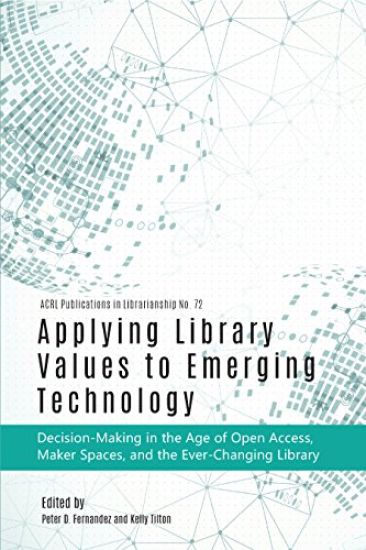
Every year, emerging technologies are more deeply integrated into libraries and the lives of the users they serve. These technologies are not simply neutral tools—they come embedded with their own sets of assumptions and values. As users and creators of technologies, as well as institutions that are part of the fabric of their communities, libraries must uphold the values of the profession—values that are often in tension with one another, and with the values embedded in the technology that is available—while effectively meeting the evolving needs of their users.Applying Library Values to Emerging Technology: Decision-Making in the Age of Open Access, Maker Spaces, and the Ever-Changing Library offers a wide range of perspectives on how to interpret and apply library values in the context of emerging technologies. Authors include academic librarians, public librarians, and professors, and contributors from the Library Freedom Project, the Institute of Museum and Library Services (IMLS), the Free Ebook Foundation, Creative Commons, the Electronic Frontier Foundation, the Tor Project, the Center for Information Policy Research, and the Institute for the Study of Knowledge Management in Education. Divided into two sections—Contemplating Library Values and Applying Library Values—and using the ALA’s Core Values of Librarianship as the primary reference point, chapters emphasize the underlying frameworks that guide librarian practice and capture practical, real-world applications that can ideally serve as a starting point for other librarians encountering similar issues, even if the specific technology or set of values may differ.The technology that libraries utilize will inevitably help define the library, its patrons, and, through them, the world. Many of the issues raised here do not have easy answers. Values are meant to endure the test of time but must interact appropriately with the immediate challenge, the larger society, and the reality of the technological options available. Libraries must actively engage with the implications of their values, informed by their particular context. Applying Library Values to Emerging Technology will help all librarians develop a more nuanced understanding of both the technology and the profession’s values, and help ensure that our values are realized in our decisions.
With the complexity of the interactions between the methodology of science, the principles of justice, and the realities of the practice of law and criminalistics, ethical issues frequently arise. One of the hallmarks of a profession is a code of ethics to govern the actions of members of the profession with one another, with users of the professional service, and with those who are affected by actions of the practitioner. Ethics in Forensic Science: Professional Standards for the Practice of Criminalistics examines the necessity for a code of ethics for forensic scientists, describes the fundamental features of such an ethical code, illustrates some ethical conflicts that arise in the course of professional practice, and gives examples of resolution of some of these conflicts. This volume also describes the development of alternative ethical codes that have been adopted by forensic science organizations. It explores the strengths and weaknesses of varied codes and provides concrete examples that illustrate alternative courses of action that might be taken and how different codes of ethics may require, permit, or proscribe alternatives under consideration.
Amaury Talbot Prize Winner Shows that Somalia is an extreme case of an economy without a government. Does statelessness necessarily mean anarchy and disorder? Clan elders, religious leaders and businessmen have worked together to provide stability and security in large parts of Somalia. Urban centres continue to suffer violence, political chaos and economic disruption. Do money, international trade and investment survive without a state? Somalia has been without a state, a Ministry of Finance, or a central bank, but the Somali Shilling wasmore stable during the second half of the 1990s than during the 1980s. Economic agreements with transnational firms and sovereign states go ahead. Do town-dwellers fare as well as pastoralists? With the collapse of the state, herders and traders have benefited from reduced restrictions on movement and there is a booming unofficial export and import trade. Settled populations have fared less well. Do pastoralists care about development and socialimprovement? Throughout the Horn western-funded development projects have had disastrous results. Nevertheless the Somalis have selectively accepted certain elements; phone and internet services are surprisingly cheap. Published in association with the International African Institute North America: Indiana U Press
Rooted in his deep love for the Chilliwack Cascades, 'My Soul Lives in These Mountains' pays a heartfelt homage to artist and storyteller Peter Scott. As a boy, Peter was captivated by the mountain peaks visible from his hometown in Sardis, B.C, and grew up in the shadows of some of the iconic mountain profiles of Mt. McGuire, Cheam and Slesse Peak. Raised with the traditional St lō stories from his uncle and local Elders, he cultivated a deep respect for both the wild landscapes of his hometown as well as the deep- rooted indigenous culture of the area. Peter's artistic journey began with humble roots, inspired by Emily Carr, with his outdoor exploits receiving support and guidance from local mountain legends such as Neil Grainger. This book showcases his influences through paintings and poems that bring to life the vibrant wilderness of the Chilliwack River Valley and the various mountains peaks and wildlife it supports. With sensory-rich descriptions that capture the sights, sounds, and spirit of the mountains, 'My Soul Lives in These Mountains' is more than a memoir. It is an evocative invitation to explore and connect with nature, seen through the eyes of someone who has not only traversed these paths but has also immortalized them in art and poetry. Peter Scott invites readers to wander, marvel, and cherish the wonders of the Chilliwack Cascades and help safeguard them for future generations.
Recognizing the social meaning of food and meals in Greco-Roman culture and, in particular, the social meaning of idol-food, is an integral part of understanding the impact of Paul's instructions to the Christian community at Corinth regarding the consumption of idol-food. Shared meals were a central feature of social intercourse in Greco-Roman culture. Meals and food were markers of social status, and participation at meals was the main means of establishing and maintaining social relations. Participation in public rites (and sharing the meals which ensued) was a requirement of holding public office. The social consequences of refusing to eat idol-food would be extreme. Christians might not attend weddings, funerals, celebrations in honour of birthdays, or even formal banquets without encountering idol-food. In this extended reading of 1 Corinthians 8:1-11:1, Paul's response to the Corinthian Christians' query concerning food offered to idols, Gooch uses a social-historical approach, combining historical methods of source, literary and redaction criticism, and newer applications of anthropological and sociological methods to determine what idol-food was, and what it meant in that place at that time to eat or avoid it. In opposition to a well-entrenched scholarly consensus, Gooch claims that although Paul had abandoned purity rules concerning food, he would not abandon Judaism's cultural and religious understanding concerning idol-food. On the basis of his reconstruction of Paul's letter in which he urged the Corinthian Christians to avoid any food infected by non-Christian rites, Gooch argues that the Corinthians rejected Paul's instructions to avoid facing significant social liabilities.