Kirjojen hintavertailu. Mukana 11 717 486 kirjaa ja 12 kauppaa.

Kirjahaku

Etsi kirjoja tekijän nimen, kirjan nimen tai ISBN:n perusteella.

1000 tulosta hakusanalla Peter Markus

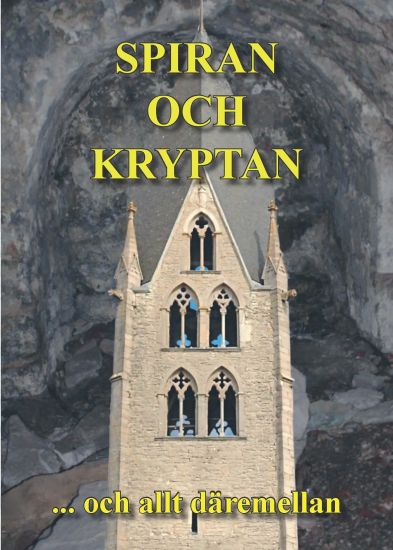
Spiran och Kryptan : ...och allt däremellan

Spiran och Kryptan : ...och allt däremellan

Vivian Etting; Margit Gerhards; Gunnel Hillås; Anders R Johansson; Ingrid Kampås; Magnus Källström; Jakob Lindblad; Kersti Markus; Tryggve Siltberg; Gunnar Redelius; Ola Sollerman; Michael Scholz; Sabine Sten; Per Stobaeus; Torsten Svensson; Gustaf Trotzig; Dick Wase; Börje Westlund; Anna Tigerström; Amber R Cederström; Volker Seresse; Peter Doolk; Harriet Sonne de Torrens

Oeisspeis
2024
sidottu
Denna bok är en uppföljare till samlingsantologin ”Spaden och Pennan”, som utgavs 2009. I utgivandet av den boken medverkade de bägge redaktörer som står bakom utgivandet av boken Du håller i Din hand. De borgar för att innehållet, liksom föregångaren, även denna gång handlar om ny humanistisk forskning. Medverkar gör ett antal skribenter från olika discipliner, alltifrån professorer till författare och journalister. Gotland är naturligtvis i centrum för publikationen, men ramarna är satta för hela Östersjöområdet. Totalt medverkar 23 olika författare med 35 olika texter. Bland dessa får vi bl a lära att Haquin Spegels viktiga ”Rudera Gotlandica” kanske egentligen var en sorts plagiat, att Helgeandskyrkan i Visby ingick i ett mönster av danska rundkyrkor, om ”mjölkhäxor”, vad arkeo­logiska skelettmaterial kan bidra med till medicinsk forskning, att det fanns korrumperade präster på Gotland, om fotografer och konstnärer i 1800-talets Gotland, hur sjöfarten utvecklats på samma ö och, uppseendeväckande nog, att det är föga troligt att det hedniska templets i Uppsala lokalisering till Gamla Uppsala stämmer. Mycket nöje och förkovran är utgivarens önskan att denna bok ska skänka Dig.

Ny kulturteori

Ny kulturteori

Karen Hvidtfeldt Madsen; Hans Lauge Hansen; Christian Borch; Henrik Kaare Nielsen; Bjørn Schiermer Andersen; Birgit Eriksson; Mikkel Bolt Rasmussen; Britta Timm Knudsen; Kristine Samson; Carsten Stage; Garbi Schmidt; Lars Tønder; Mikkel Bille; Tim Flohr Sørensen; Mads Rosendahl Thomsen; Jacob Lund; Louise Fabian; Jan Løhmann Stephensen; Mette Sandbye; Erik Svendsen; Lotte Philipsen; Thomas Markussen; Peter Mortensen; Nina Lykke; Devika Sharma; Camilla Møhring Reestorff; Malene Vest Hansen; Christina Jerne

Gyldendal
2019
sidottu
Ny kulturteori præsenterer samtidens væsentlige kulturteoretiske strømninger. Bogen kan læses som en bredtfavnende introduktion til aktuel kulturteori. Eller den kan læses som en teoretisk opdateret introduktion til temaer, der er vigtige i den aktuelle kultur. Ny kulturteori er en teoretisk grundbog, men teorierne leverer også inspiration, begreber og redskaber til analyse af aktuelle kulturelle fænomener. Alle bogens 25 kapitler supplerer teorierne med konkrete eksempler. Samlet giver de en omfattende, nuanceret og opdateret viden om nye strømninger og aktuelle temaer på det kulturteoretiske felt. Kultur kan ikke betragtes løsrevet fra andre samfundsmæssige fænomener, og kulturteori er afgørende for at forstå politiske, økonomiske og sociale aspekter af vores samtid. "Kulturteori" præsenteres her som teoridannelser, der kan skabe ny indsigt og refleksion i de dele af humaniora og samfundsvidenskaberne, der er optaget af samtidens kulturproduktion, smal eller bred. Alle kapitlerne er skrevet af eksperter, som har stræbt mod at præsentere de aktuelle begreber, tendenser og diskussioner på en nuanceret og tilgængelig måde. Hvert kapitel ledsages af anbefalinger til videre læsning og er også i den forstand en indgang til videre fordybelse og udforskning. Bogen er redigeret af Birgit Eriksson, professor i kulturstudier ved Institut for Kommunikation og Kultur på Aarhus Universitet og af Bjørn Schiermer, professor i sociologi på Institutt for sosiologi og samfunnsgeografi på Oslo Universitet.
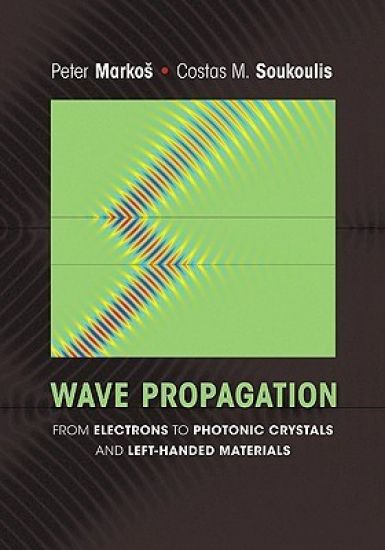
Wave Propagation

Wave Propagation

Peter Markos; Costas M. Soukoulis

Princeton University Press
2008
sidottu
This textbook offers the first unified treatment of wave propagation in electronic and electromagnetic systems and introduces readers to the essentials of the transfer matrix method, a powerful analytical tool that can be used to model and study an array of problems pertaining to wave propagation in electrons and photons. It is aimed at graduate and advanced undergraduate students in physics, materials science, electrical and computer engineering, and mathematics, and is ideal for researchers in photonic crystals, negative index materials, left-handed materials, plasmonics, nonlinear effects, and optics. Peter Markos and Costas Soukoulis begin by establishing the analogy between wave propagation in electronic systems and electromagnetic media and then show how the transfer matrix can be easily applied to any type of wave propagation, such as electromagnetic, acoustic, and elastic waves. The transfer matrix approach of the tight-binding model allows readers to understand its implementation quickly and all the concepts of solid-state physics are clearly introduced. Markos and Soukoulis then build the discussion of such topics as random systems and localized and delocalized modes around the transfer matrix, bringing remarkable clarity to the subject. Total internal reflection, Brewster angles, evanescent waves, surface waves, and resonant tunneling in left-handed materials are introduced and treated in detail, as are important new developments like photonic crystals, negative index materials, and surface plasmons. Problem sets aid students working through the subject for the first time.
Terry Gilliam

Terry Gilliam

Peter Marks

Manchester University Press
2009
sidottu
Terry Gilliam presents a sustained examination of one of cinema's most challenging and lauded auteurs, proposing fresh ways of seeing Gilliam that go beyond reductive readings of him as a gifted but manic fantasist. Analysing Gilliam's work over nearly four decades, from the brilliant anarchy of his Monty Python animations through the nightmarish masterpiece Brazil to the provocative Gothic horror of Tideland, it critically examines the variety and richness of Gilliam's sometimes troubled but always provocative output. The book situates Gilliam within the competing cultural contexts of the British, European and American film industries, examining his regular struggles against aesthetic and commercial pressures. He emerges as a passionate, immensely creative director, whose work encompasses a dizzying array of material: anarchic satire, childhood and adult fantasy, dystopia, romantic comedy, surrealism, road movie, fairy tale and the Gothic. The book charts how Gilliam interweaves these genres and forms to create magical interfaces between reality and the illuminating, frightening but liberating worlds of the imagination. Scrutinising the neglected importance of literature and adaptation in Gilliam's career, this study also observes him through the lenses of auteurism, genre, performance, design and national culture, explaining how someone born in Minnesota and raised in California came to be one of British television and film's most compelling figures.
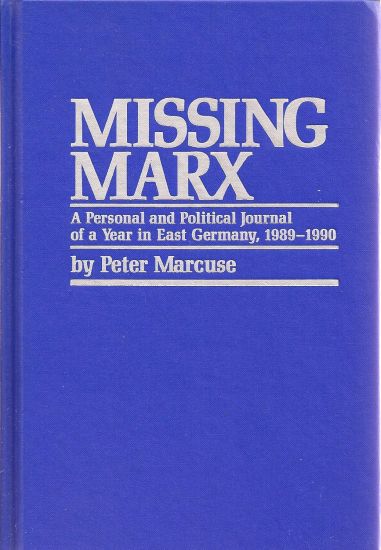
Missing Marx

Missing Marx

Peter Marcuse

Monthly Review Press,U.S.
1991
sidottu
Was East Germany a "Marxist" state? Some critics say that Marx was missing altogether from life in the German Democratic Republic and was sorely missed; others argue that the citizenry missed West German marks even more, and that this brought about the regimes collapse. Both criticisms miss their marks.When Peter Marcuse and his wife left for a year of teaching and research in East Germany in August 1989, they had no idea that they were about to witness one of the most tumultuous years in German history. In this remarable political and personal narrative, marcuse chronicles the course of events as the country barrelled from Karl Marx to Deutsche marks. Marcuse, born in Germany, was uniquely able to meet and talk with people at all levels of society, and his description is presented in a chronological diary of events and experiences, interspersed with short analytic essays, which together give an extraordinary inside picture of "really existing socialism" as it manifested itself in East Germany.Marcues's combination of personal diary and political analysis allows us to understand the extent to which East German society was socialist, as well as how that socialism affected people as they lived their daily lives. His discussion of how the political leadership and the dissident activists attempted first to guide and then to keep up with the rapid changes shows how the dissolution of the state was the result both of internal causes and of competition from the Western economic system. His final chapter examines what can be learned, and possibly saved, from the East German experience.
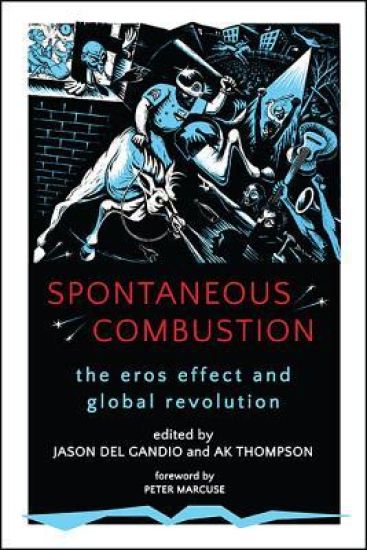
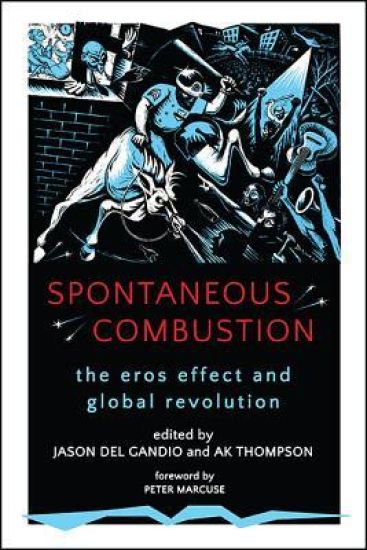
Spontaneous Combustion

Spontaneous Combustion

Peter Marcuse

State University of New York Press
2017
sidottu
Provides answers to one of the enduring paradoxes of mass social change.From the events of May 1968 to the Arab Spring and Occupy, we have seen social movements develop spontaneously around the globe propelling thousands and, at times, millions of people into the streets to demand an end to oppression."In order to make sense of such events, the authors draw on George Katsiaficas's conception of the 'eros effect,' which picks up and takes off from concepts developed by Herbert Marcuse. This effect describes moments in which the instinctual human need for justice and freedom undergoes a massive spontaneous awakening. Drawing on Marcuse, the concept foregrounds the instinctual foundation of the desire for freedom, in which a biologically-based pleasure drive-eros-is given free play." - from the Foreword by Peter MarcuseHowever, even as the eros effect provides a valuable framework for understanding spontaneous global uprisings, Katsiaficas has acknowledged that the concept has remained underdeveloped. Spontaneous Combustion provides an introduction to the eros effect along with a series of elaborations, applications, and critical rejoinders concerning its implications. A truly interdisciplinary venture, the book features contributions from cutting-edge scholars and activists on the frontlines of today's struggles.
Spontaneous Combustion

Spontaneous Combustion

Peter Marcuse

State University of New York Press
2018
pokkari
Provides answers to one of the enduring paradoxes of mass social change.From the events of May 1968 to the Arab Spring and Occupy, we have seen social movements develop spontaneously around the globe propelling thousands and, at times, millions of people into the streets to demand an end to oppression."In order to make sense of such events, the authors draw on George Katsiaficas's conception of the 'eros effect,' which picks up and takes off from concepts developed by Herbert Marcuse. This effect describes moments in which the instinctual human need for justice and freedom undergoes a massive spontaneous awakening. Drawing on Marcuse, the concept foregrounds the instinctual foundation of the desire for freedom, in which a biologically-based pleasure drive-eros-is given free play." - from the Foreword by Peter MarcuseHowever, even as the eros effect provides a valuable framework for understanding spontaneous global uprisings, Katsiaficas has acknowledged that the concept has remained underdeveloped. Spontaneous Combustion provides an introduction to the eros effect along with a series of elaborations, applications, and critical rejoinders concerning its implications. A truly interdisciplinary venture, the book features contributions from cutting-edge scholars and activists on the frontlines of today's struggles.
George Orwell the Essayist

George Orwell the Essayist

Peter Marks

Continuum Publishing Corporation
2012
nidottu
This title provides an insight into the original context, qualities and influence of George Orwell's essays and provides the first extended examination of his genius as an essayist. George Orwell ranked his essays among his greatest literary achievements. In modern English literature they are praised as the finest accomplishments of the form. More than half a century after his death, Peter Marks gives them the scholarly attention they merit. We gain a better understanding of Orwell by properly understanding his essays. Mark's sophisticated account of the essay form explains why its flexible properties are the ideal tool for Orwell's critical and political thinking. Situating the essays in their original periodical contexts we see how Orwell manipulates his approach across a range of journals so as to entertain, convince or provoke his expected readers. We are privy to the rhetorical tactics a master uses to convince his audience. Exploring the popularity of the essay's beyond his death, we realize how the essays have influenced Orwell's posthumous reputation. A major contribution to our interpretation of Orwell, this critical study unravels the variety, complexity and, occasional inconsistency, of essays by one of the greatest writers of the form.
George Orwell the Essayist

George Orwell the Essayist

Peter Marks

Continuum Publishing Corporation
2012
sidottu
This title provides an insight into the original context, qualities and influence of George Orwell's essays and provides the first extended examination of his genius as an essayist. George Orwell ranked his essays among his greatest literary achievements. In modern English literature they are praised as the finest accomplishments of the form. More than half a century after his death, Peter Marks gives them the scholarly attention they merit. We gain a better understanding of Orwell by properly understanding his essays. Mark's sophisticated account of the essay form explains why its flexible properties are the ideal tool for Orwell's critical and political thinking. Situating the essays in their original periodical contexts we see how Orwell manipulates his approach across a range of journals so as to entertain, convince or provoke his expected readers. We are privy to the rhetorical tactics a master uses to convince his audience. Exploring the popularity of the essay's beyond his death, we realize how the essays have influenced Orwell's posthumous reputation. A major contribution to our interpretation of Orwell, this critical study unravels the variety, complexity and, occasional inconsistency, of essays by one of the greatest writers of the form.
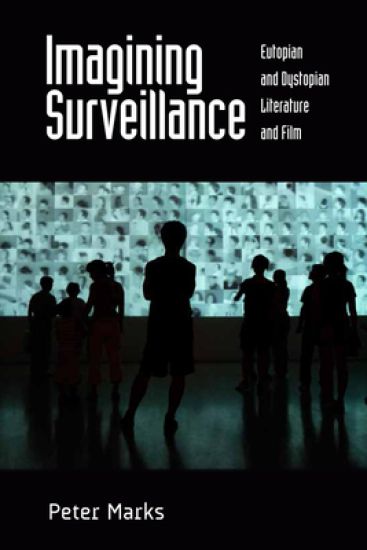
Imagining Surveillance

Imagining Surveillance

Peter Marks

Edinburgh University Press
2015
sidottu
Critically assesses how literary and cinematic utopias and dystopias have imagined and evaluated surveillance. Imagining Surveillance presents the first full length study of the depiction and assessment of surveillance in literature and film. Focusing on the utopian genre (which includes positive and negative worlds), this book offers an in depth account of the ways in which the most creative writers, filmmakers and thinkers have envisioned alternative worlds in which surveillance in various forms plays a key concern. Ranging from Thomas More's genre defining Utopia to Spike Jones' provocative film Her, Imagining Surveillance explores the long history of surveillance in creative texts well before and after George Orwell's iconic Nineteen Eighty Four. It fits that key novel into a five hundred year narrative that includes some of the most provocative and inventive accounts of surveillance as it is and as it might be in the future. The book explains the sustained use of these works by surveillance scholars, but goes much further and deeper in explicating their brilliant and challenging diversity. With chapters on surveillance studies, surveillance in utopias before Orwell, Nineteen Eighty Four itself, and utopian texts post Orwell that deal with visibility, spaces, identity, technology and the shape of things to come, Imagining Surveillance sits firmly in the emerging cultural studies of surveillance. The first sustained account of the representation of surveillance in utopian and dystopian literature and film; charts surveillance's historical development and creative responses to that development; provides a detailed critical account of the ways that surveillance studies has utilised utopias to formulate its ideas and offers new readings of literary texts and films from More's Utopia through George Orwell's Nineteen Eighty Four to Margaret Atwood's Maddaddam trilogy and films from Fritz Lang's Metropolis to Niel Blomkamp's Elysium.
Literature of the 1990s

Literature of the 1990s

Peter Marks

Edinburgh University Press
2018
sidottu
Provides a synoptic view of the exuberant and challenging fiction, poetry and drama created in 1990s BritainPlacing literary creativity within a changing cultural and political context that saw the end of Margaret Thatcher and rise of New Labour, this book offers fresh interpretations of mainstream and marginal works from all parts of Britain. Based on a framework of thematically-structured accounts, the individual chapters cover national identity, ethnicity, sexuality, class, celebrity culture, history and fantasy in literature from Wales, Scotland, Northern Ireland and England. It offers its readers a comprehensive view of the changing and challenging literary landscape in this period, critically examining the fiction, poetry and drama as well as representative films, art and music. Placed within the broader context of a transformative political and cultural environment that included Margaret Thatcher and Tony Blair, Damian Hirst and Princess Diana, the book captures the energetic and sometimes provocative experimentation that typified the final decade of the twentieth century. Key FeaturesConsiders a wide-ranging assortment of fiction, poetry, drama and film of the 1990s within the broader political and cultural context of Great BritainSupplies a thematically oriented account of major aspects of contemporary literature, including ethnicity, class, celebrity and speculative workDeals with literature from Northern Ireland, Scotland, Wales and England, both in relation to each other and within the larger cultural environment of Great BritainPresents a theoretically informed argument integrated with close critical analyses of mainstream and marginal texts
Imagining Surveillance

Imagining Surveillance

Peter Marks

Edinburgh University Press
2017
nidottu
Imagining Surveillance presents the first full-length study of the depiction and assessment of surveillance in literature and film. Focusing on the utopian genre (which includes positive and negative worlds), this book offers an in- depth account of the ways in which the most creative writers, filmmakers and thinkers have envisioned alternative worlds in which surveillance in various forms plays a key concern. Ranging from Thomas More's genre-defining Utopia to Spike Jones' provocative film Her, Imagining Surveillance explores the long history of surveillance in creative texts well before and after George Orwell's iconic Nineteen Eighty-Four. It fits that key novel into a 500 year narrative that includes some of the most provocative and inventive accounts of surveillance as it is and as it might be in the future. The book explains the sustained use of these works by surveillance scholars, but goes much further and deeper in explicating their brilliant and challenging diversity. With chapters on surveillance studies, surveillance in utopias before Orwell, Nineteen Eighty-Four itself, and utopian texts post-Orwell that deal with visibility, spaces, identity, technology and the shape of things to come, Imagining Surveillance sits firmly in the emerging cultural studies of surveillance.
Literature of the 1990s

Literature of the 1990s

Peter Marks

Edinburgh University Press
2019
nidottu
Provides a synoptic view of the exuberant and challenging fiction, poetry and drama created in 1990s BritainPlacing literary creativity within a changing cultural and political context that saw the end of Margaret Thatcher and rise of New Labour, this book offers fresh interpretations of mainstream and marginal works from all parts of Britain. Based on a framework of thematically-structured accounts, the individual chapters cover national identity, ethnicity, sexuality, class, celebrity culture, history and fantasy in literature from Wales, Scotland, Northern Ireland and England. It offers its readers a comprehensive view of the changing and challenging literary landscape in this period, critically examining the fiction, poetry and drama as well as representative films, art and music. Placed within the broader context of a transformative political and cultural environment that included Margaret Thatcher and Tony Blair, Damian Hirst and Princess Diana, the book captures the energetic and sometimes provocative experimentation that typified the final decade of the twentieth century.Key Features Considers a wide-ranging assortment of fiction, poetry, drama and film of the 1990s within the broader political and cultural context of Great BritainSupplies a thematically oriented account of major aspects of contemporary literature, including ethnicity, class, celebrity and speculative workDeals with literature from Northern Ireland, Scotland, Wales and England, both in relation to each other and within the larger cultural environment of Great BritainPresents a theoretically informed argument integrated with close critical analyses of mainstream and marginal texts
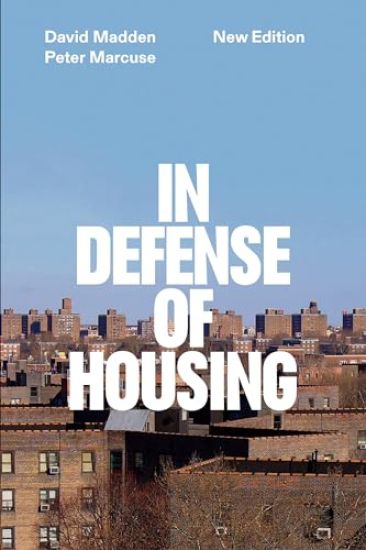
In Defense of Housing

In Defense of Housing

Peter Marcuse; David Madden

Verso Books
2016
nidottu
Everyone needs and deserves housing. But today our homes are being transformed into commodities, making the inequalities of the city ever more acute. Profit has become more important than social need. The poor are forced to pay more for worse housing. Communities are faced with the violence of displacement and gentrification. And the benefits of decent housing are only available for those who can afford it.In Defense of Housing is the definitive statement on this crisis from leading urban planner Peter Marcuse and sociologist David Madden. They look at the causes and consequences of the housing problem and detail the need for progressive alternatives. The housing crisis cannot be solved by minor policy shifts, they argue. Rather, the housing crisis has deep political and economic roots-and therefore requires a radical response.
In Defense of Housing

In Defense of Housing

Peter Marcuse; David Madden

Verso Books
2024
nidottu
In Defense of Housing is the definitive statement on this crisis from leading urban planner Peter Marcuse and sociologist David Madden. Today our homes are being transformed into commodities, making the inequalities of the city ever more acute. Profit has become more important than social need. The poor are forced to pay more for worse housing. Communities are faced with the violence of displacement and gentrification. And the benefits of decent housing are only available for those who can afford it. The authors look at the causes and consequences of the housing problem and detail the need for progressive alternatives. The housing crisis cannot be solved by minor policy shifts, they argue. Rather, the housing crisis has deep political and economic roots-and therefore requires a radical response.
Islands in the Interior

Islands in the Interior

Peter Marius Veth

International Monographs in Prehistory
1993
pokkari
In this book, Veth develops a model of settlement and subsistence in the Western Desert of Australia, drawing on his own archaeological investigations, as well as ethnographic and environmental data. Building on this model, he concludes with a plausible reconstruction of the colonization of the harsh, arid interior of this continent.
Islands in the Interior

Islands in the Interior

Peter Marius Veth

International Monographs in Prehistory
1993
sidottu
In this book, Veth develops a model of settlement and subsistence in the Western Desert of Australia, drawing on his own archaeological investigations, as well as ethnographic and environmental data. Building on this model, he concludes with a plausible reconstruction of the colonization of the harsh, arid interior of this continent.
Dark Square

Dark Square

Peter Marcus

Pleasure Boat Studio
2012
pokkari
Poetry. This collection reveals the poet's versatility as he writes personal poems as well as lyrical descriptions of unusual places. Some of his poems are very sexual, others more like landscapes. It is clear to see why Marcus's poetry has appealed to such diverse publications as AGNI, Poetry, and Alimentum.