
Kirjahaku
Etsi kirjoja tekijän nimen, kirjan nimen tai ISBN:n perusteella.
1000 tulosta hakusanalla Phillip Good
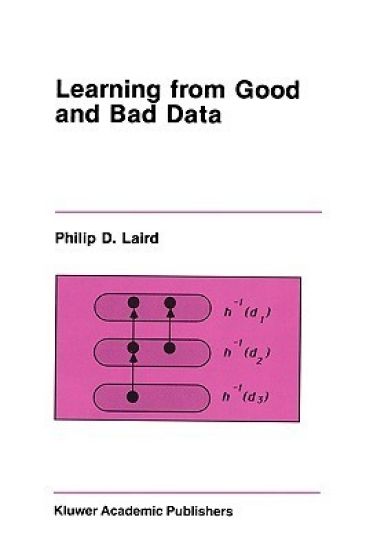
This monograph is a contribution to the study of the identification problem: the problem of identifying an item from a known class us ing positive and negative examples. This problem is considered to be an important component of the process of inductive learning, and as such has been studied extensively. In the overview we shall explain the objectives of this work and its place in the overall fabric of learning research. Context. Learning occurs in many forms; the only form we are treat ing here is inductive learning, roughly characterized as the process of forming general concepts from specific examples. Computer Science has found three basic approaches to this problem: • Select a specific learning task, possibly part of a larger task, and construct a computer program to solve that task . • Study cognitive models of learning in humans and extrapolate from them general principles to explain learning behavior. Then construct machine programs to test and illustrate these models. xi Xll PREFACE • Formulate a mathematical theory to capture key features of the induction process. This work belongs to the third category. The various studies of learning utilize training examples (data) in different ways. The three principal ones are: • Similarity-based (or empirical) learning, in which a collection of examples is used to select an explanation from a class of possible rules.
Businesses can do well by doing good -- Kotler, Hessekiel, and Lee show you how! Marketing guru Philip Kotler, cause marketing authority David Hessekiel, and social marketing expert Nancy Lee have teamed up to create a guide rich with actionable advice on integrating marketing and corporate social initiatives into your broader business goals. Businesspeople who mix cause and commerce are often portrayed as either opportunistic corporate "causewashers" cynically exploiting nonprofits, or visionary social entrepreneurs for whom conducting trade is just a necessary evil in their quest to create a better world. Marketing and corporate social initiatives requires a delicate balancing act between generating financial and social dividends. Good Works is a book for business builders, not a Corporate Social Responsibility treatise. It is for capitalists with the hearts and smarts to generate positive social impacts and bottom-line business results. Good Works is rich with actionable advice on integrating marketing and corporate social initiatives into your broader business goals. Makes the case that purpose-driven marketing has moved from a nice-to-do to a must-do for businesses Explains how to balance social and business goals Author Philip Kotler is one of the world's leading authorities on marketing; David Hessekiel is founder and President of Cause Marketing Forum, the world's leading information source on how to do well by doing good; Nancy Lee is a corporate social marketing expert, and has coauthored books on social marketing with Philip Kotler With Good Works, you'll find that you can generate significant resources for your cause while achieving financial success.
This monograph is a contribution to the study of the identification problem: the problem of identifying an item from a known class us ing positive and negative examples. This problem is considered to be an important component of the process of inductive learning, and as such has been studied extensively. In the overview we shall explain the objectives of this work and its place in the overall fabric of learning research. Context. Learning occurs in many forms; the only form we are treat ing here is inductive learning, roughly characterized as the process of forming general concepts from specific examples. Computer Science has found three basic approaches to this problem: • Select a specific learning task, possibly part of a larger task, and construct a computer program to solve that task . • Study cognitive models of learning in humans and extrapolate from them general principles to explain learning behavior. Then construct machine programs to test and illustrate these models. xi Xll PREFACE • Formulate a mathematical theory to capture key features of the induction process. This work belongs to the third category. The various studies of learning utilize training examples (data) in different ways. The three principal ones are: • Similarity-based (or empirical) learning, in which a collection of examples is used to select an explanation from a class of possible rules.
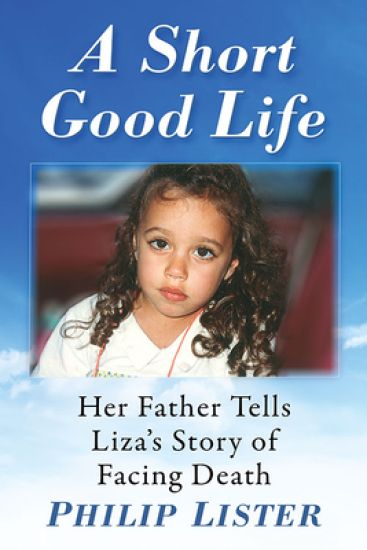
It's unusual to access a child's mind during the magic years of childhood. It's rarer when the child is facing her death. Liza, an ardent child with a deep love of cows and the color purple was diagnosed with leukemia at age four and died two years later in 1996. Liza was an unusually expressive child and her parents, both child psychiatrists, were uniquely oriented to appreciate the richness of a child's mind. Through writing this book, Liza's father strove to reveal the inner world of a child's mind--and a parent's mind--as few other books can. At its center, this is the story of a child's psyche growing and striving to understand all she could of her experience, and of a small family coping with life's biggest challenges. It is a story of love's power to help a family cope and endure despite loss, and to grow, through darkness, back toward a full embrace of life. Through the process, the family emerges transformed, awed by the capacities of this child.
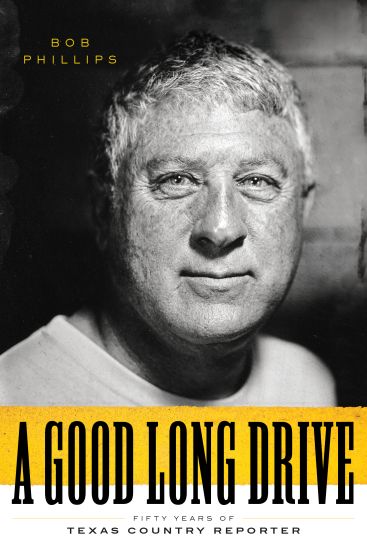
In 2021, Texas Country Reporter celebrates its fiftieth season on the air. Broadcast every week on stations across Texas, it focuses on "ordinary people doing extraordinary things." And at the center of it is Bob Phillips, the show's creator and host—an erstwhile poor kid from Dallas who ended up with a job that allowed him to rub elbows with sports figures, entertainers, and politicians but who preferred to spend his time on the back roads, listening to less-famous Texans tell their stories. In this memoir, Phillips tells his own story, from his early days as a reporter and his initial pitch for the show while a student at SMU to his ongoing work at the longest-running independently produced TV show in American television history. As we travel with Phillips on his journey, we meet Willie Nelson and former Dallas Cowboys coach Tom Landry; reflect on memorable, unusual, and challenging show segments; experience the behind-the-scenes drama that goes on in local television; witness the launching of an annual festival; and discover the unbelievable allure of Texas, its culture, and, especially, its people. Spanning generations, A Good Long Drive is proof that life's journey really is a destination unto itself.
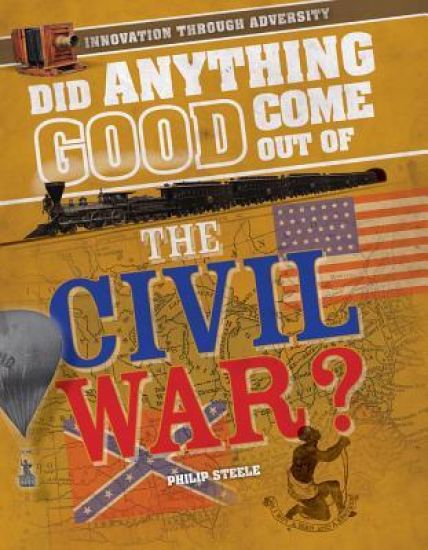
In addition to putting an end to the inhumane institution of slavery, the Civil War also spurred important inventions that improved people's lives, such as canned food, pocket watches, federal paper currency, and standard sizes for shoes. Although medical technology lagged behind the development of new weapons that could kill and maim more soldiers than ever, there were advances in amputation techniques and anesthesia delivery. Additionally, the railroad and telegraph systems were hugely beneficial to the war effort and became far more entrenched in daily life after the end of hostilities. Timelines and fun facts help illuminate these innovations of the Civil War.
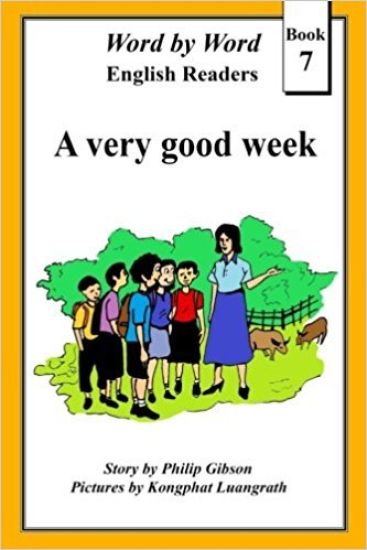
Lee and Pat have a very good week, and a very busy week. Every day, they visit some new and interesting place to explore and learn about.This entertaining new series of simplified, illustrated readers has been developed specifically in order to enable young children to learn to read by themselves, with only minimal help from parents or teachers.All the details in the book are revealed in language (words and structure) that has been rigorously selected to be as simple and understandable as possible for young readers.For example, did you know that just 25 most commonly used words make up about one-third of all words written or spoken in English? The first 100 most frequently used words make up about one-half of all written and spoken English. By the end of the 12-book Word by Word series, children will have learned the 1,000 most frequently used words which comprise more than 95% of all written and spoken English.The content of all Word by Word readers is based on extensive, diligent research into the most frequently used English words and structures. The key words and structures are presented gradually and systematically throughout the series. For example, all new words and structures are repeated at least 15 times subsequent to their first appearance in the series. This, together with the phonic emphasis in each book, ensures effective and rapid learning as well as maximum retention and comprehension. It is this very systematic control of vocabulary and structure that makes Word by Word graded readers unique.All the books in the series have been extensively trialed and repeatedly improved over a period of many years and are now proven to be extremely effective in building functional literacy in children of many ages and nationalities, including the author's own children.The series consists of 12 books in 4 levels:, Level 1Book 1: Lee and PatBook 2: Lee and Pat like to playBook 3: Lee and Pat go with DaddyLevel 2Book 4: Lee and Pat go to schoolBook 5: Lee has a friendBook 6: Lee and Pat like animalsLevel 3Book 7: A very good weekBook 8: Let's go shoppingBook 9: Pat's birthdayLevel 4Book 10: All about animalsBook 11: Our worldBook 12: All about peopleBy the end of the series, the child will have learned to read and understand all of the most important English words and structures. At this point, the child will be functionally literate and fully capable of independent readin
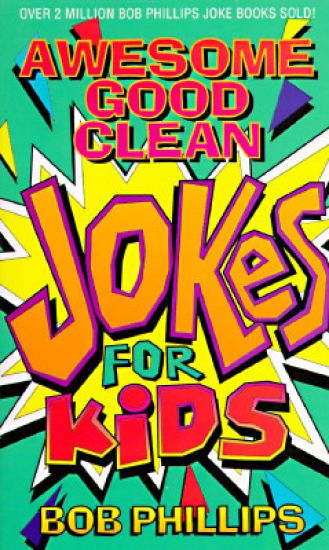
A collection of jokes, grouped into such categories as "School Daze," "Hoarse Laughs," and "Silly Dillies"

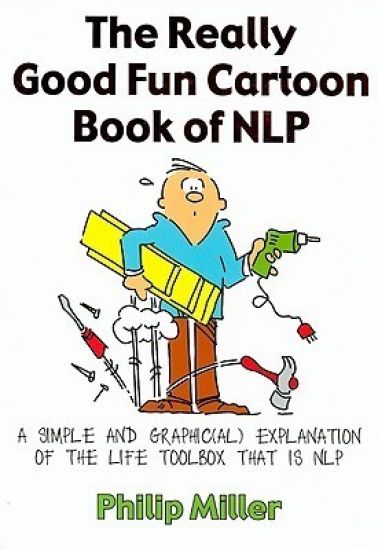
NLP pronounced en el pea. Let's just get the name thing out of the way NLP stands for neuro linguistic programming - yes, I know it's weird and yes, I know it's funny (peculiar, not ha ha) - but, that's the name. How come? NEURO Concerns the brain and the things that go on in your mind. Also the rest of the neurological system, including the five senses. LINGUISTIC This relates to language, both spoken and non-spoken (sometimes called body language). PROGRAMMINGThe concepts and ideas of NLP can be of great benefit to people in all areas of their lives; be it at work, with family and friends or in other activities. The problem has been how to get this across and explain those ideas and show how they can be easily learnt and applied. Traditionally the world of NLP training and literature has been full of technical sounding expressions, just think of the name - neuro linguistic programming. It takes a lot of persistence and effort to get through all this to access the real benefits that NLP can bring to people. The Really Good Fun Cartoon Book of NLP seeks to cut through all this by using simple (non jargon) language and amusing illustrations to get across the principles of NLP and how people can think about using them in their everyday lives. Knowing when and how to dip into the NLP life skills toolbox is really useful as is the idea that it's all just a learning experience. This book will help you get even more from life - to become an even more interesting and interested person, but only if that's what you want.
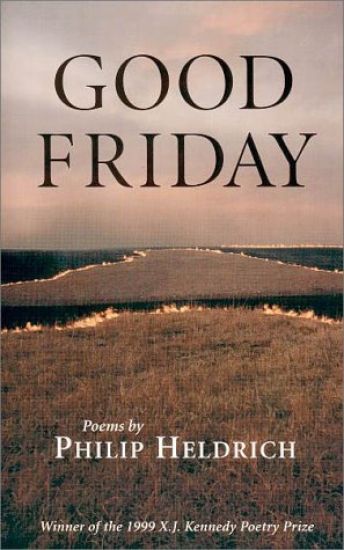
In his poem, "Settings," Seamus Heaney, asks, "Where does the spirit live? Inside or outside/ Things remembered, made things, things unmade?" In the Western tradition of lyric poetry, Philip Heldrich's Good Friday examines the essence of self forged in the spirit of place. His poems, like those of William Stafford, James Wright, and Robert Bly, ask difficult questions about the nature of our souls, about our wavering faiths, and our desire for deeper revelations. Rooted in the landscape of the Great Plains, these are poems of searching. Filled with tenderness and compassion, humor and irony, Good Friday takes its readers on much more than a journey of words into a world of prairie fire, barbed wire, migrating birds, tall grass, and wind.

A Good Man Inside is the diary of one man's experiences of his time in prison written over 300 days as he reels from and makes sense of being under lock and key. A white collar criminal he sees himself as someone who should not really be in prison - as 'a good man' for whom his incarceration is doubly punitive, not practically necessary or achieving much other than the degradation and powerlessness of being in prison. But as time passes he accepts his fate and settles down to the regime, helping others and using the experience to best advantage. The book takes the reader through the day-to-day minutiae of prison life, prison conditions and the strange language of prisoner interchanges, hygiene, mental health and prison food. It emphasises the different worlds of captors and captured and deals with the preoccupations of someone who has known better times and wishes to get back to what is left of his life and family and start all over again. Captures the essence of the sudden incarceration of a previously respectable white collar offender whose reputation and comfortable life have been turned upside down. Not only from self-interest, does he try to explain the futility of locking up people like himself making the book of interest to prison reformers as well as general readers. Set out as a diary and very easy to read. Illustrated by the author. Humorous, sometimes dark, critical, insightful and of particular interest to prison reformers.
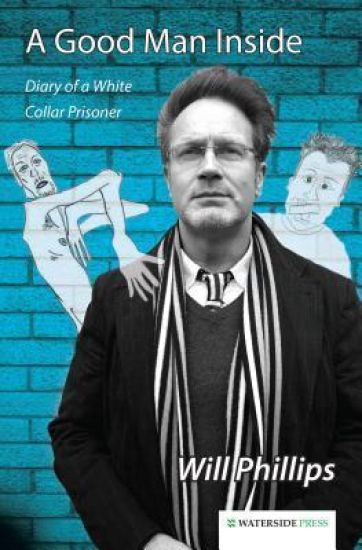
A Good Man Inside is the diary of one man's experiences of his time in prison written over 300 days as he reels from and makes sense of being under lock and key. A white collar criminal he sees himself as someone who should not really be in prison - as 'a good man' for whom his incarceration is doubly punitive, not practically necessary or achieving much other than the degradation and powerlessness of being in prison. But as time passes he accepts his fate and settles down to the regime, helping others and using the experience to best advantage. The book takes the reader through the day-to-day minutiae of prison life, prison conditions and the strange language of prisoner interchanges, hygiene, mental health and prison food. It emphasises the different worlds of captors and captured and deals with the preoccupations of someone who has known better times and wishes to get back to what is left of his life and family and start all over again. Captures the essence of the sudden incarceration of a previously respectable white collar offender whose reputation and comfortable life have been turned upside down. Not only from self-interest, does he try to explain the futility of locking up people like himself making the book of interest to prison reformers as well as general readers. Set out as a diary and very easy to read. Illustrated by the author. Humorous, sometimes dark, critical, insightful and of particular interest to prison reformers.
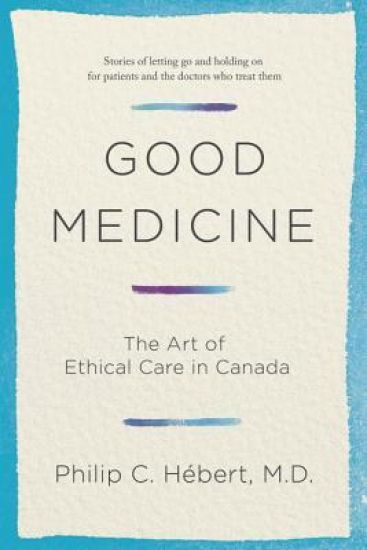
Award-winning physician Philip C. H bert creates a brave and intimate portrait of the complex ethical imperatives at the heart of good medicine: doctors do not have all the answers; patients must be heard; and their needs, desires, fears, and experiences must be reflected in how practitioners look after them. Medical science continues to advance to previously unimagined heights in its diagnostic and treatment capabilities. With these advances, however, come unexpected ethical dilemmas for practitioners, patients, and families. In Good Medicine, Dr. H bert approaches these questions of pressing and fundamental importance from the dual point of view of acclaimed physician and long-time patient. With remarkable balance and sensitivity, he explores a range of politically, constitutionally, and ethically contentious matters, including assisted suicide, treatment refusal and suspension, and the overall allocation of medical resources. H bert pairs his artful analysis with the real-life, often deeply moving stories of those who have lived these challenges. H bert offers piercing and compassionate insight into the relationship between patients and medical professionals, and guides readers towards the open and empathetic communication needed to ensure good medicine for everyone.
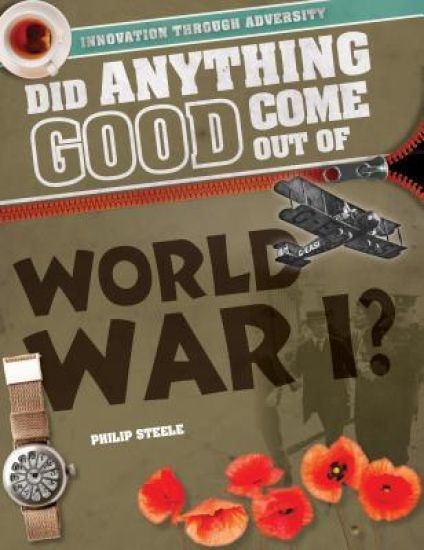
The immediate legacy of World War I, the first truly global conflict, was devastation, loss, and tragedy. However, a century later, we still benefit from many of the indirect results of the war, including life-saving medical advances and popular consumer items like tea bags and wristwatches. This thought-provoking volume tackles its title question by examining the causes and effects of World War I. Readers learn how the "Great War" precipitated social, cultural, political, and medical strides even as it claimed lives and livelihoods. The narrative's balanced perspective encourages readers to think deeply about the positive and negative effects of war.