
Kirjahaku
Etsi kirjoja tekijän nimen, kirjan nimen tai ISBN:n perusteella.
1000 tulosta hakusanalla Phillis Levin
Reproduction of the original: Cousin Phillis by Elizabeth Gaskell
Aunt Phillis's Cabin Or, Southern Life As It Is
Mary H (Mary Henderson) Eastman
Tredition Classics
2011
pokkari
Aunt Phillis's Cabin; Or, Southern Life As It Is
ALPHA EDITION
2022
pokkari
The book "" Aunt Phillis's Cabin; Or, Southern Life As It Is "" has been considered important throughout the human history, and so that this work is never forgotten we have made efforts in its preservation by republishing this book in a modern format for present and future generations. This whole book has been reformatted, retyped and designed. These books are not made of scanned copies and hence the text is clear and readable.
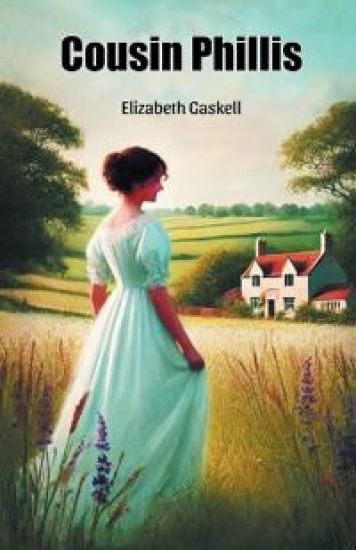
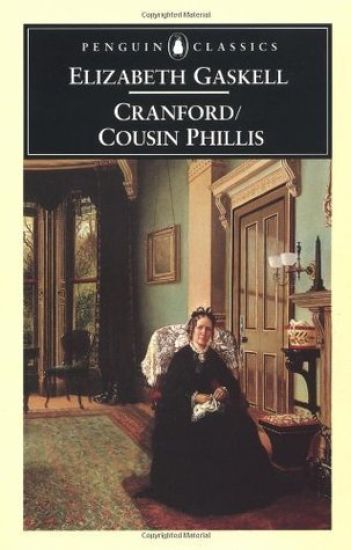
Cranford depicts the lives and preoccupations of the inhabitants of a small village - their petty snobberies and appetite for gossip, and their loyal support for each other in times of need. The village is dominated by women, from the kindly spinster Miss Matty, living in genteel poverty with her redoubtable sister, to Lady Glenmire, who shocks everyone by marrying the doctor. When men do appear, such as 'modern' Captain Brown or Matty's suitor from the past, they bring disruption and excitement to the everyday life of Cranford. This volume includes the novella Cousin Phillis, which depicts a fleeting love affair in a rural community at a time when old values are being supplanted by the new. Both works are exquisitely observed tragicomedies of human nature, told with great delicacy and affection.
The Writings of Phillis Wheatley Peters
Oxford University Press
2024
nidottu
Honorable Mention, Modern Language Association Prize for a Scholarly Edition, Modern Language Association This edition includes all of the known surviving writings of the poet Phillis Wheatley Peters (1753-1784), several of which have been discovered since the last attempt at a complete edition was published in 2001. Of the fifty-seven poems, as well as their authoritative variants, forty-six were published during her lifetime. Versions of nine of them were published before September 1773. Wheatley Peters published thirty-eight works in Poems on Various Subjects, Religious and Moral (London, 1773). Only seven of her poems were published between 1773 and her death in 1784. Eleven poems survive only in manuscript versions. This edition also includes all of Wheatley Peters' extant prose writings: twenty-three letters and four subscription proposals. It includes as well the three known surviving letters written to Wheatley Peters. Wheatley Peters' writings are accompanied by an Introduction to her life and times, as well as extensive textual and explanatory notes.
The Writings of Phillis Wheatley
Oxford University Press
2019
sidottu
This edition includes all of the known surviving writings of the poet Phillis Wheatley (1753-1784), several of which have been discovered since the last attempt at a complete edition was published in 2001. Of the fifty-seven poems, as well as their authoritative variants, forty-six were published during her lifetime. Versions of nine of them were published before September 1773. Wheatley published thirty-eight works in Poems on Various Subjects, Religious and Moral (London, 1773). Only seven of her poems were published between 1773 and her death in 1784. Eleven poems survive only in manuscript versions. This edition also includes all of Wheatley's extant prose writings: twenty-three letters and four subscription proposals. It includes as well the three known surviving letters written to Wheatley. Wheatley's writings are accompanied by an Introduction to her life and times, as well as extensive textual and explanatory notes.
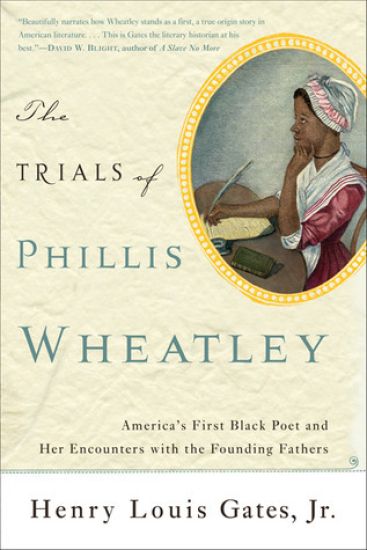
In 1773, the slave Phillis Wheatley literally wrote her way to freedom. The first person of African descent to publish a book of poems in English, she was emancipated by her owners in recognition of her literary achievement. For a time, Wheatley was the most famous black woman in the West. But Thomas Jefferson, unlike his contemporaries Ben Franklin and George Washington, refused to acknowledge her gifts as a writer,a repudiation that eventually inspired generations of black writers to build an extraordinary body of literature in their efforts to prove him wrong. In The Trials of Phillis Wheatley , Henry Louis Gates Jr. explores the pivotal roles that Wheatley and Jefferson played in shaping the black literary tradition. Writing with all the lyricism and critical skill that place him at the forefront of American letters, Gates brings to life the characters, debates, and controversy that surrounded Wheatley in her day and ours.

The Poems of Phillis Wheatley
The University of North Carolina Press
1988
nidottu
Collects poems by the young Black slave with critical commentaries on her short career
The Odyssey of Phillis Wheatley: A Poet's Journeys Through American Slavery and Independence
David Waldstreicher
Farrar, Straus and Giroux
2023
sidottu
A New York Times notable book of 2023 A finalist for the Los Angeles Times Book Prize for biography Winner of the 2024 George Washington Prize" An] erudite, enlightening new biography . . . Waldstreicher's] interpretations equal Wheatley's own intentional verse, making it a joy to follow along as he unpacks her words and their arrangement." --Tiya Miles, The Atlantic"Thoroughly researched, beautifully rendered and cogently argued . . . The Odyssey of Phillis Wheatley is . . .] historical biography at its best." --Kerri Greenidge, The New York Times Book Review (Editors' Choice)A paradigm-shattering biography of Phillis Wheatley, whose extraordinary poetry set African American literature at the heart of the American Revolution. Admired by George Washington, ridiculed by Thomas Jefferson, published in London, and read far and wide, Phillis Wheatley led one of the most extraordinary American lives. Seized in West Africa and forced into slavery as a child, she was sold to a merchant family in Boston, where she became a noted poet at a young age. Mastering the Bible, Greek and Latin translations, and the works of Pope and Milton, she composed elegies for local elites, celebrated political events, praised warriors, and used her verse to variously lampoon, question, and assert the injustice of her enslaved condition. "Can I then but pray / Others may never feel tyrannic sway?" By doing so, she added her voice to a vibrant, multisided conversation about race, slavery, and discontent with British rule; before and after her emancipation, her verses shook up racial etiquette and used familiar forms to create bold new meanings. She demonstrated a complex but crucial fact of the times: that the American Revolution both strengthened and limited Black slavery. In this new biography, the historian David Waldstreicher offers the fullest account to date of Wheatley's life and works, correcting myths, reconstructing intimate friendships, and deepening our understanding of her verse and the revolutionary era. Throughout The Odyssey of Phillis Wheatley, he demonstrates the continued vitality and resonance of a woman who wrote, in a founding gesture of American literature, "Thy Power, O Liberty, makes strong the weak / And (wond'rous instinct) Ethiopians speak."

In 1773, a young, African American woman named Phillis Wheatley Peters published a book of poetry that challenged Western prejudices about African and female intellectual capabilities. Based on fifteen years of archival research, The Age of Phillis, by award-winning writer Honorée Fanonne Jeffers, imagines the life and times of Wheatley: her childhood in the Gambia, West Africa, her life with her white American owners, her friendship with Obour Tanner, and her marriage to the enigmatic John Peters. Woven throughout are poems about Wheatley's "age" - the era that encompassed political, philosophical, and religious upheaval, as well as the transatlantic slave trade. For the first time in verse, Wheatley's relationship to black people and their individual "mercies" is foregrounded, and here we see her as not simply a racial or literary symbol, but a human being who lived and loved while making her indelible mark on history.
Admired by George Washington, ridiculed by Thomas Jefferson, published in London, and read far and wide, Phillis Wheatley led one of the most extraordinary American lives. Seized in West Africa and forced into slavery as a child, she was sold to a merchant family in Boston, where she became a noted poet at a young age. Mastering the Bible, Greek and Latin translations, and the works of Pope and Milton, she composed elegies for local elites, celebrated political events, praised warriors, and used her verse to variously lampoon, question, and assert the injustice of her enslaved condition. “Can I then but pray / Others may never feel tyrannic sway?” By doing so, she added her voice to a vibrant, multisided conversation about race, slavery, and discontent with British rule; before and after her emancipation, her verses shook up racial etiquette and used familiar forms to create bold new meanings. She demonstrated a complex but crucial fact of the times: that the American Revolution both strengthened and limited Black slavery. In this new biography, the historian David Waldstreicher offers the fullest account to date of Wheatley’s life and works, correcting myths, reconstructing intimate friendships, and deepening our understanding of her verse and the revolutionary era. Throughout The Odyssey of Phillis Wheatley, he demonstrates the continued vitality and resonance of a woman who wrote, in a founding gesture of American literature, “Thy Power, O Liberty, makes strong the weak / And (wond’rous instinct) Ethiopians speak.”
A Study Guide for Phillis Wheatley's "On Being Brought From Africa to America"
Cengage Learning Gale
Gale, Study Guides
2017
pokkari
A Study Guide for Phillis Wheatley's "To His Excellency, General Washington"
Cengage Learning Gale
Gale, Study Guides
2017
pokkari
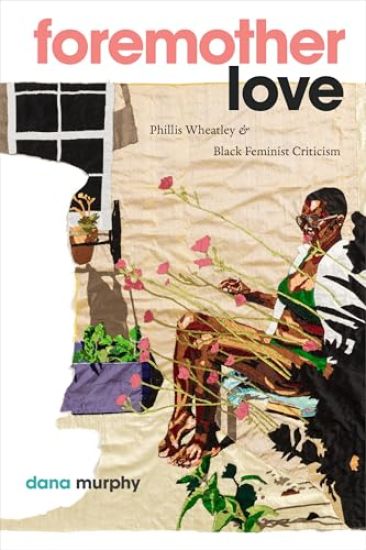
Foremother Love: Phillis Wheatley and Black Feminist Criticism
Dana Murphy
DUKE UNIVERSITY PRESS
2025
sidottu
In Foremother Love, Dana Murphy examines the importance of eighteenth-century poet Phillis Wheatley as a foundational figure for Black feminist criticism. Murphy establishes Phillis (as she refers to her) as a writer who wrote in response to and in conversation with other creators as well as a critic who was invested in sharing, explaining, and evaluating her own and others' work and contexts. Indeed, Phillis played a key role in the development of what Murphy calls "foremother love"--the Black feminist depiction of the love of an unrelated feminist ancestor as a legitimate relation for the practice of inheritance, mourning, liberation, and friendship. Drawing on the work of Barbara Christian, June Jordan, Audre Lorde, Barbara Smith, and others, Murphy shows that Black feminist criticism becomes a transhistorical theorization when read in conjunction with Phillis's labor and vision. Revealing how Phillis lives on in Black feminist criticism, Murphy contends that foremother love is an ethic of critical care that implores readers to recognize the affective labor of all those working in the field.