
Kirjahaku
Etsi kirjoja tekijän nimen, kirjan nimen tai ISBN:n perusteella.
1000 tulosta hakusanalla Philo Pratt
Philo of Alexandria, On Cultivation
Albert C Geljon; David T Runia
Society of Biblical Literature
2024
pokkari
This fourth volume of the Philo of Alexandria Commentary Series, originally published by Brill in hardcover, presents the first readable, modern English translation and commentary on Philo's De agricultura (On Cultivation), which gives an elaborate allegorical interpretation of Genesis 9:20. Albert C. Geljon and David T. Runia focus on the treatise's structure, biblical sources, and exegetical and philosophical contents. The volume provides valuable insights into Philo's highly influential allegorical method of biblical interpretation.
Philo's Influence on Valentinian Tradition
Risto Auvinen
Society of Biblical Literature
2024
pokkari
In this book Risto Auvinen reevalutes the relationship between the exegetical and philosophical traditions found in the works of Philo and those of the Valentinian gnostic tradition, with a particular focus on the latter half of the second century, Valentinianism's formative years. Auvinen asserts that the number of parallels between Philonic and Valentinian sources reveals a relationship between Philo's writings and Valentinian teachers. These connections expand our knowledge not only of the preservation and circulation of Philo's texts in the latter part of the second century but also the importance of the allegorical traditions of Hellenistic Judaism on Valentinus's school of thought and on Gnosticism more broadly.
Philo's Influence on Valentinian Tradition
Risto Auvinen
Society of Biblical Literature
2024
sidottu
In this book Risto Auvinen reevalutes the relationship between the exegetical and philosophical traditions found in the works of Philo and those of the Valentinian gnostic tradition, with a particular focus on the latter half of the second century, Valentinianism's formative years. Auvinen asserts that the number of parallels between Philonic and Valentinian sources reveals a relationship between Philo's writings and Valentinian teachers. These connections expand our knowledge not only of the preservation and circulation of Philo's texts in the latter part of the second century but also the importance of the allegorical traditions of Hellenistic Judaism on Valentinus's school of thought and on Gnosticism more broadly.
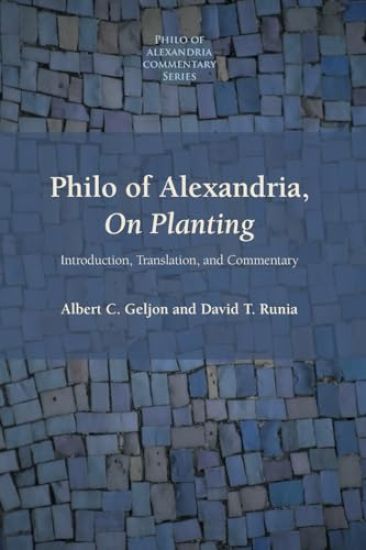
Philo of Alexandria, On Planting
Albert C Geljon; David T Runia
Society of Biblical Literature
2024
pokkari
In this fifth volume of the Philo of Alexandria Commentary Series, originally published by Brill in hardcover, Albert C. Geljon and David T. Runia present the first readable, modern English translation and commentary on Philo's De plantatione (On Planting). In this allegorical treatise, Philo first turns to theological and cosmological interpretations of Noah's planting of a vineyard in Genesis 9:20. He then moves to the spiritual quest of advanced souls and those beginning their journey. The commentary pays particular attention to the treatise's structure, its biblical basis, and its exegetical and philosophical contents.

Philo of Alexandria, On the Life of Abraham
Ellen Birnbaum; John Dillon
Society of Biblical Literature
2025
pokkari

Philo of Byblos in the early Roman imperial period claimed to have translated the work of an ancient author Sanchuniathon who recorded stories of the ancient Canaanite gods, stories that resemble the myths found in Ugaritic sources. This monograph provides an English translation of Philo's Greek text with an introduction and notes.

Philo of Byblos in the early Roman imperial period claimed to have translated the work of an ancient author Sanchuniathon who recorded stories of the ancient Canaanite gods, stories that resemble the myths found in Ugaritic sources. This monograph provides an English translation of Philo's Greek text with an introduction and notes.

A powerful collection of writings in which Philo attempts to consolidate Jewish beliefs with Greek philosophy in the end Hellenising the Hebrew Bible. Many early church fathers actually owe their thinking and interpretation ways to Philo since he paved the way for philosophical thinking and the teachings of the Hebrew Bible. Although it is unclear as to how much he influence someone like the apostle Paul, some consider it likely since they both lived and taught during the same early forming of the first church. This book includes: On Mating with the Preliminary Studies, On Flight and Finding, On the Change of Names, On Dreams, That They Are God Sent, On Abraham, On Joseph, On the Life of Moses I & II, The Decalogue, The Special Laws I & II

Philo-Semitic Violence: Poland’s Jewish Past in New Polish Narratives addresses the growing popularity of philo-Semitic violence in Poland between the 2000 revelation of Polish participation in the Holocaust and the 2015 authoritarian turn. Janicka and Zukowski examine phenomena termed a “new opening in Polish-Jewish relations,” which stems from sociocultural change and the posthumous inclusion of those subjected to anti-Semitic violence. The authors investigate the terms and conditions of this inclusion whose object is an imagined collective Jewish figure.Different creators and media, same friendly intentions, same warm reception beyond class and political cleavages, regardless of gender and age. The made-to-measure Jewish figure confirms and legitimizes the majority narrative – especially about Polish stances and behaviors during the Holocaust. Enabled by this, philo-Semitic feelings indulge the dominant group in Baudrillard’s retrospective hallucinations. The consequence: aggression toward anyone who dares to interrupt the narcissistic self-staging.This book exposes the Polish ethnoreligious identity regime that privileges the concern for the collective image over reality. The authors’ inquiry shows how patterns of exclusion and violence are reproduced when anti-Semitism – with its Christian sources and community-building function – is not openly problematized, reassessed, and rejected in light of its consequences and the basic principle of equal rights.


How much do you know about Philo T. Farnsworth? Find out the facts you need to know about this inventor, scientist, and TV pioneer. You'll learn about the early life, challenges, and major accomplishments of this important American.

The Writings of Philo of Alexandria
Philo of Alexandria
Createspace Independent Publishing Platform
2017
nidottu
Philo of Alexandria), also called Philo Judaeus, was a Hellenistic Jewish philosopher who lived in Alexandria, in the Roman province of Egypt. Philo used philosophical allegory to harmonize Jewish scripture, mainly the Torah, with Greek philosophy. His method followed the practices of both Jewish exegesis and Stoic philosophy. His allegorical exegesis was important for several Christian Church Fathers, but he has barely any reception history within Rabbinic Judaism. He believed that literal interpretations of the Hebrew Bible would stifle humanity's perception of a God too complex and marvelous to be understood in literal human terms. Some scholars hold that his concept of the Logos as God's creative principle influenced early Christology. Other scholars deny direct influence but say that Philo and Early Christianity borrow from a common source. The only event in Philo's life that can be decisively dated is his participation in the embassy to Rome in 40 CE. He represented the Alexandrian Jews in a delegation to Roman Emperor Caligula following civil strife between the Alexandrian Jewish and Greek communities. The story of this event, and a few other biographical details, are found in Josephus and in Philo's own works, especially in Legatio ad Gaium (Embassy to Gaius) of which only two of the original five volumes survive. Odin's Library Classics is dedicated to bringing the world the best of humankind's literature from throughout the ages. Carefully selected, each work is unabridged from classic works of fiction, nonfiction, poetry, or drama.

Philo of Alexandria’s Ethical Discourse
CDP Naveros Córdova
Lexington Books/Fortress Academic
2018
sidottu
Philo of Alexandria’s Ethical Discourse: Living in the Power of Piety proposes a fresh approach to better understand Philo’s ethics exploring the virtue of piety. In this exceptionally well-researched book, Nélida Naveros Córdova analyzes five major uses of piety in Philo’s treatises— piety and the Decalogue; piety as a foundational virtue; piety as the opposite of impiety; the practice of piety, and the relationship between piety and love of humanity. Naveros carefully examines each of these five uses within both the Hellenistic Jewish and Greek philosophical traditions, focusing particularly on piety’s primary role in Philo’s teaching about the acquisition of virtues and the avoidance of vices. Naveros argues that in his ethical discourse, Philo incorporates language familiar in ancient Greek philosophical ethical systems to attribute qualities and powers to the virtue of piety. This book illustrates the way Philo moves beyond both Hellenistic Jewish and Greek philosophical traditions by comprehensively showing how he develops the place of piety, from being a subordinate virtue in Greek catalogue of virtues to becoming a foundational virtue. Naveros brings evidence from ancient Greco-Roman and major Hellenistic Jewish texts as well as modern secondary literature in order to argue and support a plausible case for the understanding of Philo’s unique configuration of his own ethical discourse, his view of virtue ethics, and his philosophical stance. To date, this is an original study on Philo’s ethics, and the first to offer the fullest evaluation of piety within the categories of ancient ethical systems.
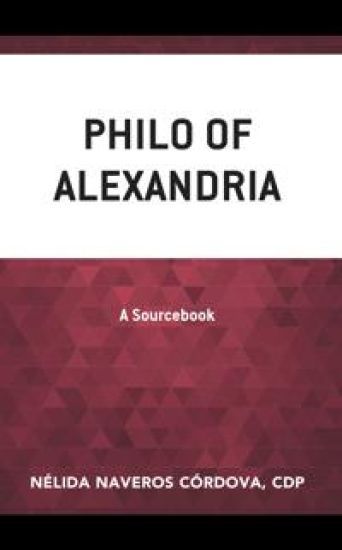
Philo of Alexandria
Nélida Naveros Córdova CDP; CDP Naveros Córdova
BLOOMSBURY PUBLISHING PLC
2023
sidottu
Nélida Naveros Córdova carefully draws from a variety of texts within the Philonic corpus to provide a complete sourcebook for an introduction to Philo. After a general introduction, she consolidates the major topics and themes commonly studied in Philo into seven chapters: Philo's theology, his doctrine of creation, his anthropology, his doctrine of ethics, his metaphorical interpretation of biblical characters, his exposition of the Jewish Law and the Decalogue, and Jewish worship and major observances. For each chapter, Naveros Córdova provides a brief introduction and overview of the topics in their cultural and religious contexts highlighting Philo's philosophical thought and the significance of his biblical interpretation. The sourcebook consists mostly of fresh translations with few authorial comments with an attempt to introduce and present Philonic texts to the introductory reader to give broad exposure to the nature of Philo's literal and allegorical biblical interpretations. From start to finish, the book emphasizes the unity of the ethical character of Philo's thought considered the basic spectrum of his biblical exegesis.
Philo of Alexandria
Nélida Naveros Córdova CDP; CDP Naveros Córdova
BLOOMSBURY PUBLISHING PLC
2025
nidottu
Nélida Naveros Córdova carefully draws from a variety of texts within the Philonic corpus to provide a complete sourcebook for an introduction to Philo. After a general introduction, she consolidates the major topics and themes commonly studied in Philo into seven chapters: Philo's theology, his doctrine of creation, his anthropology, his doctrine of ethics, his metaphorical interpretation of biblical characters, his exposition of the Jewish Law and the Decalogue, and Jewish worship and major observances. For each chapter, Naveros Córdova provides a brief introduction and overview of the topics in their cultural and religious contexts highlighting Philo's philosophical thought and the significance of his biblical interpretation. The sourcebook consists mostly of fresh translations with few authorial comments with an attempt to introduce and present Philonic texts to the introductory reader to give broad exposure to the nature of Philo's literal and allegorical biblical interpretations. From start to finish, the book emphasizes the unity of the ethical character of Philo's thought considered the basic spectrum of his biblical exegesis.
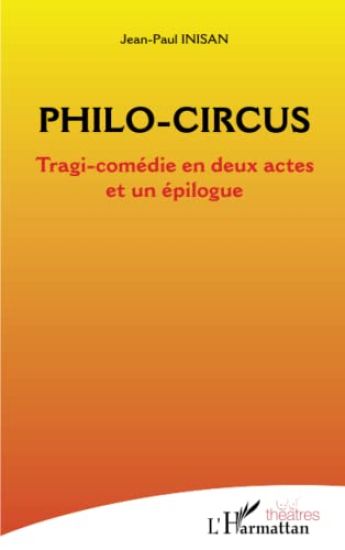

R sum Comment la recherche par le jeu vous installe en plein coeur dans la philosophie. Auteur

Philo von Alexandria
de Gruyter
1962
sidottu