Kirjojen hintavertailu. Mukana 12 379 209 kirjaa ja 12 kauppaa.

Kirjahaku

Etsi kirjoja tekijän nimen, kirjan nimen tai ISBN:n perusteella.

186 tulosta hakusanalla Pynchon Thomas

Becoming Pynchon

Becoming Pynchon

Luc Herman

OHIO STATE UNIVERSITY PRESS
2023
sidottu
The 1963 publication of Thomas Pynchon's V. changed the landscape of American fiction. Becoming Pynchon: Genetic Narratology and V. offers a detailed examination of the dramatic transformations that took place as Pynchon's foundational novel went from typescript to published work. Luc Herman and John M. Krafft develop and deploy a rich theory of genetic narratology to examine the performance of genre in the novel. Pushing back against the current dominance of cognitive narratology, they discuss focalization, character construction, and evocation of consciousness as clues to Pynchon's developing narratology of historical fiction. Their theoretical interventions offer an important and timely corrective to the field of narratology with a method that brings the author back into the analytical frame. Herman and Krafft use as their guide the typescript of V. that surfaced in 2001, when it was acquired by the Harry Ransom Humanities Research Center, as well as Pynchon's editorial correspondence with Corlies Smith, his first editor at J. B. Lippincott. Becoming Pynchon assembles a comprehensive and unequaled picture of Pynchon's writing process that will appeal both to Pynchonians and to postmodernism scholars more broadly.
Becoming Pynchon: Genetic Narratology and V.

Becoming Pynchon: Genetic Narratology and V.

Luc Herman; John M. Krafft

OHIO STATE UNIVERSITY PRESS
2026
nidottu
The 1963 publication of Thomas Pynchon's V. changed the landscape of American fiction. Becoming Pynchon: Genetic Narratology and V. offers a detailed examination of the dramatic transformations that took place as Pynchon's foundational novel went from typescript to published work. Luc Herman and John M. Krafft develop and deploy a rich theory of genetic narratology to examine the performance of genre in the novel. Pushing back against the current dominance of cognitive narratology, they discuss focalization, character construction, and evocation of consciousness as clues to Pynchon's developing narratology of historical fiction. Their theoretical interventions offer an important and timely corrective to the field of narratology with a method that brings the author back into the analytical frame. Herman and Krafft use as their guide the typescript of V. that surfaced in 2001, when it was acquired by the Harry Ransom Humanities Research Center, as well as Pynchon's editorial correspondence with Corlies Smith, his first editor at J. B. Lippincott. Becoming Pynchon assembles a comprehensive and unequaled picture of Pynchon's writing process that will appeal both to Pynchonians and to postmodernism scholars more broadly.
Occupy Pynchon

Occupy Pynchon

Sean Carswell

University of Georgia Press
2017
sidottu
Occupy Pynchon examines power and resistance in the writer’s post–Gravity’s Rainbow novels. As Sean Carswell shows, Pynchon’s representations of global power after the neoliberal revolution of the 1980s shed the paranoia and meta­physical bent of his first three novels and share a great deal in common with the work of Michael Hardt and Antonio Negri’s critical trilogy, Empire, Multitude, and Commonwealth. In both cases, the authors describe global power as a horizontal network of multinational corporations, national governments, and supranational institutions. Pynchon, as do Hardt and Negri, theorizes resistance as a horizontal network of individuals who work together, without sacrificing their singularities, to resist the political and economic exploitation of empire.Carswell enriches this examination of Pynchon’s politics—as made evident in Vineland (1990), Mason & Dixon (1997), Against the Day (2006), Inherent Vice (2009), and Bleeding Edge (2013)—by reading the novels alongside the global resistance movements of the early 2010s. Beginning with the Arab Spring and progressing into the Occupy Movement, political activists engaged in a global uprising. The ensuing struggle mirrored Pynchon’s concepts of power and resistance, and Occupy activists in particular constructed their movement around the same philosophical tradition from which Pynchon, as well as Hardt and Negri, emerges. This exploration of Pynchon shines a new light on Pynchon studies, recasting his post-1970s fiction as central to his vision of resisting global neoliberal capitalism.
Occupy Pynchon

Occupy Pynchon

Sean Carswell

University of Georgia Press
2019
pokkari
Occupy Pynchon examines power and resistance in the writer’s post–Gravity’s Rainbow novels. As Sean Carswell shows, Pynchon’s representations of global power after the neoliberal revolution of the 1980s shed the paranoia and meta­physical bent of his first three novels and share a great deal in common with the work of Michael Hardt and Antonio Negri’s critical trilogy, Empire, Multitude, and Commonwealth. In both cases, the authors describe global power as a horizontal network of multinational corporations, national governments, and supranational institutions. Pynchon, as do Hardt and Negri, theorizes resistance as a horizontal network of individuals who work together, without sacrificing their singularities, to resist the political and economic exploitation of empire.Carswell enriches this examination of Pynchon’s politics—as made evident in Vineland (1990), Mason & Dixon (1997), Against the Day (2006), Inherent Vice (2009), and Bleeding Edge (2013)—by reading the novels alongside the global resistance movements of the early 2010s. Beginning with the Arab Spring and progressing into the Occupy Movement, political activists engaged in a global uprising. The ensuing struggle mirrored Pynchon’s concepts of power and resistance, and Occupy activists in particular constructed their movement around the same philosophical tradition from which Pynchon, as well as Hardt and Negri, emerges. This exploration of Pynchon shines a new light on Pynchon studies, recasting his post-1970s fiction as central to his vision of resisting global neoliberal capitalism.
Planetary Pynchon

Planetary Pynchon

Tore Rye Andersen

Cambridge University Press
2023
sidottu
While Thomas Pynchon is usually described as an American author who primarily writes about American reality, Planetary Pynchon: History, Modernity, and the Anthropocene argues that his major novels, Gravity's Rainbow, Mason & Dixon, and Against the Day, can profitably be read as a global trilogy that presents a coherent historical account of how the emergence and spread of European modernity across the world have had devastating consequences for the planet and its inhabitants. This book sets a new agenda in Pynchon studies, charting his early anticipation of anthropocenic and planetary ideas, including globalization's demand for constant growth. It combines close textual readings with broad perspectives on large thematic arcs and stylistic developments across Pynchon's entire career as well as an extensive dialogue with the rich reception of his work.
The Gnostic Pynchon

The Gnostic Pynchon

Dwight Eddins

Indiana University Press
1990
sidottu
The appearance of Vineland, his first novel in seventeen years, has rekindled critical debate on Thomas Pynchon. Written before the publication of the new novel, but remarkably prescient about its themes, The Gnostic Pynchon is a provocative reading of Pynchon's work. Where most critics find in Thomas Pynchon a postmodern writer of indeterministic, relativistic, contingent fiction, Dwight Eddins also finds a man on a religious quest. Pynchon's quest, Eddins shows, is for some principle of organic order that will provide an alternative to hopeless ambiguity, or an equally hopeless choice between total chaos and total control. The Gnostic Pynchon is a profoundly revisionist view of one of this century's most important writers.
Approaches to Teaching Pynchon's the Crying of Lot 49 and Other Works
As teachers well know, the elements that make Thomas Pynchon exciting to read and study—the historical references, the multilayered prose, and the postmodern integration of high and low cultures and science and literature—often constitute hurdles to undergraduate and graduate readers alike. The essays gathered in this volume turn these classroom challenges into assets, showing instructors how to make the narratives' frustration of reader expectations not only intellectually rewarding but also part of the joy of reading The Crying of Lot 49, Gravity's Rainbow, Mason & Dixon, and other Pynchon works, short and long.Like all volumes in the Approaches to Teaching series, the collection opens with a survey of original and supplementary materials. The essays that follow offer an array of classroom techniques: among them, ways to contextualize the novels in their historical settings, from Puritan America through World War II and the volatile 1960s; to use the texts to explore racial and gender politics and legacies of colonialism; and to make Pynchon's elaborate prose style accessible to students. Teachers will also find sample syllabi for courses solely on Pynchon as well as suggestions for incorporating his work into graduate and undergraduate classrooms at a range of institutions.
Approaches to Teaching Pynchon's the Crying of Lot 49 and Other Works
As teachers well know, the elements that make Thomas Pynchon exciting to read and study—the historical references, the multilayered prose, and the postmodern integration of high and low cultures and science and literature—often constitute hurdles to undergraduate and graduate readers alike. The essays gathered in this volume turn these classroom challenges into assets, showing instructors how to make the narratives' frustration of reader expectations not only intellectually rewarding but also part of the joy of reading The Crying of Lot 49, Gravity's Rainbow, Mason & Dixon, and other Pynchon works, short and long.Like all volumes in the Approaches to Teaching series, the collection opens with a survey of original and supplementary materials. The essays that follow offer an array of classroom techniques: among them, ways to contextualize the novels in their historical settings, from Puritan America through World War II and the volatile 1960s; to use the texts to explore racial and gender politics and legacies of colonialism; and to make Pynchon's elaborate prose style accessible to students. Teachers will also find sample syllabi for courses solely on Pynchon as well as suggestions for incorporating his work into graduate and undergraduate classrooms at a range of institutions.
The New Pynchon Studies

The New Pynchon Studies

Cambridge University Press
2019
sidottu
This book captures a cross-section of the most significant recent developments in criticism on one of the most challenging authors of our time. It brings together essays by a new generation of Pynchon critics alongside some more established names in the field, building on and moving beyond existing critical paradigms in the study of Pynchon's work. In a critical landscape in which the postmodernism of Pynchon's earlier novels has been thoroughly established, this collection presents fresh analytical methodologies and new perspectives on Pynchon's fiction informed by the more expansive, globalized, and politicized network models that undergird recent advances in American literary theory and criticism. The New Pynchon Studies illustrates how Pynchon's later novels, Against the Day, Inherent Vice, and Bleeding Edge, demand a re-orientation of our approach to his entire oeuvre and enables readers to trace lines of continuity and development in his writing from V. to the present day.
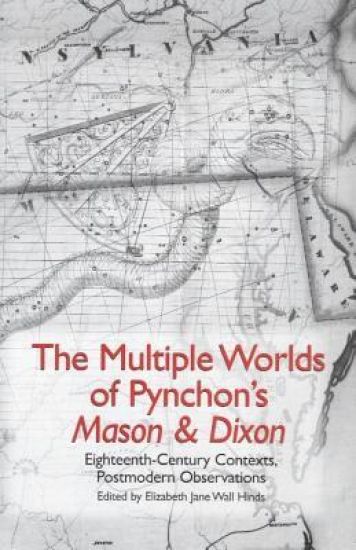
The Multiple Worlds of Pynchon's Mason & Dixon
New essays examining the interface between 18th- and 20th-century culture both in Pynchon's novel and in the historical past. Thomas Pynchon's 1997 novel Mason & Dixon marked a deep shift in Pynchon's career and in American letters in general. All of Pynchon's novels had been socially and politically aware, marked by social criticism and a profound questioning of American values. They have carried the labels of satire and black humor, and "Pynchonesque" has come to be associated with erudition, a playful style, anachronisms and puns -- and an interest in scientific theories, popular culture, paranoia, and the "military-industrial complex." In short, Pynchon's novels were the sine qua non of postmodernism; Mason & Dixon went further, using the same style, wit, and erudition to re-create an 18th century when "America" was being formed as both place and idea. Pynchon's focus on the creation of the Mason-Dixon Line and the governmental and scientific entities responsible for it makes a clearer statement than any of his previous novels about the slavery and imperialism at the heart of the Enlightenment, as he levels a dark and hilarious critique at this America. This volume of new essays studies the interface between 18th- and 20th-century cultureboth in Pynchon's novel and in the historical past. It offers fresh thinking about Pynchon's work, as the contributors take up the linkages between the 18th and 20th centuries in studies that are as concerned with culture as withthe literary text itself. Contributors: Mitchum Huehls, Brian Thill, Colin Clarke, Pedro Garcia-Caro, Dennis Lensing, Justin M. Scott Coe, Ian Copestake, Frank Palmeri. Elizabeth Jane Wall Hinds is Professor and Chair of the English Department at SUNY Brockport.
Irritable Bodies and Postmodern Subjects in Pynchon, Puig, Volponi
Irritable Bodies and Postmodern Subjects in Pynchon, Puig, Volponi examines the recurrence of violent body figuration in the fiction of Pynchon, Puig, and Volponi, and also in the fiction of several other postmodern authors who published their literature during the last quarter of the twentieth century. Different as they may be, these authors engage in analogous representative strategies, as their prose is frequently and similarly disrupted by obscene images of wounded, torn, or deformed bodies. In their mix of irony and morbidity, in the hyper-reality of their depiction, in the unwarranted, apparently random nature of their occurrence, these shocking outbreaks exemplify an uncompromisingly «irritable» style which is one fundamental element of postmodernist representation. The author argues how through their fascination with obscene material, these writers address burning issues about the significance of the corporeal in a seemingly discourse-defined universe. This book is a great resource for literary graduate students who are interested in a comparative approach to contemporary literature.
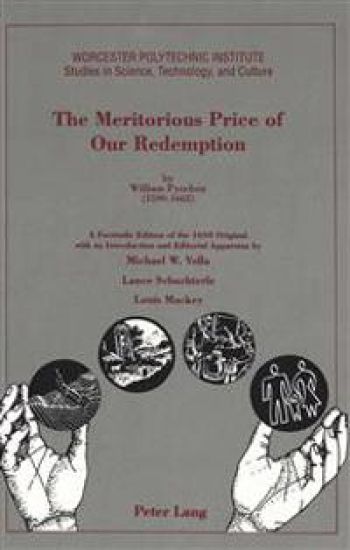
The Meritorious Price of Our Redemption by William Pynchon (1590 - 1662)
"The Meritorious Price of Our Redemption: A Facsimile Edition" reproduces William Pynchon's rare 1650 theological treatise about the Atonement. Written in the dialogue genre and deemed heretical by Boston orthodoxy, the book was burned on the city Commons. More than three hundred years later "Meritorious Price" is transformed in "On Preterition," a fictional counterpart that is inscribed in Thomas Pynchon's "Gravity's Rainbow," a landmark in the contemporary American novel. The reworking of the Puritan past in this recent postmodernist novel in part results from Thomas Pynchon's direct descent from his Puritan ancestor, but more than that, it points at important continuities in American literature. Introductory essays by Michael W. Vella, Lance Schachterle, and Louis Mackey explore questions of genealogy, theology, and postmodernism in the presentation of this facsimile edition aimed at scholars and readers of both Pynchons.
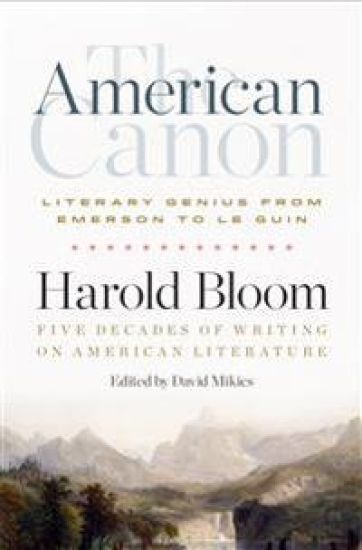
The American Canon: Literary Genius from Emerson to Pynchon
Our foremost literary critic on our most essential writers, from Emerson and Whitman to Hurston and Ellison, from Faulkner and O'Connor to Ursula K. LeGuin and Philip Roth. No critic has better understood the ways writers influence one another--how literary traditions are made--and no writer has helped readers understand this better, than Harold Bloom. Over the course of a remarkable sixty-year career, in such bestselling books as The Western Canon, Shakespeare: The Invention of the Human, and How to Read and Why, Bloom brought enormous insight and infectious enthusiasm to the great writers of the Western tradition, from Shakespeare and Cervantes to the British Romantics and the Russian masters. Now, for the first time, comes a collection of his brilliant writings about the American tradition, the ultimate guide to our nation's literature. Assembled with David Mikics (Slow Reading in a Hurried Age), this unprecedented collection gathers five decades' worth of Bloom's writings-- much of it hard to find and long unavailable--including essays, occasional pieces, and introductions as well as excerpts from his books. It offers deep readings of 47 essential American writers, reflecting on the surprising ways they have influenced each other across more than two centuries. The story it tells, of American literature as a recurring artistic struggle for selfhood, speaks to the passion and power of the American spirit. All of the visionary American writers who have long preoccupied Bloom―Emerson and Whitman, Hawthorne and Melville, and Dickinson, Faulkner, Crane, Frost, Stevens, and Bishop―make their appearance in The American Canon, along with Hemingway, James, O'Connor, Ellison, Hurston, Le Guin, Ashbery and many others. Bloom's passion for these classic writers is contagious, and he reminds readers how they have shaped our sense of who we are, and how they can summon us to be better versions of ourselves. Bloom, Mikics writes, "is still our most inspirational critic, still the man who can enlighten us by telling us to read as if our lives depended on it: Because, he insists, they do." For readers who want to deepen their appreciation of American literature, there's no better place to start than The American Canon.