Kirjojen hintavertailu. Mukana 12 441 652 kirjaa ja 12 kauppaa.

Kirjahaku

Etsi kirjoja tekijän nimen, kirjan nimen tai ISBN:n perusteella.

1000 tulosta hakusanalla R.J. Lawrence

Sceptics-Arg Philosophers

Sceptics-Arg Philosophers

R.J. Hankinson

Routledge
1999
sidottu
First Published in 1999. The purpose of this series is to provide a contemporary assessment and history of the entire course of philosophical thought. Each book constitutes a detailed, critical introduction to the work of a philosopher of major influence and significance. This book focuses on Greek scepticism.
Lucifer and Prometheus

Lucifer and Prometheus

R J Z WERBLOWSKY

Routledge
1999
sidottu
Routledge is now re-issuing this prestigious series of 204 volumes originally published between 1910 and 1965. The titles include works by key figures such asC.G. Jung, Sigmund Freud, Jean Piaget, Otto Rank, James Hillman, Erich Fromm, Karen Horney and Susan Isaacs. Each volume is available on its own, as part of a themed mini-set, or as part of a specially-priced 204-volume set. A brochure listing each title in the "International Library of Psychology" series is available upon request.
The Problems of Perception

The Problems of Perception

R J Hirst

Routledge
2002
sidottu
First published in 2002. Written in 1959, this volume looks at the philosophical problems of perception, that arise mainly because our traditional common-sense notions clash with the factual evidence concerning not only the occurrence of illusions and hallucinations but also the essential role played by complex causal and psychological processes in perceiving.
John Stuart Mill

John Stuart Mill

R J Halliday; R. J. Halliday

Routledge
2003
sidottu
First published in 1976, this volume offers a significant new interpretation of Mill's political thought, Mill's ambivalent attitude to democracy is carefully examined. The implications for modern democracy of Mill's views on consensus and leadership, bureaucracy and participation, equality and liberty emerge from a deep understanding of Mill's place in 19th century ideas.
Cities, Capitalism and Civilization
Cities, Capitalism and Civilization looks at the character and distinctiveness of Western Civilization. R.J. Holton sets out to challenge the belief that cities and urban social classes have formed the main component of the advance of civilization, and the principle dynamic of Western capitalism.This book was first published in 1986.
English Primary Education and the Progressives, 1914-1939
Originally published 1972.This book concerns the progressive movement, its prominent thinkers and its achievements, at a period of vital change in English primary education. The role of progressive educationists, such as Lane, Neill and Montessori is considered. The author asserts that these pioneers gradually made themselves the intellectual orthodoxy in the years between the wars.
John Stuart Mill

John Stuart Mill

R J Halliday; R. J. Halliday

Routledge
2007
nidottu
First published in 1976, this volume offers a significant new interpretation of Mill's political thought, Mill's ambivalent attitude to democracy is carefully examined. The implications for modern democracy of Mill's views on consensus and leadership, bureaucracy and participation, equality and liberty emerge from a deep understanding of Mill's place in 19th century ideas.
Sceptics-Arg Philosophers

Sceptics-Arg Philosophers

R.J. Hankinson

Routledge
2011
nidottu
First Published in 1999. The purpose of this series is to provide a contemporary assessment and history of the entire course of philosophical thought. Each book constitutes a detailed, critical introduction to the work of a philosopher of major influence and significance. This book focuses on Greek scepticism.
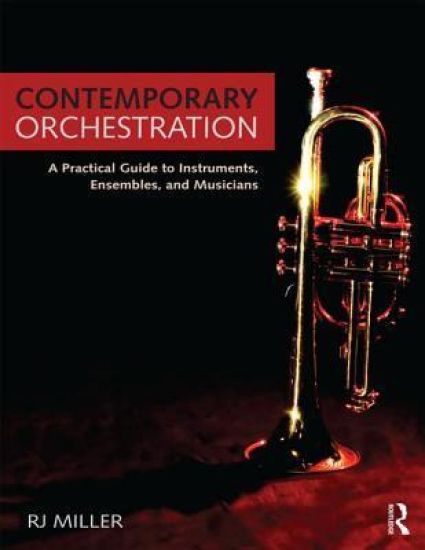
Contemporary Orchestration

Contemporary Orchestration

R.J. Miller

Routledge
2015
sidottu
Contemporary Orchestration: A Practical Guide to Instruments, Ensembles, and Musicians teaches students how to orchestrate for a wide variety of instruments, ensembles, and genres, while preparing them for various real-world professional settings ranging from the concert hall to the recording studio. Unlike most orchestration texts, it includes coverage of contemporary instruments and ensembles alongside traditional orchestra and chamber ensembles. Features Practical considerations: Practical suggestions for choosing a work to orchestrate, and what to avoid when writing for each instrument. Pedagogical features In the Profession: Professional courtesies, considerations and expectations. Building the Score: Step-by-step construction of an orchestration. Scoring Examples: Multiple scoring examples for each instrument. Exercises: Analyzing, problem solving, and creating orchestration solutions. Critical Thinking: Alternate approaches and solutions.
Contemporary Orchestration

Contemporary Orchestration

R.J. Miller

Routledge
2014
nidottu
Contemporary Orchestration: A Practical Guide to Instruments, Ensembles, and Musicians teaches students how to orchestrate for a wide variety of instruments, ensembles, and genres, while preparing them for various real-world professional settings ranging from the concert hall to the recording studio. Unlike most orchestration texts, it includes coverage of contemporary instruments and ensembles alongside traditional orchestra and chamber ensembles. Features Practical considerations: Practical suggestions for choosing a work to orchestrate, and what to avoid when writing for each instrument. Pedagogical features In the Profession: Professional courtesies, considerations and expectations. Building the Score: Step-by-step construction of an orchestration. Scoring Examples: Multiple scoring examples for each instrument. Exercises: Analyzing, problem solving, and creating orchestration solutions. Critical Thinking: Alternate approaches and solutions.
English Primary Education and the Progressives, 1914-1939
Originally published 1972.This book concerns the progressive movement, its prominent thinkers and its achievements, at a period of vital change in English primary education. The role of progressive educationists, such as Lane, Neill and Montessori is considered. The author asserts that these pioneers gradually made themselves the intellectual orthodoxy in the years between the wars.
Cities, Capitalism and Civilization
Cities, Capitalism and Civilization looks at the character and distinctiveness of Western Civilization. R.J. Holton sets out to challenge the belief that cities and urban social classes have formed the main component of the advance of civilization, and the principle dynamic of Western capitalism.This book was first published in 1986.
Italy and the Wider World

Italy and the Wider World

R.J.B. Bosworth

Routledge
2013
nidottu
Richard Bosworth's overview of Italy's role in European and world politics from 1860 to 1960 is lively and iconclastic. Based on a combination of primary research and secondary material he examines Italian diplomacy, military power, commerce, culture, tourism and ideology. His account challenges many aspects of current Italian historiography and offers an original vision of the place of Italy in modern history.
Lucifer and Prometheus

Lucifer and Prometheus

R J Z WERBLOWSKY

Routledge
2013
nidottu
Routledge is now re-issuing this prestigious series of 204 volumes originally published between 1910 and 1965. The titles include works by key figures such asC.G. Jung, Sigmund Freud, Jean Piaget, Otto Rank, James Hillman, Erich Fromm, Karen Horney and Susan Isaacs. Each volume is available on its own, as part of a themed mini-set, or as part of a specially-priced 204-volume set. A brochure listing each title in the International Library of Psychology series is available upon request.
Good Figs, Bad Figs

Good Figs, Bad Figs

R.J.R. Plant

BLOOMSBURY PUBLISHING PLC
2008
sidottu
Good Figs, Bad Figs begins by reviewing how the Old Testament depicts YHWH exercising judgment in Israel. Three broad categories of judicial action are identified: selective, unselective, and national. It is noted that more than one of these may be juxtaposed within the same text, and that each is a corollary of a wider theological frame of reference. The rest of the study focuses on the concept of judicial differentiation in the book of Jeremiah. Jeremiah 1 - 20 announce wrath upon all Judah, while chs. 30 - 33 prophesy restoration for the entire Diaspora. Elsewhere, however, YHWH's judicial action is more nuanced. Jer. 21 - 24 differentiates between those who stay in Jerusalem and those who surrender (21.1-10), between Israel's leaders and people (23.1-8), and between the exiles and non-exiles (24.1-10). Jeremiah 27 - 29 also distinguishes between exiled and non-exiled communities, but adds a 'people and prophets' polarity. Finally, Jer. 37 - 45 offers hope to those who surrender (38.1-3) or remain in the land (42.1-22), alongside salvation oracles for two individuals who do not conform to these conditions (39.15-18; 45.1-5). Three main conclusions are drawn. Firstly, the polarities of judgment and salvation in Jer. are more varied than has generally been appreciated. Secondly, this diversity of perspective is theologically significant; it is suggested that each polarity offers a valid though incomplete lens through which to interpret God's judicial action. Thirdly, the concepts of judicial differentiation and non-differentiation may offer a helpful framework in which to read the book of Jeremiah as a whole.