Kirjojen hintavertailu. Mukana 12 083 983 kirjaa ja 12 kauppaa.

Kirjahaku

Etsi kirjoja tekijän nimen, kirjan nimen tai ISBN:n perusteella.

1000 tulosta hakusanalla ROBERT C. WATERSTON

Context and Content

Context and Content

Robert C. Stalnaker

Clarendon Press
1999
nidottu
In Context and Content Robert Stalnaker develops a philosophical picture of the nature of speech and thought and the relations between them. Two themes in particular run through these collected essays: the role that the context in which speech takes place plays in accounting for the way language is used to express thought, and the role of the external environment in determining the contents of our thoughts. Stalnaker argues against the widespread assumption of the priority of linguistic over mental representation, which he suggests has had a distorting influence on our understanding. The first part of the book develops a framework for representing contexts and the way they interact with the interpretation of what is said in them. This framework is used to help to explain a range of linguistic phenomena concerning presupposition and assertion, conditional statements, the attribution of beliefs, and the use of names, descriptions, and pronouns to refer. Stalnaker then draws out the conception of thought and its content that is implicit in this framework. He defends externalism about thought--the assumption that our thoughts have the contents they have in virtue of the way we are situated in the world--and explores the role of linguistic action and linguistic structure in determining the contents of our thoughts. Context and Content offers philosophers and cognitive scientists a summation of Stalnaker's important and influential work in this area. His new introduction to the volume gives an overview of this work and offers a convenient way in for those who are new to it. The Oxford Cognitive Science series is a new forum for the best contemporary work in this flourishing field, where various disciplines--cognitive psychology, philosophy, linguistics, cognitive neuroscience, and computational theory--join forces in the investigation of thought, awareness, understanding, and associated workings of the mind. Each book constitutes an original contribution to its subject, but will be accessible beyond the ranks of specialists, so as to reach a broad interdisciplinary readership. The series will be carefully shaped and steered with the aim of representing the most important developments in the field and bringing together its constituent disciplines.
Context and Content

Context and Content

Robert C. Stalnaker

Clarendon Press
1999
sidottu
In Context and Content Robert Stalnaker develops a philosophical picture of the nature of speech and thought and the relations between them. Two themes in particular run through these collected essays: the role that the context in which speech takes place plays in accounting for the way language is used to express thought, and the role of the external environment in determining the contents of our thoughts. Stalnaker argues against the widespread assumption of the priority of linguistic over mental representation, which he suggests has had a distorting influence on our understanding. The first part of the book develops a framework for representing contexts and the way they interact with the interpretation of what is said in them. This framework is used to help to explain a range of linguistic phenomena concerning presupposition and assertion, conditional statements, the attribution of beliefs, and the use of names, descriptions, and pronouns to refer. Stalnaker then draws out the conception of thought and its content that is implicit in this framework. He defends externalism about thought--the assumption that our thoughts have the contents they have in virtue of the way we are situated in the world--and explores the role of linguistic action and linguistic structure in determining the contents of our thoughts. Context and Content offers philosophers and cognitive scientists a summation of Stalnaker's important and influential work in this area. His new introduction to the volume gives an overview of this work and offers a convenient way in for those who are new to it. The Oxford Cognitive Science series is a new forum for the best contemporary work in this flourishing field, where various disciplines--cognitive psychology, philosophy, linguistics, cognitive neuroscience, and computational theory--join forces in the investigation of thought, awareness, understanding, and associated workings of the mind. Each book constitutes an original contribution to its subject, but will be accessible beyond the ranks of specialists, so as to reach a broad interdisciplinary readership. The series will be carefully shaped and steered with the aim of representing the most important developments in the field and bringing together its constituent disciplines.
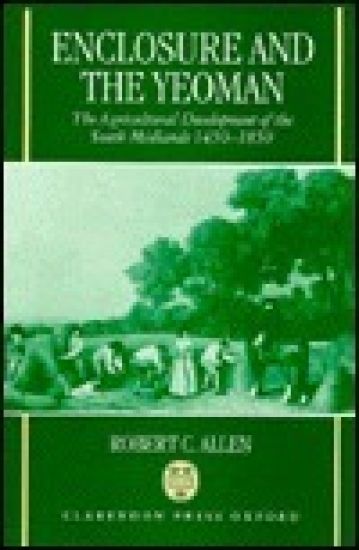
Enclosure and the Yeoman

Enclosure and the Yeoman

Robert C. Allen

Clarendon Press
1992
sidottu
This book traces the shift from medieval to modern institutions in English agriculture. It explores their importance for productivity growth, income distribution, and the contribution of agriculture to British economic development. Robert C. Allen's pioneering study shows that, contrary to the assumption of many historians, small-scale farmers in the open-field system were responsible for a considerable proportion of the productivity growth achieved between the middle ages and the nineteenth century. The process of enclosure and the replacement of these yeomen by large-scale tenant farming relying on wage labour had relatively little impact on the agricultural contribution to economic development during the industrial revolution. Enclosures and large farms enriched landowners without benefiting consumers, workers, or farmers. Thoroughly grounded in the archival sources, and underpinned by rigorous economic analysis, Enclosure and the Yeoman is a scholarly and challenging reassessment of the history of English agriculture. It will be indispensable reading for all historians concerned with the making of modern Britain.
Chaos and Nonlinear Dynamics

Chaos and Nonlinear Dynamics

Robert C. Hilborn

Oxford University Press
2000
nidottu
Chaos and Nonlinear Dynamics introduces students, scientists, and engineers to the full range of activity in the rapidly growing field on nonlinear dynamics. Using a step-by-step introduction to dynamics and geometry in state space as the central focus of understanding nonlinear dynamics, this book includes a thorough treatment of both differential equation models and iterated map models (including a derivation of the famous Feigenbaum numbers). It is the only book at this level to include the increasingly important field of pattern formation and a survey of the controversial questions of quantum chaos. Important tools such as Lyapunov exponents and fractal dimensions are treated in detail. With over 200 figures and diagrams, and analytic and computer exercises for every chapter, the book can be used as a course-text or for self-instruction. This second edition has been restructured to make the book even more useful as a course text:many of the more complex examples and derivations have been moved to appendices. The extensive collection of annotated references has been updated through January 2000 and now includes listings of World Wide Web sites at many of the major nonlinear dynamics research centers. From reviews on the 1/e: 'What has been lacking is a single book that takes the reader with nothing but a knowledge of elementary calculus and physics all the way to the frontiers of research in chaos and nonlinear dynamics in all its facets. [...] a serious student, teacher, or researcher would be delighted to have this book on the shelf as a reference and as a window to the literature in this exciting and rapidly growing new field of chaos.' J.C. Sprott, American Journal of Physics, September 19944 'I congratulate the author on having managed to write an extremely thorough, comprehensive, and entertaining introduction to the fascinating field of nonlinear dynamics. His book is highly self- explanatory and ideally suited for self-instruction. There is hardly any question that the author does not address in an exceptionally readable manner. [...] I strongly recommend it to those looking for a comprehensive, practical, and not highly mathematical approach to the subject.' E.A. Hunt, IEEE Spectrum, December 1994
The Industrial Revolution

The Industrial Revolution

Robert C. Allen

Oxford University Press
2017
nidottu
The 'Industrial Revolution' was a pivotal point in British history that occurred between the mid-eighteenth and mid-nineteenth centuries and led to far reaching transformations of society. With the advent of revolutionary manufacturing technology productivity boomed. Machines were used to spin and weave cloth, steam engines were used to provide reliable power, and industry was fed by the construction of the first railways, a great network of arteries feeding the factories. Cities grew as people shifted from agriculture to industry and commerce. Hand in hand with the growth of cities came rising levels of pollution and disease. Many people lost their jobs to the new machinery, whilst working conditions in the factories were grim and pay was low. As the middle classes prospered, social unrest ran through the working classes, and the exploitation of workers led to the growth of trade unions and protest movements. In this Very Short Introduction, Robert C. Allen analyzes the key features of the Industrial Revolution in Britain, and the spread of industrialization to other countries. He considers the factors that combined to enable industrialization at this time, including Britain's position as a global commercial empire, and discusses the changes in technology and business organization, and their impact on different social classes and groups. Introducing the 'winners' and the 'losers' of the Industrial Revolution, he looks at how the changes were reflected in evolving government policies, and what contribution these made to the economic transformation. ABOUT THE SERIES: The Very Short Introductions series from Oxford University Press contains hundreds of titles in almost every subject area. These pocket-sized books are the perfect way to get ahead in a new subject quickly. Our expert authors combine facts, analysis, perspective, new ideas, and enthusiasm to make interesting and challenging topics highly readable.
Knowledge and Conditionals

Knowledge and Conditionals

Robert C. Stalnaker

Oxford University Press
2019
sidottu
Robert C. Stalnaker presents a set of essays on the structure of inquiry. In the first part he focuses on the concepts of knowledge, belief, and partial belief, and on the rules and procedures we use - or ought to use - to determine what to believe, and what to claim that we know. In the second part he examines conditional statements and conditional beliefs, their role in epistemology, and their relations to causal and explanatory concepts, such as dispositions, objective chance, relations of dependence, and independence. A central concern of the book is the interaction of different cognitive perspectives - the ways in which the attitudes of rational agents are or should be influenced by critical reflection on their present cognitive situation, on their own cognitive situations at other times, and on the cognitive situations of others with whom they interact. The general picture that is developed is naturalistic, following Hume in rejecting a substantive role for pure reason in the defense of inductive rules, and in giving causal concepts a central role in the description and explanation of our cognitive practices. However, Stalnaker rejects the side of Hume that aims to reduce concepts involving natural necessity to more basic descriptive concepts. Instead, he argues that the development of inductive rules and practices takes place in interaction with the development of concepts for giving a theoretical description of the world.
Global Economic History

Global Economic History

Robert C. Allen

Oxford University Press
2026
nidottu
Very Short Introductions: Brilliant, Sharp, Inspiring Why are some countries rich, and some poor? Does this status persist throughout time, and if so, why? How can a country escape poverty? In this Very Short Introduction, Robert C. Allen explores the interplay of geography, globalization, technological change, economic policy, and institutions, to show how they have determined the wealth and poverty of nations around the world. Using historical examples to analyse the factors that have influenced growth, he exposes what has caused the unequal world we live in today, focusing on recent changes in equality and world economic disruption. ABOUT THE SERIES: The Very Short Introductions series from Oxford University Press contains hundreds of titles in almost every subject area. These pocket-sized books are the perfect way to get ahead in a new subject quickly. Our expert authors combine facts, analysis, perspective, new ideas, and enthusiasm to make interesting and challenging topics highly readable.
Ways a World Might Be

Ways a World Might Be

Robert C. Stalnaker

Clarendon Press
2003
sidottu
Robert Stalnaker draws together in this volume his work in metaphysics. The central theme is the role of possible worlds in articulating our various metaphysical commitments. The book begins with reflections on the general idea of a possible world, and then uses the framework of possible worlds to formulate and clarify some questions about properties and individuals, reference, thought, and experience. The essays also reflect on the nature of metaphysics, and on the relation between questions about what there is and questions about how we talk and think about what there is.
Ways a World Might Be

Ways a World Might Be

Robert C. Stalnaker

Clarendon Press
2003
nidottu
Ways a World Might Be collects, and adds to, Robert Stalnaker's published papers on metaphysical issues. The central theme that runs throughout the book is the role of possible worlds in articulating our various metaphysical commitments. The essays contain both reflections on the general idea of a space of possibilities and attempts to use the framework of possible worlds to formulate and clarify semantic and metaphysical questions about properties and individuals, supervenience and essentialism, reference, thought and experience. The essays also reflect on the nature of metaphysics, and on the relation between metaphysical and semantic questions - questions about what there is and questions about how we talk and think about what there is. The book begins by asking what possible worlds are, and how we are able to represent and know about them. Stalnaker argues that we can take possibilities seriously without embracing the kind of modal realism that David Lewis defended, and can take them as fundamental without purporting to offer a reductive account of modality. He then turns to questions about the nature of properties and relations and their role in carving up a space of possibilities, and to questions about the nature of individuals, and the way they are identified across time and possible worlds. The essays in the last two sections of the book are concerned with the interaction of metaphysical and semantic issues, and with the place of subjective experience in our conception of an objective world as it is in itself. Two of the fourteen essays, plus an extensive introduction that sets the papers in context and makes explicit some of the essays' common threads, are published here for the first time.
Intellectual Virtues

Intellectual Virtues

Robert C. Roberts; W. Jay Wood

Clarendon Press
2007
sidottu
Out of the ferment of recent debates about the intellectual virtues, Roberts and Wood have developed an approach they call 'regulative epistemology'. This is partly a return to classical and medieval traditions, partly in the spirit of Locke's and Descartes's concern for intellectual formation, partly an exploration of connections between epistemology and ethics, and partly an approach that has never been tried before. Standing on the shoulders of recent epistemologists - including William Alston, Alvin Plantinga, Ernest Sosa, and Linda Zagzebski - Roberts and Wood pursue epistemological questions by looking closely and deeply at particular traits of intellectual character such as love of knowledge, intellectual autonomy, intellectual generosity, and intellectual humility. Central to their vision is an account of intellectual goods that includes not just knowledge as properly grounded belief, but understanding and personal acquaintance, acquired and shared through the many social practices of actual intellectual life. This approach to intellectual virtue infuses the discipline of epistemology with new life, and makes it interesting to people outside the circle of professional epistemologists. It is epistemology for the whole intellectual community, as Roberts and Wood carefully sketch the ways in which virtues that would have been categorized earlier as moral make for agents who can better acquire, refine, and communicate important kinds of knowledge.
Ethics in Palliative Care

Ethics in Palliative Care

Robert C. Macauley

Oxford University Press Inc
2018
nidottu
No specialty faces more diverse and challenging ethical dilemmas than palliative medicine. What is the best way to plan ahead for the end of life? How should physicians respond when patients refuse treatments likely to be beneficial, or demand treatments not likely to be? Who makes medical decisions for patients who are too ill to decide for themselves? Do patients have the "right to die" (and, if so, what exactly does that mean)? In this volume noted palliative care physician and bioethicist Robert C. Macauley addresses a broad range of issues from historical, legal, clinical, and ethical perspectives. Clinically nuanced and philosophically rigorous, Ethics in Palliative Care analyzes hot-button subjects like physician assisted dying and euthanasia, as well as often overlooked topics such as pediatric palliative care, organ donation, palliative care research, and moral distress. Drawing on real cases yet written in non-technical language, this complete guide will appeal to both medical professionals and lay readers.
Intellectual Virtues

Intellectual Virtues

Robert C. Roberts; W. Jay Wood

Oxford University Press
2009
nidottu
Out of the ferment of recent debates about the intellectual virtues, Roberts and Wood have developed an approach they call 'regulative epistemology'. This is partly a return to classical and medieval traditions, partly in the spirit of Locke's and Descartes's concern for intellectual formation, partly an exploration of connections between epistemology and ethics, and partly an approach that has never been tried before. Standing on the shoulders of recent epistemologists - including William Alston, Alvin Plantinga, Ernest Sosa, and Linda Zagzebski - Roberts and Wood pursue epistemological questions by looking closely and deeply at particular traits of intellectual character such as love of knowledge, intellectual autonomy, intellectual generosity, and intellectual humility. Central to their vision is an account of intellectual goods that includes not just knowledge as properly grounded belief, but understanding and personal acquaintance, acquired and shared through the many social practices of actual intellectual life. This approach to intellectual virtue infuses the discipline of epistemology with new life, and makes it interesting to people outside the circle of professional epistemologists. It is epistemology for the whole intellectual community, as Roberts and Wood carefully sketch the ways in which virtues that would have been categorized earlier as moral make for agents who can better acquire, refine, and communicate important kinds of knowledge.
Our Knowledge of the Internal World

Our Knowledge of the Internal World

Robert C. Stalnaker

Oxford University Press
2010
nidottu
On the traditional Cartesian picture, knowledge of one's own internal world -- of one's current thoughts and feelings -- is the unproblematic foundation for all knowledge. The philosophical problem is to explain how we can move beyond this knowledge, how we can form a conception of an objective world, and how we can know that the world answers to our conception of it. This book is in the anti-Cartesian tradition that seeks to reverse the order of explanation. Robert Stalnaker argues that we can understand our knowledge of our thoughts and feelings only by viewing ourselves from the outside, and by seeing our inner lives as features of the world as it is in itself. He uses the framework of possible worlds both to articulate a conception of the world as it is in itself, and to represent the relation between our objective knowledge and our knowledge of our place in the world. He explores an analogy between knowledge of one's own phenomenal experience and self-locating knowledge -- knowledge of who one is, and what time it is. He criticizes the philosopher's use of the notion of acquaintance to characterize our intimate epistemic relation to the phenomenal character of our experience, and explores the tension between an anti-individualist conception of the contents of thought and the thesis that we have introspective access to that content. The conception of knowledge that emerges is a contextualist and anti-foundationalist one but, it is argued, a conception that is compatible with realism about both the external and internal worlds.
Global Economic History

Global Economic History

Robert C. Allen

Oxford University Press
2011
nidottu
Why are some countries rich and others poor? In 1500, the income differences were small, but they have grown dramatically since Columbus reached America. Since then, the interplay between geography, globalization, technological change, and economic policy has determined the wealth and poverty of nations. The industrial revolution was Britain's path breaking response to the challenge of globalization. Western Europe and North America joined Britain to form a club of rich nations by pursuing four polices-creating a national market by abolishing internal tariffs and investing in transportation, erecting an external tariff to protect their fledgling industries from British competition, banks to stabilize the currency and mobilize domestic savings for investment, and mass education to prepare people for industrial work. Together these countries pioneered new technologies that have made them ever richer. Before the Industrial Revolution, most of the world's manufacturing was done in Asia, but industries from Casablanca to Canton were destroyed by western competition in the nineteenth century, and Asia was transformed into 'underdeveloped countries' specializing in agriculture. The spread of economic development has been slow since modern technology was invented to fit the needs of rich countries and is ill adapted to the economic and geographical conditions of poor countries. A few countries - Japan, Soviet Russia, South Korea, Taiwan, and perhaps China - have, nonetheless, caught up with the West through creative responses to the technological challenge and with Big Push industrialization that has achieved rapid growth through investment coordination. Whether other countries can emulate the success of East Asia is a challenge for the future. ABOUT THE SERIES: The Very Short Introductions series from Oxford University Press contains hundreds of titles in almost every subject area. These pocket-sized books are the perfect way to get ahead in a new subject quickly. Our expert authors combine facts, analysis, perspective, new ideas, and enthusiasm to make interesting and challenging topics highly readable.
Depression in Later Life

Depression in Later Life

Robert C. Baldwin

Oxford University Press
2014
nidottu
Depression affects between 10-15% of older people, making it the most frequently encountered mental health condition in later life. Despite this, the condition is easily missed in clinical practice or not adequately treated. Part of the Oxford Psychiatry Library, this second edition of Depression in Later Life highlights areas of depression which are of special relevance to later life, how to diagnose depression in an older person, the overlap with dementia and various other physical illnesses, and important pharmacological and psychological considerations. All chapters have been updated with new data where relevant, and case vignettes are included to ensure the book is relatable and easy to read.
Thesaurus of Claim Construction

Thesaurus of Claim Construction

Robert C. Kahrl; Stuart B. Soffer

Oxford University Press Inc
2010
pokkari
Claim construction is a major phase of a patent litigation where the meaning and scope of the claims themselves - the invention - is determined by the court. The outcome of this definition phase is crucial to the respective infringement and invalidity positions of the parties. The Thesaurus of Claim Construction directs practitioners to cases-and in contrast to searches on more general electronic databases, only those cases-in which claim terms have previously been construed, and further to the sources of the evidence used by previous courts to construe the terms in dispute.
A Dictionary of Genetics

A Dictionary of Genetics

Robert C. King; Pamela Mulligan; William Stansfield

Oxford University Press Inc
2013
nidottu
This eighth edition of A Dictionary of Genetics contains over 7,500 up-to-date and cross-referenced entries, including 540 that are newly written. The entries include the latest terminology, concepts, theories, and techniques, covering not only genetics but also such overlapping disciplines as cell biology, medicine, and evolutionary biology. The fully revised six appendices are a unique source of detailed supplementary information, including a chronology of scientific and technological breakthroughs spanning the period from 1590 to the present, lists of useful internet sites and journals, and a table of sample genome sizes and gene numbers. A Dictionary of Genetics continues to be the definitive reference work for students, educators, and clinicians in the field of genetics.
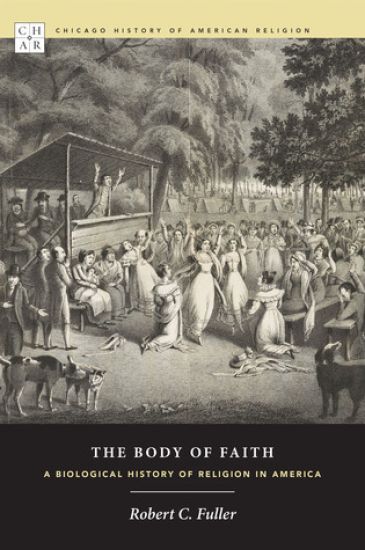
The Body of Faith

The Body of Faith

Robert C. Fuller

University of Chicago Press
2013
sidottu
The postmodern view that human experience is constructed by language and culture has informed historical narratives for decades. Yet newly emerging information about the biological body now makes it possible to supplement traditional scholarly models with insights about the bodily sources of human thought and experience. "The Body of Faith" is the first account of American religious history to highlight the biological body. Robert C. Fuller brings a crucial new perspective to the study of American religion, showing that knowledge about the biological body deeply enriches how we explain dramatic episodes in American religious life. Fuller shows that the body's genetically evolved systems - pain responses, sexual passion, and emotions like shame and fear - have persistently shaped the ways that Americans forge relationships with nature, society, and God. The first new work to appear in the "Chicago History of American Religion" series in decades, "The Body of Faith" offers a truly interdisciplinary framework for explaining the richness, diversity, and endless creativity of American religious life.
The Benchley Roundup

The Benchley Roundup

Robert C. Benchley

University of Chicago Press
2001
nidottu
Robert C. Benchley's sketches and articles, published in periodicals like Life, Vanity Fair, and The New Yorker, earned him a reputation as one of the sharpest humorists of his time; his influence—on contemporaries such as E. B. White, James Thurber, and S. J. Perelman, or followers like Woody Allen, Steve Martin, and Richard Pryor—has left an indelible mark on the American comic tradition. The Benchley Roundup collects those pieces, selected by Benchley's son Nathaniel, "which seem to stand up best over the years"-a compendium of the most endearing and enduring work from one of America's funniest and most penetrating wits."It took me fifteen years to discover that I had no talent for writing, but I couldn't give it up because by then I was too famous."—Robert Benchley
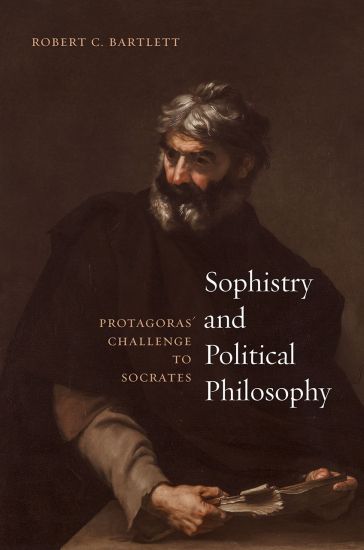
Sophistry and Political Philosophy

Sophistry and Political Philosophy

Robert C. Bartlett

University of Chicago Press
2016
sidottu
One of the central challenges to contemporary political philosophy is the apparent impossibility of arriving at any commonly agreed upon "truths." As Nietzsche observed in his Will to Power, the currents of relativism that have come to characterize modern thought can be said to have been born with ancient sophistry. If we seek to understand the strengths and weaknesses of contemporary radical relativism, we must therefore look first to the sophists of antiquity the most famous and challenging of whom is Protagoras. With Sophistry and Political Philosophy, Robert C. Bartlett provides the first close reading of Plato's two-part presentation of Protagoras. In the "Protagoras," Plato sets out the sophist's moral and political teachings, while the "Theaetetus," offers a distillation of his theoretical and epistemological arguments. Taken together, the two dialogues demonstrate that Protagoras is attracted to one aspect of conventional morality the nobility of courage, which in turn is connected to piety. This insight leads Bartlett to a consideration of the similarities and differences in the relationship of political philosophy and sophistry to pious faith. Bartlett's superb exegesis offers a significant tool for understanding the history of philosophy, but, in tracing Socrates's response to Protagoras' teachings, Bartlett also builds toward a richer understanding of both ancient sophistry and what Socrates meant by "political philosophy."