Kirjojen hintavertailu. Mukana 11 244 527 kirjaa ja 12 kauppaa.

Kirjahaku

Etsi kirjoja tekijän nimen, kirjan nimen tai ISBN:n perusteella.

1000 tulosta hakusanalla Ralph Hodder-Williams

Ralph Compton Double: Rough Justice #1

Ralph Compton Double: Rough Justice #1

Ralph Compton; Ralph Cotton

Penguin Putnam Inc
2022
nidottu
Ride the long path of vengeance in this thrilling double installment of bestselling Western author Ralph Compton's Rough Justice series. DEATH RIDES A CHESTNUT MARE by Ralph Compton: Waylaid by a pack of murdering outlaws, Daniel Strange's lifeless body is left dangling at the end of a rope. Now a mysterious gunslinger is on the vengeance trail, packing twin Colts and answering to the same name. With fiery green eyes and a temper to match, he won't stop until every last man who killed Strange shares the same fate. And as each bullet finds its mark, his victims will die never knowing the truth: that Daniel Strange may be dead and buried, but his daughter is alive--and killing.... THE SHADOW OF A NOOSE by Ralph Cotton: Young Jed and Tim Strange lost their father to an outlaw's bullet, and now their mother has succumbed to a fatal illness. Unable to farm their land due to a lack of funds, the twins set out to find their sister--who left home to avenge their father's death over a year ago. Farm life hasn't prepared the twins for the rough-and-tumble cow towns west of Missouri. And before they even begin their search, they're accused of a murder they didn't commit. Just barely escaping a posse's rope, the twins are on the run--wounded, hounded by the law, and desperately seeking the true killers....

Ralph Compton Double: Rough Justice #2

Ralph Compton Double: Rough Justice #2

Ralph Compton; Ralph Cotton

Penguin Putnam Inc
2023
nidottu
The Strange siblings are on the hunt for justice in this wild double installment of bestselling Western author Ralph Compton's Rough Justice series. RIDERS OF JUDGMENT: In her guise as "Danny Duggin," Danielle Strange has spent the past two years hunting down the outlaws who murdered her father. Reunited with her brothers, the twins Tim and Jed, she plans to take her war across the border into Mexico--unaware she's being pursued by a U.S. federal marshal.... Saul Delmano comes from a powerful family of cattlemen whose business stretches from the Southwestern territories into Mexico. He's put a $2,000 reward on Danny Duggin's head, tempting every outlaw and bounty hunter across the West to try to collect it. But the cry of vengeance has been shouted out--and only justice can silence it. DEATH ALONG THE CIMARRON: Disguised as "Danny Duggin," Danielle Strange hunted down the merciless cutthroats who murdered her father. Now the feared gunslick has hung up her trademark twin Colts--and given up her secret identity--to make something out of her Texas ranch. But then a passel of hard cases rides into town and all hell breaks loose. And when the vicious gunmen kill one of Danielle's old saddle pals, she knows it's time for Danny Duggin to ride the vengeance trail again....
The Collected Essays of Ralph Ellison

The Collected Essays of Ralph Ellison

Ralph Ellison

Modern Library
2024
nidottu
From the renowned author of Invisible Man, a classic, "elegant" (The New York Times) collection of essays that captures the breadth and complexity of his insights into racial identity, jazz and folklore, and citizenship across six decades. Compiled, edited, and newly revised by Ralph Ellison's literary executor, John F. Callahan, this definitive volume includes posthumously discovered reviews, criticism, and interviews, as well as the essay collections Shadow and Act (1964), hailed by Robert Penn Warren as "a body of cogent and subtle commentary on the questions that focus on race," and Going to the Territory (1986), an exploration of literature and folklore, jazz and culture, and the nature and quality of lives that Black Americans lead. With newly discovered essays and speeches, The Collected Essays reveals a more vulnerable, intimate side of Ellison than what we've previously seen. "Raph Ellison," wrote Stanley Crouch, "reached across race, religion, class and sex to make us all Americans."
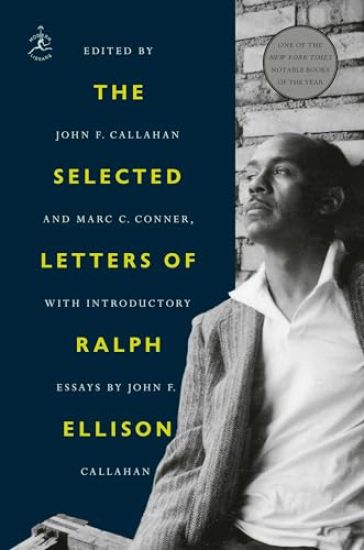
The Selected Letters of Ralph Ellison

The Selected Letters of Ralph Ellison

Ralph Ellison; John F. Callahan

RANDOM HOUSE USA INC
2024
nidottu
A NEW YORK TIMES NOTABLE BOOK - A radiant collection of letters from the renowned author of Invisible Man that traces the life and mind of a giant of American literature, with insights into the riddle of identity, the writer's craft, and the story of a changing nation over six decades These extensive and revealing letters span the life of Ralph Ellison and provide a remarkable window into the great writer's life and work, his friendships, rivalries, anxieties, and all the questions about identity, art, and the American soul that bedeviled and inspired him until his death. They include early notes to his mother, written as an impoverished college student; lively exchanges with the most distinguished American writers and thinkers of his time, from Romare Bearden to Saul Bellow; and letters to friends and family from his hometown of Oklahoma City, whose influence would always be paramount. These letters are beautifully rendered first-person accounts of Ellison's life and work and his observations of a changing world, showing his metamorphosis from a wide-eyed student into a towering public intellectual who confronted and articulated America's complexities.
Collected Works of Ralph Waldo Emerson

Collected Works of Ralph Waldo Emerson

Ralph Waldo Emerson

The Belknap Press
2004
sidottu
The essays in this book, first published in 1860, were developed from a series of lectures on "The Conduct of Life" delivered by Emerson during the early 1850s. Some of the original lectures were dropped and the rest were considerably revised, with new topics introduced. The published essays, on "Fate," "Power," "Wealth," "Culture," "Behavior," "Worship," "Considerations by the Way," "Beauty," and "Illusions," show Emerson's interest in many practical aspects of human life, and reflect his increasing involvement in politics--chiefly in the antislavery movement--during the decade before the Civil War.This edition is based on Emerson's holograph manuscripts and published sources. The text incorporates Emerson's later corrections and revisions, and shows us what he actually wrote (or, perhaps in some cases, intended to write).The historical introduction traces the book's development and its relation to Emerson's own personal growth and political awareness. Joseph Slater's explanatory notes help the modern reader to understand many of Emerson's references and allusions that may not be readily apparent. Historical Introduction by Barbara L. PackerNotes by Joseph SlaterText Established and Textual Introduction and Apparatus by Douglas Emory Wilson
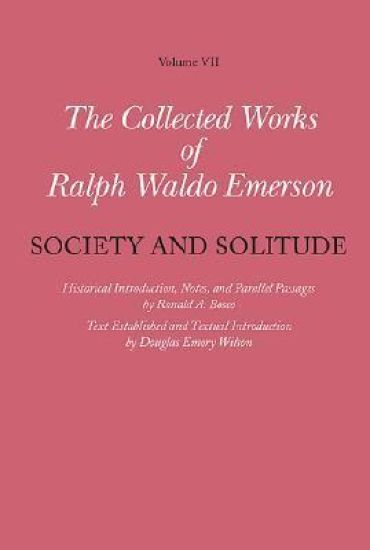
Collected Works of Ralph Waldo Emerson

Collected Works of Ralph Waldo Emerson

Ralph Waldo Emerson

The Belknap Press
2008
sidottu
Society and Solitude, published in 1870, was the first collection of essays Emerson had put into press since The Conduct of Life ten years earlier. Of the twelve essays included in the volume, he had previously published seven in whole or in part: "Society and Solitude," "Civilization," "Art," "Eloquence," "Domestic Life," "Books," and "Old Age." Emerson added five previously unpublished lectures or essays, "Works and Days," "Clubs," "Courage," "Success," and "Farming." This edition is based on Emerson's holograph manuscripts and published sources. The text incorporates corrections and revisions he recorded in both sources, and thus restores for the reader the text he actually wrote. Although he is still visibly the insistent optimist of his early and middle career, here Emerson assumes a more pragmatic attitude than formerly toward the life of the mind and the imagination. Society and Solitude captures the penultimate expression of Emersonian Transcendentalism and Romanticism. Historical Introduction, Notes, and Parallel Passages by Ronald A. Bosco Text Established and Textual Introduction and Apparatus by Douglas Emory Wilson
Collected Works of Ralph Waldo Emerson

Collected Works of Ralph Waldo Emerson

Ralph Waldo Emerson

The Belknap Press
2010
sidottu
Letters and Social Aims, published in 1875, contains essays originally published early in the 1840s as well as those that were the product of a collaborative effort among Ralph Waldo Emerson, his daughter Ellen Tucker Emerson, his son Edward Waldo Emerson, and his literary executor James Eliot Cabot. The volume takes up the topics of “Poetry and Imagination,” “Social Aims,” “Eloquence,” “Resources,” “The Comic,” “Quotation and Originality,” “Progress of Culture,” “Persian Poetry,” “Inspiration,” “Greatness,” and, appropriately for Emerson’s last published book, “Immortality.”The historical introduction demonstrates for the first time the decline in Emerson’s creative powers after 1865; the strain caused by the preparation of a poetry anthology and delivery of lectures at Harvard during this time; the devastating effect of a house fire in 1872; and how the Emerson children and Cabot worked together to enable Emerson to complete the book. The textual introduction traces this collaborative process in detail and also provides new information about the genesis of the volume as a response to a proposed unauthorized British edition of Emerson’s works.Historical Introduction by Ronald A. BoscoNotes and Parallel Passages by Glen M. JohnsonText Established and Textual Introduction and Apparatus by Joel Myerson
Collected Works of Ralph Waldo Emerson

Collected Works of Ralph Waldo Emerson

Ralph Waldo Emerson

The Belknap Press
2011
sidottu
At his death in 1882, Ralph Waldo Emerson was counted among the greatest poets in nineteenth-century America. This variorum edition of all the poems Emerson chose for publication during his lifetime offers readers the opportunity to situate Emerson’s poetic achievement alongside his celebrated essays and to consider their interrelationship.Decades before Walt Whitman and Emily Dickinson took their places in the firmament of American poets, Emerson was securely enthroned. Though his reputation as essayist now eclipses his reputation as poet, Emerson self-identified as a writer of verse and worked out his transcendental philosophy in this genre, establishing his belief in the authority of individual experience and in the essential metaphoric nature of language. Albert J. von Frank’s historical introduction traces the development of Emerson the poet, considering how life events, as well as his reading of German philosophy and Sufi poetry, influenced his thought and expression. Alongside accounts of the critical reception of his poems are public and private writings that reveal Emerson’s own estimation of his poetic project and achievement.The textual introduction and apparatus make transparent the theoretical and practical concerns that inform these critical texts. Also included are a chronological lists of variants and texts constituting the historical collation, notes clarifying obscure allusions, and headnotes identifying sources and context.
Collected Works of Ralph Waldo Emerson

Collected Works of Ralph Waldo Emerson

Ralph Waldo Emerson

The Belknap Press
2013
sidottu
With the appearance of the tenth and final volume of Collected Works, a project fifty years in the making reaches completion: the publication of critically edited texts of all of Emerson’s works published in his lifetime and under his supervision. The Uncollected Prose Writings is the definitive gathering of Emerson’s previously published prose writings that he left uncollected at the time of his death.The Uncollected Prose Writings supersedes the three posthumous volumes of Emerson’s prose that James Elliot Cabot and Edward Waldo Emerson added to his canon. Seeing as their primary task the expansion of the Emerson canon, they embellished and improvised. By contrast, Ronald A. Bosco and Joel Myerson have undertaken the restoration of Emerson’s uncollected prose canon, printing only what Emerson alone wrote, authorized for publication, and saw into print.In their Historical Introduction and Textual Introduction, the editors survey the sweep of Emerson’s uncollected published prose. The evidence they marshal reveals Emerson’s progressive reliance on lectures as forerunners to his published prose in major periodicals and clarifies what has been a slowly emerging portrait of the last decade and a half of his life as a public intellectual.
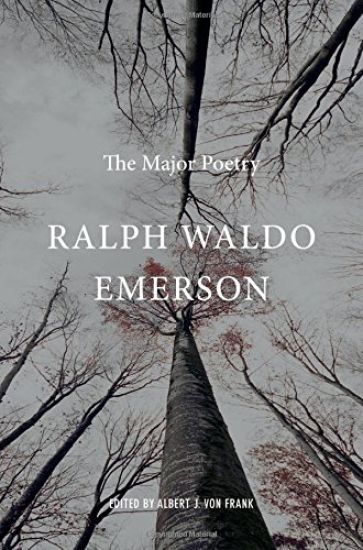
Ralph Waldo Emerson

Ralph Waldo Emerson

Ralph Waldo Emerson

The Belknap Press
2015
sidottu
Ralph Waldo Emerson: The Major Poetry, like its companion prose volume, presents a selection of definitively edited texts drawn chiefly from the multivolume Collected Works. Accompanying each poem is a headnote prepared by Albert von Frank for the student and general reader, which serves as an entryway to the poem, offering critical and historical contexts. Detailed annotations provide further guidance.A master of the essay form, a philosopher of moods and self-reliance, and the central figure in the American romantic movement, Emerson makes many claims on our attention. Ralph Waldo Emerson: The Major Poetry reminds us exactly why his poetry also matters and why he remains one of our most important theoreticians of verse. Emerson saw his poetry and philosophy as coordinate ways of seeing the world. “It is not metres,” he once declared, “but a metre-making argument, that makes a poem,—a thought so passionate and alive, that, like the spirit of a plant or an animal, it has an architecture of its own, and adorns nature with a new thing.”All the major poems published in Emerson’s lifetime—chosen from Poems (1847), May-Day and Other Pieces (1867), and Selected Poems (1876) as well as uncollected poems—are represented here. Also included in an appendix is the first selection ever made of the poems and poetic fragments that Emerson addressed to his first wife, Ellen, during their courtship and marriage and concluding with the anguish of bereavement following her death on February 8, 1831, at the age of nineteen.
Collected Works of Ralph Waldo Emerson

Collected Works of Ralph Waldo Emerson

Ralph Waldo Emerson

Harvard University Press
1971
sidottu
In 1849 Ralph Waldo Emerson collected in one volume all of his published work he thought worthy of preservation that had not been contained in the two series of Essays (1841, 1844) and the Poems (1847). Included were the essay Nature (1836); four orations, “The American Scholar,” “The Divinity School Address,” and two others; and five lectures which had appeared in The Dial.As the first volume of a projected new Collected Works, this edition of Nature, Addresses, and Lectures now provides for the first time a definitive text based on collation of all editions in which Emerson might have had a hand, together with a wholly new introduction and extensive notes. The recently published Journals and Lectures from this period help bring to this volume a fresh perspective on the first and formative stage of Emerson’s career as a public figure and man of letters.Introduction and Notes by Robert E. Spiller; Text Established by Alfred R. Ferguson
Collected Works of Ralph Waldo Emerson

Collected Works of Ralph Waldo Emerson

Ralph Waldo Emerson

Harvard University Press
1980
sidottu
Some of Ralph Waldo Emerson’s finest and most famous essays, such as “Self-Reliance,” “Compensation,” and “The Over-Soul,” appeared in his Essays of 1841, published when he was thirty-seven years old. Preceded by the slim volume Nature, it was his first full-length book.The present edition provides for the first time an authoritative text of the Essays, together with an introduction, notes, and supplementary material of great value for the study of Emerson’s creative processes. A list of hundreds of parallel passages in his earlier journals and lectures makes it possible to examine in detail how he drew upon those manuscripts (now published), especially the voluminous journals, as grist for the twelve essays. His subsequent alterations of the essays, particularly in the revised edition of 1847, give evidence of the evolution of his thought and style at this stage of his career. While the text incorporates his revisions, so as to represent his final intention, the earlier versions are given at the end of the book.Introduction and Notes by Joseph SlaterText Established by Alfred R. Ferguson and Jean Ferguson Carr
Collected Works of Ralph Waldo Emerson

Collected Works of Ralph Waldo Emerson

Ralph Waldo Emerson

Harvard University Press
1984
sidottu
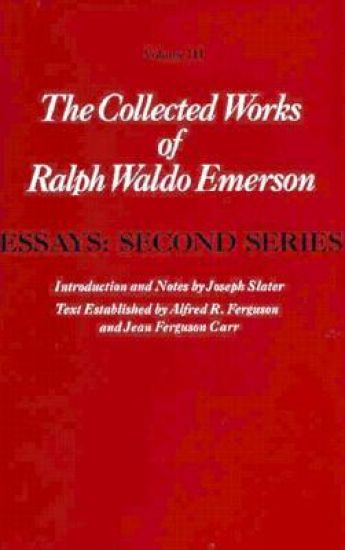
Ralph Waldo Emerson’s second collection of essays appeared in 1844, when he was forty-one. It includes eight essays—“The Poet,” “Experience,” “Character,” “Manners,” “Gifts,” “Nature,” “Politics,” and “Nominalist and Realist”—and one address, the much misunderstood “New England Reformers.” Essays: Second Series has a lightness of tone and an irony absent from the earlier writings, but it is no less memorable: “a sermon to me,” Carlyle wrote, “a real word.”The present edition, drawing on the vast body of Emerson scholarship of the last forty years, incorporates all the textual changes Emerson made or demonstrably intended to make after 1844. It records variant wordings and recounts the development of the text before and after publication. A list of parallel passages makes it possible to trace Emerson’s extensive use of material from his journals, notebooks, and lectures. Endnotes provide information about people, events, and now-obscure terms. A brief historical introduction places the book in the context of the years during which it was written, the time of Brook Farm, The Dial, and the death of Emerson’s five year-old son.Historical Introduction and Notes by Joseph SlaterText Established by Alfred R. Ferguson and Jean Ferguson CarrTextual Introduction and Apparatus by Jean Ferguson Carr
Collected Works of Ralph Waldo Emerson

Collected Works of Ralph Waldo Emerson

Ralph Waldo Emerson

Harvard University Press
1987
sidottu
In 1845 Emerson delivered a series of lectures entitled "Uses of Great Men; Plato, or the Philosopher; Swedenborg, or the Mystic; Montaigne, or the Skeptic; Shakespeare, or the Poet; Napoleon, or the Man of the World; and Goethe, or the Writer." Emerson's approach to his great men stands in interesting contrast to that of his friend Carlyle in his Heroes and Hero Worship of 1841.Although by 1845 Emerson had been lecturing for over ten years, Representative Men, published in 1850, was the first of his works to consist of his lectures as delivered, with only minima! revision and expansion. The book retains the immediacy of the spoken word, and the freedom and daring inspired by a live audience.This critical edition is based on Emerson's holograph manuscript, which served as printer's copy for the first American edition, collated with subsequent editions and with Emerson's own corrections. The historical introduction relates the book to Emerson's life and times and discusses its literary origins, composition, and contemporary reception. A textual introduction and apparatus have been provided by the textual editor, and there are full informational notes. The volume has been awarded the seal of the Center for Scholarly EditionsJoseph Slater, General EditorDouglas Emory Wilson, Textual Editor
Collected Works of Ralph Waldo Emerson

Collected Works of Ralph Waldo Emerson

Ralph Waldo Emerson

Harvard University Press
1994
sidottu
Emerson traveled broadly in England and Scotland in 1833 and again on lecture tour fifteen years later. Drawing on his experiences there as well as his wide reading in British history, he set forth in English Traits his view of the English as a nation. Published in 1856, this was one of his most popular books, perhaps because of its playfulness and wit and clarity of style.English Traits is a searching and distinctive portrayal of English culture that today offers a revealing perspective on American viewpoints and preoccupations in the mid-nineteenth century. It is notable, too, for revealing an interesting side of Emerson's complex character; here we find Emerson the practical Yankee, analyzing English power, resourcefulness, determination, and materialism.The historical introduction to this fullscale critical edition, places English Traits in the context of Emerson's career and travels, and discusses the book's contemporary reception. The explanatory notes provide a treasury of helpful information. This is the definitive scholarly edition of English Traits.Historical Introduction by Philip NicoloffNotes by Robert E. BurkholderText Established and Textual Introduction and Apparatus by Douglas Emory Wilson
Early Lectures of Ralph Waldo Emerson

Early Lectures of Ralph Waldo Emerson

Ralph Waldo Emerson

Harvard University Press
1959
sidottu
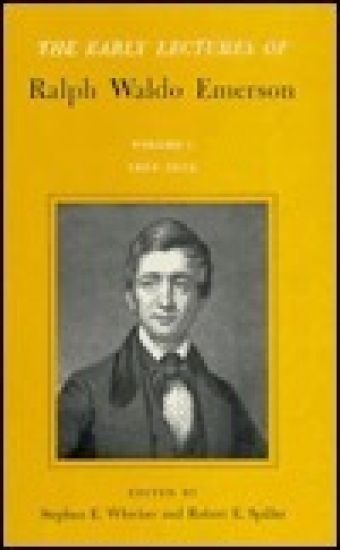
Famous first as a lecturer, Ralph Waldo Emerson molded his books on the rostrum. Yet relatively few of his hundreds of lectures have ever been published. Now, in a projected series of three volumes of which this is the first, the complete surviving lectures of Emerson’s earlier years are made available. In a readable and critical text, these volumes will establish an important step in Emerson’s creative process—that which lies between the notes jotted down in the journals and the finished text of the essays as prepared for print.The lectures, more sustained and organized than the journals and fresher and more direct than the essays, represent the vital missing middle panel in the total picture of Emerson’s literary achievement. It is in the early lectures, fruits of those vigorous and formative years, that we find the first ordering of his journal thoughts. To see his mind at its most sustained activity in these crucial few years when he was first exploring his own proper world of thought and growing with a sense of “power and hope,” we need above all to have the complete, original texts of the lectures.For the years covered by this volume, all passages later published elsewhere by Emerson and others are included together with much new material. The lectures are the immediate source of much in his essays, whose composition cannot be understood without them. As important in their own right as either journals or essays, the lectures also have a coordinate interest and should be studied with the other two forms of his writing.This volume contains among others the lectures on Science, Biography, and English Literature. The editors have supplied extensive textual and informational notes, invaluable for an intelligent reading of material originally intended for oral communication.
Early Lectures of Ralph Waldo Emerson

Early Lectures of Ralph Waldo Emerson

Ralph Waldo Emerson

Harvard University Press
1964
sidottu
The notable link between Ralph Waldo Emerson’s journals and his essays is formed by the lectures that reflected his developing views on issues of his time. This second volume of a welcome edition of the early lectures follows the earlier experimental series of lectures and presents the works of Emerson the now professional lecturer who revealed to his audience central ideas and themes which later crystallized into Essays, First Series.“The Philosophy of History,” a series of 12 lectures, explores the nature of man in his society, past and present, and singles out the individual as the center of society and history. A second series of 10 lectures on “Human Culture” begins with the duty and the right of the individual to cultivate his powers and proceeds to consider various means by which this cultivation can be accomplished. The occasional “Address on Education,” which Emerson delivered between these two series, may be seen as a link between them.Of the twenty-three lectures in this volume, only three have been previously published. The lectures have been reproduced from Emerson’s manuscripts, approximating as nearly as possible the original version read by the author to his audience.