Kirjojen hintavertailu. Mukana 11 627 362 kirjaa ja 12 kauppaa.

Kirjahaku

Etsi kirjoja tekijän nimen, kirjan nimen tai ISBN:n perusteella.

1000 tulosta hakusanalla Robbert Veen

Robert Burton: The Anatomy of Melancholy: Volume IV: Commentary up to Part 1, Section 2, Member 3, Subsection 15, 'Misery of Schollers'
This is the fourth volume of the Clarendon edition of Robert Burton's Anatomy of Melancholy and the first of three volumes of Commentary. It contains commentary on the text up to p. 327 of volume one - i.e. The Argument of the Frontispeice, Democritus to the Reader, and Partition 1 as far as the end of Section 2, Member 3, Subsection 15: 'Misery of Schollers'. In his study of morbid psychology as it was understood in his day, Burton cites many other writers. No previous edition of the Anatomy has identified all of these or verified all his quotations. In addition to explanatory notes and translations of all the passages in Latin, this edition attempts to locate all Burton's sources in the actual books he himself owned or to which he probably had access. The last of the three volumes of commentary will contain a Biobibliography listing over 1,500 authorities referred to by Burton, many very obscure, and will give not only bibliographical details but information about the writers.
The Poetical Works of Robert Browning: Volume VII. The Ring and the Book, Books I-IV
Henry James described Browning's extended dramatic poem The Ring and the Book, over 20,000 lines in length, as `a great living thing', `a proportioned monstrous magnificence'. The story was developed from some old legal documents discovered by Browning concerning an actual murder which took place in Rome in 1698, and its writing was his major preoccupation in the 1860s, the early years of his widowerhood in London. This volume gives us the first third of the poems, Books I to IV. The Introduction draws on unpublished letters, journals, and working papers not examined by previous editors, to illuminate how the poem was conceived and researched, the range of people the poet consulted, and the five-year period of composition. The poem's complex publishing history is disentangled in the Text part of the Introduction, including a discussion of the corrections and revisions Browning made on sheets from volumes I, III, and IV of the second edition, which he later forgot and which never appeared in print. Appendix E gives these important variants in full. The annotation presents new contextual matter, including unpublished letters relating to `Lyric Love', Browning's famous invocation to his dead wife. The appendices give the original Italian text of Browning's second source, `Morte dell'Uxoricida Guido Franceschini Decapitato'; two previously unpublished autograph chronologies in which the poet worked out historical details of his story; and a new account of the biographical significance of the `Ring' image. The editors have made six substantive emendations to the text, ranging from inaccuracies in the original typesetting to changes made by Browning after publication. The evolution of the text from manuscript to copy text is also discussed, and an appendix is devoted to a set of corrected proofs preserved at Yale, a textual evolutionary dead end of great interest and significance.
The Poetical Works of Robert Browning: Volume III. Bells and Pomegranates I-VI
This volume contains six of the eight Bells and Pomegranates, modestly-priced pamphlets published by Edward Moxon in a bid to help Browning recover from the ridicule which greeted the first appearance of Sordello. It includes Pippa Passes, four other dramatic works, and Dramatic Lyrics, the first of the great collections of short poems with which Browning established his reputation. In addition, a version of a poem on the Pied Piper by Browning's father is here printed for the first time. All significant textual variants are recorded, and each of the Bells is accompanied by an introduction and by full annotation. New information throws further light on this most important period in Browning's poetic career.
The Poetical Works of Robert Browning: Volume IV
`Browning really comes back to life in the marvellous third volume of the new Oxford Browning', wrote John Bayley, choosing it as one of his Books of the Year for 1988. While Volume III included six of the eight Bells and Pomegranates pamphlets, the present volume completes the series and includes the most remarkable of all, Dramatic Romances and Lyrics. Here we find `Pictor Ignotus', `The Lost Leader', `The Bishop orders his Tomb', `The Laboratory', `The Boy and the Angel', and the first part of `Saul'. Also included are Christmas-Eve and Easter-Day and the essay on Shelley. As the Times Literary Supplement reviewer of the earlier volumes commented, `readers of a poet like this need all the help they can get; and Jack and Smith have provided it in abundance.' Each poem is fully annotated, and accompanied by a detailed introduction which provides information on the chronology of composition and on Browning's sources.
The Poetical Works of Robert Browning: Volume V. Men and Women
This is the first full scholarly edition of Browning's greatest and perhaps best-known collection of short poems, Men and Women. A comprehensive introduction shows how new research by Ian Jack an Robert Inglesfield has unearthed material which throws fresh light on the composition and dates of such famous pieces as 'Fra Lippo Lippi', 'Childe Roland to the Dark Tower Came', and 'One Word More: To E.B.B.'. This edition uses a critical text based on that of Browning's final collection, and has detailed introductions to the individual poems. It is the fifth volume in the highly praised Political Works of Robert Browning.
Robert Burton: The Anatomy of Melancholy: Volume V: Commentary from Part. 1, Sect. 2, Memb. 4, Subs. 1 to the End of the Second Partition
This, the fifth volume of the Clarendon Press edition of Robert Burton's Anatomy of Melancholy, contains commentary on the text from Partition 1, Section 2, Member 4, Subsection 1 until the end of Part. 1, and on the whole of the second Partition. It thus concludes Burton's account of the causes, the symptoms, and the prognosis of melancholy, and his examination of the remedies for the disease both spiritual and medical. As before, the aim of the commentary is to aid the reader to understand Burton's meaning (to which end all the passages in Latin are translated) and to identify the sources of his many quotations from and references to other authors. The third and last volume of the commentary, and of the edition, will contains a full Bibliography of these authors and brief biographical notes on them.
Robert Burton: The Anatomy of Melancholy: Volume VI: Commentary on the Third Partition, together with Biobibliographical and Topical Indexes
This, the final volume of the Clarendon Press edition of Burton's Anatomy of Melancholy, contains commentary on the Third Partition, in which Burton considers two especial forms of the disease, Love and Religious Melancholy. In treating of these Burton had fewer precedents to follow than in previous sections, but he was able to draw largely on his extensive knowledge of classical literature and also on his acquaintance with English drama and poetry (including popular verse). As ever his range of reference to other authors is wide, and the volume includes an index which gives biographical and bibliographical information concerning the more than 1550 authorities cited in the Anatomy, most of whom are little known today. Also included are an index of the major topics discussed in the Anatomy, and a complete bibliography of all the works mentioned in the commentary.
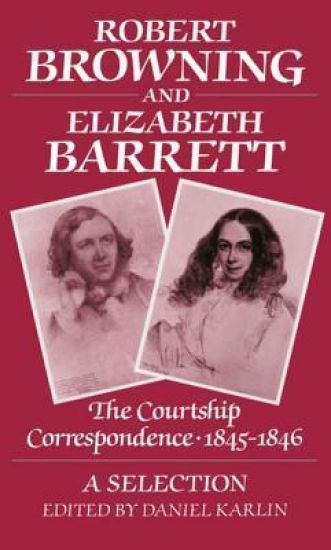
Robert Browning and Elizabeth Barrett
The love letters of Robert Browning and Elizabeth Barrett are among the most famous in literary history: intimate and sensitive, they illuminate both the writers' lives and their creative aims and methods. Daniel Karlin's selection, which complements his widely acclaimed The Courtship of Robert Browning and Elizabeth Barrett, is based on a fresh examination of the manuscripts and allows the reader to follow the story in all its scope and richness, from the beginning of their clandestine correspondence to their elopement in 1846.
The Poetical Works of Robert Browning: Volume VIII. The Ring and the Book, Books V-VIII
In old age, Browning always referred people to The Ring and the Book as his finest achievement. This is the second of the three volumes of the Oxford edition presenting this great Italian murder-story, including the monologues of the villain, the aristocrat Guido Franceschini, Pompilia his abused wife, and Caponsacchi, the priest who tries to rescue her from death. The commentary, at the bottom of each page, elucidates Browning's creative and sometimes challenging use of language with reference to his correspondence, his historical sources, and his own rich experience of Italy. Previously unidentified allusions are fully explained, and a newly discovered source from a seventeenth-century Italian chronicle is presented for the first time (in Appendix B), allowing further insight into Browning's engagement with history. The copy text of 1888-9 has numerous emendations to its punctuation, both those authorized by the poet in the last year of his life and those resulting from corrected compositors' errors, and these, combined with fourteen emendations to substantives, produce a text as near as possible to Browning's final intentions.
Robert Grosseteste

Robert Grosseteste

R. W. Southern

Clarendon Press
1992
sidottu
For this second edition, Sir Richard Southern has revised his much-acclaimed study in the light of recent scholarly research, and added an extensive preliminary chapter on the debate over Robert Grosseteste's career and intellectual growth. He has added c.50 extra pages in which he answers criticisms and adds further material to support his controversial account of Grosseteste's career. He examines particular features of Grosseteste's career in detail, especially his chancellorship of tbe University of Oxford, and provides a fuller account of the tradition of scientific study in England which Grosseteste inherited and transformed. This is a study of the intellectual development and influence of one of the most independent and vigorous Englishmen of the Middle Ages. As a scientist, theologian and pastoral leader, he was rooted in an English tradition predating the Norman conquest, and he looks forward to such disturbing characters of the later Middle Ages as Piers Plowman and John Wycliffe, though with a wider range of intellectual interests than any of them.
Robert Surtees and Early Victorian Society
Though for well over a century the novels of R.S. Surtees have maintained a steady readership, his books have been comparatively neglected in the literary and social studies of his period. Norman Gash's stimulating book is both a contribution to Surtees studies and to Victorian social history. It has often been observed that Surtees' fiction furnishes a wealth of material for social historians, and Professor Gash sets out to exploit the opportunities it offers. He places Surtees' novels in their historical context, and uses the novels and other writings to enlarge the historical evidence. Through the views of an unorthodox and sceptical early Victorian novelist, Norman Gash examines a familiar landscape from an unfamiliar angle, illuminating the conservative world of the countryside, small provincial towns, and the seedier side of London. This is a scholarly and entertaining study by an eminent historian of the nineteenth century.
Robert Robinson: Chemist Extraordinary

Robert Robinson: Chemist Extraordinary

Trevor I. Williams

Clarendon Press
1990
sidottu
Sir Robert Robinson was among the last of the great organic chemists in the classical tradition, achieving brilliant results with extremely simple apparatus. In this area he may be compared with Ernest Rutherford and his colleagues at the Cavendish Laboratory, Cambridge, who revolutionized atomic physics with equipment based on `string and sealing wax'. This biography examines Robinson's long and distinguished career, from his academic achievements to his work in the chemical industry, and illustrates his complex personality.
Robert Burns and Pastoral

Robert Burns and Pastoral

Nigel Leask

Oxford University Press
2015
nidottu
Robert Burns and Pastoral is a full-scale reassessment of the writings of Robert Burns (1759-1796), arguably the most original poet writing in the British Isles between Pope and Blake, and the creator of the first modern vernacular style in British poetry. Although still celebrated as Scotland's national poet, Burns has long been marginalised in English literary studies worldwide, due to a mistaken view that his poetry is linguistically incomprehensible and of interest to Scottish readers only. Nigel Leask challenges this view by interpreting Burns's poetry as an innovative and critical engagement with the experience of rural modernity, namely to the revolutionary transformation of Scottish agriculture and society in the decades between 1760 and 1800, thereby resituating it within the mainstream of the Scottish and European enlightenments. Detailed study of the literary, social, and historical contexts of Burns's poetry explodes the myth of the 'Heaven-taught ploughman', revealing his poetic artfulness and critical acumen as a social observer, as well as his significance as a Romantic precursor. Leask discusses Burns's radical decision to write 'Scots pastoral' (rather than English georgic) poetry in the tradition of Allan Ramsay and Robert Fergusson, focusing on themes of Scottish and British identity, agricultural improvement, poetic self-fashioning, language, politics, religion, patronage, poverty, antiquarianism, and the animal world. The book offers fresh interpretations of all Burns's major poems and some of the songs, the first to do so since Thomas Crawford's landmark study of 1960. It concludes with a new assessment of his importance for British Romanticism and to a 'Four Nations' understanding of Scottish literature and culture.
Robert Graves and the Classical Tradition
The poet Robert Graves' use of material from classical sources has been contentious to scholars for many years, with a number of classicists baulking at his interpretation of myth and his novelization of history, and questioning its academic value. This collection of essays provides the latest scholarship on Graves' historical fiction (for example in I, Claudius and Count Belisarius) and his use of mythical figures in his poetry, as well as an examination of his controversial retelling of the Greek Myths. The essays explore Graves' unique perspective and expand our understanding of his works within their original context, while at the same time considering their relevance in how we comprehend the ancient world.
Robert Browning

Robert Browning

Oxford University Press
2018
nidottu
This volume in the 21st-Century Oxford Authors series offers students and readers a comprehensive selection of the work of Robert Browning (1812-1889). Accompanied by full scholarly apparatus, this is the first one-volume fully annotated edition of Browning's poetry. It presents work written across the breadth of his career, from the very first poem he published, Pauline, to Asolando, the volume that was published on the day that he died. The text chosen is, wherever possible, the text of the poem as it was first published by Browning himself, and as a consequence the volume also constitutes a kind of biography that enables students to understand Browning's development over the course of his life. The edition reveals a poet who began as a bold experimentalist, and who continued to experiment throughout a writing career of more than fifty years. Browning is best known for his dramatic monologues, and the dramatic monologues are fully represented in this volume, but he was also a narrative poet, a poet of philosophical reflection, and a poet who fashioned an extraordinary variety of lyric measures. This volume reveals Browning as a far more versatile poet than he is often taken to be. There are two important prose items, an essay on Shelley and a letter to Ruskin which clarify Browning's intellectual stance. The Notes include brief headnotes to each poem followed by detailed annotation, and they assist the reader in developing a full understanding of these masterful poems. Explanatory notes and commentary are included, to enhance the study, understanding, and enjoyment of these works, and the edition includes an Introduction to the life and works of Browning, and a Chronology.
Robert Grosseteste's

Robert Grosseteste's

Oxford University Press
2019
sidottu
Robert Grosseteste (1168/75-1253), Bishop of Lincoln from 1235-1253, is widely recognized as one of the key intellectual figures of medieval England and as a trailblazer in the history of scientific methodology. Few of his numerous philosophical and scientific writings circulated as widely as the Compotus, a treatise on time reckoning and calendrical astronomy apparently written during a period of study in Paris in the 1220s. Besides its strong and long-lasting influence on later writers, Grossteste's Compotus is particularly noteworthy for its innovatory approach to the theory and practice of the ecclesiastical calendar--a subject of essential importance to the life of the Latin Church. Confronting traditional computistical doctrines with the lessons learned from Graeco-Arabic astronomy, Grosseteste offered his readers a critical and reform-oriented take on the discipline, in which he proposed a specific version of the Islamic lunar as a substitute for the failing nineteen-year cycle the Church still employed to calculate the date of Easter. This new critical edition of Grosseteste's Compotus contains the Latin text with an en-face English translation. It is flanked by an extensive introduction and chapter commentary, which will provide valuable new insights into the text's purpose and disciplinary background, its date and biographical context, its sources, as well as its reception in later centuries.