
Kirjahaku
Etsi kirjoja tekijän nimen, kirjan nimen tai ISBN:n perusteella.
1000 tulosta hakusanalla Robert Cornforth

Robert the Devil
Pennsylvania State University Press
2018
pokkari
Samuel N. Rosenberg, one of the premier translators of Old French, presents in this volume the first modern English-language version of the thirteenth-century French romance Robert le Diable, a tale of supernatural birth and spiritual redemption.Robert is born after his mother, a childless noblewoman, secretly calls upon Satan to help her conceive. His wicked behavior as a boy and, later, as a destructive young man is so brutal that one day Robert prevails upon his mother to reveal the secret of his birth and thus the source of his wickedness. Upon learning the truth, he leaves his privileged home in Normandy to seek salvation. Robert’s lengthy penance—under the aegis of the Pope and a pious hermit—begins with his acting as a mute fool in the Roman Emperor’s court and ends with his sainthood. In between he plays the hero’s role in defeating the Turks in battle and turns down the hand of the Emperor’s daughter in marriage, choosing instead to return to the hermit’s abode.The legend of Robert le Diable was extraordinarily influential in the seven hundred years after its creation, generating new versions and adaptations in various languages, ranging from sixteenth-century English adaptations by Wynken de Worde and Thomas Lodge to Giacomo Meyerbeer’s esteemed 1831 opera. Framed by a thoughtful introduction and thorough bibliography, this accessible translation renders the original octosyllabic rhymed couplets of the metrical Old French romance in energetic free verse.
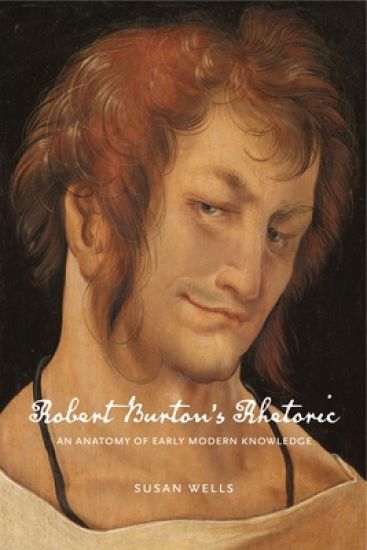
Published in five editions between 1621 and 1651, The Anatomy of Melancholy marks a unique moment in the development of disciplines, when fields of knowledge were distinct but not yet restrictive. In Robert Burton’s Rhetoric, Susan Wells analyzes the Anatomy, demonstrating how its early modern practices of knowledge and persuasion can offer a model for transdisciplinary scholarship today.In the first decades of the seventeenth century, Robert Burton attempted to gather all the existing knowledge about melancholy, drawing from professional discourses including theology, medicine, and philology as well as the emerging sciences. Examining this text through a rhetorical lens, Wells provides an account of these disciplinary exchanges in all their subtle variety and abundant wit, showing that questions of how knowledge is organized and how it is made persuasive are central to rhetorical theory. Ultimately, Wells argues that in addition to a book about melancholy, Burton’s Anatomy is a meditation on knowledge.A fresh interpretation of The Anatomy of Melancholy, this volume will be welcomed by scholars of early modern English and the rhetorics of health and medicine, as well as those interested in transdisciplinary work and rhetorical theory.
Published in five editions between 1621 and 1651, The Anatomy of Melancholy marks a unique moment in the development of disciplines, when fields of knowledge were distinct but not yet restrictive. In Robert Burton’s Rhetoric, Susan Wells analyzes the Anatomy, demonstrating how its early modern practices of knowledge and persuasion can offer a model for transdisciplinary scholarship today.In the first decades of the seventeenth century, Robert Burton attempted to gather all the existing knowledge about melancholy, drawing from professional discourses including theology, medicine, and philology as well as the emerging sciences. Examining this text through a rhetorical lens, Wells provides an account of these disciplinary exchanges in all their subtle variety and abundant wit, showing that questions of how knowledge is organized and how it is made persuasive are central to rhetorical theory. Ultimately, Wells argues that in addition to a book about melancholy, Burton’s Anatomy is a meditation on knowledge.A fresh interpretation of The Anatomy of Melancholy, this volume will be welcomed by scholars of early modern English and the rhetorics of health and medicine, as well as those interested in transdisciplinary work and rhetorical theory.

Robert de Reims, also known as “La Chievre de Rains,” was among the earliest trouvères—poet-composers who were contemporaries of the troubadours but who wrote in the dialects of northern France. This critical edition provides new translations into English and modern French of all the songs and motets ascribed to him, along with the original texts, the extant music, and a substantive introduction.Active sometime between 1190 and 1220, Robert was an influential figure in the literary circles of Arras. Thirteen compositions set to music are here attributed to him, including nine chansons and four polyphonic motets that were broadly disseminated in the thirteenth century and beyond. Robert’s work is exceptional on a number of fronts. He lavished particular care on the phonic harmony of his words. Acoustic luxuriance and expertise in rhyming, grounded in the play of echoes and variation (often extending into the music), constitute the hallmark of his poetry. Moreover, he is the earliest trouvère known to have composed a parodic sotte chanson contre Amours (silly song against Love).Located clearly at the nexus of monophonic song and polyphony, Robert’s corpus also poses the intriguing question of trouvère participation in the development of the polyphonic repertory. The case of Robert de Reims jostles and tempers the standard history of the chanson and motet.Accessible and instructive, this trilingual critical edition of his complete works makes the oeuvre of this innovative and consequential trouvère available in one volume for the first time.

Apologie de la vraie théologie Chrétienne; contenant l'explication et la défense des principes et de la doctrine de la société dite des Quakers. Ecrite en Latin et en Anglois par Robert Barclay. Et traduit ... en Francois, par E. P. Bridel, ...
Robert Barclay
Wentworth Press
2018
sidottu
Recherches sur les influences solaires et lunaires, pour prouver le magnétisme universel, &c. ... Par M. Robert de Lo-Looz, ... of 4; Volume 1
Robert De Lo-Looz
Wentworth Press
2018
sidottu

Robert Estienne's Influence on Lexicography
DeWitt T. Starnes
University of Texas Press
1963
nidottu
Towering above printers of his time and their successors for many years afterward was the figure of Robert Estienne, the great French lexicographer of the sixteenth century, whose contribution to knowledge and its dissemination is the subject of this authoritative book. The span of Robert Estienne's life (1503–1559) encompassed the historical epochs and events which shaped his career: the Renaissance, the Reformation, and the invention of printing by movable type. His keen interest in the revival of ancient literatures and languages and his training in the art of printing pointed the road he would travel, and the climate of opinion in the Reformation determined his destiny. Robert Estienne promoted classical learning by printing the works of good authors; to spread knowledge of ancient literature he compiled dictionaries and grammars which were adopted by most of the universities of Europe. His dictionary of proper names of Biblical and classical origin, the Dictionarium historicum ac poeticum, became one of the great source books for later compilers of dictionaries and for authors. His influence on English writers was pervasive. Ben Jonson showed familiarity with his texts; Spenser and Milton sometimes set trarislations of his phraseology directly into their poetry. Perpetuation of the few errors he made is one sure proof that his dictionaries were used and copied. An exemplar of learning in the classics and scripture, he searched in ancient manuscripts to avoid repeating the numerous errors that had crept into Bible translations over hundreds of years. For his efforts he was called a heretic by docteurs de theologie in the Sorbonne, but was protected by the royal favor of Francis I of France. Between attacks of theologians on the one side and the King's protection on the other, he became a "controversial" figure and after many years of calumny and persecution finally took refuge in Geneva. Estienne established a family tradition of printing correct and beautiful books, and the printing establishments which made the name of Estienne celebrated throughout the world continued for 162 years.
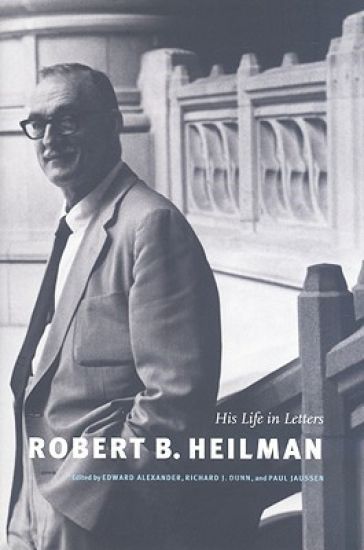
Robert B. Heilman
University of Washington Press
2009
sidottu
Robert Bechtold Heilman was a great literary figure of the twentieth century. This collection of his correspondence includes over 600 exchanges with more than 100 correspondents, among them Saul Bellow, Kenneth Burke, Malcolm Cowley, Richard Eberhart, Charles Johnson, Bernard Malamud, and William Carlos Williams. The letters follow Heilman's career from the time he was a thirty-six-year-old member of Louisiana State University's English Department, through his tenure at the University of Washington from 1948 to 1975, until a few years before his death in 2004. Two of his appointees who spent their entire careers at the University of Washington, Edward Alexander and Richard Dunn, have edited the letters with Paul Jaussen.The rich representation of letters to as well as from Heilman gives the reader access to decades-long conversations between him and Robert Penn Warren, Cleanth Brooks, Joseph Epstein, Theodore Roethke, and many others. They provide a sense of Heilman's character, personality, and achievements in the context of American letters. They also afford an inside history of the changes that took place over sixty years, for better and worse, in American universities, literary criticism, and the politics of literature.In the 1940s, Heilman not only defended the New Criticism against its many enemies, but in his own writing extended its imperial reach to the tragedies of Shakespeare. By the fifties, the focus of his letters shifted to the University of Washington's Department of English, and his flair for efficient, energetic, and imaginative administration resonates through them. The first time University of Washington President Raymond Allen read a letter by Heilman, he scribbled a note to his provost: "I like this man's philosophy very much . . . would he not make an excellent Dean of Arts and Sciences?" Heilman had been at the university less than four months.He soon transformed the department, making Washington a national center for poetry. He exhibited courage and ingenuity in defending academic freedom from yahooism and McCarthyism, nurtured and protected an ailing and unpredictable Roethke (a letter about Roethke is one of the wisest and most eloquent letters ever written by a university administrator), and struggled with demands for the appointment of black faculty as well as with the volatile campus politics of the sixties.Heilman's major correspondents - especially his Washington colleagues Solomon Katz and Andrew Hilen - were learned and articulate masters of the epistolary art. To read his letters and theirs is to understand that Samuel Johnson's famous observation "we shall receive no letters in the grave" was not a sigh of expected relief from nuisance and obligation but an anticipatory lament over the loss of a supreme pleasure.

Robert Cantwell and the Literary Left is the first full critical study of novelist and critic Robert Cantwell, a Northwest-born writer with a strong sense of social justice who found himself at the center of the radical literary and cultural politics of 1930s New York. Regarded by F. Scott Fitzgerald and Ernest Hemingway as one of the finest young fiction writers to emerge from this era, Cantwell is best known for his superb novel, The Land of Plenty, set in western Washington. His literary legacy, however, was largely lost during the Red Scare of the McCarthy era, when he retreated to conservatism.Through meticulous research, an engaging writing style, and a deep commitment to the history of American social movements, T. V. Reed uncovers the story of a writer who brought his Pacific Northwest brand of justice to bear on the project of "reworking" American literature to include ordinary working people in its narratives. In tracing the flourishing of the American literary Left as it unfolded in New York, Reed reveals a rich progressive culture that can inform our own time.
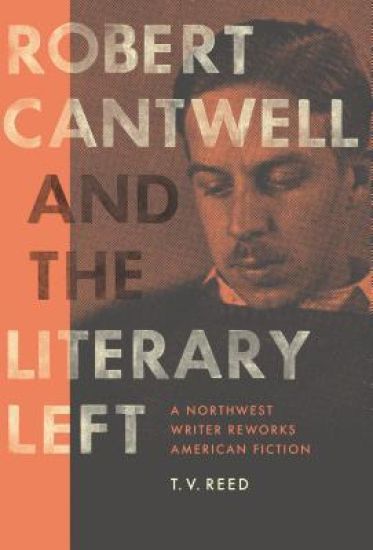
Robert Cantwell and the Literary Left is the first full critical study of novelist and critic Robert Cantwell, a Northwest-born writer with a strong sense of social justice who found himself at the center of the radical literary and cultural politics of 1930s New York. Regarded by F. Scott Fitzgerald and Ernest Hemingway as one of the finest young fiction writers to emerge from this era, Cantwell is best known for his superb novel, The Land of Plenty, set in western Washington. His literary legacy, however, was largely lost during the Red Scare of the McCarthy era, when he retreated to conservatism.Through meticulous research, an engaging writing style, and a deep commitment to the history of American social movements, T. V. Reed uncovers the story of a writer who brought his Pacific Northwest brand of justice to bear on the project of "reworking" American literature to include ordinary working people in its narratives. In tracing the flourishing of the American literary Left as it unfolded in New York, Reed reveals a rich progressive culture that can inform our own time.
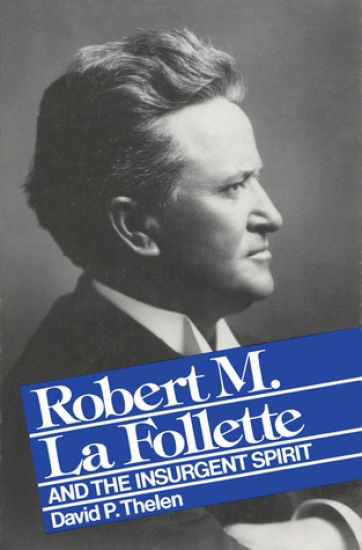
Robert M.La Follette and the Insurgent Spirit
University of Wisconsin Press
1986
nidottu
Robert M. La Follette and the Insurgent Spirit is a closely argued, lively, and readable biography of the central figure in the American Progressive movement. Wisconsin's "Fighting Bob" La Follette embodied the heart of Progressive sentiment and principle. He was a powerful force in shaping national political events between the eras of Populism and the New Deal

Robert Ball and the Politics of Social Security
University of Wisconsin Press
2003
sidottu
In the second half of the twentieth century, no one had more influence over Social Security than Robert Ball, who in 1947 wrote the key statement defining why social insurance, not welfare, should be America's primary income maintenance program. Drawing on exclusive access to Ball's papers and Ball's own extensive oral memoir created for this project, Edward D. Berkowitz explains how Social Security came to be America's most important social welfare program. Ball's role in expanding coverage to more workers, as well as in supporting the indexing of benefits to the rate of inflation, directly affected the lives of senior citizens and the overall U. S. economy. Finally, Berkowitz considers Ball's legacy in the face of the George W. Bush administation's goal of replacing Social Security with private accounts.
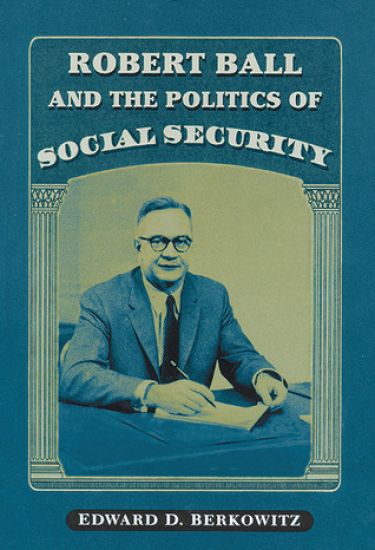
Robert Ball and the Politics of Social Security
University of Wisconsin Press
2005
nidottu
Berkowitz considers Robert Ball's Social Security legacy in the face of the George W. Bush administration's goal of replacing it with private accounts In the second half of the twentieth century, no one exerted more influence over Social Security than Robert Ball, who in 1947 wrote the key statement defining why social insurance, not welfare, should be America's primary income maintenance program. This policy-oriented biography surveys the history of Social Security from 1950 to the present through the eyes of the public servant most crucial to its development. Drawing on exclusive access to Robert Ball's papers and Ball's own extensive oral memoir created for this project, Edward D. Berkowitz explains how Social Security came to be America's most important social welfare program. Ball's role in expanding coverage to more workers during the period between 1950 and 1972, as well as in supporting the indexing of benefits to the rate of inflation, directly affected the lives of senior citizens and the overall U. S. economy. Berkowitz demonstrates how Robert Ball used the conservative means of social insurance towards the liberal end of improving the social welfare of Americans.
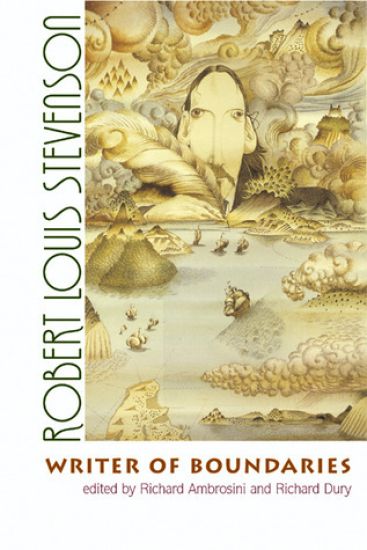
Robert Louis Stevenson
University of Wisconsin Press
2006
sidottu
Robert Louis Stevenson: Writer of Boundaries reinstates Stevenson at the center of critical debate and demonstrates the sophistication of his writings and the present relevance of his kaleidoscopic achievements. While most young readers know Robert Louis Stevenson (1850 - 1894) as the author of ""Treasure Island"", few people outside of academia are aware of the breadth of his literary output. The contributors to ""Robert Louis Stevenson: Writer of Boundaries"" look, with varied critical approaches, at the whole range of his literary production and unite to confer scholarly legitimacy on this enormously influential writer who has been neglected by critics. As the editors point out in their Introduction, Stevenson reinvented the ""personal essay"" and the ""walking tour essay,"" in texts of ironic stylistic brilliance that broke completely with Victorian moralism. His first full-length work of fiction, ""Treasure Island"", provocatively combined a popular genre (subverting its imperialist ideology) with a self-conscious literary approach. Stevenson, one of Scotland's most prolific writers, was very effectively excluded from the canon by his twentieth-century successors, and rejected by Anglo-American Modernist writers and critics for his play with popular genres and for his non-serious metaliterary brilliance. While Stevenson's critical recognition has been slowly increasing, there have been far fewer published single-volume studies of his works than those of his contemporaries, Henry James and Joseph Conrad. ""The Robert Louis Stevenson Colloquium"", held at Gargnano, Italy, on Lake Garda in the summer of 2002, was attended by many of the world's leading Stevenson scholars.
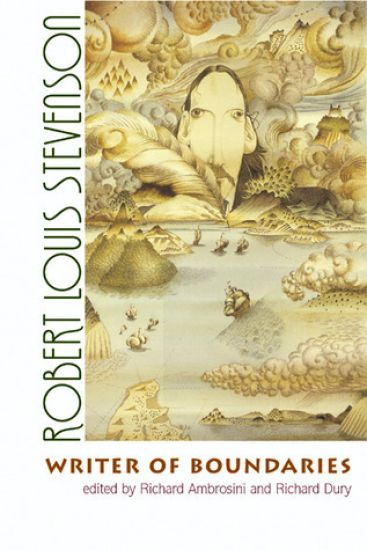
Robert Louis Stevenson
University of Wisconsin Press
2006
nidottu
Robert Louis Stevenson: Writer of Boundaries reinstates Stevenson at the center of critical debate and demonstrates the sophistication of his writings and the present relevance of his kaleidoscopic achievements. While most young readers know Robert Louis Stevenson (1850 - 1894) as the author of ""Treasure Island"", few people outside of academia are aware of the breadth of his literary output. The contributors to ""Robert Louis Stevenson: Writer of Boundaries"" look, with varied critical approaches, at the whole range of his literary production and unite to confer scholarly legitimacy on this enormously influential writer who has been neglected by critics. As the editors point out in their Introduction, Stevenson reinvented the ""personal essay"" and the ""walking tour essay,"" in texts of ironic stylistic brilliance that broke completely with Victorian moralism. His first full-length work of fiction, ""Treasure Island"", provocatively combined a popular genre (subverting its imperialist ideology) with a self-conscious literary approach. Stevenson, one of Scotland's most prolific writers, was very effectively excluded from the canon by his twentieth-century successors, and rejected by Anglo-American Modernist writers and critics for his play with popular genres and for his non-serious metaliterary brilliance. While Stevenson's critical recognition has been slowly increasing, there have been far fewer published single-volume studies of his works than those of his contemporaries, Henry James and Joseph Conrad. ""The Robert Louis Stevenson Colloquium"", held at Gargnano, Italy, on Lake Garda in the summer of 2002, was attended by many of the world's leading Stevenson scholars.

Every work of art has a story behind it. In 1886 the German American artist Robert Koehler painted a dramatic wide-angle depiction of an imagined confrontation between factory workers and their employer. He called this oil painting The Strike. It has had a long and tumultuous international history as a symbol of class struggle and the cause of workers’ rights. First exhibited just days before the tragic Chicago Haymarket riot, The Strike became an inspiration for the labor movement. In the midst of the campaign for an eight-hour workday, it gained international attention at expositions in Paris, Munich, and the 1893 Chicago World’s Fair. Though the painting fell into obscurity for decades in the early twentieth century, The Strike lived on in wood-engraved reproductions in labor publications. Its purchase, restoration, and exhibition by New Left activist Lee Baxandall in the early 1970s launched it to international fame once more, and collectors and galleries around the world scrambled to acquire it. It is now housed in the Deutsches Historisches Museum in Berlin, Germany. Art historian James M. Dennis has crafted a compelling “biography” of Koehler’s painting: its exhibitions, acclaim, neglect, and rediscovery. He introduces its German-born creator and politically diverse audiences and traces the painting’s acceptance and rejection through the years, exploring how class and sociopolitical movements affected its reception. Dennis considers the significance of key figures in the painting, such as the woman asserting her presence in the center of action. He compellingly explains why The Strike has earned its identity as the iconic painting of the industrial labor movement.

Robert Harley (1661-1724) dominated English politics in the late seventeenth century and throughout the reign of Queen Anne, and his long parliamentary career spanned years during which British political institutions underwent crucial changes. As predecessor of Sir Robert Walpole, he was in effect a prime minister before the office was created, and he administered the country at a time of major conflict within Europe. However, Harley's style of politics was characterized by secrecy and mistrust, and this tended to overshadow serious assessment of his influence and achievements. This book by Brian W. Hill is the first biography of this significant figure.A pioneer of parliamentary government after the revolution of 1688, Harley became leader of the opposition and Speaker of the House of Commons, and he went on to hold the most important positions of state. Although he moved from one intrigue to another, he was able to stay in power until he was dismissed from office in 1714 by Queen Anne over the South Seas Company affair. His achievements during this period were significant: he turned the early Tories into an effective opposition to help forge a two-party parliamentary system; he persuaded William III to accept limitation of the Crown's powers by the Act of Settlement; and, through the Treaty of Utrecht, he helped to secure peace in Europe for half a century.Hill sets Harley's career firmly within the political and social context of contemporary religion, regionalism, dynastic conflict, and factionalism. His much-needed study is an important contribution to our understanding of a major figure in a complex and exciting period of British history.
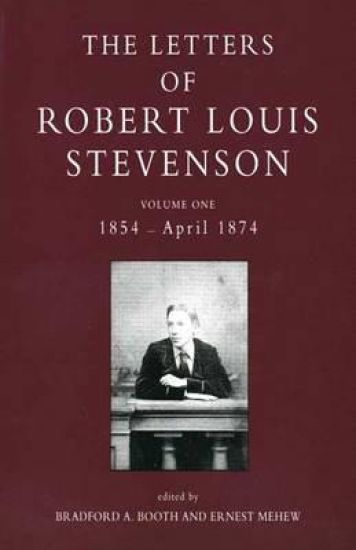
Robert Louis Stevenson, celebrated author of such treasured classics as Treasure Island, Kidnapped, and The Strange Case of Dr. Jekyll and Mr. Hyde, has long been recognized as a master storyteller and essayist. But he was also a delightful and instructive letter writer. Now, in the centenary of his death, Yale University Press is publishing the definitive edition of Stevenson's collected letters in eight handsomely produced volumes. The edition will contain nearly 2800 letters; only 1100 have been published before, and many of these were abridged or expurgated.The letters make fascinating reading, not only for those interested in Stevenson's life and work but also for everyone interested in nineteenth-century literature and social history.The letters in volumes I and II, which cover the years from 1854 to 1879, reveal Stevenson's struggles to achieve success as an author. We learn of his years as a student, his work, and his travels. We meet the people who became his chief correspondents for the rest of his life, including Sidney Colvin, who was to be his literary mentor and lifelong friend; the poet and critic W.E. Henley; and Fanny Osbourne, who later became Stevenson's wife. During this period Stevenson published stories and essays and two books, An Inland Voyage and Edinburgh: Picturesque Notes, and set off on the journey to the Cevennes later immortalized in his famous Travels with a Donkey.Ernest Mehew's introduction and detailed annotation place the letters in a biographical framework that gives a chronology of Stevenson's life; explains his family background; and identifies the people he met, the literary projects he planned, and the contemporary events to which he refers.

Robert Louis Stevenson, celebrated author of such treasured classics as Treasure Island, Kidnapped, and The Strange Case of Dr. Jekyll and Mr. Hyde, has long been recognized as a master storyteller and essayist. But he was also a delightful and instructive letter writer. Now, in the centenary of his death, Yale University Press is publishing the definitive edition of Stevenson's collected letters in eight handsomely produced volumes. The edition will contain nearly 2800 letters; only 1100 have been published before, and many of these were abridged or expurgated. The letters make fascinating reading, not only for those interested in Stevenson's life and work but also for everyone interested in nineteenth-century literature and social history. The letters in volumes I and II, which cover the years from 1854 to 1879, reveal Stevenson's struggles to achieve success as an author. We learn of his years as a student, his work, and his travels. We meet the people who became his chief correspondents for the rest of his life, including Sidney Colvin, who was to be his literary mentor and lifelong friend; the poet and critic W.E. Henley; and Fanny Osbourne, who later became Stevenson's wife. During this period Stevenson published stories and essays and two books, An Inland Voyage and Edinburgh: Picturesque Notes, and set off on the journey to the Cevennes later immortalized in his famous Travels with a Donkey. Ernest Mehew's introduction and detailed annotation place the letters in a biographical framework that gives a chronology of Stevenson's life; explains his family background; and identifies the people he met, the literary projects he planned, and the contemporary events to which he refers.