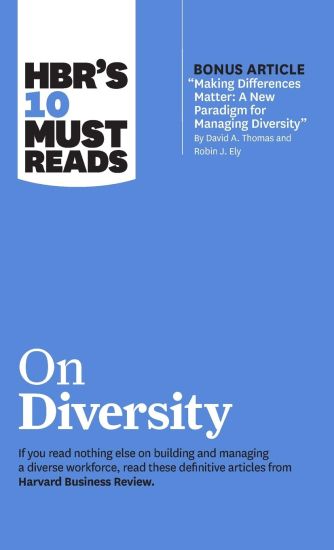
Reap the benefits of a diverse workforce.If you read nothing else on promoting diversity and realizing its benefits, read these 10 articles. We've combed through hundreds of Harvard Business Review articles and selected the most important ones to help you create a culture that seeks and celebrates difference.This book will inspire you to:Identify and address biasShort-circuit discrimination instead of unintentionally feeding itAttract, retain, and engage talented people who represent myriad identitiesEnsure that everyone has equal access to growth opportunitiesTrade outdated policies for practices that are proven to foster inclusionHarness employees' unique skills and perspectives to transform how your company operatesThis collection of articles includes "Making Differences Matter: A New Paradigm for Managing Diversity," by David A. Thomas and Robin J. Ely; "Why Diversity Programs Fail," by Frank Dobbin and Alexandra Kalev; "'Numbers Take Us Only So Far,'" by Maxine Williams; "Race Matters: The Truth About Mentoring Minorities," by David A. Thomas; "Leadership in Your Midst: Tapping the Hidden Strengths of Minority Executives," by Sylvia Ann Hewlett, Carolyn Buck Luce, and Cornel West; "What Most People Get Wrong About Men and Women," by Catherine H. Tinsley and Robin J. Ely; "Hacking Tech's Diversity Problems," by Joan C. Williams; "Why Men Still Get More Promotions Than Women," by Herminia Ibarra, Nancy M. Carter, and Christine Silva; "When No One Retires," by Paul Irving; "Neurodiversity as a Competitive Advantage," by Robert D. Austin and Gary P. Pisano; "Managing Multicultural Teams," by Jeanne Brett, Kristin Behfar, and Mary C. Kern; and "7 Myths About Coming Out at Work," by Raymond Trau, Jane O'Leary, and Cathy Brown.
Michael Dailey has been making landscape paintings for more than 40 years. During that time he has been balancing line and color to produce paintings about the nuances of space, light, and atmosphere that comprise our memories of time and place. We value Dailey's paintings not because they provide a literal description of a landscape, but because they offer us a chance to revisit and savor part of our past.Born and educated in Iowa, Michael Dailey moved to Seattle in 1963 to teach painting and drawing at the University of Washington. He is regarded as an influential and much loved teacher by his former students, many of whom are now practicing artists. Dailey retired in 1998 but continues to live and paint in the Northwest.
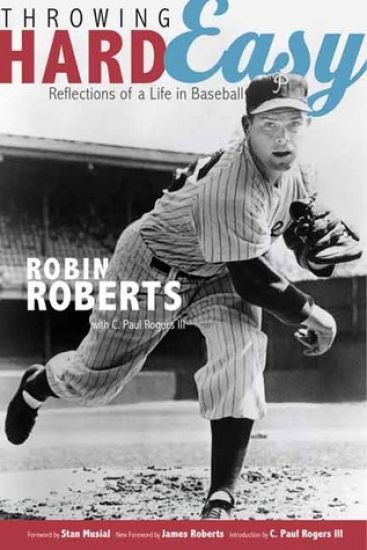
With a seemingly effortless motion, pinpoint control, a blazing, dancing fastball, and an unequaled competitive spirit, Robin Roberts enjoyed one of the most celebrated careers in baseball history. He made his Major League debut in the summer of 1948 and became one of the most notable sports figures of the fifties. His many accomplishments on the mound helped to make him one of the more distinguished residents of Cooperstown, and he will always be remembered as the most dominant National League pitcher of his time. In addition, Roberts was as impressive a storyteller as he was an athlete, and his experiences and encounters leading up to, throughout, and following his incredible nineteen-year career made for an extraordinary life. Throwing Hard Easy is Roberts's own account, recalling his childhood, his playing days, and life after baseball. This edition features new photographs and a new foreword by his son, James Roberts, as well as a new introduction by his coauthor and lifelong fan, C. Paul Rogers III.
This book is the first to treat the analytic aspects of combinatorial enumeration from a multivariate perspective. Analytic combinatorics is a branch of enumeration that uses analytic techniques to estimate combinatorial quantities: generating functions are defined and their coefficients are then estimated via complex contour integrals. The multivariate case involves techniques well known in other areas of mathematics but not in combinatorics. Aimed at graduate students and researchers in enumerative combinatorics, the book contains all the necessary background, including a review of the uses of generating functions in combinatorial enumeration as well as chapters devoted to saddle point analysis, Groebner bases, Laurent series and amoebas, and a smattering of differential and algebraic topology. All software along with other ancillary material can be located via the book's website, http://www.cs.auckland.ac.nz/~mcw/Research/mvGF/asymultseq/ACSVbook/.
Discrete structures model a vast array of objects ranging from DNA sequences to internet networks. The theory of generating functions provides an algebraic framework for discrete structures to be enumerated using mathematical tools. This book is the result of 25 years of work developing analytic machinery to recover asymptotics of multivariate sequences from their generating functions, using multivariate methods that rely on a combination of analytic, algebraic, and topological tools. The resulting theory of analytic combinatorics in several variables is put to use in diverse applications from mathematics, combinatorics, computer science, and the natural sciences. This new edition is even more accessible to graduate students, with many more exercises, computational examples with Sage worksheets to illustrate the main results, updated background material, additional illustrations, and a new chapter providing a conceptual overview.
The true story of a woman who was born deaf and raised orally, and her struggle to live in the hearing world.I was born in 1940 to hearing parents. My older sister and younger brother have normal hearing. Raised on a dairy and poultry farm, I helped with the farm chores. I attended regular hearing schools because my father wanted me to be able to function in the hearing world (I was also able to lip read at a very young age). I'm a wife, mother, grandmother and great grandmother and worked in various factories and offices while raising my family (7 children) and going to college. I have a graduate degree (M.A.), I worked for several years as a state psychologist and now have a private psychotherapy practice. "Under the Cloud of Silence" is my story.
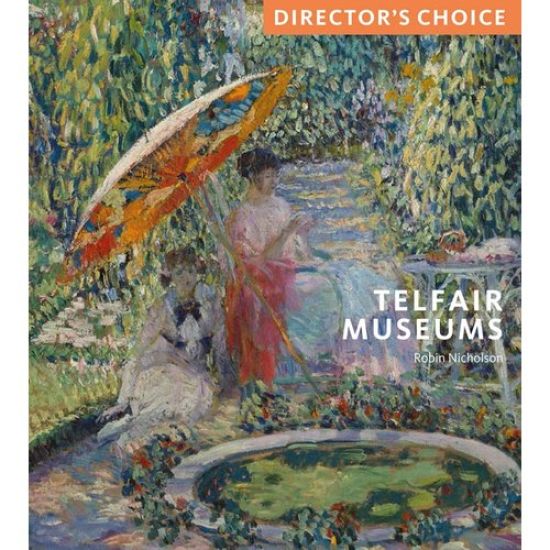
Opened in 1886, Telfair Museums in Savannah, Georgia, is the oldest public art museum in the southern USA. Today, Telfair Museums consists of three unique buildings: the Telfair Academy, the historic Owens-Thomas House & Slave Quarters, and the contemporary Jepson Center for the Arts. Telfair Museums was formally founded with the bequest of Mary Telfair in 1875 and now has grown to over 6,300 paintings, sculpture, works on paper and decorative arts. Telfair's collections are particularly strong in American Impressionism, the Ashcan School, and American and English silver. Director Robin Nicholson's text is an engaging insight into the history of Telfair Museums and its varied collections, featuring artworks by Childe Hassam, Henry Ossawa Tanner, George Bellows, Helen Levitt, and Mickalene Thomas.
Students in Discord fills a void in the professional literature concerning adolescents with emotional and behavioral disorders by providing theoretical information about psychiatric and psychological diagnoses with practical information about actual public school students who show both externalizing and internalizing disorders. In the process, the book provides understanding about disorders in childhood and adolescence and enhances understanding of federal guidelines on emotional disturbance, specifically those provided in the Individuals With Disabilities Education Act. The author provides suggested educational strategies that represent behavioral, psychological, sociological, and environmental models and that aim to both decrease undesirable behaviors and increase desirable ones.Theoretical issues covering disorders related to personality, disruptive behavior, eating, mood, anxiety, and development are illustrated by 57 adolescents whose feelings and behaviors are presented through anecdotal material, direct quotes from them and their teachers, life facts, and student writings. Additional perspectives are provided by comparing federal and practical definitional characteristics of emotional disturbance and discussing concerns about the inability of students with emotional and behavioral disorders to detach, the inclusion of socially-maladjusted students in the ED (emotionally disturbed) category, and the interrelation of emotional and behavioral disorders.
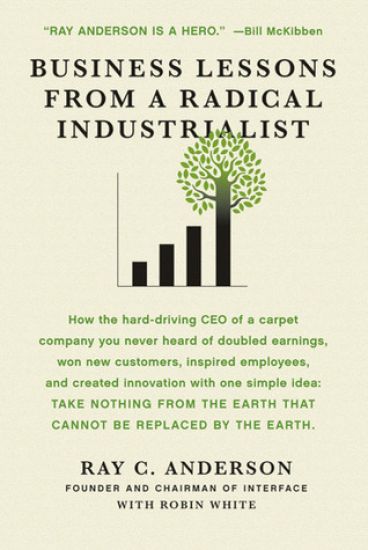
In 1994, Interface founder and chairman Ray Anderson set an audacious goal for his commercial carpet company: to take nothing from the earth that can't be replaced by the earth. Now, Anderson leads the way forward and challenges all of industry to share that goal, with Business Lessons from a Radical Industrialist.The Interface story is a compelling one: in 1994, making carpets was a toxic, petroleum-based process, releasing immense amounts of air and water pollution and creating tons of waste. Fifteen years after Anderson's call for change, Interface has: --cut greenhouse gas emissions by 82%--cut fossil fuel consumption by 60%--cut waste by 66%--cut water use by 75%--invented and patented new machines, materials, and manufacturing processes--increased sales by 66%, doubled earnings, and raised profit margins With practical ideas and measurable outcomes that every business can use, Anderson shows that profit and sustainability are not mutually exclusive; businesses can improve their bottom lines and do right by the earth. Ray Anderson is featured in the film, So Right, So Smart, which takes a behind-the-scenes look at how his leadership transformed Interface into a company with a sustainable business practices that made it more profitable than it was before.
Published in Association with the Natural History Museum, London "Few field guides exist to the plants of the American tropics. Guides to the juvenile stages of plants are rare for any part of the world. A guide to identification of tropical seedlings, from trees to herbs, is something to be treasured. Nancy Garwood's lifelong devotion to the study of the ecology and taxonomy of seedlings, combined with Margaret Tebbs's superb illustrations, has given us this first comprehensive guide to juvenile plants in the American tropics."—from the Foreword by Robin B. Foster Seedlings are the future of forest communities. Knowledge of seedling ecology is essential for understanding the local abundance, distribution, and dynamics of individual species and plant populations, for deciphering the mechanisms responsible for the high species diversity in tropical forests, and for developing sound management and conservation plans for tropical forests. In this monumental work of botany, Nancy C. Garwood provides the first comprehensive guide to seedlings in the American tropics, using Barro Colorado Island in Panama as an emblematic locale. More than two decades in the making, this guide is the essential work on the Neotropical seedlings. The review of Neotropical seedlings from 229 plant families is the heart of the book. Descriptions summarize information from 1,243 genera gleaned from accounts of nearly 3,000 species. Families of all major Neotropical woody plants are covered, as well as those that are mostly herbs, aquatic species, parasites and saprophytes. This is the largest compendium of information on tropical seedlings published to date. This guide to the seedling flora of Barro Colorado Island includes illustrations of and keys to 775 species of forest trees, shrubs, lianas, vines, herbs, epiphytes, hemi-epiphytes, and "weedy" plants typical of forest margins and clearings. All genera and 75 percent of the species covered occur broadly across the Neotropics and provide numerous illustrated examples for the family accounts. Key characters needed to identify dicot and monocot seedlings are also described and illustrated, supplemented with an illustrated glossary of descriptive terms. Paired with superb and intricate illustrations by Margaret Tebbs, arranged in 255 plates, Garwood's work enables tropical ecologists, botanists, and systematists to identify Neotropical seedlings that have not yet developed the diagnostic characteristics of the parent plants.
Published 50 years after the last major treatment of American art song, the first edition of the three-volume American Art Song and American Poetry was the first work to fully consider the musical settings of American poetry. Ruth Friedberg's monumental study was undertaken as a partial remedy to examine American song, from Edward Macdowell up through 1980. In the first edition, Friedberg focused on the interrelationship between the composer and the poet and the ways in which this influenced the completed song. Pieces selected for inclusion had the dual function of recognizing the importance of contributions to the performing literature as well as illuminating phases of America's cultural past. In this second edition, now published in a convenient, one-volume format, Ruth Friedberg and Robin Fisher have updated the entries on composers and poets from the first edition and added new individuals to both categories. New composers appearing in this volume include Florence Price, Lee Hoiby, Emma Lou Diemer, Helen Greenberg, Flicka Rahn, Libby Larsen, John Musto, Lori Laitman, Ricky Ian Gordon, and Jake Heggie. Poets now receiving their first treatment are Ezra Pound, Emma Lazarus, Dorothy Diemer Hendry, Dorothy Parker, Willa Cather, Louise Bogan, and William Carlos Williams. As before, musical examples are liberally employed to illustrate specific approaches to poetic text-setting and are much more visually accessible due to present-day digital technology. The new edition of American Art Song and American Poetry will be a valuable addition to the collections of scholars, performers, and libraries. It is an ideal reference work for students and faculty of voice in undergraduate and graduate courses in American music as well as literature scholars interested in the interdisciplinary approaches. Singers and teachers of singing will find in this new edition a vast array of carefully selected program material for the studio and the recital hall, along with carefully researched background material to enable effective performance. Users will find the volume's extensive bibliography and general index extremely helpful.
Nuclear Magnetic Resonance (NMR) has proved to be a uniquely powerful and versatile tool for analyzing and characterizing chemicals and materials of all kinds. This book focuses on the latest developments and applications for ""solid-state"" NMR, which has found new uses from archaeology to crystallography to biomaterials and pharmaceutical science research. The book will provide materials engineers, analytical chemists, and physicists, in and out of lab, a survey of the techniques and the essential tools of solid-state NMR, together with a practical guide on applications. In this concise introduction to the growing field of solid-state nuclear magnetic resonance spectroscopy The reader will find: * Basic NMR concepts for solids, including guidance on the spin-1/2 nuclei concept * Coverage of the quantum mechanics aspects of solid state NMR and an introduction to the concept of quadrupolar nuclei * An understanding relaxation, exchange and quantitation in NMR * An analysis and interpretation of NMR data, with examples from crystallography studies * Appendices covering spin properties of spin-1/2 nuclides as well as NMR simulation procedures
Strategy exhibits a pervasive commitment to the belief that the best approach to adopt in dealing with affairs of the world is to confront, overcome and subjugate things to conform to our will, control and eventual mastery. Performance is about sustaining distinctiveness. This direct and deliberate approach draws inspiration from ancient Greek roots and has become orthodoxy. Yet there are downsides. This book shows why. Using examples from the world of business, economics, military strategy, politics and philosophy, it argues that success may inadvertently emerge from the everyday coping actions of a multitude of individuals, none of whom intended to contribute to any preconceived design. A consequence of this claim is that a paradox exists in strategic interventions, one that no strategist can afford to ignore. The more single-mindedly a strategic goal is sought, the more likely such calculated instrumental action eventually works to undermine its own initial success.