Kirjojen hintavertailu. Mukana 11 244 527 kirjaa ja 12 kauppaa.

Kirjahaku

Etsi kirjoja tekijän nimen, kirjan nimen tai ISBN:n perusteella.

1000 tulosta hakusanalla Rudolf Schaefer

The Interpretation of Fairy Tales: A Lecture Given by Rudolf Steiner in Berlin, December 1908
The Interpretation of Fairy Tales is a book that contains the transcript of a lecture given by Rudolf Steiner in Berlin in December 1908. In this lecture, Steiner explores the deeper meanings behind fairy tales and their significance in the development of human consciousness. He argues that fairy tales are not just stories for children, but contain important spiritual and psychological insights that can help us understand ourselves and the world around us. Steiner delves into the symbolism and archetypes found in fairy tales, and explains how they can be interpreted to reveal hidden truths about human nature and the spiritual realm. This book is a must-read for anyone interested in the esoteric and mystical aspects of fairy tales, and the profound wisdom they contain.This is a new release of the original 1929 edition.This scarce antiquarian book is a facsimile reprint of the old original and may contain some imperfections such as library marks and notations. Because we believe this work is culturally important, we have made it available as part of our commitment for protecting, preserving, and promoting the world's literature in affordable, high quality, modern editions, that are true to their original work.
Rudolf Steiner's 'Philosophie Der Freiheit' as the Foundation of the Logic of Beholding Thinking. Religion of the Thinking Will. Organon of the New Cultural Epoch. Vol. 2
An introduction to Anthroposophical Methodology and a complete analysis of Rudolf Steiner's 'Philosophy of Freedom (Spiritual Activity)', Gennady Bondarev's 'Organon' demonstrates that the methodology intrinsic to Anthroposophy is fundamental to and capable of unifying all modern sciences as it describes the monistic sensible-supersensible reality. Through its anthropocentric and ontological character, this methodology's actualization implies an evolutionary change of both the human subject and the process of cognition itself. Rudolf Steiner's fundamental epistemological work is thereby shown to be the foundation for the development of a new kind of 'beholding' thinking - what Goethe began to experience and called "anschauende Urteilskraft". This is volume 2 of 3. The volumes, taken together, contain a completely new translation of 'Die Philosophie der Freiheit' by Graham B. Rickett.
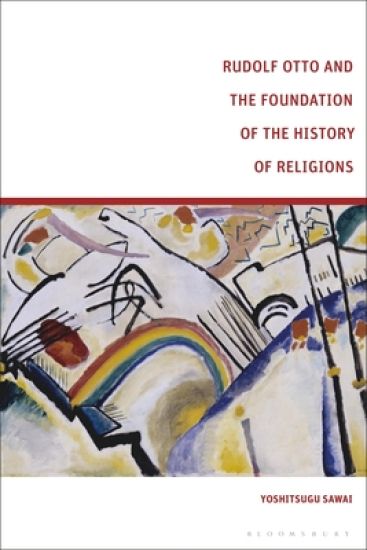
Rudolf Otto and the Foundation of the History of Religions
This book provides an up-to-date treatment of Rudolf Otto and his work, placing him in the context of comparative religion, theology, and the philosophy of religion. Yoshitsugu Sawai shows how Otto has “three faces”: the Lutheran Theologian, the Philosopher of Religion, and the Comparative Religionist. The book also shows how, of these, Otto saw himself primarily as a Lutheran Theologian, and provides an account of Otto’s engagement with India and the centrality that Hindu theology had on his thinking. In Otto’s theory of religion, his well-known concepts including “wholly other” and “numinous” constitute a multiple structure of meaning. For example, his concept of the “wholly other” (das ganz Andere) no doubt has the meaning of “God” in his Christian theological studies. At the same time, however, from the perspective of comparative religion or the phenomenology of religion, this same term semantically implies the “ultimate reality” of other religious traditions; “Brahman” and “God” (Isvara) in Hindu religious tradition as well as “God” in Christianity.
Rudolf Otto and the Foundation of the History of Religions

Rudolf Otto and the Foundation of the History of Religions

Yoshitsugu Sawai

BLOOMSBURY PUBLISHING PLC
2023
nidottu
This book provides an up-to-date treatment of Rudolf Otto and his work, placing him in the context of comparative religion, theology, and the philosophy of religion. Yoshitsugu Sawai shows how Otto has “three faces”: the Lutheran Theologian, the Philosopher of Religion, and the Comparative Religionist. The book also shows how, of these, Otto saw himself primarily as a Lutheran Theologian, and provides an account of Otto’s engagement with India and the centrality that Hindu theology had on his thinking. In Otto’s theory of religion, his well-known concepts including “wholly other” and “numinous” constitute a multiple structure of meaning. For example, his concept of the “wholly other” (das ganz Andere) no doubt has the meaning of “God” in his Christian theological studies. At the same time, however, from the perspective of comparative religion or the phenomenology of religion, this same term semantically implies the “ultimate reality” of other religious traditions; “Brahman” and “God” (Isvara) in Hindu religious tradition as well as “God” in Christianity.
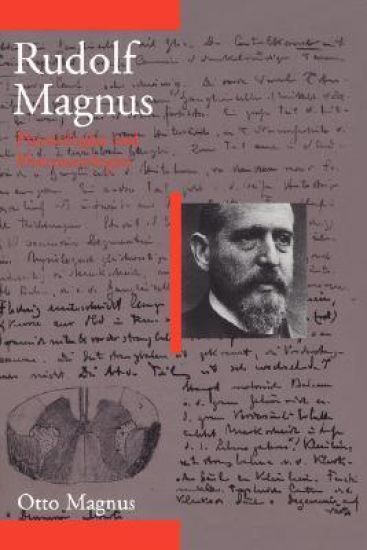
Rudolf Magnus: Physiologist and Pharmacologist (1873-1927)
Most medical doctors have probably during their studies heard of the Magnus and De Kleijn reflexes' and may have been aware of their relation to posture. But they know little about their significance and nothing about the man who unravelled the complex physiology of these reflexes and about his work. Rudolf Magnus lived from 1873 until 1927. His work on the physiology of posture was initiated during a short period of work with Sherrington in Liverpool in 1908. Though Magnus was also an authority in the field of pharmacology, it was particularly his neurophysical work on posture which made him known worldwide. It led to his nomination, together with De Kleijn, for the Nobel Prize in 1927. Unfortunately he died before the decision was made. In this illustrated biography Magnus' family background and his student years are described in a lively way. Fragments of the diary of his journey to England in 1898 and the description of his scientific career in Heidelberg will enlighten those interested in the history of how science was conducted during his lifetime. His lectures on Goethe as a scientist are also included. This is followed by Magnus' life as Professor of Pharmacology in Utrecht, and his studies on animal postures and experimental pharmacology. Finally Magnus' legacy is described.
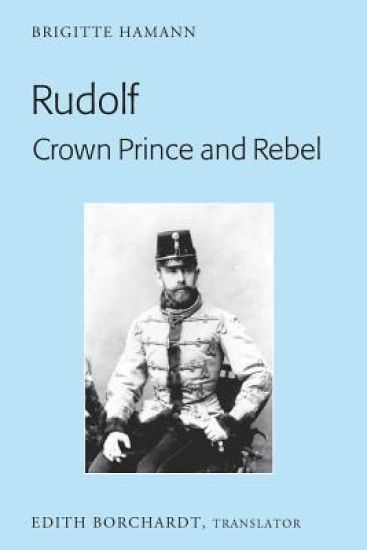
Rudolf. Crown Prince and Rebel

Rudolf. Crown Prince and Rebel

Brigitte Hamann

Peter Lang Publishing Inc
2017
nidottu
Brigitte Hamann portrays Rudolf von Habsburg, Crown Prince of Austria, as a liberal intellectual who stood in opposition to his father Emperor Franz Josef and the imperial establishment. Against the prevailing currents of his time, Rudolf wanted to modernize the Habsburg Empire by abolishing the privileges of the aristocracy. He vehemently opposed nationalism and anti-Semitism and fought for liberalism and democracy and the rights of the minorities within the multinational Empire. His political goal was a United Europe of liberal states. For a long time, Crown Prince Rudolf was known mainly in connection with his suicide at Mayerling with Baroness Mary Vetsera. However, the Mayerling tragedy may be seen as the last consequence of living without any prospect of realizing his ideals.
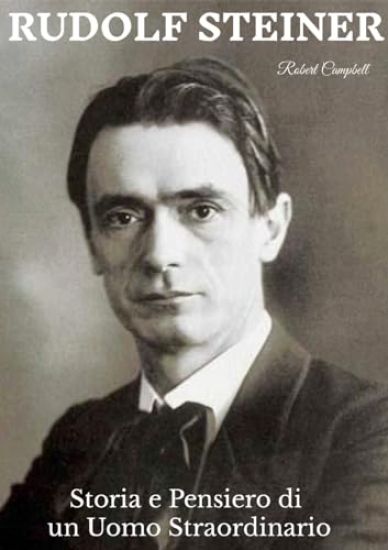
Rudolf Steiner

Rudolf Steiner

Heiner Ullrich

Bloomsbury Academic
2014
nidottu
Rudolf Steiner is one of the most controversially judged educational reformers of the twentieth century. Although he received little recognition within his field, his educational thought has had a sustained and profound influence, not only in the development of the Waldorf Schools, but also in healing, socially therapeutic work, psychosomatic medicine, biological-dynamic agriculture, corporate organisation, fine arts, and architecture. Heiner Ullrich paints a concise and well-grounded portrait of the creator of the anthroposophic doctrine and Waldorf pedagogy. The text describes a wide arc from the intellectual biography of Rudolf Steiner, across his basic ideas on human development and education, to include discussion of the organisation, curriculum, methods and success of the Waldorf Schools.
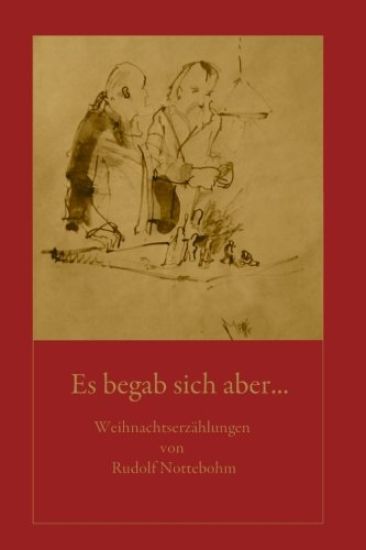
Es begab sich aber...: Weihnachtsgeschichten von Rudolf Nottebohm

Es begab sich aber...: Weihnachtsgeschichten von Rudolf Nottebohm

Rudolf Nottebohm

Createspace Independent Publishing Platform
2013
nidottu
Ein alter Krippenschnitzer arbeitet an seiner letzten Krippe und es soll die sch nste werden. Aber er ahnt, dass sie seine letzte sein und nie und nimmer mehr fertig werden wird - es sei denn, es geschieht ein Wunder; Annette ist zur Christmesse mit einem Engel verabredet - der hat ihr ein Wunder in Aussicht gestellt; Marianne und Annemarie werden Heiligabend ihr Kind zur Welt bringen und beide glauben, dass das in einer Katastrophe enden wird - und dass nur ein Wunder sie retten kann und der kleine Heiner ist am Heiligen Abend ganz allein, bis ihm ein besoffener Weihnachtsmann ber den Weg l uft - das ist kein Wunder Vier Weihnachtserz hlungen zum stillen Lesen, zum Vorlesen und zum Wiederlesen.